Award-Winning Organic Chemistry Tutors
serving Grand Rapids, MI
Organic Chemistry
Tutors in Grand Rapids
Private 1-on-1 tutoring, weekly live classes for academic support, test prep & enrichment, practice tests and diagnostics, and more to elevate grades and test scores.
Based on 3.4M Learner Ratings
UniversitiesSchools & Universities
DeliveredHours Delivered
ProficiencyGrowth in Proficiency
Who needs tutoring?
No obligation. Takes ~1 minute.

Having completed both semesters of organic chemistry at the University of Michigan — on top of AP Chemistry before that — Ajay knows exactly where students get stuck, whether it's arrow-pushing in reaction mechanisms or keeping substitution and elimination pathways straight. He teaches students to recognize electron behavior patterns so new reactions feel predictable instead of random.
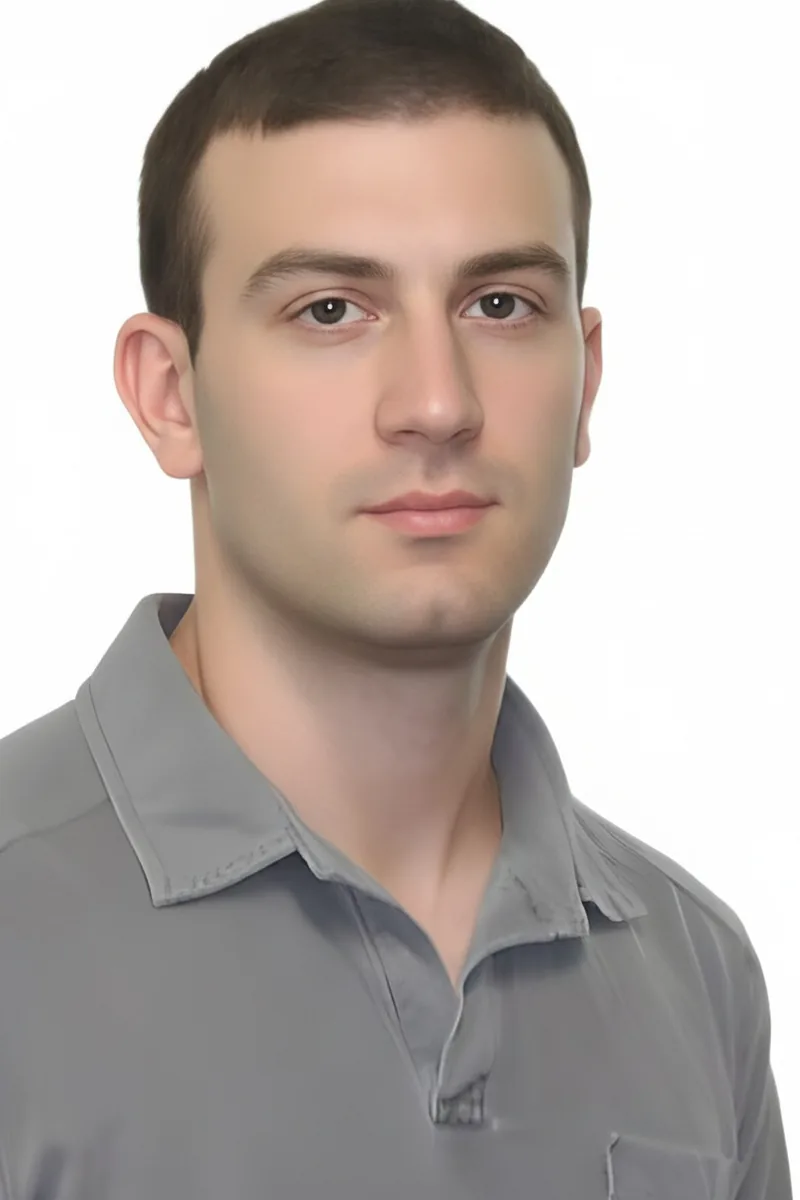
Reaction mechanisms click when you understand electron movement — why a nucleophile attacks one carbon over another, or how steric hindrance reshapes a synthesis pathway. Vazrik's chemistry degree and doctoral work in materials science mean he can trace organic reactions from their molecular-orbital roots through to real laboratory outcomes, making arrow-pushing feel intuitive rather than arbitrary.
I am eternally grateful! I minored in Chemistry after getting interested in the inner workings of organic chemistry. While going to college I earned money by tutoring classes I had already taken. I also offered "supplemental instruction" which were informal classroom question and answer sessions. I worked in a research lab after earning an undergraduate research fellowship and explored Physiology at the School of Medicine. Then went on to study Toxicology at the University of Wisconsin, Madison. While there a decision appeared clear between focusing on research or teaching. I like teaching better. I truly enjoy spreading knowledge about Biology and Chemistry and finding fun ways to introduce people to these (often difficult) subjects.
I am a PhD student in Chemistry at the University of Windsor. I did both my Undergraduate and Master's degree in Chemistry at the University of Windsor as well. I also did a year and a half of course/research work at Cornell University. I am interested in the academic field and hope to one day hold a position in the academic world to do groundbreaking research and teach the next generation of students the very fundamentals of Chemistry. I love teaching and I have been doing it since 2011. I have taught many students at different levels and from different backgrounds. I like to make sure that students understand concepts rather than memorize. I take my time explaining concepts and always have examples on the top of my head to help understand different problems in Chemistry.
I'm your girl! I majored in Biochemistry at the University of Michigan and am looking to help any students in need of assistance.
Reaction mechanisms are the backbone of organic chemistry, and most students struggle not because the material is impossibly hard but because they try to memorize hundreds of reactions instead of learning the handful of electron-pushing patterns that explain almost all of them. Rebecca's science training means she teaches students to read a mechanism the way you'd read a sentence — subject, verb, object — so new reactions become predictable rather than surprising.
Most organic chemistry frustration comes from trying to memorize hundreds of reactions instead of recognizing the handful of electronic patterns — nucleophilic attack, leaving group ability, steric effects — that drive all of them. Garrett teaches students to read arrow-pushing mechanisms as stories about electron movement, which makes predicting products and regiochemistry intuitive. His approach turns reaction maps from overwhelming charts into logical flowcharts.
Reaction mechanisms click when you understand electron movement — why a nucleophile attacks one carbon over another, how steric hindrance redirects a pathway, what drives an elimination versus a substitution. Enric's PhD in Chemistry means he's spent years thinking at the mechanistic level and can unpack arrow-pushing, stereochemistry, and retrosynthetic analysis in ways that make each reaction type feel logical rather than arbitrary.
Between his biochemistry degree and his current pharmacy doctoral work at VCU, Joel has run through organic chemistry from both the academic and applied sides — understanding how functional group reactivity and stereochemistry translate into real drug design and pharmacological mechanisms. He's also taught university chemistry courses as adjunct faculty, so he knows how to break down multi-step synthesis problems and spectroscopy interpretation at the pace a student actually needs. Rated 5.0 by students.
Reaction mechanisms are the backbone of organic chemistry, and most students struggle not because the material is impossibly hard but because they try to memorize hundreds of reactions instead of recognizing patterns. Manpinder approaches orgo by teaching students to trace electron movement through arrow-pushing — once that skill clicks, predicting products for substitution, elimination, and addition reactions becomes systematic rather than overwhelming.
Studying physics with a concentration in chemical principles at Penn means Max encounters organic chemistry from the physical side first — thermodynamics of reaction pathways, orbital interactions driving nucleophilic attacks, and the energy landscapes that determine whether a substitution or elimination wins out. That perspective lets him teach mechanisms by grounding arrow-pushing in the physics of why electrons move, not just where they go.
Reaction mechanisms are essentially stories told with curved arrows, and the trick is learning to read them rather than memorize hundreds individually. Mark approaches organic chemistry by teaching students to recognize patterns — nucleophilic attacks, leaving group stability, steric effects — so they can predict products on reactions they've never seen before. His chemistry coursework at Notre Dame keeps these concepts fresh and grounded in real molecular behavior.
Reaction mechanisms are the language of organic chemistry, and Daniel learned to speak it fluently through his microbiology and dental science training. He walks through arrow-pushing, stereochemistry, and functional group reactivity by emphasizing the "why" behind each electron movement — so students can predict products on exam day instead of relying on memorized templates.
Having earned a chemistry degree from Yale, Zosia spent years immersed in the subject well past the introductory orgo sequence — which means she can contextualize tricky topics like electrophilic aromatic substitution and acyl chemistry within the broader landscape of how molecules actually behave. She walks students through spectral analysis and multi-step synthesis by building from first principles of electronegativity and sterics, so each new reaction type feels like an extension of what they already know rather than a fresh page to memorize. Rated 4.9 by students.
Jeff's molecular biology degree meant spending serious time with organic chemistry — not just passing it, but applying it to understand enzyme active sites, metabolic intermediates, and drug interactions at the molecular level. That applied perspective makes him especially effective at teaching synthesis strategy and functional group transformations, because he can ground abstract mechanisms in real biochemical context. Rated 5.0 by students.
A bio-organic chemistry degree means Alex didn't just pass orgo — the entire major was built around understanding how molecular structure dictates reactivity, from substitution and elimination selectivity to multi-step synthesis design. He breaks down each mechanism by identifying the nucleophile, electrophile, and driving force first, so students develop a repeatable framework instead of a growing pile of flashcards. That same logic scales directly into spectroscopy interpretation and retrosynthetic analysis when exams get harder.
Jonathan's human biology degree and pre-med track at Cornell meant organic chemistry wasn't just a prerequisite — it was the course that connected molecular structure to everything he'd later study in physiology and biochemistry. He tackles synthesis problems and spectroscopy interpretation by linking functional group behavior back to biological relevance, which gives students a reason to care about each mechanism. Rated 4.9 by students.
Testimonials
Because the right Organic Chemistry tutor makes all the difference.
Average Session Rating – Based on 3.4M Learner Ratings
Practice Organic Chemistry
Free practice tests, flashcards, and AI tutoring for Organic Chemistry
Other Grand Rapids Tutors
Related Science Tutors in Grand Rapids
Frequently Asked Questions
Organic Chemistry requires both memorization and deep conceptual understanding—students often struggle with visualizing 3D molecular structures, understanding reaction mechanisms, and recognizing patterns across different reaction types. Many find it challenging to move beyond memorizing reactions to truly understanding why molecules behave the way they do. Personalized tutoring helps students build this foundational understanding so they can apply concepts to new problems rather than relying on memorization alone.
During your first session, a tutor will assess your current understanding of foundational concepts like bonding, molecular structure, and acid-base chemistry, then identify specific areas where you need support—whether that's reaction mechanisms, synthesis problems, or exam preparation. They'll discuss your learning goals and create a personalized plan tailored to your course pace and learning style. This initial meeting sets the foundation for targeted, effective instruction moving forward.
Expert tutors use multiple approaches to build visualization skills—drawing mechanisms step-by-step, using molecular models, and connecting abstract structures to real-world applications like drug design or polymer chemistry. Rather than just showing you how to draw a reaction, tutors help you understand the electron movement and reasoning behind each step. This active, visual learning approach transforms abstract concepts into concrete understanding you can apply to new problems.
Yes—tutors can help you understand the theory behind lab procedures, predict outcomes, and interpret results through the lens of the concepts you're learning in lecture. They can also help you prepare lab reports by connecting your experimental observations to underlying chemical principles. This support strengthens both your lab skills and your conceptual understanding of how theory applies to real-world chemistry.
Tutors break down synthesis problems by teaching you to think backwards from the target molecule, identifying key transformations and the reactions needed to achieve them. They help you build a mental library of reactions and their conditions, then guide you to recognize patterns and select appropriate strategies for new problems. This systematic approach transforms synthesis from overwhelming to manageable, building your confidence and problem-solving skills.
Tutors help you prepare by reviewing challenging topics, working through practice problems similar to what you'll see on exams, and identifying your personal weak spots so you can focus study time effectively. They teach test-taking strategies specific to Organic Chemistry—like how to approach multi-step synthesis problems under time pressure and how to check your work for common mistakes. With targeted preparation, many students see significant improvements in both understanding and exam performance.
Varsity Tutors connects you with tutors who have strong backgrounds in chemistry—many have advanced degrees, teaching experience, or professional chemistry expertise. Each tutor is vetted for subject knowledge and teaching ability, ensuring they can explain complex concepts clearly and adapt to your learning style. You can review tutor profiles and experience before connecting with someone who's the right fit for your needs.
Starting early—ideally within the first few weeks of the course—gives you the best foundation for success, allowing you to build understanding gradually rather than trying to catch up later. However, tutoring helps at any point: if you're struggling midway through the course, tutors can help you fill knowledge gaps and boost your confidence before exams. Whether you're being proactive or need urgent support, personalized instruction accelerates your progress.
Let’s find your perfect tutor
Answer a few quick questions. We’ll recommend the right plan and match you with a top 5% tutor.