Award-Winning Japanese Tutors
serving Grand Rapids, MI
Japanese
Tutors in Grand Rapids
Private 1-on-1 tutoring, weekly live classes for academic support, test prep & enrichment, practice tests and diagnostics, and more to elevate grades and test scores.
Based on 3.4M Learner Ratings
UniversitiesSchools & Universities
DeliveredHours Delivered
ProficiencyGrowth in Proficiency
Who needs tutoring?
No obligation. Takes ~1 minute.

A drama degree might not scream Japanese fluency, but John's literary work — he's a section editor for the Los Angeles Review of Books and literary manager for two theater companies — means he's deeply attuned to how language shapes meaning, tone, and register. That sensitivity to nuance transfers directly to navigating Japanese's layered politeness levels and context-dependent sentence endings. Rated 5.0 by students.
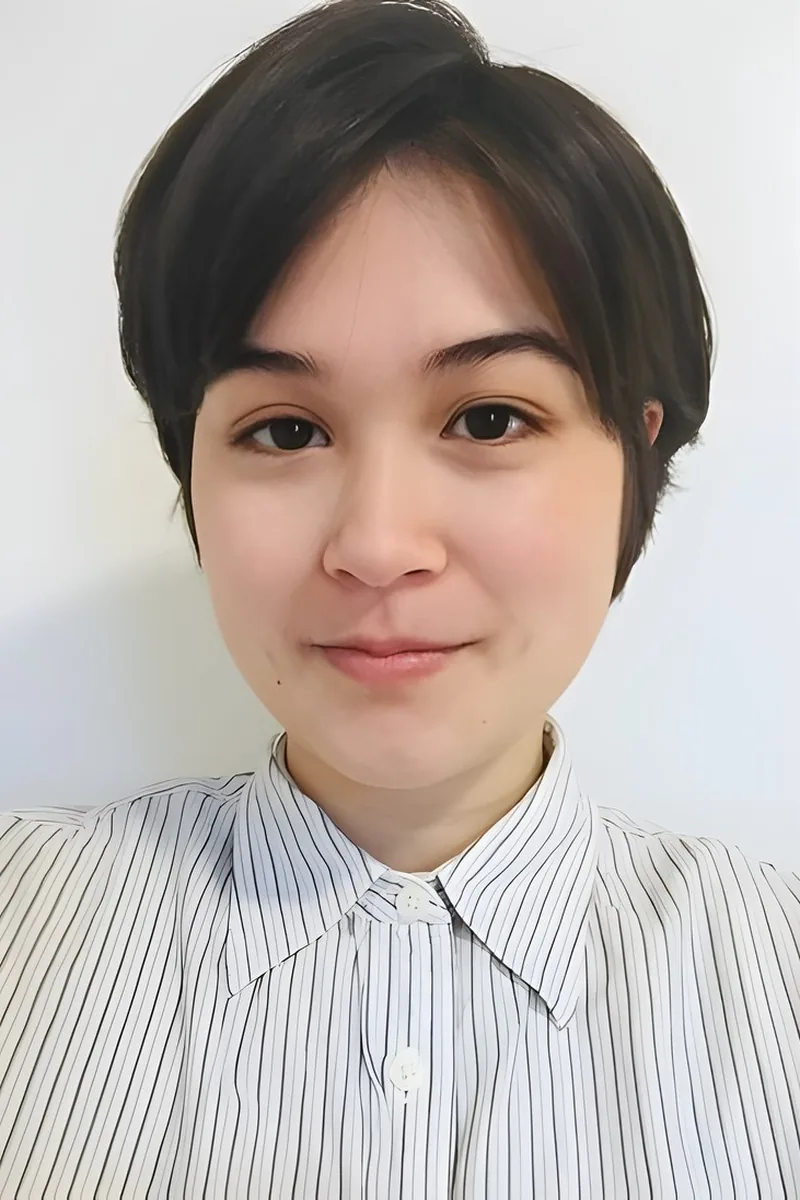
Few Japanese tutors can combine formal academic study with real teaching experience in Japan — Sophie has both. Her East Asian Studies work at Princeton included intensive Japanese language training, and she spent time teaching English in Japan, which gave her deep familiarity with how the two languages map onto (and diverge from) each other. She tackles everything from hiragana and katakana basics to particle usage and keigo politeness levels.
Having completed an Asian Languages minor at UCLA, Abrahim brings formal training in Japanese grammar, kanji acquisition, and reading comprehension to his tutoring. He approaches the language methodically — building from particle usage and verb conjugation patterns up to reading authentic texts — which works especially well for students who want structure rather than immersion-only learning.
Studying Japanese as a minor at Columbia — with plans to eventually work in Japan's renewable energy sector — Shin uses the language as a living tool, not just a classroom exercise. He teaches everything from hiragana and katakana basics to intermediate grammar patterns like ~てしまう and ~ことにする, adjusting to each student's level and building real conversational confidence alongside written accuracy.
Darin brings an analytical learner's perspective to Japanese, tackling the language's grammar patterns and writing systems with the same systematic approach he applied to his scientific training. For students working through hiragana, katakana, kanji recognition, or verb conjugation, he offers structured methods that make consistent progress feel achievable.
Growing up attending the Japanese Weekend School of New Jersey while enrolled in American public schools, Hidefusa developed native-level fluency in both languages and a deep understanding of where English speakers stumble with Japanese. He teaches everything from hiragana and katakana basics to kanji recognition, particle usage, and keigo (formal speech) — drawing on the bilingual instincts of someone who has lived in both linguistic worlds.
I am currently finishing my thesis. For the past two years I was an adjunct instructor at The City College of New York, teaching statistics and introductory neuroscience, where I learned the importance of communicating complicated concepts clearly at an individualized level. All of my classes performed above average, and I discovered how satisfying it is to help people understand difficult ideas. I've found that by creating a good rapport with my students I am able to more effectively impart difficult concepts to them while causing them less stress. My passion is people, which first led me to study psychology, leading to my work in statistics, and later into teaching.
I'm currently a freshman at Brown University. I will most likely triple major in Ancient Greek & Sanskrit, Latin, and Japanese. I have had lots of experience tutoring those around me, such as friends, peers, and class mates, and I have always enjoyed seeing their progress as students. My tutoring experiences include after-school assistance to those struggling in Ancient Greek at my former high school, to helping Juniors and Sophomores help ace the SAT. My specialty is language and history, with an emphasis on Japanese, English, Latin, US history and World History, but I am also more than happy to help out those struggling with Algebra and Geometry. As someone who was once an ESL student himself, I believe that a good education rests upon the ability to comprehend, interact, and apply ideas. Besides academic matters, I am also fond of running, calisthenics, and Enka music.
Triple-majoring in Japanese, linguistics, and computer science at UMass Amherst, Connor brings both fluency and analytical rigor to teaching the language. He unpacks grammar patterns like particle usage and verb conjugation groups by connecting them to the underlying logic of how Japanese sentences are built — making new structures easier to internalize and recall.
Cori is pursuing a Japanese minor at MIT, which means she's actively working through the grammar structures, kanji readings, and particle usage that trip up most learners. That proximity to the learning process gives her a practical sense of what sticks and what needs extra repetition.
Hi! It's Wataru. I am originally from Japan and have been living in New York since 2000. I had a career as an industrial newspaper pressman/editor in Tokyo so that I know newspaper level strict grammar and manner of business speech. I watch anime and I can talk about Japanese subculture with you if you like. I have been teaching Japanese language in person and online. I have taught from beginners to JLPT N3 certificate prep students. I've taught American, Canadian, English, Indian, German, Australian, Mexican, and so on. Teaching is one of my way to feel the joy of supporting people. I'll help you master the language and dive into Japanese culture and subculture. Once you start to think in Japanese, you will notice that your way of communication changes. English is good for business, law, and science while Japanese is more about sharing feelings. The waiters in Japan may be reluctant to serve your table, but my students prepare well to make them feel at ease and they have fantastic travel in Japan.
Though her degrees are in biology and science education, Sarah lists Japanese among her interests and brings a teacher's instinct for breaking complex systems into learnable parts — useful when students are wrestling with hiragana stroke order or the logic behind particle placement. Her 5.0 rating and four years of classroom teaching mean she knows how to pace a lesson and adjust when something isn't landing.
Testimonials
Because the right Japanese tutor makes all the difference.
Average Session Rating – Based on 3.4M Learner Ratings
Other Grand Rapids Tutors
Related Languages Tutors in Grand Rapids
Frequently Asked Questions
During your first session, a tutor will assess your current level across reading, writing, speaking, and listening to understand your starting point. They'll discuss your goals—whether you're preparing for AP Japanese, building conversational skills, or studying for a proficiency exam—and create a personalized learning plan. This foundation helps ensure every session after that is tailored to your needs and pace.
In a classroom setting, students rarely get extended speaking time with a native or fluent speaker. Personalized 1-on-1 instruction gives you dedicated conversation practice every session, allowing you to build confidence, refine pronunciation, and develop natural fluency. A tutor can correct your speech in real-time, model proper intonation, and adjust difficulty to keep you challenged without overwhelming you.
Japanese verbs conjugate based on tense, politeness level, and context in ways that don't map directly to English, making conjugation patterns feel abstract at first. A tutor breaks this down systematically, showing you the underlying patterns and giving you targeted practice until conjugation becomes automatic. Rather than memorizing rules in isolation, you'll see how conjugations work in real conversations and writing.
Research on effective learning shows that spaced repetition—reviewing words at increasing intervals—and using vocabulary in context are far more effective than cramming. A tutor can integrate new vocabulary into your conversations, writing exercises, and cultural discussions, helping words stick naturally. They'll also help you develop personalized strategies like mnemonics or connecting words to cultural context, which deepens retention.
Absolutely. Understanding Japanese culture—from honorific language reflecting social hierarchy to how context shapes communication—gives you insight into why the language works the way it does. Tutors often weave cultural context into lessons, helping you grasp nuances like when to use formal versus casual speech and why certain phrases carry specific weight. This deeper understanding accelerates both comprehension and authentic usage.
A tutor will introduce these writing systems strategically—typically starting with hiragana and katakana for foundational sounds, then layering in kanji gradually as you progress. Rather than treating writing systems as separate from speaking and listening, personalized instruction integrates them naturally: you'll read and write the vocabulary you're actually using in conversation. This connected approach keeps all four skills developing together.
Reaching conversational proficiency typically requires 600-750 hours of study according to language learning research, but the timeline varies based on your starting point, study frequency, and immersion level. With consistent personalized tutoring—especially if combined with self-study—many students can hold basic conversations within 6-12 months and develop stronger conversational skills within 18-24 months. A tutor can help you progress efficiently by focusing on high-value vocabulary and patterns relevant to your goals.
Look for tutors with native or near-native fluency, ideally combined with teaching experience and familiarity with Japanese curriculum standards. If you're preparing for AP Japanese or proficiency exams, ask whether they have experience with those specific assessments. Varsity Tutors connects you with expert tutors who have been vetted for both language proficiency and teaching ability, ensuring you get quality instruction matched to your level and goals.
Let’s find your perfect tutor
Answer a few quick questions. We’ll recommend the right plan and match you with a top 5% tutor.