Award-Winning History Tutors
serving Ann Arbor, MI
History
Tutors in Ann Arbor
Private 1-on-1 tutoring, weekly live classes for academic support, test prep & enrichment, practice tests and diagnostics, and more to elevate grades and test scores.
Based on 3.4M Learner Ratings
UniversitiesSchools & Universities
DeliveredHours Delivered
ProficiencyGrowth in Proficiency
Who needs tutoring?
No obligation. Takes ~1 minute.
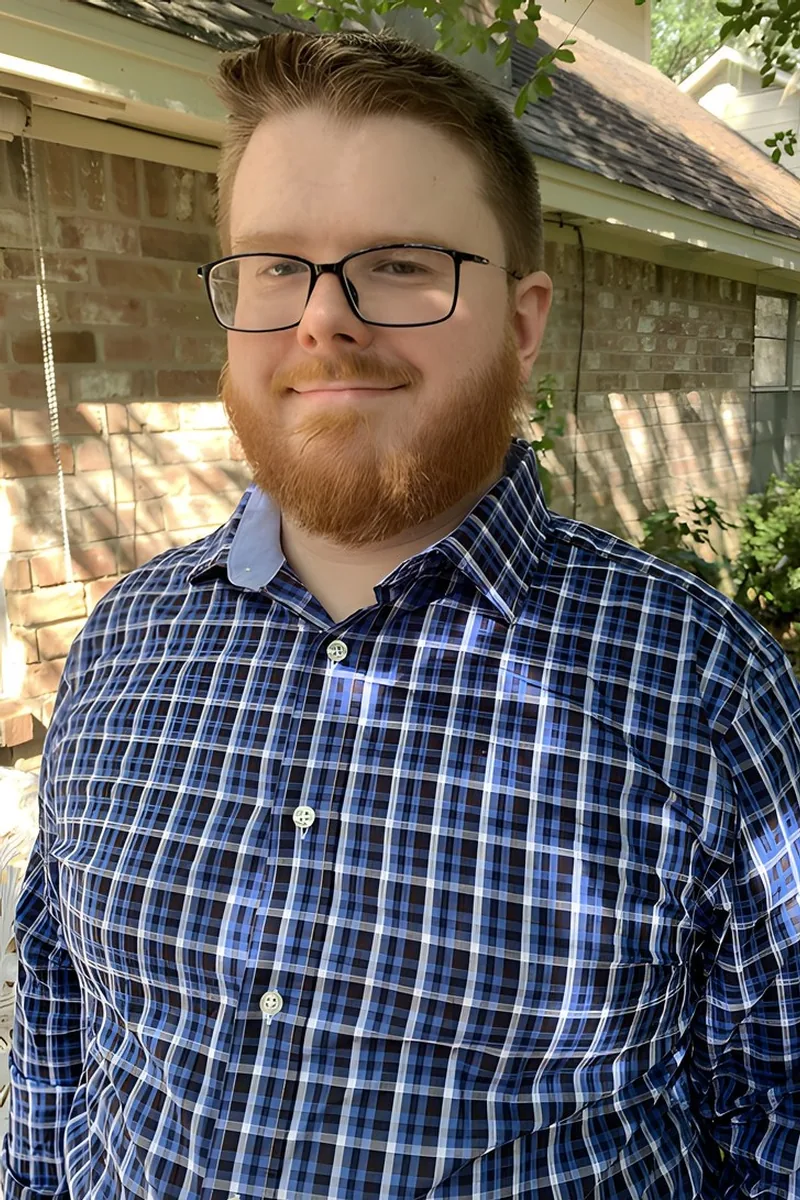
Michael approaches history the way he approaches physics: by asking what evidence supports a claim and whether the reasoning holds up. His philosophy background and extensive academic writing experience make him especially effective at teaching students to analyze primary sources, construct cause-and-effect arguments, and write essays that do more than summarize events.

Skyler's MA in Russian, Central and Eastern European, and Eurasian Studies means she doesn't treat history as a list of dates — she treats it as overlapping narratives shaped by politics, culture, and geography. She teaches students to read primary sources critically, construct cause-and-effect arguments, and write essays that demonstrate genuine historical thinking. That analytical approach applies whether the topic is the Cold War, the American Revolution, or a world history survey.
Martha's research at Michigan examines how culture shapes psychological processes across societies, giving her a natural entry point into history's big questions about social movements, colonialism, and cross-cultural exchange. She teaches students to analyze primary sources critically and construct arguments that connect specific events to broader patterns of change.
Global Affairs is half of Megan's double focus at Yale, which means she's constantly engaging with historical context — trade networks, political revolutions, colonial legacies — in her own coursework. She teaches students to read history as cause-and-effect chains rather than isolated events, making it easier to write essays and retain information for exams.
An English major at Yale, Sophia reads historical texts the way she reads literature — closely, looking for whose voice is centered, what's left out, and how narrative choices shape interpretation. That literary training makes her especially effective at teaching students to dissect primary source documents and craft thesis-driven arguments where textual evidence does the heavy lifting. Her perfect 36 ACT speaks to the kind of critical reading and analytical writing that history coursework rewards.
An MD/PhD candidate at Michigan Medical School, Suzie spends her research days reading across disciplines — parsing how scientific discoveries, public policy, and social conditions intertwine, which is essentially what good historical analysis demands. Her chemical and biological engineering background trained her to trace how systems evolve under pressure, a habit she brings to teaching students how to connect political and economic forces in essay arguments and document analysis. Rated 5.0 by students.
Ruth approaches history through the lens of source analysis and argumentative writing, teaching students to move from "what happened" to "why it mattered" in their essays and exam responses. Her liberal arts training at the University of Alabama, where she graduated summa cum laude, built the kind of interdisciplinary thinking that makes historical cause-and-effect reasoning click.
I am a learner for life and I love sharing my knowledge with others. I have tutored middle-school students for one year and university students for two years. My focus is mainly on mathematics, chemistry, and related fields. I have degrees in both mathematics and biomedical engineering so I cover a lot of ground in the physiological sciences, computer programming, and statistics as well. Taking tests is one of my strong points and I have some killer strategies to share!
Ajay's philosophy minor at the University of Michigan trained him to analyze arguments, trace ideological shifts, and evaluate sources — skills that translate directly into strong historical thinking. He teaches students to read primary documents like a philosopher, asking not just what happened but why a particular account was written and whose perspective it serves.
Megan approaches history the way she approaches literary analysis: by teaching students to read sources critically and build arguments from evidence rather than summaries. Her interdisciplinary background — a biology degree from Michigan and a doctorate in German literature at Princeton — means she can draw unexpected connections across intellectual, cultural, and scientific history. She's particularly effective at helping students structure essays that make a genuine historical argument.
Strong history performance comes down to building arguments from evidence, not memorizing dates — a skill Kerry sharpened through years of analytical writing at the University of Michigan. She teaches students to read primary sources critically, identify cause-and-effect relationships, and structure essay responses that earn full marks on document-based questions.
Growing up with a teacher for a mother and later volunteering as a tutor in underfunded Manhattan public schools, Jason learned early that history clicks when students see themselves in it — connecting their own neighborhoods and communities to broader patterns of change. His business administration training sharpened that instinct, giving him a framework for analyzing how economic decisions, power structures, and institutional incentives drove events from Reconstruction to the Civil Rights Movement. He's especially effective at coaching students through essay prompts that ask them to argue *why* something happened, not just recount it.
Eva's approach to history leans on the skills she's sharpened as an English major and working journalist: reading primary sources critically, identifying whose perspective a document represents, and constructing arguments grounded in evidence. She's especially useful for students who need to write document-based essays or research papers where the challenge isn't knowing the facts but building a coherent interpretation from them.
Computer science teaches you to think in systems — how one change cascades through an entire structure — and Henry brings that same cause-and-effect reasoning to historical analysis, particularly when tracing how technological shifts, resource pressures, or policy decisions rippled across societies. His biochemistry minor at Carleton adds a second lens, useful for topics like the history of pandemics or the Green Revolution, where scientific context makes the narrative richer. He's especially effective at teaching students to build tightly organized essay arguments from primary source evidence.
Phil treats history less as a catalog of dates and more as a set of arguments waiting to be examined — why did a particular policy succeed, what pressures shaped a treaty, how do competing primary sources tell different stories about the same event. His reading habit spans historical nonfiction alongside literature, which gives him a knack for connecting cultural context to political developments in ways that make material stick.
Nikitha treats history less like a list of dates and more like a series of cause-and-effect chains worth untangling. She teaches students to read primary sources critically and build arguments that connect events to broader patterns — skills that transfer directly to essay exams and document-based questions.
Surina approaches history as a discipline built on evidence and interpretation, not memorization of dates. She teaches students to read primary sources critically — identifying bias, context, and perspective — and to construct document-based essays that make a defensible claim. Her honors college training at Arizona State sharpened the kind of analytical writing that history courses reward.
Trishani approaches history as a discipline built on evidence, not memorization. She teaches students to evaluate primary sources, identify cause-and-effect chains, and construct document-based arguments — skills that transfer whether the unit covers the French Revolution or the Civil Rights Movement.
Teaching special education sharpens a very specific skill: figuring out how each student actually processes information and adapting on the fly. Rachel brings that diagnostic instinct to history, where she breaks down broad topics like causes of conflict or shifts in government into concrete, manageable pieces that students can connect and recall. Her approach is especially useful for students who struggle with the sheer volume of names, dates, and concepts that history courses throw at them.
Geology-Biology at Brown meant reading the earth's history through rock layers, fossils, and environmental data — training that sharpened Rebekah's instinct for piecing together cause-and-effect across long timescales. She applies that same reconstructive thinking to human history, teaching students to trace how geographic, economic, and political forces converge to produce specific outcomes. Her 5.0 rating speaks to an approach that adapts explanations on the fly until a concept actually lands.
Engineering coursework at Michigan State trained William to think in systems — how interconnected forces produce specific outcomes — which is exactly what strong historical analysis requires. He teaches students to map out how economic pressures, technological changes, and political decisions fed into each other during events like industrialization or wartime mobilization, turning vague narratives into structured causal arguments. Rated 5.0 by students.
Teaching a first-year social sciences seminar at the University of Michigan gave Ceren practice breaking down how historical arguments are built — sourcing evidence, identifying bias, and connecting events across periods. She approaches history as a discipline of interpretation, which makes document-based questions and analytical essays far less intimidating.
While history isn't Uchenna's primary discipline, his psychology background and analytical training give him a strong framework for evaluating cause-and-effect relationships and interpreting primary sources. He approaches historical topics the way he approaches scientific problems: identify the evidence, assess competing explanations, and build a clear argument from what's actually there.
Chemical engineering coursework is essentially applied history — understanding how industrial revolutions, wartime manufacturing demands, and energy policy debates shaped the technology and infrastructure we study today. Haley leans on that engineering context to teach students how to build cause-and-effect arguments in essays and DBQs, connecting economic and technological forces to the political events most textbooks treat in isolation. Rated 4.8 by students.
Engineering coursework is essentially applied history — understanding why bridges failed, how the Industrial Revolution transformed manufacturing, and what design constraints shaped wartime technology. Nikki brings that mechanical engineering mindset to history tutoring, teaching students to trace how technological and economic forces drove the events they're writing about. Rated 5.0 by students.
Studying biology at Michigan means Samantha spends her time evaluating competing hypotheses and weighing evidence — skills that map directly onto analyzing historical arguments and primary source documents. She's particularly effective at teaching students how to build cause-and-effect chains in essay responses, treating historical events less like facts to memorize and more like phenomena to explain. Her 35 ACT reflects the kind of critical reading ability that history coursework rewards.
Most science majors treat history as a memorization exercise, but Kirby's biochemistry background actually trained her to do what history essays demand — read complex source material, weigh conflicting evidence, and build a coherent argument about what it means. She applies that analytical rigor to document-based questions and essay prompts, coaching students to connect political and social causes rather than just recounting what happened. Rated 4.9 by students.
While history isn't Tyler's primary discipline, his doctoral training in chemistry sharpened the same skills history demands: evaluating sources, constructing evidence-based arguments, and distinguishing correlation from causation. He teaches students to treat a historical essay like a research problem, building claims from primary documents rather than vague generalizations.
Psychology trains you to ask what drives human decision-making — and that question sits at the heart of every major historical turning point, from revolutions to treaties to social movements. Alexandra uses that behavioral lens to teach students how individual and group motivations explain historical patterns, making cause-and-effect reasoning feel intuitive rather than abstract. Rated 5.0 by students.
Neuroscience coursework at Michigan means Vikhyathi spends most of her time reading dense research and building arguments from evidence — skills that translate directly to analyzing primary sources and writing thesis-driven history essays. Her 35 ACT reflects the kind of sharp reading comprehension and analytical reasoning that document-based questions reward, and her dual focus on cognition gives her a natural curiosity about how people in different eras understood their own worlds.
Reading history like a series of cause-and-effect chains rather than a list of dates makes the material far easier to retain. Nicholas approaches historical topics by connecting events to the political and economic pressures behind them, whether that's the lead-up to the Civil War or Cold War foreign policy. His genuine interest in history as a subject — not just a requirement — comes through in how he teaches it.
Studying economics gave Jack a lens most history tutors don't have — he connects political events to the trade policies, labor conditions, and financial crises that drove them. Whether a student is writing a DBQ for AP U.S. History or preparing for a world history exam, he teaches them to build arguments from primary sources rather than just recounting dates.
Three years directing a nonprofit where she trained 75 community leaders to communicate about local issues gave Julia a ground-level understanding of how civic movements, policy debates, and public rhetoric actually work — the same dynamics students encounter in history coursework. Her English degree and Writing Center experience at Denison mean she's especially effective at teaching students to craft thesis-driven historical essays and pull specific evidence from primary sources to support an argument.
Vazrik's strength in history comes from treating it the way a scientist treats data — examining causes, weighing competing explanations, and constructing arguments from evidence rather than memorized dates. His analytical training at the University of Michigan sharpens how he teaches students to write document-based essays and evaluate primary sources critically.
Graduate work in speech-language pathology sharpens something most people don't associate with history: close attention to how language shapes meaning and persuasion. Anna brings that lens to primary source analysis, teaching students to unpack the rhetoric in political speeches, letters, and propaganda rather than just summarizing what happened. Her literacy-focused background makes her especially effective with document-based questions where reading comprehension is half the battle.
Reading history well means learning to ask what a source is doing and why it was created, not just what it says. Juliane approaches historical study as an exercise in critical analysis — evaluating primary documents, identifying bias, and building arguments from evidence. Her background in writing-intensive disciplines makes her especially sharp on the essay and document-based question side of history coursework.
Engineering coursework at Michigan means Alec spends most of his time solving technical problems, but it also trained him to read carefully, synthesize dense material, and build arguments from evidence — exactly what history essays and document-based questions require. He's particularly good at teaching students how to move from a pile of sources to a clear thesis with supporting claims, treating essay structure like a design problem with inputs and outputs. Rated 5.0 by students.
Reading history well means learning to ask why sources disagree and whose perspective is missing from the textbook account. Timothy connects historical events to economic and political incentives — a lens sharpened by his finance studies — which gives students a framework for writing stronger DBQs and constructing cause-and-effect arguments that go beyond surface-level summaries.
Studying business at Michigan means constantly analyzing how economic forces, political decisions, and cultural shifts intersect — exactly the kind of thinking history courses demand. Sarnath teaches students to move past memorizing dates and instead construct cause-and-effect narratives that connect events like the Industrial Revolution to broader patterns of change.
Shreeman treats history as an exercise in constructing arguments from evidence, not memorizing dates. He teaches students to read primary sources critically — identifying bias, context, and purpose — and to build essays that connect specific events to broader themes like industrialization or political reform. His analytical training in biomedical engineering carries over surprisingly well to evaluating competing historical claims.
Testimonials
Because the right History tutor makes all the difference.
Average Session Rating – Based on 3.4M Learner Ratings
Other Ann Arbor Tutors
Related Social Studies Tutors in Ann Arbor
Frequently Asked Questions
Varsity Tutors matches Ann Arbor students with expert History tutors for 1-on-1 instruction. We pair each student with a tutor based on their specific needs, learning style, and goals.
Whether you need homework help, exam prep, or want to get ahead, our History tutors are ready to help.
Common challenges include gaps from earlier material, difficulty with specific concepts, and trouble applying learning to new problems. These issues can snowball quickly in History.
A tutor identifies where you're stuck, fills in gaps, and provides targeted practice. The 1-on-1 format means you get help exactly where you need it.
Tutors work with your student's actual coursework—homework assignments, class notes, and upcoming tests. This keeps tutoring directly relevant to what's happening in the classroom.
When you share information about your student's school and curriculum, we can match you with a tutor who has relevant experience.
All tutors complete background checks, credential verification, and teaching evaluation. Many of our History tutors hold advanced degrees or have years of teaching experience.
You can review tutor profiles to find someone with the right background for your student's level and needs.
Many students see improved grades within a few weeks, along with better understanding of History concepts and more confidence tackling challenging material.
Tutors track progress and adjust their approach to ensure continued improvement.
Most students benefit from 1-2 sessions per week. More frequent sessions help if your student is significantly behind or has an important exam coming up.
Your tutor can recommend a schedule based on your student's specific situation and goals.
Tutoring is purchased in packages of hours, with rates varying by tutor experience. Varsity Tutors offers several options to fit different budgets and needs.
You can discuss pricing during your consultation to find what works best.
Your tutor will assess where your student is, discuss goals, and start working on priority areas. Most students bring current homework or upcoming test material to focus on.
By the end, you'll have a clear sense of how the tutor can help and a plan for moving forward.
Let’s find your perfect tutor
Answer a few quick questions. We’ll recommend the right plan and match you with a top 5% tutor.