Award-Winning Pre-Calculus Tutors
serving Ann Arbor, MI
Pre-Calculus
Tutors in Ann Arbor
Private 1-on-1 tutoring, weekly live classes for academic support, test prep & enrichment, practice tests and diagnostics, and more to elevate grades and test scores.
Based on 3.4M Learner Ratings
UniversitiesSchools & Universities
DeliveredHours Delivered
ProficiencyGrowth in Proficiency
Who needs tutoring?
No obligation. Takes ~1 minute.
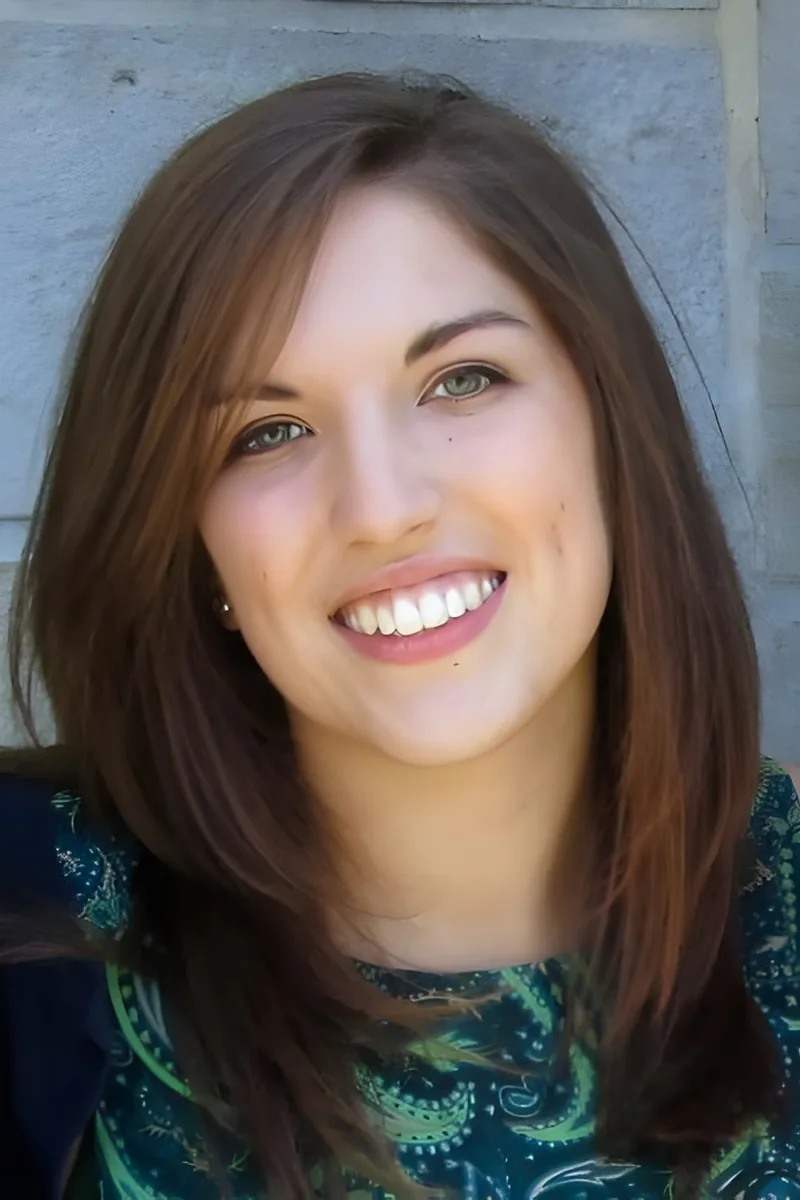
The jump from algebra to calculus hinges on Pre-Calculus — specifically, whether a student truly understands function behavior, transformations, and trigonometric identities or is just memorizing steps. Suzie earned a 1540 SAT and studied chemical and biological engineering, so she approaches topics like limits, polar coordinates, and composite functions with the kind of fluency that comes from using them daily in advanced coursework.

Heading to the University of Michigan to major in Mathematics this fall, Phil is building his pre-calculus teaching around the specific skills that tripped him up watching peers struggle — the moment rational functions stop behaving like polynomials, or when students first confront the abstraction of inverse trig. His 35 ACT reflects genuine comfort with this material, and his approach leans toward letting students drive the session, tackling the exact problems and concepts giving them trouble rather than marching through a preset curriculum.
The jump from algebra to calculus is where most students either build momentum or lose it, and pre-calc is that bridge. Haley digs into the behavior of polynomial, rational, and exponential functions with an engineer's eye — she's used every one of these function families in her Michigan coursework and knows which conceptual gaps cause the most trouble in calc later.
A Doctor of Engineering in Materials Science means Vazrik has spent years modeling phase diagrams, diffusion curves, and stress-strain relationships — all built on the polynomial, exponential, and trigonometric foundations that pre-calculus introduces. He teaches these function families by connecting them to the physical systems where they actually matter, turning abstract graph behavior into something students can visualize and reason through. His chemistry background adds another layer, particularly when unpacking logarithmic and exponential relationships.
The jump into Pre-Calculus is where students first encounter the function-heavy thinking that defines higher math — transformations, trigonometric identities, limits as a preview of calculus. Jack approaches each of these topics by tying them back to graphical intuition, so students can see what an equation is doing before they manipulate it algebraically. His broad math background, from algebra through calculus, keeps the bigger picture in view.
Biomedical engineering at the undergraduate level means Shreeman spent years modeling biological systems with the exact toolkit pre-calculus teaches — sinusoidal waveforms for cardiac rhythms, exponential decay for drug clearance, and composite functions for signal processing chains. He digs into how each function family behaves and why, connecting the algebra students already know to the more abstract reasoning calculus will demand. His 33 ACT reflects solid quantitative instincts across the board.
Mechanical engineering at the undergraduate level means Justin spent semesters immersed in the pre-calculus toolkit — graphing rational functions to model system behavior, manipulating trigonometric identities for force analysis, and composing functions long before calculus formalized the concepts. He teaches the course as someone who needed every one of these skills to hold up under pressure in engineering coursework, so he knows which shortcuts actually work and which ones collapse in harder problems. His 1450 SAT confirms the quantitative grounding behind that practical approach.
Triple-majoring in economics, mathematics, and philosophy means Thomas approaches pre-calculus from an unusually analytical angle — he doesn't just teach how to manipulate rational expressions or graph polar equations, he digs into the logical structure underneath so students can reason through unfamiliar problems on their own. That philosophy training shows up most when he unpacks proofs of trigonometric identities, treating each one as an argument to construct rather than a formula to memorize. Holds a 5.0 rating and a 1530 SAT.
A PhD in applied physics means Leslie has spent years where pre-calculus isn't a course — it's the scaffolding holding together everything from wave mechanics to signal analysis. She digs into the places students typically get stuck, like connecting the algebra of rational expressions to the graphical behavior of asymptotes, or building real intuition for why trigonometric identities work instead of just pattern-matching them. Rated 5.0 by students.
Mechanical engineering at Yale means Andrew hits pre-calculus concepts like parametric equations, trigonometric identities, and function transformations every week in his coursework — they're the scaffolding beneath everything from kinematics to thermodynamic modeling. He teaches the course with calculus already in his rearview mirror, which lets him flag exactly which skills will matter most when students get there. His 1550 SAT reflects the quantitative sharpness he brings to each session.
Civil engineering at Michigan meant Ashley spent years solving problems built on the pre-calculus toolkit — analyzing load curves with trigonometric functions, modeling material stress with polynomials, and applying logarithmic scales to environmental data. Her Wharton MBA added another layer, reinforcing exponential and logarithmic models in financial forecasting contexts. She teaches these function families by drawing on the real engineering and business scenarios where she's actually used them.
Mechanical engineering trained Lane to think in the language pre-calculus actually teaches — trigonometric relationships for force resolution, parametric descriptions of motion, and the function behavior that governs everything from gear ratios to thermal cycles. He tackles the course by connecting each new concept back to the algebra and geometry students already have under their belt, building toward calculus readiness without making the material feel like an arbitrary checklist. His teaching range from pre-algebra through Calculus II means he knows exactly which skills need to be solid before moving on.
Studying biology at MIT means Benicio encounters pre-calculus constantly in disguise — logistic growth models in ecology, sinusoidal fits for circadian rhythms, exponential decay in radioactive tracers — so he teaches these function families as someone who actively depends on them. He's especially sharp at bridging the gap between algebraic mechanics and the kind of functional reasoning that calculus will demand, walking through transformations and compositions until students see the structure instead of just the steps.
Biomedical engineering at Michigan — both the bachelor's and master's — meant Jack spent years modeling physiological systems with the exact toolkit pre-calculus teaches: sinusoidal waveforms for cardiac rhythms, exponential decay for drug clearance, and composite functions for multi-stage biological processes. He uses that applied fluency to show students how each concept connects to the next, turning what often feels like a disconnected checklist into a coherent bridge toward calculus. His 33 ACT and 4.9 rating back up the approach.
The jump into pre-calculus — limits of sequences, rational functions with asymptotes, polar coordinates — demands a level of algebraic fluency that catches many students off guard. Matthew tackles these gaps head-on, reinforcing the manipulation skills students need while pushing them toward the conceptual thinking calculus will require. He's pursuing an honors math degree at Notre Dame, so the material he teaches is the same territory he works in daily.
I am a junior Computer Science major in the College of Engineering at Cornell University. I have experience tutoring in the National Honor Society in high school, as well as on numerous occasions with acquaintances of mine who were struggling and needed a hand. I tutor high school computer science especially in java and python, as well as algebra (1 & 2) and calculus 1. I love tutoring the math subjects especially, because I feel very comfortable with the subjects and enjoy abstracting them in different ways to help any individual. I believe that success in education is key to building a great life for oneself, and that any person can succeed with the proper work ethic and support network. Even more, I love to see when people I have helped are successful, regardless of area of life. In my spare time, I love to follow college football and basketball and talk about games.
Working as a mechanical engineer in the automotive industry, Matthew deals daily with the sinusoidal waveforms, composite functions, and rate-of-change reasoning that pre-calculus is designed to build. He teaches the course with calculus already in view, making sure students understand how each transformation or identity will actually get used — not just tested. His 1530 SAT reflects the quantitative rigor behind that forward-looking approach.
The leap from trig identities to limits-based thinking is one of the hardest transitions in high school math. Nishika's computer science background gives her a knack for teaching the logical structure behind topics like composite functions, sequences, and asymptotic behavior — the kind of reasoning that makes calculus feel approachable when students get there.
Most pre-calculus struggles trace back to a shaky bridge between algebra and the more abstract function work ahead — and Michael's economics training at Notre Dame means he's crossed that bridge repeatedly, using polynomial and exponential models for everything from market equilibrium to growth projections. He zeroes in on the logical structure behind each topic, walking through why a transformation or identity works before drilling the mechanics. His broad math teaching range, from pre-algebra through calculus, means he can spot and patch the specific algebra gaps holding a student back.
Engineering students hit pre-calculus concepts on repeat — Sawyer's general engineering program at Michigan Tech means trigonometric functions, polar coordinates, and function transformations show up in coursework long after the textbook chapter ends. He teaches those topics with the perspective of someone still actively using them, connecting the algebra students already know to the more abstract behavior that trips people up around rational functions and composite expressions. His 1510 SAT and 4.7 rating confirm the quantitative skill behind his approach.
Neuroscience training builds a surprisingly deep relationship with pre-calculus — Hamid's coursework runs on the same exponential decay models, logarithmic scaling, and sinusoidal wave analysis that students encounter in the course for the first time. He tackles these topics by connecting the math to how neurons actually fire and signals propagate, turning abstract function families into something students can visualize. His 1550 SAT and 5.0 rating back up the quantitative instincts he brings to every session.
I am passionate about. Throughout my education, even in elementary school, I would love helping my friends do better in their schooling, whether that be by just answering a few questions they had, some one-on-one time, or a group study session.
Industrial engineering at Oakland University trained Carly to optimize systems using the exact toolkit pre-calculus teaches — polynomial modeling, trigonometric analysis, and the functional reasoning that ties algebra to calculus. She zeroes in on graph transformations and composite functions, two areas where her engineering background lets her show students the mechanical logic underneath the notation instead of just drilling procedures.
Cognitive science at Penn blends psychology, philosophy, and a surprising amount of mathematical modeling — Samantha's coursework has kept her actively working with the function families, transformations, and analytical reasoning that define pre-calculus. She's especially sharp at bridging the gap between algebraic mechanics and the conceptual shift pre-calc demands, like understanding why a rational function behaves near its asymptotes or how composite functions layer operations in a specific order. Her 1460 SAT reflects the quantitative grounding behind that clarity.
Chemical engineering at Johns Hopkins means Joshitha encounters polynomial modeling, rational expressions, and trigonometric analysis in nearly every core course — she's not recalling pre-calculus from memory but actively using it. She zeroes in on the conceptual bridges between algebra and calculus, particularly how function transformations and composition set up the derivative thinking students will need next. Her 1580 SAT and 5.0 rating reflect the precision she brings to building that understanding.
Differential equations, calculus, and physics all live on Bidyut's teaching roster — which means he knows exactly which pre-calculus skills (and which specific weak spots) will matter most once students move forward. His biomedical engineering training at Johns Hopkins keeps him fluent in the trigonometric, exponential, and composite function reasoning that pre-calc demands, and he teaches those topics by connecting them to the applied problems where sloppy understanding actually costs you. A 36 ACT and 5.0 rating back up the depth he brings.
Kevin's competition math background gives him an unusual edge in Pre-Calculus — he's used to attacking problems involving sequences, series, and trigonometric manipulations from angles most textbooks never cover. That depth, combined with a 35 ACT and Stanford CS coursework heavy in mathematical foundations, means he can explain why a parametric equation behaves the way it does, not just how to graph it.
Holding degrees in both mechanical and electrical engineering, Steve has spent years in the territory where pre-calculus stops being coursework and starts being the toolkit — trigonometric analysis for signal processing, polynomial modeling for system dynamics, vectors and complex numbers for circuit design. He teaches the course knowing exactly which skills will matter most when students hit calculus and engineering-track courses, and builds each lesson around that forward view. Rated 4.9 by students.
Materials science relies heavily on the mathematics pre-calculus teaches — modeling crystal lattice structures with trigonometry, describing diffusion rates through exponential functions, analyzing stress-strain curves as polynomial behavior. Jennifer brings that applied perspective to her tutoring, connecting abstract function families to the physical phenomena they actually describe. Her 1550 SAT and 5.0 rating confirm the quantitative depth behind her explanations.
The jump into pre-calculus — trigonometric identities, limits, and complex functions — trips up even strong math students who breezed through earlier courses. Julia breaks these topics into logical building blocks, connecting each new idea back to the algebra and geometry students already know. Her Stanford coursework in economics and quantitative methods keeps her sharp on exactly the kind of function analysis pre-calc demands.
The jump to pre-calculus is where many students first encounter trigonometric identities, polar coordinates, and limits — concepts that feel disconnected from anything they've done before. Eileen bridges that gap by tying each new idea back to familiar algebra and geometry, giving students a clear roadmap into calculus.
Chemical engineering and math — Greg's double focus at Vanderbilt — means he hits pre-calculus material from two directions at once, using polynomial and rational functions to model reactor behavior in one class while proving their properties rigorously in the other. That dual fluency is especially useful when students get stuck on the conceptual jump from manipulating expressions to analyzing how entire function families behave. His 1550 SAT and 5.0 rating round out the picture.
The jump to pre-calculus is where many students first encounter limits of their algebraic intuition — rational functions behave strangely, trigonometric identities pile up, and sequences suddenly matter. Emily tackles these topics by emphasizing the graphical and conceptual logic underneath, drawing on a math background that earned her a 1590 SAT and a 36 ACT.
Mechanical engineering at the undergraduate level means Andrea spent semesters grinding through the exact transition pre-calculus prepares students for — mastering polar coordinates, parametric equations, and trigonometric identities before they became essential tools in dynamics and thermodynamics courses. She teaches that material as someone who knows precisely where each concept resurfaces, breaking down topics like composite functions and rational expressions by connecting them to the engineering problems they eventually power. Her 32 ACT and 4.8 rating reflect consistent results across a wide range of students.
Teaching game theory to advanced middle schoolers in Hong Kong meant Carter had to make concepts like optimization, strategic equilibrium, and functional reasoning accessible — skills that map directly onto the pre-calculus toolkit of analyzing function behavior, interpreting graphs, and building toward limits. His economics degree from Brown kept him deep in the quantitative side of social science, where polynomial and logarithmic models aren't abstract exercises but everyday working tools. Holds a 5.0 rating and a 1570 SAT.
Testimonials
Because the right Pre-Calculus tutor makes all the difference.
Average Session Rating – Based on 3.4M Learner Ratings
Practice Pre-Calculus
Free practice tests, flashcards, and AI tutoring for Pre-Calculus
Other Ann Arbor Tutors
Related Math Tutors in Ann Arbor
Frequently Asked Questions
Varsity Tutors matches Ann Arbor students with expert Pre-Calculus tutors for 1-on-1 instruction. We pair each student with a tutor based on their specific needs, learning style, and goals.
Whether you need homework help, exam prep, or want to get ahead, our Pre-Calculus tutors are ready to help.
Common challenges include gaps from earlier material, difficulty with specific concepts, and trouble applying learning to new problems. These issues can snowball quickly in Pre-Calculus.
A tutor identifies where you're stuck, fills in gaps, and provides targeted practice. The 1-on-1 format means you get help exactly where you need it.
Tutors work with your student's actual coursework—homework assignments, class notes, and upcoming tests. This keeps tutoring directly relevant to what's happening in the classroom.
When you share information about your student's school and curriculum, we can match you with a tutor who has relevant experience.
All tutors complete background checks, credential verification, and teaching evaluation. Many of our Pre-Calculus tutors hold advanced degrees or have years of teaching experience.
You can review tutor profiles to find someone with the right background for your student's level and needs.
Many students see improved grades within a few weeks, along with better understanding of Pre-Calculus concepts and more confidence tackling challenging material.
Tutors track progress and adjust their approach to ensure continued improvement.
Most students benefit from 1-2 sessions per week. More frequent sessions help if your student is significantly behind or has an important exam coming up.
Your tutor can recommend a schedule based on your student's specific situation and goals.
Tutoring is purchased in packages of hours, with rates varying by tutor experience. Varsity Tutors offers several options to fit different budgets and needs.
You can discuss pricing during your consultation to find what works best.
Your tutor will assess where your student is, discuss goals, and start working on priority areas. Most students bring current homework or upcoming test material to focus on.
By the end, you'll have a clear sense of how the tutor can help and a plan for moving forward.
Let’s find your perfect tutor
Answer a few quick questions. We’ll recommend the right plan and match you with a top 5% tutor.