Award-Winning AP Calculus BC Tutors
serving Springfield, MA
AP Calculus BC
Tutors in Springfield
Private 1-on-1 tutoring, weekly live classes for academic support, test prep & enrichment, practice tests and diagnostics, and more to elevate grades and test scores.
Based on 3.4M Learner Ratings
UniversitiesSchools & Universities
DeliveredHours Delivered
ProficiencyGrowth in Proficiency
Who needs tutoring?
No obligation. Takes ~1 minute.

Tackling series convergence tests, parametric equations, and polar curves requires more than memorizing formulas — it demands knowing when and why each technique applies. Talia approaches BC-specific topics by building intuition around each concept before drilling the mechanics, so students can handle the free-response questions that reward deep understanding over rote calculation.
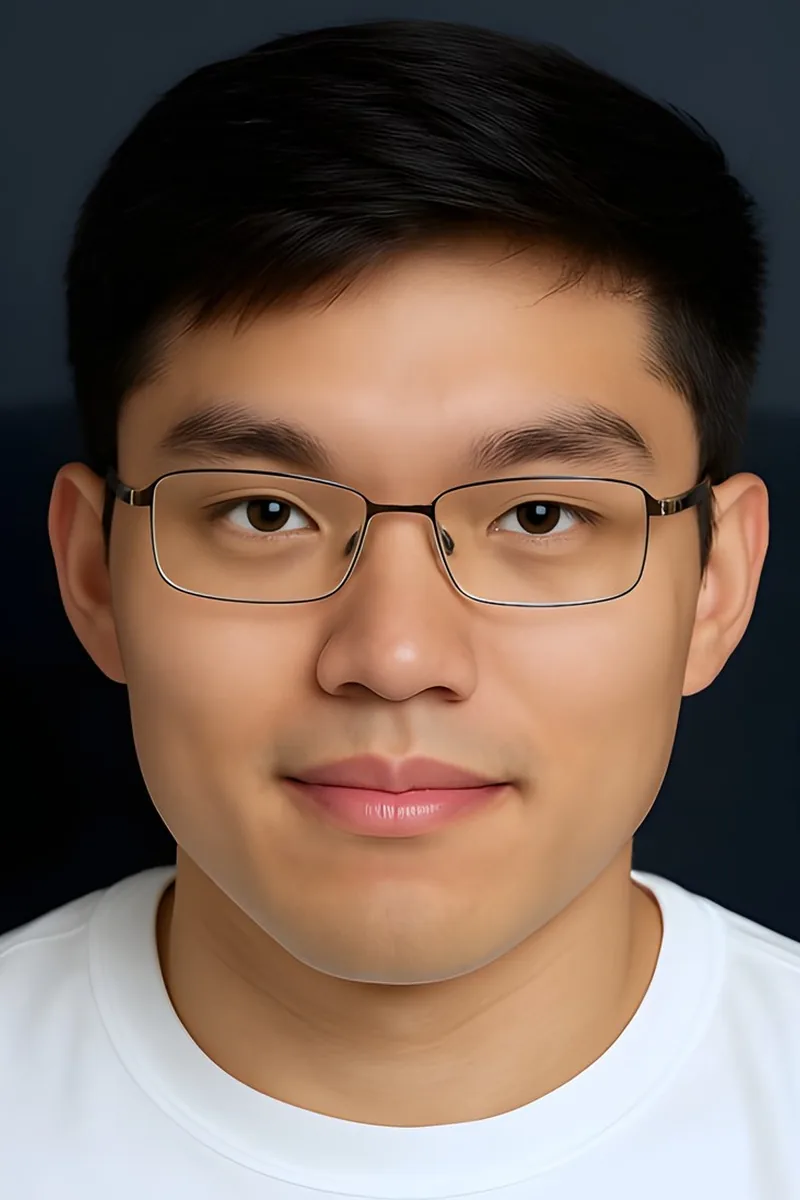
Scoring a perfect 1600 on the SAT while studying computer science at MIT suggests Brice isn't just comfortable with calculus — he's fluent in it, and BC's extension into series, parametric equations, and advanced integration techniques sits squarely in his daily coursework. He breaks down topics like convergence tests by tracing each one back to the limit reasoning students already built in AB, turning what feels like a grab bag of rules into a coherent decision-making process. Rated 4.9 by students.
Physics majors don't just take BC Calculus — they breathe it, using series expansions to model wave behavior, integration techniques to derive equations of motion, and parametric equations to describe projectile paths. Adam's physics degree means he teaches topics like Taylor polynomials and convergence not as abstract procedures but as tools he's actually wielded to solve real problems. He's especially attentive to whether a concept has genuinely landed or a student is just nodding along, which makes a real difference when the material gets dense.
Chemical-biological engineering coursework is where BC Calculus stops being theoretical — Kristen uses series expansions to model reaction kinetics and integration techniques to solve mass balance equations as part of her actual degree work. That daily application sharpens how she teaches topics like convergence tests and parametric derivatives, because she can trace each procedure back to the underlying logic instead of just drilling formulas. Her 36 ACT and 4.9 rating speak for themselves.
Series convergence, parametric equations, polar coordinates — BC Calculus piles on topics that demand both conceptual clarity and speed under exam pressure. Jacques has taught math and science in Massachusetts public schools for over 25 years and completed graduate coursework in differential equations, so the connections between BC topics and their applications in physics and engineering come naturally to him. Rated 4.8 by students.
BC Calculus layers on series convergence, parametric equations, and polar coordinates on top of an already demanding AB curriculum, so gaps in foundational reasoning compound fast. Valerie's applied math background means she can trace a student's confusion on Taylor series or integration by parts back to the specific earlier concept that isn't solid yet. She teaches the logic behind each technique so students can adapt on exam day, not just reproduce memorized solutions.
Most BC students can memorize which convergence test to apply but freeze when a series doesn't match a textbook pattern — Marika, a physics major who scored a 1590 on the SAT, teaches the underlying logic so students can reason through unfamiliar series on the fly. Her physics coursework means she's used Taylor expansions and parametric equations to model real systems, which gives her a concrete vocabulary for explaining why these tools exist, not just how to execute them on an exam.
Hope's mathematics degree means she didn't just pass through BC topics like series convergence and parametric integration — she studied the underlying theory that makes them cohere, from epsilon-delta foundations to formal power series. That background is especially useful when a student can mechanically apply the ratio test but can't articulate why it works or when to reach for it instead of the comparison test. She holds a 4.8 rating and a perfect 1600 SAT.
Biomedical engineering at Boston University means Peter is actively using integration techniques and series approximations in courses like biomechanics and signal analysis — the same topics that make the AB-to-BC jump feel so steep. His 1550 SAT reflects the kind of precise, methodical reasoning he brings to breaking down convergence tests and parametric problems into steps that actually make sense.
Pursuing a math degree at Tufts means Nikola is actively working with the theoretical underpinnings of BC topics — building proofs around convergence, wrestling with series representations in analysis courses — not just recalling them from a high school class. He's especially sharp at demystifying the leap from AB to BC, walking through how something like a Taylor series is really just the logical next step from the local linear approximations students already trust. Holds a 5.0 rating and scored a 35 on the ACT.
Greetings, my name is Karthik! I studied at Northeastern University and earned a BS in math and physics, and I started tutoring formally in undergrad via a mix of online tutoring and university sponsored peer tutoring later taking on responsibilities as a student grader and TA. But well before I started formal tutoring, it was not uncommon for peers to remark that I explained things better than our teachers. While at first I was prone to lecturing due to my assumption that others found theory as elucidating as I did, my sessions are now dominated by working through problems provided by either the student or me. Also software visualization is a boon whenever my drawing skills don't pass muster. Ultimately, my purpose is to cultivate disciplined learning and excellence in STEM, whether that be for a class or purely out of curiosity/passion, so please do not hesitate to reach out if you think I can help you achieve your goals.
Problem-solving competitions from elementary school through high school graduation gave John years of practice attacking unfamiliar math problems under pressure — exactly the mindset BC Calculus rewards when students face series convergence questions or parametric setups they haven't seen before. His actuarial mathematics degree from WPI means he lived in the world of infinite series, probability models, and rigorous proofs well beyond the AP level. Rated 4.9 by students.
Most BC students can follow a Taylor series procedure on the board but freeze when an FRQ asks them to justify convergence or bound the error — that's the gap Jing zeros in on. Her broad math background, spanning algebra through Calc 2, means she can trace a shaky BC concept like improper integrals or series tests back to the specific earlier skill that needs reinforcing, then rebuild from there.
BC Calculus topics like Taylor series, parametric equations, and polar curves click faster when a tutor can connect them to real applications. Amber's physics minor means she regularly uses these tools — modeling oscillations with series expansions or describing particle motion with parametric functions — and she teaches the reasoning behind each technique, not just the formulas.
Calculus BC piles on convergence tests, parametric equations, and polar curves right when students think they've mastered AB material. Kathrine's graduate work in Mathematics Secondary Education at BU means she's studied how students actually learn these layered concepts — not just the math itself, but the sequencing and scaffolding that makes series and integration techniques click.
Pursuing a math minor alongside his biology degree at UMass Amherst means Benjamin is actively working through the rigorous proof-based side of calculus — not just computing series or evaluating integrals, but understanding the logic that holds them together. That dual perspective makes him especially effective at breaking down BC's trickier leaps, like moving from basic integration to convergence criteria or constructing Taylor polynomials from scratch. Rated 5.0 by students.
Proof-based math is where Adriano thrives — his computer science studies at MIT lean heavily on the kind of rigorous reasoning that makes BC topics like convergence tests and series constructions actually make sense instead of feeling like arbitrary rules. He digs into the logic behind techniques like the ratio test or Taylor polynomial error bounds, building each argument step by step so the reasoning holds up long after the exam. That conceptual emphasis is especially useful for students who can compute answers but can't explain why a method works.
Environmental engineering graduate work is essentially applied calculus — Kate's thesis work required series approximations for modeling fluid dynamics and integration techniques for analyzing pollutant transport, so BC topics like Taylor polynomials and improper integrals are tools she's used professionally, not just academically. She's particularly good at showing how convergence tests follow a logical decision tree rather than feeling like a random grab bag of techniques. Rated 4.9 by students.
Series convergence is where most BC students start to feel lost — ratio tests, Taylor expansions, error bounds all hit at once. Matthew's Harvard math coursework goes well beyond the AP curriculum, which means he can explain not just how to apply these tools but why they work. He connects BC-specific topics like parametric equations and polar curves back to the core calculus intuitions students already have.
Series convergence tests, parametric equations, polar curves — BC Calculus piles on concepts fast, and falling behind on one unit can cascade through the rest of the course. Ethan breaks each new topic back to its AB foundation before building upward, so students see Taylor series and integration techniques as extensions of ideas they already own rather than entirely new material.
Series convergence tests, parametric equations, polar curves — BC Calculus piles on topics fast, and falling behind on even one unit can snowball. JF scored a perfect 1600 SAT and is studying mathematical and computational science at Stanford, where the calculus concepts from BC are the everyday language of coursework. That recent fluency means explanations stay intuitive rather than overly formal.
BC Calculus piles on topics like Taylor series, parametric equations, and convergence tests at a pace that leaves little room for falling behind. As a Penn math major who also tutors multivariable calculus and linear algebra, Ben understands these concepts at a depth that lets him explain not just the how but the why behind each technique. That deeper perspective makes integration methods and series analysis click faster.
Molecular biology at Yale means Maxwell lives in calculus-heavy territory — modeling gene expression rates, quantifying cell growth curves, analyzing reaction kinetics — so BC topics like differential equations and series approximations aren't abstract exercises for him but tools he actually reaches for in research. He's especially good at walking through the logic of integration techniques and parametric problems by grounding them in the AB concepts students already trust. Holds a 5.0 rating.
Biomedical engineering at Johns Hopkins means Bidyut uses series approximations and differential equations to model biological systems — the same convergence tests and integration techniques that define the BC curriculum beyond AB. He's especially sharp at showing how a topic like Taylor polynomial error bounds connects back to the derivative reasoning students already trust, turning what feels like a wall of new material into a logical extension. Holds a 5.0 rating and a 36 ACT composite.
BC Calculus covers a massive range — from parametric equations and polar curves to Taylor series and convergence tests — and Dennis's physics research at Princeton demanded fluency in all of it. He connects topics like integration techniques and differential equations to the physical problems they were invented to solve, which makes the logic behind each method click.
Winning Duke's DT Stallings Award for sustained tutoring of local school students means Taariq has logged serious hours watching where calculus understanding actually breaks down — and BC's leap into series, parametric curves, and advanced integration is where breakdowns happen fastest. His math degree from Duke gives him the theoretical grounding to trace a student's confusion with, say, a ratio test or a polar area integral back to the specific AB concept that isn't solid yet. Rated 4.9 by students.
BC Calculus piles on series convergence, parametric equations, and polar coordinates on top of an already demanding AB curriculum. Julie's Princeton training in statistics and machine learning means she regularly uses advanced calculus as a tool, giving her an intuitive sense for which techniques apply where. She tackles integration strategies and Taylor series by connecting each method back to the core idea it extends.
BC Calculus piles on convergence tests, parametric equations, and polar curves right when students think they've mastered AB material. Jake tackles series and sequences by teaching students to build a decision tree for which convergence test applies, turning one of the most overwhelming units into a systematic process.
Princeton's public policy program is surprisingly calculus-heavy — Gianna's coursework in economic modeling and quantitative analysis means she's applied integration techniques and series approximations to real policy questions, not just problem sets. She's especially sharp at walking through the logic of convergence tests and parametric curves, connecting each BC topic back to the AB reasoning that makes it click.
Testimonials
Because the right AP Calculus BC tutor makes all the difference.
Average Session Rating – Based on 3.4M Learner Ratings
Practice AP Calculus BC
Free practice tests, flashcards, and AI tutoring for AP Calculus BC
Nearby AP Calculus BC Tutors
Other Springfield Tutors
Related Math Tutors in Springfield
Frequently Asked Questions
AP Calculus BC builds on calculus fundamentals and covers limits, derivatives, integrals, differential equations, and sequences/series. The course includes all AB topics plus additional material like parametric equations, polar coordinates, and vector-valued functions. For students in Springfield, understanding this broader scope helps you prepare for the comprehensive exam and develop stronger problem-solving skills across advanced mathematics.
Score improvement depends on your starting point and effort level, but students typically see meaningful gains when they work with a tutor to identify weak areas and practice consistently. Many students improve by 1-2 score points (on the 1-5 scale) by focusing on their specific challenges—whether that's mastering integration techniques, understanding series convergence, or improving free-response problem-solving. Personalized 1-on-1 instruction helps you target exactly what's holding you back rather than reviewing material you already understand.
Students typically struggle most with series and convergence tests, parametric and polar calculus, and connecting multiple concepts in free-response questions. Integration techniques—especially u-substitution and integration by parts—also trip up many students. A tutor can break down these challenging topics into manageable pieces, show you when to apply each technique, and give you plenty of practice so these concepts click before test day.
Practice tests are essential—they help you get comfortable with the exam format, identify weak areas, and build pacing skills for the timed sections. Taking full-length practice tests under realistic conditions shows you exactly where you need to focus your studying. A tutor can review your practice test results with you, explain why you missed certain problems, and help you develop strategies to avoid those mistakes on the actual AP exam.
Test anxiety often stems from feeling unprepared or uncertain about your approach to problems. Working through practice tests and difficult problems with a tutor builds genuine confidence—you'll know you've seen similar questions and have strategies to solve them. Additionally, tutors can help you develop a pacing plan so you're not rushing, and teach you techniques like skipping hard problems initially and coming back to them, which reduces panic during the actual exam.
Look for someone with strong calculus knowledge who understands the AP exam format and can explain concepts clearly—not just solve problems quickly. The best tutors identify your specific weak areas, adapt their teaching style to how you learn, and help you develop problem-solving strategies rather than just giving you answers. Varsity Tutors connects you with expert tutors who specialize in AP Calculus BC and know how to help students in Springfield succeed on test day.
Ideally, you should start reviewing several months before the exam—typically January or February for the May test. If you're already in the course, consistent weekly tutoring sessions combined with regular practice throughout the year is more effective than cramming. If you're closer to test day, intensive tutoring sessions focused on your weakest topics can still make a real difference in your score.
Your first session is about assessment and planning. A tutor will review which topics you understand well and which need work, ask about your current score goal, and learn your learning style. From there, you'll develop a focused study plan that targets your specific challenges and fits your timeline before the AP exam. This personalized approach means you're not wasting time on material you already know.
Let’s find your perfect tutor
Answer a few quick questions. We’ll recommend the right plan and match you with a top 5% tutor.