Award-Winning Microeconomics Tutors
serving Baltimore, MD
Microeconomics
Tutors in Baltimore
Private 1-on-1 tutoring, weekly live classes for academic support, test prep & enrichment, practice tests and diagnostics, and more to elevate grades and test scores.
Based on 3.4M Learner Ratings
UniversitiesSchools & Universities
DeliveredHours Delivered
ProficiencyGrowth in Proficiency
Who needs tutoring?
No obligation. Takes ~1 minute.
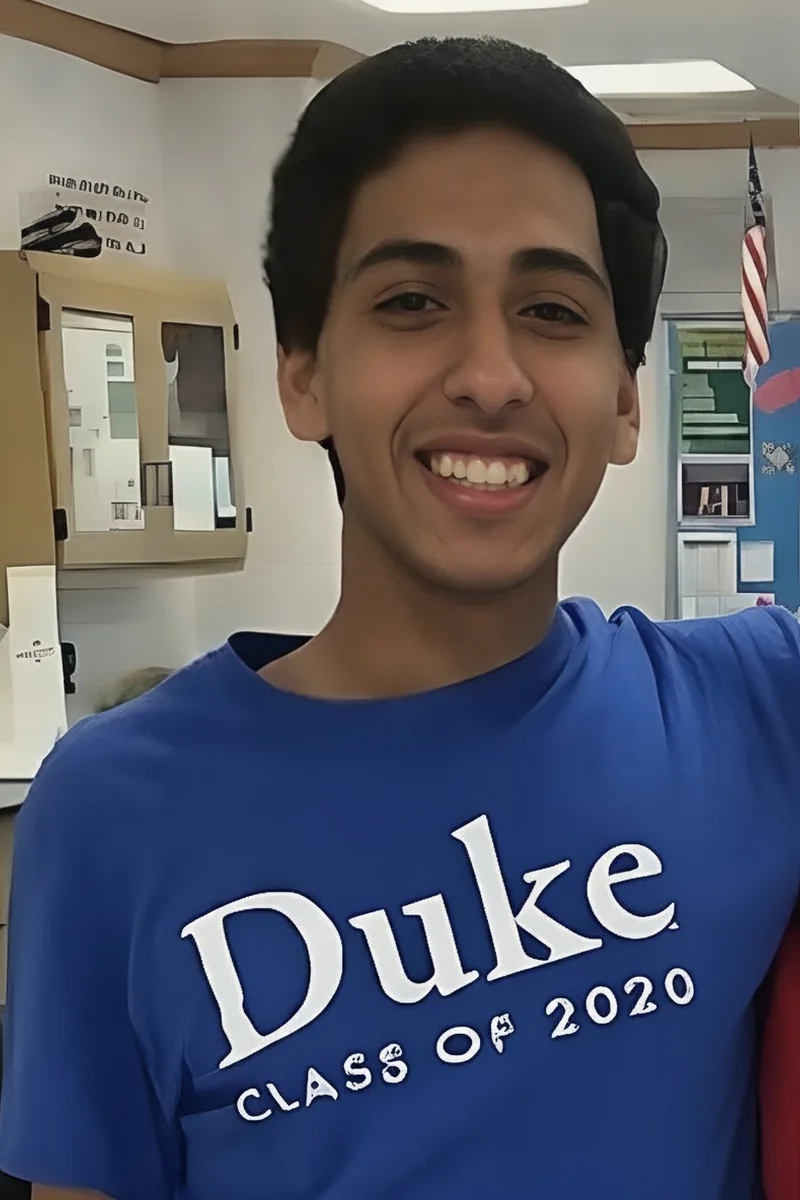
I am a rising college sophomore who will be attending Duke University on a full merit scholarship in the fall. I love to run cross country and play the viola, as well as tutoring students in a whole variety of subjects! Feel free to message me!

I am a senior at Duke University studying Economics and Public Policy. I am passionate about finding specific strategies that work for each individual student, drawing on my broad experience across math and the humanities.
Supply and demand curves are just the starting point — Zeeshan digs into the mechanics behind consumer choice theory, price discrimination, and market structures like oligopoly and monopolistic competition. His PhD research at Vanderbilt keeps him immersed in microeconomic modeling daily, so he can unpack concepts like elasticity or game theory with real-world precision.
Marginal cost curves, consumer surplus, and game theory matrices can feel abstract until someone shows you the math driving each one. Rahi tackles microeconomics by walking through the calculus behind optimization — profit maximization, utility functions, price discrimination — so students can solve problems confidently instead of memorizing graph shapes.
Marginal cost curves and consumer surplus diagrams start making sense once someone explains the decision-making logic underneath them. Jay approaches microeconomics from his background as an econ major, unpacking topics like market failures, production functions, and elasticity by first asking what a rational actor would actually do in a given scenario — then showing how the math and graphs formalize that reasoning.
Elasticity, marginal cost curves, game theory matrices — microeconomics is deceptively math-heavy for a social science. Ryan earned his bachelor's degree in economics and tackles micro by grounding every graph and equation in the real-world decision it represents, so students can reason through unfamiliar problems on exams instead of relying on memorized steps.
Reading The Economist for fun is one thing — Mark actually digs into the microeconomic logic underneath the headlines, connecting how firms price goods or respond to regulation back to the models students see in class. His bioengineering grad work is heavily quantitative, so he's comfortable walking through the calculus behind profit maximization or cost minimization problems that trip up students in intermediate micro.
From elasticity calculations to the nuances of monopolistic competition, microeconomics requires students to think graphically and verbally at the same time. David breaks down each market structure by walking through the firm's decision-making process step by step — where marginal cost meets marginal revenue, why profits shrink in the long run, and what happens when assumptions change. His entrepreneurship background means these aren't hypothetical firms to him.
David's sociology research at Columbia and Chicago trained him to model how individuals make decisions under constraints — which is exactly what microeconomics formalizes with utility functions, budget lines, and optimization problems. His computer science background adds fluency with the quantitative side, from setting up cost minimization equations to interpreting the slopes of indifference curves. Rated 4.9 by students.
Marginal cost curves, consumer surplus, and price discrimination can feel like a pile of disconnected graphs until someone ties them back to how actual firms make decisions. Frank connects microeconomic theory to the real market behavior he analyzed during his years as a Wall Street research executive, making concepts like market structure and deadweight loss intuitive rather than abstract.
The math behind microeconomics — setting up Lagrangians for constrained optimization, deriving demand from utility functions, finding equilibrium prices algebraically — is where most students hit a wall. Thomas's math and stats training at Carleton means he can teach both the economic intuition and the calculus simultaneously, so a concept like profit maximization isn't just "set MC equal to MR" but a problem a student can actually solve and interpret. Rated 5.0 by students.
Pursuing a PhD in economics means Jacob isn't just passing through microeconomics — he's building a career on it, with the mathematical rigor from his joint math studies to back it up. He teaches students to think through models like a researcher would, connecting the intuition behind consumer choice or firm behavior to the calculus that formalizes it. Rated 5.0 by students.
With an applied math degree and PhD-level engineering work, Professor Florence tackles microeconomics from a deeply quantitative angle — the kind that makes optimization problems, constrained utility maximization, and cost function analysis feel like natural extensions of calculus rather than foreign territory. She teaches the mathematical machinery behind economic models so students understand what they're solving, not just how to push symbols around on an exam.
The jump from basic supply-and-demand to consumer theory, production functions, and market structures trips up a lot of students because the math and the intuition have to work together. Eric unpacks each model — indifference curves, marginal cost pricing, game theory matrices — by tying the algebra back to the economic story it tells. His Business Administration training gives him a practical lens on how firms actually make these decisions.
Testimonials
Because the right Microeconomics tutor makes all the difference.
Average Session Rating – Based on 3.4M Learner Ratings
Other Baltimore Tutors
Related Business Tutors in Baltimore
Frequently Asked Questions
Microeconomics focuses on how individual consumers, workers, and businesses make decisions about production, consumption, and pricing. Students study it to understand real-world economic behavior—from why coffee prices rise to how companies set wages—and it's a foundational course for economics majors, business programs, and anyone interested in how markets work.
Many students struggle with graphical analysis, particularly supply and demand curves, elasticity diagrams, and consumer/producer surplus concepts. Others find it difficult to connect abstract economic theory to real-world applications, or they lack the mathematical foundation needed for cost analysis and optimization problems. Personalized tutoring helps break down these visual and conceptual barriers by working at your pace and focusing on your specific weak areas.
In a classroom with a 14.8:1 student-teacher ratio, instructors must move at an average pace that doesn't always match individual learning speeds. Personalized 1-on-1 instruction allows tutors to identify exactly where you're getting stuck—whether it's understanding utility theory, mastering elasticity calculations, or interpreting market equilibrium—and spend focused time on those concepts. This targeted approach typically leads to faster comprehension and stronger problem-solving skills.
Tutors work with students on core topics including supply and demand, consumer and producer behavior, elasticity, production costs, market structures (perfect competition, monopoly, oligopoly), game theory, and factor markets. Whether you're in an introductory college course, AP Microeconomics, or an upper-level economics class, tutors can tailor instruction to your curriculum and learning goals.
Your first session is an assessment and planning meeting. The tutor will discuss your current course material, identify specific topics causing confusion, review any recent exams or assignments, and understand your goals—whether that's improving your grade, preparing for the AP exam, or building confidence with problem-solving. From there, they'll create a customized plan focused on your priorities.
Yes—graphical analysis is a core focus area for microeconomics tutoring. Tutors break down how to read, interpret, and draw supply and demand curves, shift curves correctly, calculate consumer and producer surplus, and apply graphs to different market scenarios. Many students find that working through diagrams step-by-step with immediate feedback transforms their understanding and test performance.
Yes. Tutors for students in Baltimore help prepare for AP Microeconomics by reviewing all five units of the AP curriculum, practicing free-response and multiple-choice questions, refining graph-drawing skills, and building test-taking strategies. Regular practice with timed problems and detailed feedback on reasoning helps students build the confidence and accuracy needed for a strong exam score.
Many students see noticeable improvement in understanding and confidence within 3-4 sessions, especially when working on specific problem areas. More significant grade improvements typically emerge over 6-8 weeks of consistent tutoring, depending on starting point and session frequency. The key is regular practice between sessions and applying concepts to new problems—tutors guide both.
Let’s find your perfect tutor
Answer a few quick questions. We’ll recommend the right plan and match you with a top 5% tutor.