Award-Winning Economics Tutors
serving Baltimore, MD
Economics
Tutors in Baltimore
Private 1-on-1 tutoring, weekly live classes for academic support, test prep & enrichment, practice tests and diagnostics, and more to elevate grades and test scores.
Based on 3.4M Learner Ratings
UniversitiesSchools & Universities
DeliveredHours Delivered
ProficiencyGrowth in Proficiency
Who needs tutoring?
No obligation. Takes ~1 minute.

Studying economics and public policy simultaneously at Duke means Jackson is constantly seeing how microeconomic models — elasticity, market failures, incentive structures — translate into the policy debates happening across campus. That dual lens is especially useful for students who find pure theory dry, because he can anchor concepts like deadweight loss or externalities in the actual policy questions they're designed to answer.
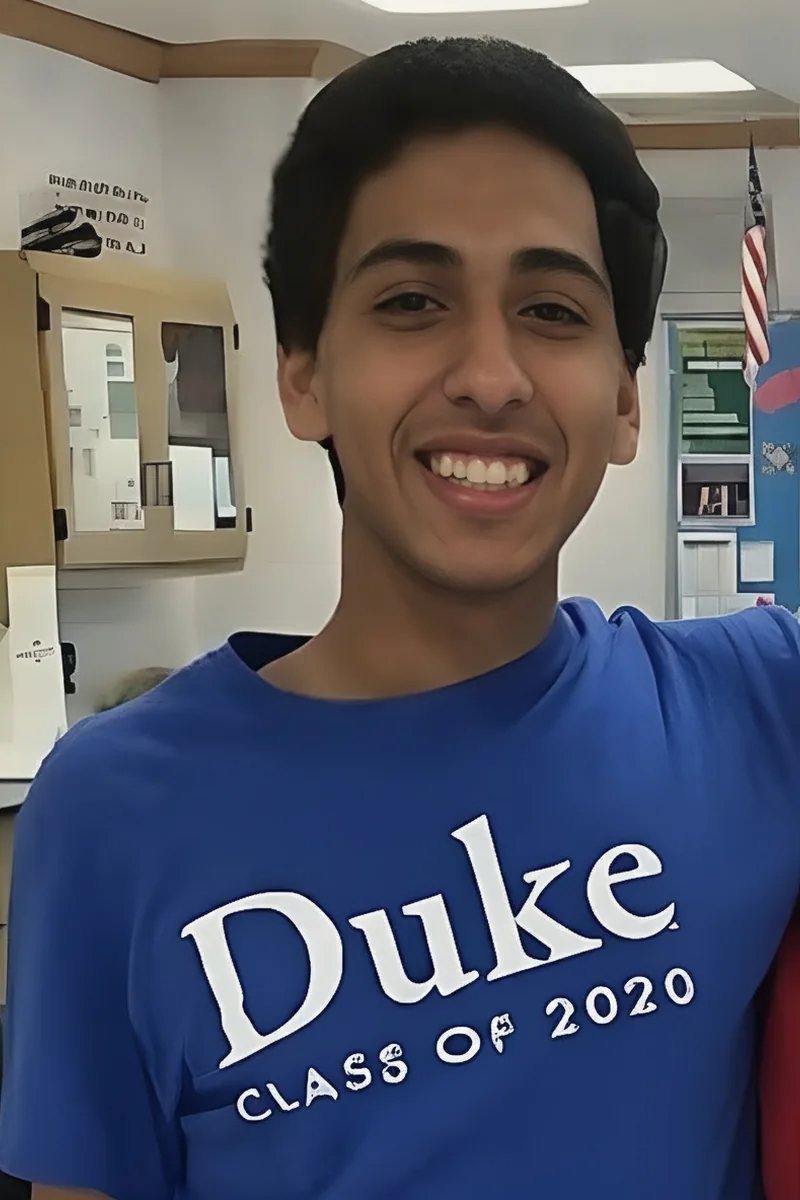
I am a rising college sophomore who will be attending Duke University on a full merit scholarship in the fall. I love to run cross country and play the viola, as well as tutoring students in a whole variety of subjects! Feel free to message me!
Studying economics at Penn while simultaneously completing a music degree meant Katherine had to internalize models quickly — there wasn't time to passively reread chapters on elasticity or game theory when rehearsals and problem sets competed for the same hours. That efficiency now shows up in her tutoring, where she zeroes in on the specific graph, equation, or intuition a student is missing and builds understanding from there. Her 1550 SAT speaks to the analytical sharpness she brings to quantitative econ topics.
Supply-and-demand curves are intuitive until externalities, elasticity, and market failures enter the picture. Dalila's quantitative background as a math major means she can walk through the graphical and algebraic reasoning behind economic models — not just label the axes, but explain why the curves shift and what the equilibrium actually means.
Supply and demand curves are just the starting point — Dawn digs into the mechanics of market equilibrium, elasticity, monetary policy, and game theory that make economics click at the college level. Her B.S. in Economics with a finance concentration from Duke means she can connect textbook models to how markets actually behave.
Three engineering degrees — including one in applied mathematics — mean Rahi is fluent in the quantitative side of economics that often catches students off guard: optimization problems, marginal analysis, and the calculus lurking behind supply and demand curves. He also tutors macroeconomics and accounting, so he can connect microeconomic theory to the bigger fiscal picture and the financial statements where these forces show up in practice.
Studying economics and finance at Wharton means Samica encounters micro and macroeconomic theory daily — supply and demand curves, market structures, GDP modeling — and can translate those concepts into clear, intuitive explanations. She connects abstract ideas like elasticity or comparative advantage to real-world business cases, which makes the material stick far better than rote definition review.
Environmental Science and Public Policy intersects constantly with economics — cost-benefit analysis, externalities, market failures, trade policy. Ethan brings that applied perspective to economics tutoring, connecting abstract models like supply-and-demand curves or GDP accounting to tangible policy questions students can reason through. His strong quantitative background (36 ACT, AP Statistics and Calculus) means the math side of econ never becomes a bottleneck.
Natalie's Health Care Management minor at Penn exposed her to microeconomic principles like supply and demand, cost-benefit analysis, and market structures — all through the lens of real industries. She breaks down economic models by connecting them to concrete examples students can actually picture, whether it's pricing decisions or how incentives shape behavior.
Supply and demand curves are simple enough on the surface, but economics gets interesting — and tricky — when students have to apply models to real-world trade policy, market failures, or development questions. Hans earned his economics degree from Northwestern with a concentration in international political economy, so he connects textbook theory to the messy situations those models were built to explain.
Studying both History and Economics at Harvard, Finley tackles economics the way it actually works — as a discipline shaped by real-world policy decisions and historical context. He breaks down concepts like supply-and-demand elasticity, market structures, and game theory by grounding them in concrete examples rather than abstract graphs alone. Rated 5.0 by students.
Three economics degrees deep, Simon lives in supply-and-demand curves, GDP models, and game theory the way most people live in their native language. He unpacks concepts like elasticity, monetary policy, and market equilibrium by tying them to real headlines — tariff debates, Federal Reserve decisions, housing markets — so the math and the intuition reinforce each other.
Caltech's economics program is heavily quantitative — Brian's coursework there meant building economic models with real calculus and statistical tools, not just sketching supply-and-demand curves. His computer science double major adds a computational edge that's particularly useful for students tackling game theory, optimization problems, or any econ course where the math suddenly gets serious. His 1580 SAT reflects the kind of analytical precision he brings to breaking down dense material.
As an economics major at Dartmouth, Mia engages with concepts like market equilibrium, elasticity, and game theory on a daily basis. She unpacks the intuition behind graphs and models so that supply-and-demand curves and GDP calculations actually make sense instead of feeling like abstract formulas to memorize.
Testimonials
Because the right Economics tutor makes all the difference.
Average Session Rating – Based on 3.4M Learner Ratings
Other Baltimore Tutors
Related Business Tutors in Baltimore
Frequently Asked Questions
Many students struggle with connecting abstract economic theories to real-world applications, making it hard to understand why supply and demand curves matter. Others find the mathematical components—graphing, calculating elasticity, or interpreting data—intimidating without step-by-step guidance. Personalized instruction helps break down these barriers by letting tutors identify exactly where confusion starts and build understanding at your pace, rather than moving at a classroom's average speed.
High school Economics in Maryland typically covers foundational concepts like scarcity, opportunity cost, supply and demand, and basic market structures. AP Economics (Macro and Micro) goes deeper into economic models, policy analysis, and quantitative reasoning. College-level Economics adds calculus-based analysis and specialized topics like econometrics or behavioral economics. Varsity Tutors connects you with tutors who understand these progression levels and can tailor instruction to your specific course requirements and learning goals.
In an initial session, a tutor will assess your current understanding of key concepts, identify specific areas of struggle (whether it's graphs, problem-solving, or conceptual gaps), and learn your learning style. From there, they'll create a personalized plan focused on your goals—whether that's improving test scores, mastering a particular unit, or building confidence for class participation. This diagnostic approach means your tutoring is targeted from day one, not generic.
In a typical Baltimore classroom with a 14.8:1 student-teacher ratio, Economics instruction moves at one pace for everyone—which means some students fall behind while others get bored. Personalized tutoring lets a tutor slow down on difficult concepts like elasticity or fiscal policy, use examples that resonate with you, and adjust explanations until they click. You also get immediate feedback on problem-solving and can ask "why" as many times as needed without holding back the class.
Graphs in Economics require understanding both the visual representation and the economic logic behind it—many students can plot points but don't grasp why a shift in supply affects equilibrium price. Tutors break this down by connecting the graph to real scenarios, teaching you to read and draw curves step-by-step, and giving you repeated practice with feedback. Once you see the relationship between the story (economic concept) and the picture (graph), the skill transfers across different topics.
Yes. AP Economics (both Macro and Micro) requires mastery of concepts, the ability to apply them to new situations, and strong multiple-choice and free-response writing skills. Tutors can help you build deep conceptual understanding, practice interpreting complex graphs, work through past exam questions, and develop clear written explanations of economic reasoning. Many students see significant score improvements with targeted preparation that focuses on your specific weak areas rather than reviewing everything equally.
Strong Economics tutoring goes beyond textbook definitions by connecting concepts to current events, local Baltimore economics, and decisions you make daily. A tutor might explain inflation using actual price changes you've noticed, discuss labor market trends affecting your community, or explore how government policies impact real businesses. This approach makes Economics feel relevant and helps concepts stick because you see their practical importance.
Many students notice better understanding and confidence within 3-4 sessions, especially if they're working on a specific unit or struggling with one concept. Bigger improvements in test scores or overall course performance typically emerge over 8-12 weeks of consistent tutoring, depending on where you're starting and how frequently you meet. The key is that personalized instruction accelerates learning because tutors eliminate time wasted on material you already know and focus entirely on closing your gaps.
Let’s find your perfect tutor
Answer a few quick questions. We’ll recommend the right plan and match you with a top 5% tutor.