Award-Winning Geometry Tutors
serving Baltimore, MD
Geometry
Tutors in Baltimore
Private 1-on-1 tutoring, weekly live classes for academic support, test prep & enrichment, practice tests and diagnostics, and more to elevate grades and test scores.
Based on 3.4M Learner Ratings
UniversitiesSchools & Universities
DeliveredHours Delivered
ProficiencyGrowth in Proficiency
Who needs tutoring?
No obligation. Takes ~1 minute.
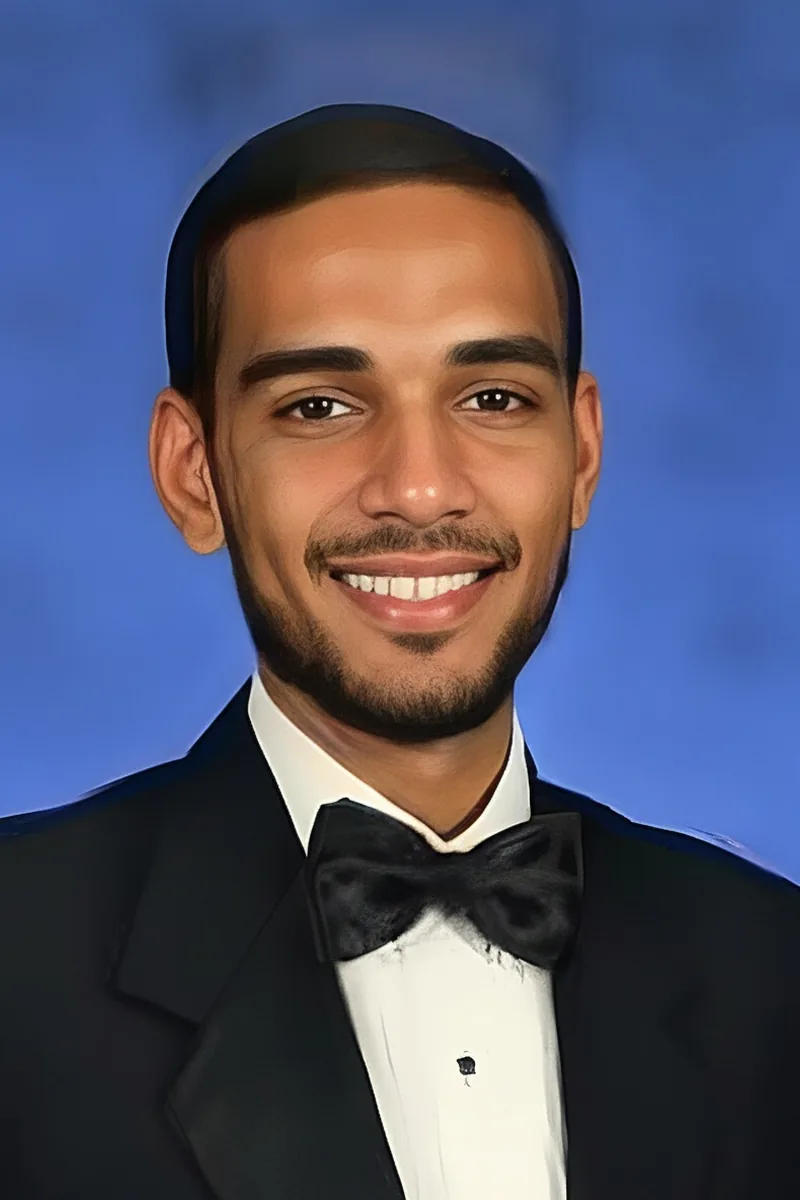
Christopher approaches geometry by anchoring proofs and spatial reasoning in logic rather than rote memorization — a skill he's sharpened through his competitive memory training. Whether it's triangle congruence, circle theorems, or coordinate geometry, he walks through each problem by building the reasoning step by step so the logic becomes intuitive.
A cellular and molecular biology degree means Mark spent years interpreting diagrams of cell structures, tissue cross-sections, and molecular shapes — all exercises in spatial reasoning that translate directly to geometric thinking. He unpacks the logic behind circle theorems and polygon properties by encouraging students to sketch, label, and reason visually before jumping to any formula. Rated 4.7 by students.
Most Geometry courses ask students to write proofs for the first time, which is a fundamentally different skill from solving equations. Nima teaches proof construction as a logical argument: identify what you know, figure out what connects to what, and build the chain — an approach that comes naturally from his physics training, where every derivation follows the same structure.
Proofs are where most geometry students panic — suddenly math requires written arguments, not just calculations. Lee approaches geometric reasoning the way his physics training taught him to: start from what you know, identify what connects to what, and build a logical chain. His studio art background also means he's unusually good at teaching spatial visualization, from angle relationships to transformations and congruence.
Learning is exciting! Anything new that you learn - an idea, a skill, a fact - changes you and paves the way for the next new idea, skill or fact to come along. I love learning. I love helping other people to learn. Be patient! Learning isn't always easy. (Teaching isn't always easy either.) So, be patient. Students need to be patient and teachers need to be patient. Sometimes, a new idea seems too challenging. That's the first time you see it. The second time, it starts to become more clear. Sometimes, our brains just need a little time to absorb. So, be patient! It will come.
Proofs are usually where geometry students panic — the leap from calculating angles to constructing logical arguments feels enormous. Allan approaches proof-writing as a skill you build step by step, connecting each theorem back to spatial reasoning that actually makes sense. His structured, patient style takes the intimidation out of two-column and paragraph proofs.
With over 15 years of industry experience in cloud computing, data analytics, data engineering, advanced SQL, and quantitative problem-solving, I am passionate about helping students and professionals develop strong technical and analytical skills that translate into academic and career success. My expertise spans database management, ETL development, data visualization, business intelligence, statistical analysis, cloud-based data solutions, and advanced SQL query optimization across enterprise environments. In addition, I have extensive experience preparing students for standardized examinations including the GRE and SAT, particularly in mathematics, quantitative reasoning, analytical problem-solving, and test-taking strategies. Alongside my professional career, I have dedicated my part-time efforts to teaching and mentoring students from diverse academic and professional backgrounds. I enjoy simplifying complex concepts into practical, easy-to-understand lessons that build both confidence and competence. My teaching approach combines real-world applications, interactive problem-solving, and personalized guidance to help learners achieve measurable results in academics, technical interviews, certifications, and career advancement. I am committed to fostering an engaging learning environment that empowers students to excel in today's competitive technology and data-driven industries.
Proofs are where most geometry students stall — the jump from calculating angles to constructing logical arguments feels like a completely different subject. Caroline's engineering training at WashU required rigorous spatial reasoning and formal proof techniques, so she teaches geometry as a system of logic rather than a collection of shape formulas. She unpacks each theorem step by step until the reasoning becomes second nature.
Proofs are usually where geometry students panic — the jump from calculating angles to constructing logical arguments feels like a different subject entirely. Isabella's MIT math training means formal reasoning is second nature to her, and she walks students through how to build a proof step by step, connecting geometric intuition to the structured logic on the page. She also covers coordinate geometry and triangle congruence with the same emphasis on understanding over memorization.
Dennis's research into quasicrystals and aperiodic tilings — like Penrose tilings of rhombuses — is geometry at its most fascinating, exploring how shapes fit together under unusual symmetry rules. That deep spatial intuition carries directly into high school Geometry, where he teaches proofs, congruence, and circle theorems by encouraging students to reason visually before writing anything formal.
Proofs are usually where geometry stops feeling intuitive and starts feeling intimidating. Allen tackles that head-on by teaching students to read a diagram like a puzzle — identifying congruent triangles, parallel-line angle relationships, or circle theorems before writing a single line of formal reasoning. His Yale-trained analytical rigor translates well to the logical structure geometry demands.
Proofs are usually the moment geometry stops feeling intuitive and starts feeling impossible. Noah approaches them as logical arguments rather than memorization exercises, drawing on the same analytical reasoning he sharpened through his political science training at Penn. He also tackles coordinate geometry and triangle congruence by emphasizing the visual logic behind each theorem.
A math major at Washington University with a 35 ACT, Kathleen has the kind of fluency across algebra, trigonometry, and spatial reasoning that lets her spot exactly which prerequisite skill is tripping a geometry student up — whether it's solving equations inside angle relationships or applying trig ratios to right triangles. She teaches the "why" behind each theorem so students can reconstruct steps on their own instead of memorizing proof templates.
Proofs are usually where geometry goes from manageable to frustrating — suddenly students need to justify every step with logic instead of just calculating angles. Maggie approaches proof-writing as a skill closer to constructing an argument than solving an equation, a perspective sharpened by her dual background in science and the liberal arts. She also covers coordinate geometry, triangle congruence, and circle theorems with the same emphasis on reasoning over rote steps.
Proofs are usually the sticking point in geometry — students can calculate angles and areas but freeze when asked to construct a logical argument from postulates. Kevin tackles this by teaching proof strategy as a skill: identifying what's given, what's needed, and which theorems connect the two. His background in computational geometry and algorithmic thinking at Stanford gives him a structured approach that clicks for students who think logically.
Proofs are usually where geometry stops feeling like math and starts feeling like a foreign language. JF breaks down the logic behind two-column and paragraph proofs so students see them as structured arguments, not mysterious rituals. A 5.0 client rating speaks to an approach that makes even angle-chasing problems feel manageable.
Neurobiology at Harvard meant Emma spent years interpreting complex diagrams of neural pathways and brain structures — skills that translate directly to reading the dense, multi-layered figures in geometry where you have to pull out the right angle relationship or identify similar triangles buried inside a larger shape. She tackles the subject from the logic side, treating each proof like a scientific hypothesis that needs step-by-step evidence. Rated 5.0 by students.
Holding dual degrees from UCLA in biology and mathematics-economics, Vinay brings an unusual ability to toggle between abstract reasoning and concrete problem-solving — exactly what geometry demands when a student has to move from reading a diagram to constructing a formal proof. He unpacks circle theorems and polygon properties by tying them back to the algebraic foundations students already have, closing gaps before they compound. Rated 5.0 by students.
Proofs trip up most geometry students because they demand a completely different kind of thinking than computation does. Phillip approaches them as logical arguments: identifying what's given, what's needed, and which theorems bridge the gap. His engineering training at Brown means spatial reasoning and geometric relationships are second nature to him.
Testimonials
Because the right Geometry tutor makes all the difference.
Average Session Rating – Based on 3.4M Learner Ratings
Practice Geometry
Free practice tests, flashcards, and AI tutoring for Geometry
Other Baltimore Tutors
Related Math Tutors in Baltimore
Frequently Asked Questions
Many students struggle with the transition from algebra's procedural focus to geometry's emphasis on spatial reasoning and logical proofs. Common pain points include visualizing 3D shapes, understanding why theorems work (not just memorizing them), constructing formal proofs, and applying geometric concepts to word problems. Personalized tutoring helps students build conceptual understanding by connecting visual patterns to mathematical reasoning, which strengthens both confidence and performance.
Proofs require a different type of thinking than students typically encounter in earlier math courses—they demand logical reasoning and clear communication. Tutors work with students to break down the proof-writing process, identify key theorems and properties, and develop strategies for approaching unfamiliar problems. With personalized guidance, students learn to see the logical flow of an argument rather than viewing proofs as mysterious or arbitrary.
Yes. Varsity Tutors connects you with tutors who are familiar with the geometry standards and approaches used across Baltimore's school districts. Whether your student is working with a specific textbook or curriculum framework, tutors can align their instruction to match what's being taught in class while providing the personalized support needed to deepen understanding and address gaps.
Word problems require students to translate real-world scenarios into geometric diagrams and equations—a skill that takes practice. Tutors teach students to break problems into steps: identify what's given, visualize the geometry, choose relevant theorems, and verify answers make sense. With consistent practice and feedback, students develop confidence in their problem-solving strategies and learn to recognize patterns across different problem types.
The first session is focused on understanding your student's current level, learning style, and specific challenges in geometry. The tutor will assess where conceptual gaps might exist, discuss goals, and begin building a personalized plan. This foundation allows tutors to tailor instruction to help your student move from confusion to confidence in geometry concepts.
Showing work demonstrates mathematical thinking and helps identify where errors occur—essential for both learning and earning full credit on tests. Tutors emphasize clear communication by teaching students to label diagrams, state theorems used, and explain reasoning step-by-step. This practice builds stronger problem-solving habits and helps students understand not just the answer, but why it's correct.
Math anxiety often stems from feeling lost or rushed in a classroom setting. One-on-one tutoring creates a safe space where students can ask questions, work at their own pace, and build confidence through small wins. As students experience success and begin to see patterns and connections in geometry, anxiety typically decreases and engagement increases—transforming their relationship with math.
Varsity Tutors connects you with expert tutors who specialize in geometry and understand the needs of students in Baltimore. Simply share your student's goals and learning style, and you'll be matched with a tutor who's a great fit. From there, you can schedule personalized sessions that work around your family's schedule and focus on exactly what your student needs to succeed.
Let’s find your perfect tutor
Answer a few quick questions. We’ll recommend the right plan and match you with a top 5% tutor.