Award-Winning Pre-Calculus Tutors
serving Baltimore, MD
Pre-Calculus
Tutors in Baltimore
Private 1-on-1 tutoring, weekly live classes for academic support, test prep & enrichment, practice tests and diagnostics, and more to elevate grades and test scores.
Based on 3.4M Learner Ratings
UniversitiesSchools & Universities
DeliveredHours Delivered
ProficiencyGrowth in Proficiency
Who needs tutoring?
No obligation. Takes ~1 minute.
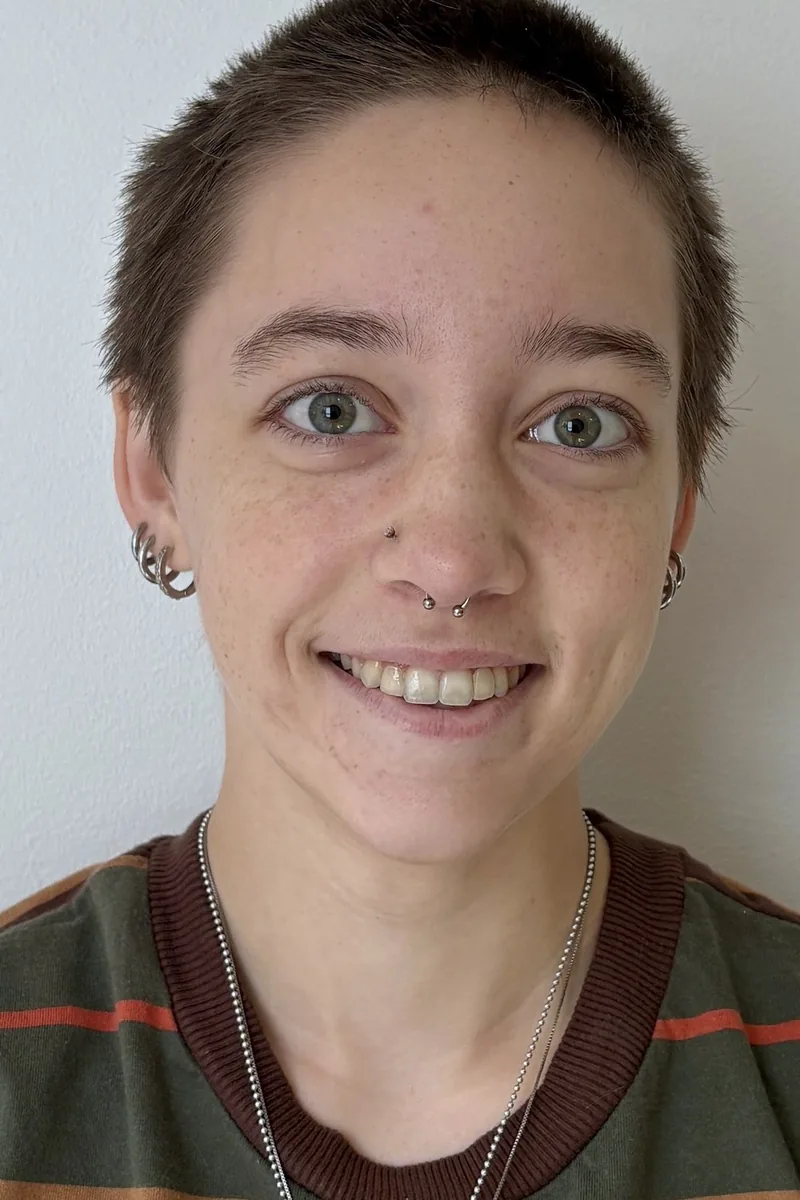
As a graduate of Johns Hopkins University with a Bachelor's in Materials Science and Engineering, I have over 5 years of tutoring experience across various subjects, including Algebra, Geometry, Biology and Chemistry. My teaching philosophy centers on fostering a supportive and engaging learning environment where students feel confident to explore and ask questions. I believe in tailoring my approach to meet each student's unique needs, encouraging them to connect concepts with real-world applications. My passion for teaching stems from witnessing students gain clarity and confidence in their abilities, which motivates me to continually refine my methods. Outside of tutoring, I enjoy exploring new technologies and engaging with nature, which often inspires my lessons.
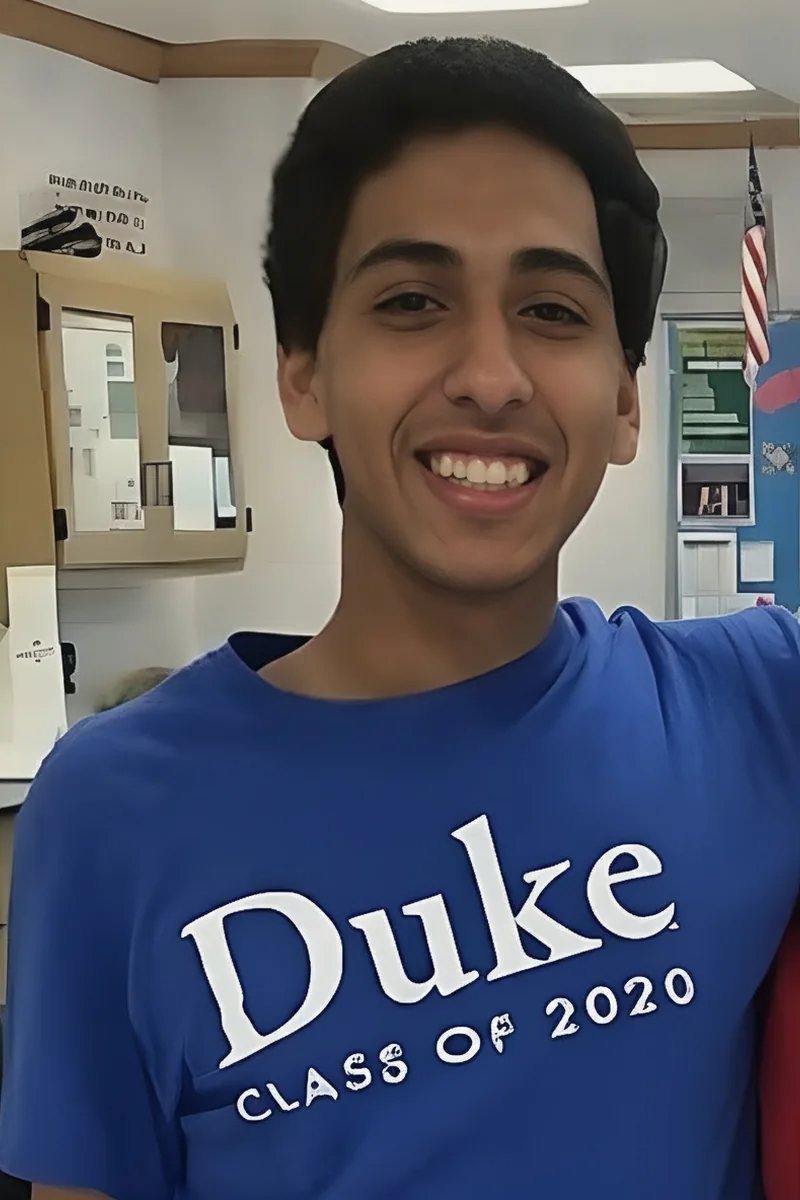
A physics major heading to Duke on a full merit scholarship, Nima treats pre-calculus as the language his discipline is built on — every vector problem, wave equation, and projectile model he encounters runs on trigonometric functions, parametric relationships, and limits of polynomial behavior. He teaches the course with that physics intuition, turning abstract graph transformations and identity proofs into tools students can actually visualize. His 1580 SAT confirms the quantitative sharpness behind that approach.
I love to teach. I love young minds and fresh brains. Those are just like clean sheets of papers I can draw anything I like. I really like to help young people to achieve their full capacities with my long experience of teaching. I am very patient and good at explaining complex concepts in simple terms. I am looking forward to meeting students who need my help.
Years in the University of Maryland's Physics Education Research group taught Lee something specific: most students don't struggle with pre-calculus because the math is hard, but because nobody connects the algebra they already know to the function behavior they're being asked to master. He bridges that gap by unpacking how polynomial end behavior, trigonometric graphs, and composite functions all follow from patterns students have seen before — just extended into unfamiliar territory. His 1490 SAT and 4.6 rating reflect a teaching style built on actual pedagogy research, not just subject knowledge.
As a biochemistry student at Swarthmore heading toward medical school, Allan regularly encounters the exponential and logarithmic relationships that pre-calculus students are just beginning to formalize — reaction rate curves, dosage modeling, and the trigonometric foundations underlying physics prerequisites. He zeroes in on the moment where algebra intuition stops being enough and functional reasoning has to take over, walking through that transition one concept at a time. His teaching range from algebra through calculus means he can spot exactly where a gap started and close it before it compounds.
As a dedicated neuroscience student at Johns Hopkins University, I have over two years of tutoring experience, specializing in math and history. My passion for subjects like algebra and AP World History drives me to help students overcome their challenges and develop a love for learning. I adapt my teaching strategies to suit each student's unique learning style, utilizing visual aids and hands-on methods to ensure comprehension and engagement. My background includes participation in Math Olympiads and earning multiple AP Scholar awards, showcasing my commitment to academic excellence. I find joy in making complex concepts accessible and fostering a supportive environment where students can thrive. Outside of tutoring, I enjoy exploring geography and history, further enriching my teaching approach.
After studying economics and computer science at Caltech, Brian developed a habit of thinking about functions as machines — inputs transform into outputs through a chain of operations, and pre-calculus is where that mechanical intuition gets built. He digs into the transition points that trip students up most, like moving from polynomial behavior to rational functions where asymptotes and holes suddenly matter. His 1580 SAT reflects the kind of precision he brings to breaking down each concept.
Differential equations, calculus, and physics all live on Bidyut's teaching roster — which means he knows exactly which pre-calculus skills (and which specific weak spots) will matter most once students move forward. His biomedical engineering training at Johns Hopkins keeps him fluent in the trigonometric, exponential, and composite function reasoning that pre-calc demands, and he teaches those topics by connecting them to the applied problems where sloppy understanding actually costs you. A 36 ACT and 5.0 rating back up the depth he brings.
Philosophy trained Keenan to construct rigorous logical arguments; computer science at Penn trained him to think in functions, recursion, and formal systems — and pre-calculus sits right at that intersection, where algebraic intuition has to become precise functional reasoning. He's especially sharp on the discrete math side of things like sequences and series, and he connects topics like composite and inverse functions to the programming concepts that make them feel less abstract. Holds a 5.0 rating from students.
The jump into pre-calculus — trigonometric identities, limits intuition, complex rational functions — is where many students realize they can't rely on memorized shortcuts anymore. Benjamin's economics coursework at the University of Chicago keeps him immersed in the kind of rigorous mathematical thinking that pre-calc demands. He connects each new concept back to its underlying logic so students actually retain it.
Todd's biology degree from UIUC built the quantitative reasoning that pre-calculus demands — modeling population dynamics with exponential and logarithmic functions, analyzing periodic phenomena with trig, interpreting rate-of-change problems that preview calculus. He draws on that science background to give function families a concrete meaning, so topics like transformations and composite functions feel like tools with a purpose rather than abstract exercises. His 33 ACT and 5.0 rating back that up.
The jump to pre-calculus trips up a lot of students because it's the first time they need to think about functions as objects — transforming them, composing them, analyzing their behavior. Christine's engineering coursework at Johns Hopkins required fluency with trigonometric identities, polar coordinates, and limits, so she teaches these topics with the confidence of someone who uses them daily.
Mechanical engineering at the undergraduate level means Andrea spent semesters grinding through the exact transition pre-calculus prepares students for — mastering polar coordinates, parametric equations, and trigonometric identities before they became essential tools in dynamics and thermodynamics courses. She teaches that material as someone who knows precisely where each concept resurfaces, breaking down topics like composite functions and rational expressions by connecting them to the engineering problems they eventually power. Her 32 ACT and 4.8 rating reflect consistent results across a wide range of students.
A philosophy major at Princeton with a certificate in Statistics and Machine Learning, Julie approaches pre-calculus proofs and function analysis with the logical rigor her coursework demands — she's especially sharp at breaking down the 'why' behind trigonometric identities and limit intuition before students hit calculus. She teaches across the full math ladder from elementary through Calculus II, so she knows exactly which algebraic instincts need to be solid and which conceptual leaps trip students up at the pre-calc stage. Rated 4.9 with a 1570 SAT.
Fred's aerospace engineering degree from Princeton meant living inside the math that pre-calculus students are just meeting — parametric equations describing flight paths, trigonometric models for oscillating systems, and the limit-adjacent thinking that bridges algebra to calculus. He teaches the course knowing exactly which concepts will matter most once students cross into derivatives and integrals, and he builds that forward-looking intuition into every session. His 1550 SAT confirms the quantitative depth behind the approach.
Most pre-calculus courses throw the unit circle, rational functions, and logarithmic properties at students in rapid succession without showing the thread connecting them — Kathleen's math degree from Washington University means she sees that thread clearly and teaches accordingly. She's especially sharp at bridging the gap between algebraic mechanics students already trust and the functional thinking calculus will demand, building each new concept as a natural extension rather than a separate topic to memorize. Her 35 ACT and 1550 SAT confirm the quantitative depth behind her approach.
Holding degrees in both mechanical and electrical engineering, Steve has spent years in the territory where pre-calculus stops being coursework and starts being the toolkit — trigonometric analysis for signal processing, polynomial modeling for system dynamics, vectors and complex numbers for circuit design. He teaches the course knowing exactly which skills will matter most when students hit calculus and engineering-track courses, and builds each lesson around that forward view. Rated 4.9 by students.
Jeffrey's mechanical engineering PhD work at Rice means he's spent years relying on the exact toolkit pre-calculus introduces — function composition, trigonometric modeling, and exponential behavior all show up constantly in dynamics and thermodynamics problems. He teaches these topics by walking through the engineering contexts where they actually matter, which gives students a concrete reason to care about each concept. His 34 ACT and 4.9 rating speak to the clarity he brings to quantitative subjects.
Testimonials
Because the right Pre-Calculus tutor makes all the difference.
Average Session Rating – Based on 3.4M Learner Ratings
Practice Pre-Calculus
Free practice tests, flashcards, and AI tutoring for Pre-Calculus
Other Baltimore Tutors
Related Math Tutors in Baltimore
Frequently Asked Questions
Pre-Calculus shifts from just solving equations to understanding the deeper "why" behind functions and their behavior. You'll move from memorizing steps to recognizing patterns—like how different function families (quadratic, exponential, trigonometric) behave and connect to real-world situations. This conceptual jump is where many students benefit from personalized instruction that breaks down these connections step by step.
Trigonometry, word problems, and graphing transformations trip up most students. These topics require you to visualize abstract concepts and apply multiple skills at once—which is exactly why 1-on-1 instruction helps. A tutor can slow down on the specific concepts giving you trouble, show you problem-solving strategies, and help you build the confidence to tackle complex, multi-step problems.
Showing your work reveals whether you understand the concepts or just got lucky with the answer. In Pre-Calculus, teachers are checking that you can justify each step and explain your reasoning—skills you'll absolutely need in Calculus. Tutors help you develop this habit by walking through problems together and explaining not just "how" but "why" each step matters.
Word problems require you to translate English into math, identify which function or technique applies, and then solve—it's a multi-step process that feels overwhelming without a strategy. Personalized tutoring helps you develop a consistent approach: read carefully, define variables, set up equations, and check if your answer makes sense. With practice and feedback, word problems become manageable.
Yes. Varsity Tutors connects you with tutors who understand Pre-Calculus standards and can align their instruction with whatever textbook or approach your school uses—whether that's traditional Pre-Calculus, honors Pre-Calc, or integrated math sequences. This means tutoring builds directly on what you're learning in class, filling gaps and reinforcing concepts your teacher is covering.
Absolutely. Math anxiety often comes from feeling lost or behind, which personalized 1-on-1 instruction directly addresses. When you work with a tutor, you get immediate feedback, can ask questions without judgment, and build confidence by mastering one concept at a time. Many students find that understanding the "why" behind Pre-Calculus topics transforms their relationship with math.
Your first session is about understanding where you are right now. A tutor will assess your strengths, identify specific topics causing trouble, and learn your learning style. Then you'll work together on a problem or concept to establish a baseline and create a personalized plan. This foundation ensures every future session targets exactly what you need.
Varsity Tutors connects you with qualified tutors who specialize in Pre-Calculus and understand the needs of Baltimore students. You'll describe your goals and challenges, and we'll match you with someone who fits your learning style and schedule. Most students start with a single session to see if the fit is right, then build from there.
Let’s find your perfect tutor
Answer a few quick questions. We’ll recommend the right plan and match you with a top 5% tutor.