Award-Winning Middle School Math Tutors
serving Baltimore, MD
Middle School Math
Tutors in Baltimore
Private 1-on-1 tutoring, weekly live classes for academic support, test prep & enrichment, practice tests and diagnostics, and more to elevate grades and test scores.
Based on 3.4M Learner Ratings
UniversitiesSchools & Universities
DeliveredHours Delivered
ProficiencyGrowth in Proficiency
Who needs tutoring?
No obligation. Takes ~1 minute.
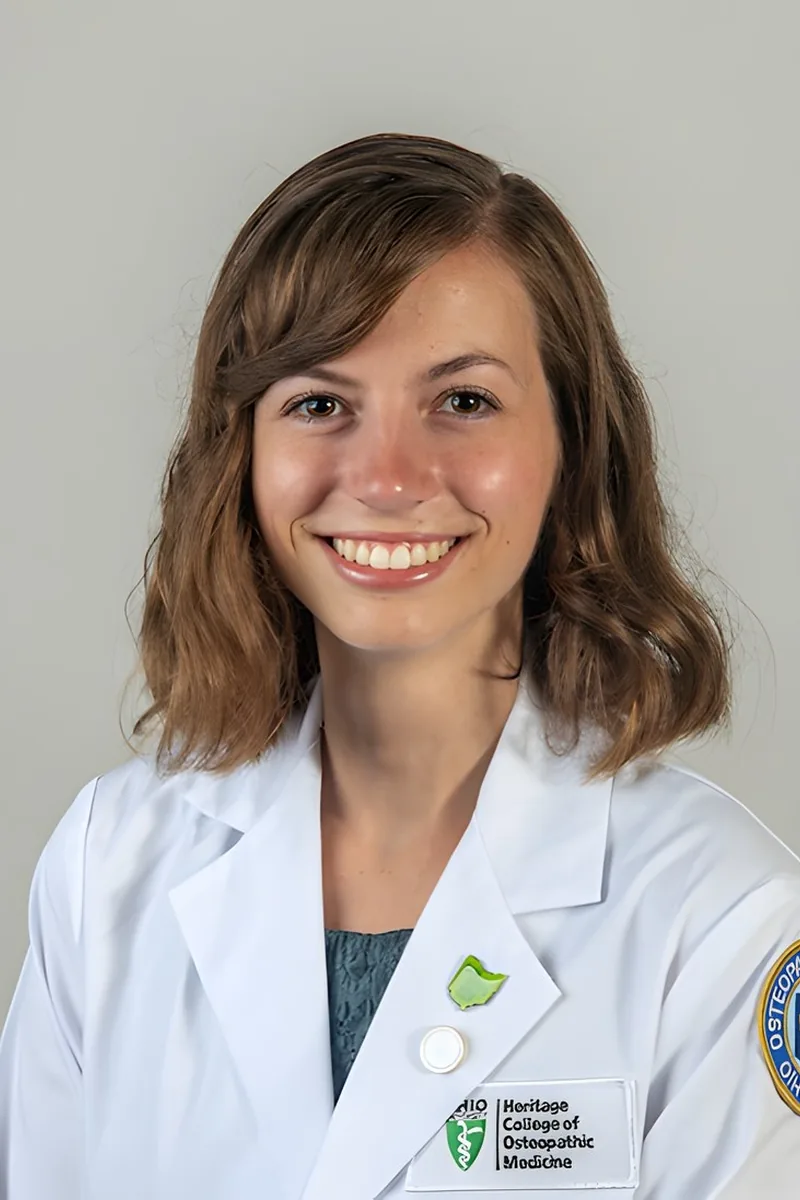
Fractions, ratios, and early algebraic thinking can feel like a sudden jump from elementary arithmetic — Kinkela breaks these concepts down into logical steps that build genuine number sense. Her science-heavy background means she's constantly showing students how middle school math connects to real problems they'll encounter later.
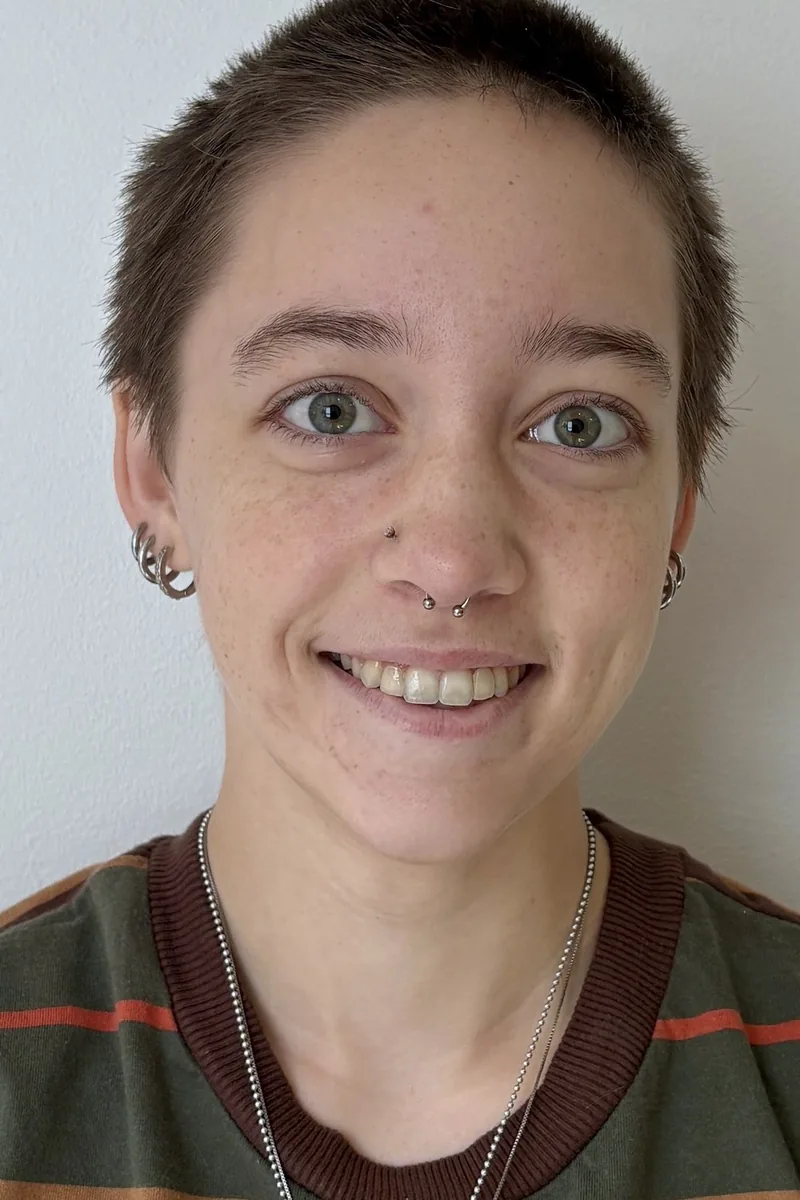
As a graduate of Johns Hopkins University with a Bachelor's in Materials Science and Engineering, I have over 5 years of tutoring experience across various subjects, including Algebra, Geometry, Biology and Chemistry. My teaching philosophy centers on fostering a supportive and engaging learning environment where students feel confident to explore and ask questions. I believe in tailoring my approach to meet each student's unique needs, encouraging them to connect concepts with real-world applications. My passion for teaching stems from witnessing students gain clarity and confidence in their abilities, which motivates me to continually refine my methods. Outside of tutoring, I enjoy exploring new technologies and engaging with nature, which often inspires my lessons.
The jump from elementary arithmetic to middle school math can feel sudden: fractions become ratios, numbers go negative, and geometry starts requiring formulas. Christopher breaks each of these transitions into concrete steps, building the number sense and proportional reasoning that set students up for algebra. He holds a 5.0 rating from past clients.
Fractions, ratios, and proportional reasoning trip up more middle schoolers than almost any other topic, and the confusion tends to snowball if it isn't addressed early. Nima's approach is to anchor each concept in real-number intuition — using visual models and step-by-step reasoning — before moving to the abstract procedures textbooks emphasize.
As a passionate educator with a Doctorate in Curriculum and Instruction from Liberty University, Dr. Barnett brings 20 years of tutoring and classroom experience to his role. His specialties in Elementary School English, Math, Reading, Science, and Social Studies enable him to create engaging, interactive lessons tailored to each student's unique needs. Dr. Barnett believes in fostering a supportive learning environment that empowers students to build confidence and achieve academic achievement. Through personalized tutoring plans, he offers effective online tutoring for grades 1-8, guiding students through their educational journeys. Dr. Barnett finds great joy in celebrating students' successes and inspiring a lifelong love for learning. Currently certified to teach in Maryland, he is dedicated to making a positive impact in students' lives.
Fractions, ratios, and early equation-solving are the skills that either build real mathematical confidence or quietly erode it — and middle school is when the gap tends to open. Rickey is known for his patience with younger learners, taking the time to walk through each step of a problem until the reasoning clicks rather than just the answer.
The jump from arithmetic to algebraic thinking happens in middle school, and it trips up students who were previously comfortable with math. Lee was part of the Physics Education Research group at the University of Maryland, studying exactly how students navigate these conceptual transitions. He tackles topics like integer operations, ratios, and intro to equations by anchoring abstract ideas in concrete reasoning students can hold onto.
Fractions, proportions, and integer operations trip up a lot of middle schoolers — not because the math is impossibly hard, but because earlier gaps quietly compound. Solome breaks each problem into visible steps so students can pinpoint exactly where their reasoning goes off track. Her Cornell training in analytical thinking means she teaches the logic behind procedures, not just the shortcuts.
Fractions, ratios, and proportional reasoning tend to be the concepts where middle schoolers either build real mathematical confidence or start to disengage. Jackson breaks these topics into concrete steps — connecting abstract operations to everyday scenarios so the logic clicks before the formulas come out. His economics coursework at Duke keeps him sharp on the applied math skills that middle school is quietly building toward.
The jump from arithmetic to pre-algebra is where a lot of middle schoolers start feeling lost — variables show up, fractions get more complex, and word problems demand new problem-solving strategies. Allen makes that transition smoother by building each new idea off what a student already knows, whether they're tackling proportional reasoning, integer operations, or their first taste of linear equations.
Ratios, proportions, and pre-algebraic thinking click faster when students can see them — and Mimi's background in visual and object-based learning means she naturally turns abstract middle school math concepts into something concrete. Her Harvard Ed.M. trained her to design lessons around how each learner actually thinks, not just how the textbook is organized.
The jump from arithmetic to middle school math trips students up when fractions, ratios, and negative numbers all arrive at once. Rachel breaks each concept into manageable steps and ties them to concrete examples, building the kind of number sense that makes pre-algebra and beyond feel approachable rather than overwhelming.
A year as a course assistant in Harvard's math department — teaching introductory calculus to undergraduates — gave Richard an unusual vantage point on middle school math: he knows exactly which arithmetic and pre-algebraic habits (especially around fractions, negative numbers, and variable expressions) need to be rock-solid before higher math stops making sense. He scored a 36 ACT and 1600 SAT, but more relevantly, he's spent time volunteering to teach a weekly course to middle schoolers through Harvard's Leadership Institute, so he's comfortable matching his explanations to how younger students actually think.
The jump from elementary math to middle school math is bigger than most people realize: suddenly students are dealing with fractions, ratios, proportions, and negative numbers all in the same problem set. Brian tutored underclassmen in math throughout his time at Stuyvesant and knows how to break these topics into manageable steps that build real number sense rather than rote procedures.
Biology majors do more math than most people realize — Joseph spent his UCLA undergrad calculating dilution ratios, analyzing statistical datasets, and working through quantitative models, all of which map directly onto the proportional reasoning and equation-solving middle schoolers are tackling for the first time. His public health master's at Yale keeps him knee-deep in data interpretation daily, so he teaches these concepts as practical skills with real stakes rather than abstract exercises. Rated 4.9 by families.
The jump from fifth-grade math to pre-algebra and early geometry catches many middle schoolers off guard, especially when proportional reasoning and negative numbers enter the picture. Asta tackles these transitional concepts by connecting them to patterns students already recognize, making ratios, percents, and coordinate graphing feel less abstract. She holds a 5.0 client rating.
Fractions, ratios, and proportional reasoning trip up more middle schoolers than almost any other topic — and Diana tackles these by connecting them to real scenarios students actually encounter. Her linguistics background gives her a sharp ear for how kids describe their thinking, so she can pinpoint exactly where a concept breaks down. She's a certified teacher who knows how to bridge the gap between arithmetic and the abstract reasoning algebra will demand.
Fractions, ratios, and pre-algebra concepts click faster when a student understands the reasoning behind each step — not just the procedure. Zosia's chemistry background at Yale means she thinks in terms of logical problem-solving, and she brings that same structured clarity to middle school math topics like proportional reasoning and integer operations.
Scoring a 35 ACT and 1570 SAT means Amber has the quantitative chops to teach middle school math cold, but her theater background is what makes her especially effective — she knows how to read an audience, adjust on the fly, and make a concept land. She zeroes in on the specific spot where a student's understanding breaks down, whether that's negative number operations or setting up basic equations, and rebuilds from there. Rated 5.0 by students.
Julie is pursuing a certificate in Statistics and Machine Learning alongside her philosophy degree at Princeton — a combination that means she thinks about math both computationally and conceptually. For middle schoolers tackling pre-algebra and proportional reasoning, she breaks down each problem's logic so students understand the *why* before memorizing the *how*. Rated 4.9 by families.
Teaching math to middle schoolers at gifted summer programs taught Isabella that this age group thrives when they understand the "why" behind a procedure, not just the steps. She digs into topics like ratios, proportional reasoning, and introductory linear relationships with the depth you'd expect from someone who earned a math degree at MIT. Her 5.0 rating speaks to how well that approach lands with younger students.
Testimonials
Because the right Middle School Math tutor makes all the difference.
Average Session Rating – Based on 3.4M Learner Ratings
Other Baltimore Tutors
Related Math Tutors in Baltimore
Frequently Asked Questions
Middle school math shifts from learning procedures (like "how to divide") to understanding why those procedures work. This conceptual jump—moving from memorizing steps to grasping underlying patterns—is where many students struggle. A tutor can bridge this gap by connecting abstract concepts to real-world examples, helping students see that math is a logical system rather than a collection of rules to memorize.
Yes. Baltimore City and Baltimore County schools use different textbooks and pacing guides, and tutors who work with students in Baltimore are familiar with these local curricula. During your first session, a tutor will learn which program your student is using and align their instruction accordingly, whether that's Saxon Math, Houghton Mifflin Harcourt, or another approach used in your school.
Word problems require students to translate language into mathematical operations—a skill that takes practice and strategy. Tutors teach concrete problem-solving approaches: identifying what you know, what you're looking for, and which operations apply. With repeated practice using these strategies, students build confidence and learn to see word problems as puzzles to solve rather than sources of anxiety.
Showing work reveals your thinking process, helping teachers identify where misunderstandings happen—not just whether the final answer is correct. It also helps students catch their own mistakes and build problem-solving habits they'll need in high school and beyond. A tutor can help your student develop organized, clear work habits that make math easier to follow and easier to learn from.
Graphing and multi-step equations require students to see connections between algebraic notation and visual representation—a big conceptual leap. In personalized 1-on-1 instruction, a tutor can slow down, use multiple representations (graphs, tables, and equations together), and immediately address confusion. This prevents small gaps from becoming major obstacles as students move into high school algebra.
Math anxiety often stems from past frustration or feeling lost in class. A tutor creates a low-pressure environment where it's safe to ask questions and make mistakes without judgment. By breaking problems into manageable steps, celebrating small wins, and helping students see that they *can* understand math, tutoring rebuilds confidence and transforms the relationship with the subject.
The first session is about getting to know your student—their current level, specific challenges, learning style, and goals. The tutor won't jump into heavy instruction; instead, they'll ask questions, listen, and identify where gaps exist. This foundation helps the tutor create a personalized plan for the sessions ahead, so every minute counts toward real progress.
Middle school math is full of hidden connections: fractions relate to decimals and percentages, properties of operations work the same way across different number types, and algebra is just a generalization of arithmetic. Tutors explicitly point out these patterns and help students notice them independently, transforming math from isolated topics into a coherent system. This deeper understanding makes learning faster and retention stronger.
Let’s find your perfect tutor
Answer a few quick questions. We’ll recommend the right plan and match you with a top 5% tutor.