Award-Winning College Physics Tutors
serving Round Lake Beach, IL
College Physics
Tutors in Round Lake Beach
Private 1-on-1 tutoring, weekly live classes for academic support, test prep & enrichment, practice tests and diagnostics, and more to elevate grades and test scores.
Based on 3.4M Learner Ratings
UniversitiesSchools & Universities
DeliveredHours Delivered
ProficiencyGrowth in Proficiency
Who needs tutoring?
No obligation. Takes ~1 minute.
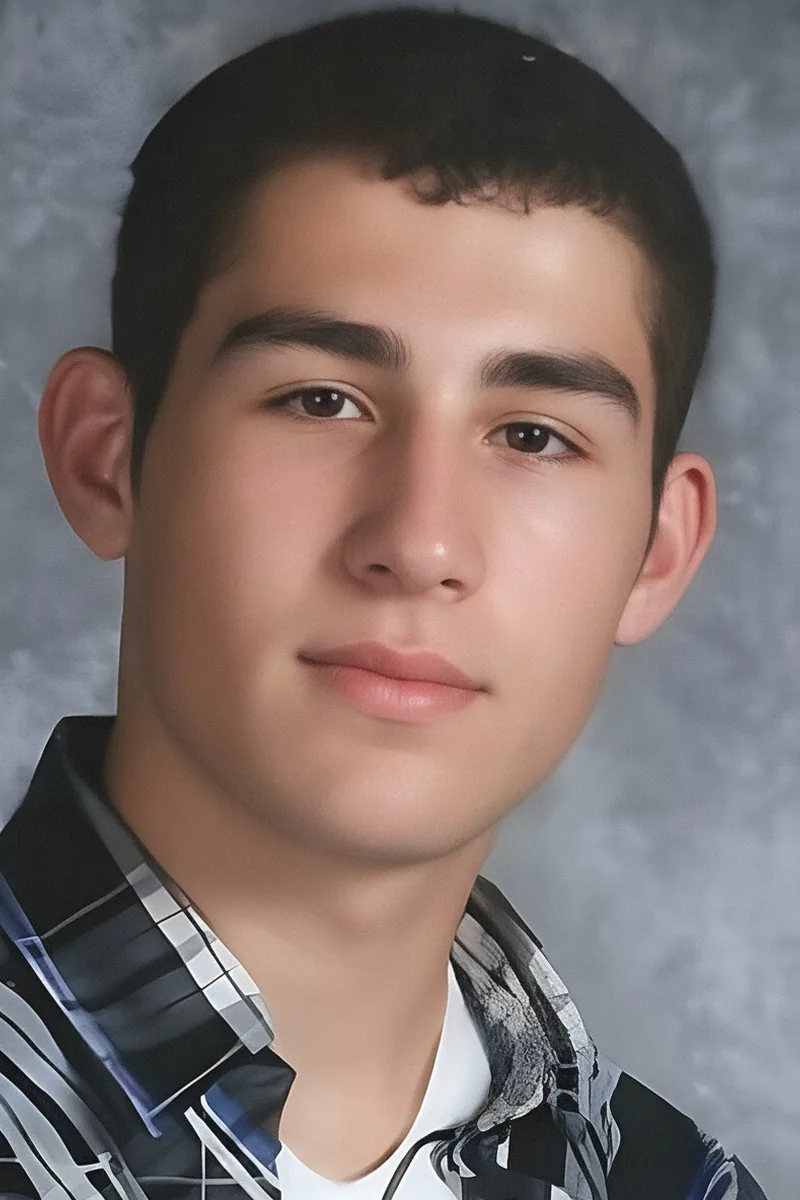
Studying mechanical engineering at Harvard means Christopher applies physics daily — from free-body diagrams and torque calculations to thermodynamic cycles and fluid dynamics. He breaks down multi-step problems by identifying which conservation law applies and walking through the math from there, so the problem-solving process becomes repeatable rather than mysterious.
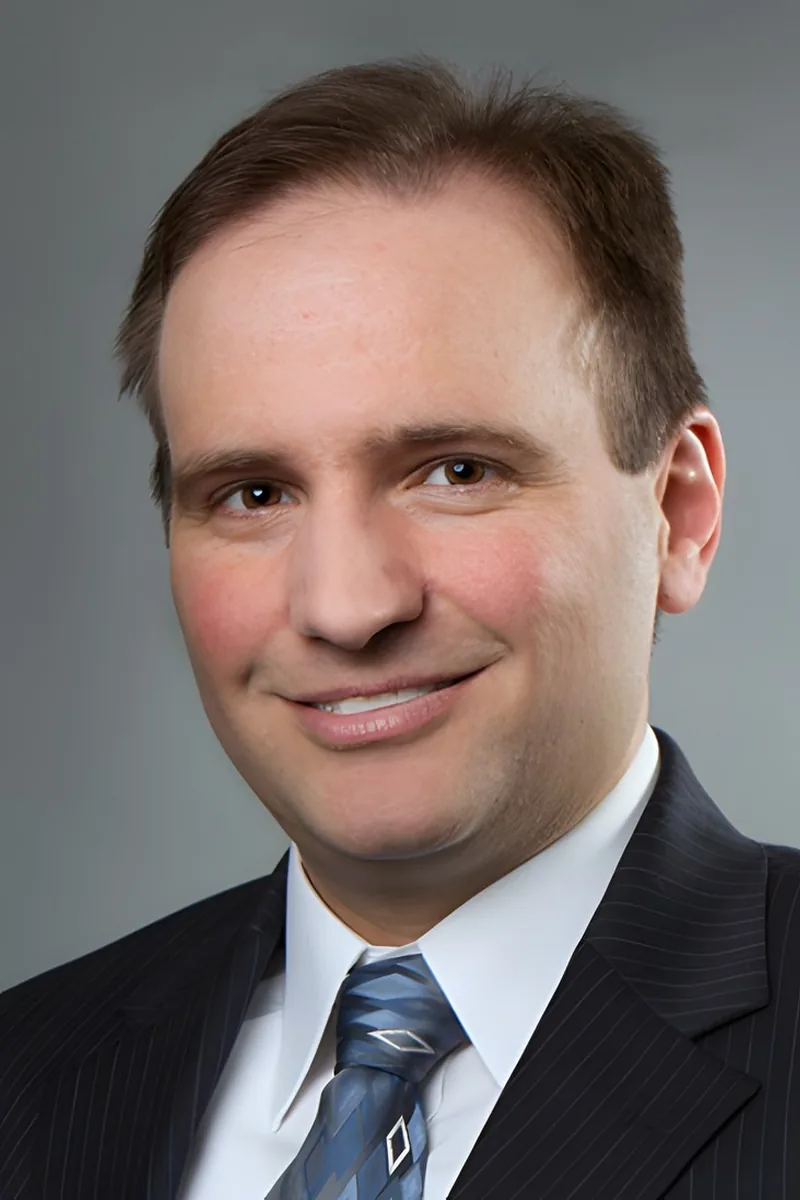
A physics PhD means Jonathan didn't just take college physics — he spent years teaching it, earning a teaching fellowship that kept him in front of students even while running his own research. That depth shows when he tackles the conceptual leaps that derail most introductory students, like connecting free-body diagrams to real force interactions or translating a word problem into the right conservation law. Rated 5.0 by students.
Before starting medical school at the University of Illinois College of Medicine, Claire built her physics foundation through a chemistry degree that required calculus-based mechanics, thermodynamics, and electromagnetism — subjects she also tutored during her time with Emory's Dream Project. She's particularly good at offering multiple angles on the same problem, so when a free-body diagram or energy conservation setup doesn't click one way, she'll rework the reasoning until it does. Rated 5.0 by students.
I am a graduate of Cornell University's College of Arts and Sciences. I received my Bachelor of Arts in Chemistry with Distinction in 2015. Since graduation, I was a physics/chemistry teacher and soccer coach at a private school in Virginia for a year, where I led the soccer team to an undefeated season. Before teaching and coaching professionally, I was a Teaching Assistant for the Cornell Math and Physics Departments, where I taught many subjects including calculus, mechanics, electromagnetism. Throughout my time at Cornell and as a teacher, I tutored subjects ranging from the SAT to AP Physics and Algebra II, which is where my true talents lie: in small group or one-on-one settings where I can give students the full attention they deserve and tailor my approach specifically to their learning styles. This is why I am now pursuing tutoring as a part-time occupation at Varsity Tutors. I embrace teaching all math and science subjects, especially physics and calculus, at both the college and high school level and will go above and beyond to make sure all of my students succeed, according to their definition of success. In my spare time, I enjoy playing league soccer, basketball, tennis and guitar, and also like to travel and see as much of the world as I can.
Biomedical engineering at Vanderbilt meant Sparsh spent four years applying physics to biological systems — modeling fluid flow through vessels, analyzing stress distributions in prosthetics, and calculating electrical signals in neural interfaces — so the mechanics, thermodynamics, and electromagnetism in college physics courses feel like familiar territory. Now heading into medical school at Northwestern, he connects abstract force diagrams and energy calculations to the physical systems they actually describe, which makes problem-solving feel less like formula hunting and more like reasoning through a real scenario.
I am a recent graduate of Princeton University's Mechanical and Aerospace Engineering Department. I am passionate about teaching and mentoring and have done so in multiple capacities over the last four years, including a fellowship during which I taught pre-algebraic math to a group of middle school students from traditionally underserved backgrounds in Saint Paul, MN. I love interacting with students and seeing them grow over the course of their studies. I'm ecstatic at the opportunity to learn alongside them as we venture into educational rabbit holes and uncover key concepts about math, science, and everything else.
Studying physics at Penn with a concentration in chemical principles means Max lives in the overlap between force, energy, and molecular behavior every day — so when college physics problems involve thermodynamics or wave mechanics, he can ground them in both the math and the chemistry that make the concepts click. His 35 ACT reflects the kind of quick, precise quantitative reasoning that matters when you're juggling vectors, integrals, and physical intuition on a timed exam.
Biomedical engineering PhD students don't just take college physics — they keep using it, and Maggie's doctoral work means she regularly applies mechanics, wave behavior, and thermodynamics to problems involving biological systems and medical devices. Her TA experience in calculus and chemistry sharpens her ability to catch the specific math and unit-conversion mistakes that derail students mid-problem. She's particularly effective at walking through free-body diagrams and energy methods, since those tools show up constantly in her own research.
Felix's microbiology background means he's comfortable with the physics that underpins lab techniques — optics in microscopy, fluid dynamics in centrifugation, and the electromagnetic principles behind spectrophotometry — which gives his explanations a practical edge that pure-physics tutors sometimes lack. He tackles problem-solving by walking students through the reasoning before the math, making sure they can identify whether a scenario calls for Newton's laws or energy conservation. Holds a 5.0 rating.
Bioengineering grad work means Mark tackles physics problems the way engineers do — translating real systems into free-body diagrams, circuit models, and thermodynamic equations that actually predict behavior. He's especially sharp on mechanics and electromagnetism, breaking multi-step problems into clear physical reasoning before touching a calculator.
The pre-dental track at UIC means Kheya is actively taking calculus-based physics alongside the biology and chemistry sequence, so she knows firsthand which problem types — free-body diagrams, energy conservation setups, projectile motion — feel straightforward on paper but fall apart during exams. Her psychology training also gives her an unusual edge: she's tuned into how students process multi-step quantitative reasoning and where cognitive overload kicks in, so she adjusts her explanations accordingly.
Nuclear engineering undergrad plus an electrical engineering master's means Moe has taken — and aced — just about every flavor of calculus-based physics a college student will encounter, from reactor thermodynamics and radiation transport to circuit theory and electromagnetic fields. He breaks down problems by teaching students to identify the governing physics first, then translate that reasoning into the math. Rated 4.9 by students.
Biomedical engineering demands constant fluency in physics — from fluid dynamics in blood flow to circuit analysis in medical devices — and Lee's MS coursework kept him deep in these applications. He breaks down intimidating college-level topics like electromagnetism, thermodynamics, and rotational mechanics by tying them to real systems he's actually modeled. Rated 4.9 by students.
College physics problems often stump students not because the math is hard, but because the physical intuition isn't there yet — knowing *why* tension acts along a rope or *how* electric fields superpose before plugging into equations. Masooma's science-heavy tutoring background across chemistry, biology, and multiple physics levels means she's seen where conceptual gaps hide and can catch them early, building the reasoning layer that makes problem sets click. Rated 4.9 by students.
Between his physics degree from Haverford and years of tutoring collegiate physics, Jacob is comfortable across the full introductory sequence — mechanics, E&M, waves, and modern physics. He approaches each topic by first building the physical intuition behind it, then showing how the mathematics follows naturally from that understanding. His 4.9 rating speaks to his ability to make dense material click.
Three physics degrees deep, James knows the subject from multiple angles — and that repetition means he's encountered nearly every way a student can get tripped up by free-body diagrams, conservation laws, or wave interference. He breaks problems into their physical story first, then translates that story into math, which keeps students from defaulting to equation-hunting. Rated 4.9 by students.
My name is Anudeep Mangu, and I hold a Doctorate in Materials Science and Engineering from Stanford University. With almost a decade of tutoring and mentorship experience, I specialize in Physics, particularly in AP Physics C: Electricity and Magnetism. I am also comfortable teaching Algebra and Calculus. My teaching philosophy centers on fostering a deep understanding of concepts by starting with the foundational "why" behind each topic. I believe that connecting complex ideas to students' interests enhances their learning experience. My goal is to create a supportive learning environment where students feel comfortable asking questions and exploring challenging concepts. I am passionate about helping students grasp the principles that underpin our modern world, and I find joy in guiding them through the problem-solving process. In my spare time, I enjoy exploring new technologies and concepts in science, which continually enriches my tutoring approach.
Preparing for medical school means Serena has recently tackled the full sweep of premed physics — mechanics, waves, thermodynamics, optics — and still remembers exactly which problem types demanded the most effort to crack. Her biology degree from UCLA gives her a knack for connecting physics concepts to biological systems, like explaining fluid dynamics through circulatory flow or pressure gradients through respiratory mechanics. Rated 5.0 by students.
Four years of Carnegie Mellon mechanical engineering means Ryan solved college physics problems under some of the toughest grading standards in the country — statics, dynamics, thermodynamics, and fluid mechanics were just prerequisites for the harder stuff. He's particularly sharp at teaching students how to set up free-body diagrams and energy conservation equations correctly the first time, since sloppy setup was the fastest way to lose points in his own coursework. Rated 4.8 by students.
I am passionate about the importance of math and science, I enjoy making them more relatable to a student by explaining their real world applications whenever possible.
Eitan earned his B.S. in Physics, which means he didn't just pass college physics — he built an entire degree on top of it, from quantum mechanics and thermodynamics to special relativity and statics. That depth shows when he walks students through tricky force problems or energy arguments, because he already knows where the conceptual gaps tend to hide. Holds a 5.0 rating.
A molecular and cellular biology degree means Mateusz has wrestled with the physics that underpins biological systems — fluid dynamics in circulatory models, optics in microscopy, and the thermodynamics governing every metabolic pathway he studied at Illinois. He breaks down force diagrams and energy conservation problems by connecting them to concrete scenarios, making the abstract machinery of introductory physics courses more intuitive. Rated 4.9 by students.
Fieldwork with the National Park Service required Matthew to apply mechanics, thermodynamics, and fluid dynamics in rugged, real-world conditions — skills that translate directly into breaking down college-level physics problems. He connects abstract derivations to physical intuition, which is especially useful when courses shift from introductory kinematics into electromagnetism and optics.
Brian's mechanical engineering master's means he lived in the calculus-heavy physics that trips up most undergrads — thermodynamic cycles, stress analysis, fluid dynamics — and can unpack the derivations behind each topic rather than just pointing to the right formula. His physics bachelor's adds the theoretical grounding to explain why Gauss's law or the work-energy theorem works the way it does. Rated 5.0 by students.
Adrianne's social science background might not scream physics, but her 34 ACT and master's in education mean she knows how to break down quantitative problem-solving for students who aren't naturally wired for it — exactly the people who struggle most in college physics. She zeroes in on translating word-heavy scenarios into free-body diagrams and energy bar charts, teaching the conceptual mapping step that makes the math feel purposeful rather than arbitrary. Rated 5.0 by students.
Biomedical engineering coursework throws students straight into the deep end of physics — fluid dynamics in blood flow, electrical circuits modeling nerve impulses, mechanics of prosthetic joints — and Khushal is actively working through all of it right now, which keeps the pain points fresh in his mind. He breaks down force diagrams and energy conservation problems by connecting them back to the biomedical systems they describe, so the physics feels like it's going somewhere. Rated 5.0 by students.
Gopal's electrical engineering degree means he spent years solving the exact problems that fill college physics courses — circuit analysis, electromagnetic fields, wave behavior, and the calculus tying them together. His later MBA adds a structured, analytical approach to breaking down multi-step problems, especially when students need to organize what they know before diving into equations. He's particularly strong on the E&M side of the curriculum, where engineering training makes abstract field concepts concrete.
TA-ing college chemistry and biology labs at UIUC means Whitney regularly fields questions about the physics lurking inside those courses — gas laws rooted in kinetic theory, calorimetry tied to heat transfer, optics in spectrophotometry — so she knows exactly which physics concepts trip students up in practice. Her analytical chemistry PhD work sharpens that further, since instrumentation courses demand fluency in circuits, electromagnetic radiation, and wave behavior. She's especially effective at bridging the gap between the physics equations on a problem set and the real phenomena they describe.
A physics degree from Loyola Chicago means Edward didn't just pass college physics — he built an entire undergraduate career on it, from classical mechanics through electromagnetism and modern physics. He's especially sharp at walking through the conceptual leaps in wave optics and interference that students often try to brute-force with equations alone. Rated 4.9 by students.
Civil engineering coursework is essentially college physics with deadlines and building codes — Kyle spent four years applying statics, dynamics, fluid mechanics, and material stress analysis to structures that actually need to stand up. That practical grounding means he can walk through a free-body diagram or a conservation of energy problem and explain not just the math, but what's physically happening and why the answer has to make sense. Rated 4.9 by students.
Mechanical engineering coursework means Grant is solving physics problems every week — from Newton's laws and energy methods to circuits and electromagnetic induction — so the material stays sharp and practical. He's particularly strong at showing how to set up a problem correctly, translating messy word problems into clean diagrams and equations before crunching any numbers. His 1490 SAT underscores the quantitative instincts he brings to each session.
Not every physics tutor comes from an engineering or physics program — Julia's strength is that she learned to reason through mechanics and thermodynamics by breaking them down independently, building the kind of step-by-step problem-solving approach that clicks for students who don't instantly see the path from diagram to answer. Her 34 ACT reflects sharp quantitative reasoning, and her experience tutoring peers through calculus-based material means she knows where the conceptual gaps tend to hide in topics like Newton's laws and energy conservation.
Beth's strength in college physics comes from an unexpected place — her 32 ACT and summa cum laude academic record reflect the kind of disciplined, systematic problem-solving that translates directly to breaking down force diagrams and energy conservation scenarios. She tackles the conceptual setup that derails most students, walking through how to identify which principle applies before any math happens. Rated 4.9 by students.
Nicholas earned his physics degree solving the same problem sets his students are grinding through now — Lagrangian mechanics, Gauss's law applications, wave superposition — so he knows exactly where the conceptual gaps tend to hide. He teaches students to extract the physical story from a problem before touching any math, turning vague scenario descriptions into clean free-body diagrams or energy bar charts. Rated 4.9 by students.
Kurt's physician assistant background means he learned college physics the hard way — applying thermodynamics, wave optics, and electromagnetism to real biological systems under pressure. He approaches problem sets methodically, teaching students to diagram a scenario before touching an equation. That structured thinking carries through rotational dynamics, circuits, and everything in between.
Holding a B.S. in Physics, Michael tackles college-level mechanics, electromagnetism, and thermodynamics by tying abstract equations back to tangible, real-world scenarios students already understand. Whether it's breaking down free-body diagrams or walking through Maxwell's equations, he connects the math to the physical intuition behind it — a dual perspective sharpened by his parallel finance training in quantitative modeling.
Architectural engineering forced James to internalize the physics that holds buildings up — statics, load distribution, material behavior under stress, and the vector math tying it all together. That hands-on structural intuition carries over when he walks students through force analysis, torque, and equilibrium problems in their college physics courses. Rated 4.8 by students.
Behavioral neuroscience covers more physics than most people realize — membrane potentials are voltage problems, action potentials involve capacitance and resistance, and neuroimaging relies on electromagnetic wave behavior. Anastasia brings that applied perspective to college physics topics like circuits and wave mechanics, grounding abstract equations in the biological systems where she first encountered them. Rated 5.0 by students.
A PhD in Physics from Notre Dame means Nathan has taught, studied, and researched the full spectrum of topics that show up in college physics — from rotational kinematics through electromagnetic induction — at a depth well beyond what any introductory course demands. He zeroes in on the reasoning step most students rush past: translating a physical scenario into the right mathematical framework before touching a single equation. That deliberate problem-setup habit is what turns a student who pattern-matches formulas into one who can tackle unfamiliar problems cold.
Pursuing an MD at Stanford after a double major in economics and molecular/cellular biology, Maggie brings a pre-med perspective to college physics that makes topics like optics, fluid dynamics, and wave mechanics feel immediately relevant rather than abstract. She's especially sharp at teaching students to set up problems cleanly — translating a physical scenario into the right free-body diagram or energy equation before doing any math. Rated 5.0 by students.
Testimonials
Because the right College Physics tutor makes all the difference.
Average Session Rating – Based on 3.4M Learner Ratings
Nearby College Physics Tutors
Other Round Lake Beach Tutors
Related Science Tutors in Round Lake Beach
Frequently Asked Questions
Varsity Tutors matches Round Lake Beach students with expert College Physics tutors for 1-on-1 instruction. We pair each student with a tutor based on their specific needs, learning style, and goals.
Whether you need homework help, exam prep, or want to get ahead, our College Physics tutors are ready to help.
Common challenges include gaps from earlier material, difficulty with specific concepts, and trouble applying learning to new problems. These issues can snowball quickly in College Physics.
A tutor identifies where you're stuck, fills in gaps, and provides targeted practice. The 1-on-1 format means you get help exactly where you need it.
Tutors work with your student's actual coursework—homework assignments, class notes, and upcoming tests. This keeps tutoring directly relevant to what's happening in the classroom.
When you share information about your student's school and curriculum, we can match you with a tutor who has relevant experience.
All tutors complete background checks, credential verification, and teaching evaluation. Many of our College Physics tutors hold advanced degrees or have years of teaching experience.
You can review tutor profiles to find someone with the right background for your student's level and needs.
Many students see improved grades within a few weeks, along with better understanding of College Physics concepts and more confidence tackling challenging material.
Tutors track progress and adjust their approach to ensure continued improvement.
Most students benefit from 1-2 sessions per week. More frequent sessions help if your student is significantly behind or has an important exam coming up.
Your tutor can recommend a schedule based on your student's specific situation and goals.
Tutoring is purchased in packages of hours, with rates varying by tutor experience. Varsity Tutors offers several options to fit different budgets and needs.
You can discuss pricing during your consultation to find what works best.
Your tutor will assess where your student is, discuss goals, and start working on priority areas. Most students bring current homework or upcoming test material to focus on.
By the end, you'll have a clear sense of how the tutor can help and a plan for moving forward.
Let’s find your perfect tutor
Answer a few quick questions. We’ll recommend the right plan and match you with a top 5% tutor.