Award-Winning Calculus Tutors
serving Round Lake Beach, IL
Calculus
Tutors in Round Lake Beach
Private 1-on-1 tutoring, weekly live classes for academic support, test prep & enrichment, practice tests and diagnostics, and more to elevate grades and test scores.
Based on 3.4M Learner Ratings
UniversitiesSchools & Universities
DeliveredHours Delivered
ProficiencyGrowth in Proficiency
Who needs tutoring?
No obligation. Takes ~1 minute.

Every week in his Harvard engineering courses, Christopher applies calculus to real systems — computing moments of inertia, modeling fluid flow, analyzing stress distributions. That constant use means he can unpack topics like the chain rule, improper integrals, and convergence tests with a fluency that goes well beyond textbook examples. He pinpoints the specific conceptual gaps holding a student back and addresses those directly rather than re-teaching entire chapters.
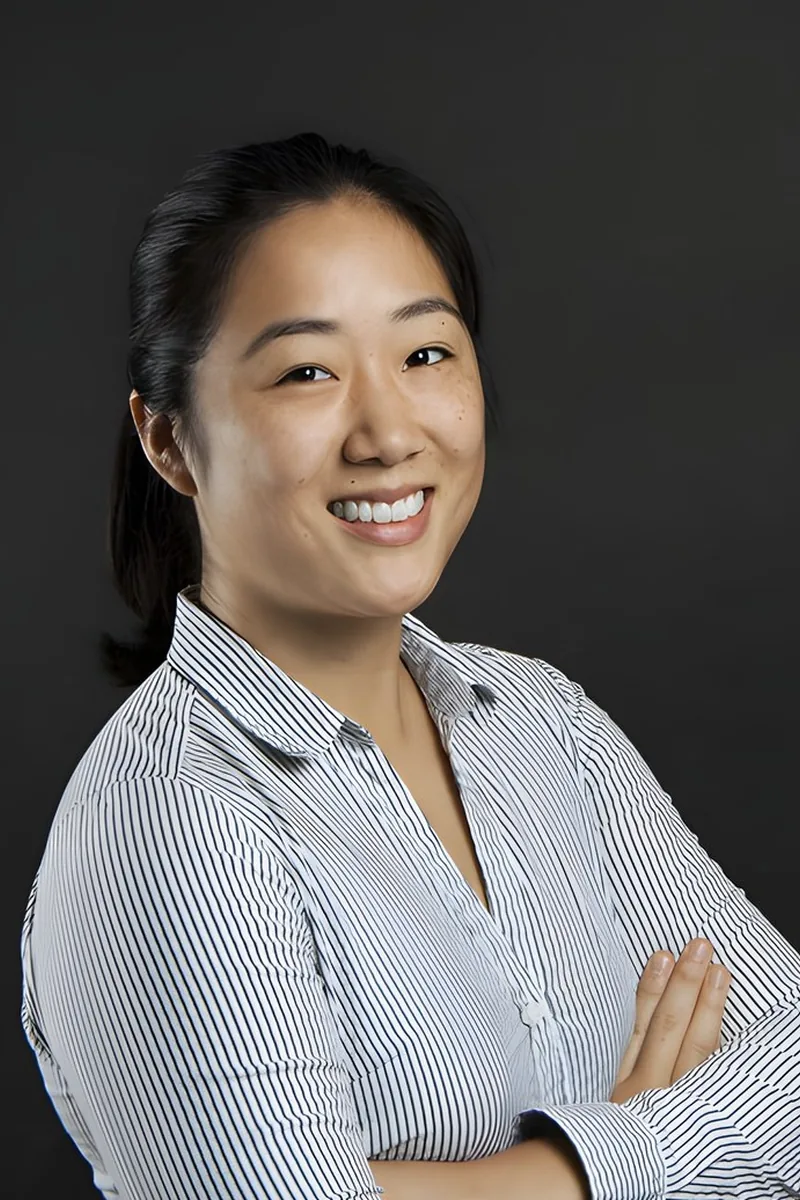
Limits, derivatives, and integrals each demand a different kind of thinking, and students who try to memorize procedures without grasping the underlying logic tend to hit a wall at the chain rule or related rates. Asta unpacks each concept visually and algebraically so the reasoning behind techniques like u-substitution actually clicks. Her 35 ACT composite speaks to the quantitative rigor she brings.
Biomedical engineering at Northwestern means Ingrid has used calculus as a daily tool — computing integrals for drug delivery models, differentiating rate equations in biomaterials research, and applying differential equations in her work at the John Rogers Lab. That hands-on engineering context lets her teach concepts like the chain rule or integration by parts through problems where the math actually builds something, not just satisfies a homework prompt.
Between a biomedical engineering degree and a PhD in statistics, Sam has used calculus as a daily working tool — from modeling biological systems to deriving the probability distributions that underpin advanced statistical theory. That means he teaches integration techniques, series convergence, and multivariable concepts as tools with clear purpose, not just abstract exercises. Rated 4.9 by students.
Elena's academic path runs through government, Spanish, and law — not mathematics — so calculus isn't her deepest subject. That said, a perfect 1600 SAT demonstrates serious quantitative ability, and her tutoring philosophy of listening to students work through problems and pinpointing exactly where their reasoning breaks down applies especially well to early calculus, where a single misunderstanding about limits or continuity can derail everything downstream.
Philosophy at Northwestern trained Emily to dissect complex arguments into their smallest logical steps — a skill that maps surprisingly well onto the sequential reasoning calculus demands, especially when unpacking what a limit definition actually says or why the chain rule works the way it does. Her legal career sharpened that precision further, since building a case and building a proof share the same demand: every step must follow inevitably from the last.
Philosophy trains you to follow an argument step by step, testing each claim before moving to the next — which turns out to be exactly how you survive a calculus proof or a related-rates problem. Jeff's Princeton philosophy degree and 1550 SAT give him both the logical rigor and the quantitative chops to unpack derivatives and integrals methodically, even though math isn't his primary academic home. He treats each new rule the way he'd treat a philosophical premise: something to justify from the ground up, not just accept on authority.
Between pharmacokinetics in medical school and the quantitative modeling baked into her MBA coursework at Kellogg, Anna has used calculus as a working tool — not just a classroom exercise. She teaches derivatives and integrals by connecting them to the rate-of-change problems she actually solves, like how drug concentrations shift over time or how marginal cost curves drive business decisions. A 36 ACT composite and 5.0 tutoring rating back up the quantitative chops.
Three years as a Cell Biology teaching assistant at Notre Dame meant Connor regularly applied calculus concepts — modeling reaction rates, interpreting growth curves, and explaining how differential changes play out in living systems. His biomedical sciences master's deepened that quantitative fluency, and he teaches derivatives and integrals by connecting them to the biological processes where they naturally appear. Rated 5.0 by students.
Studying Philosophy-Neuroscience-Psychology on a premed track at Washington University in St. Louis, Astoria has worked through calculus in the context of modeling neural processes and biological systems — territory where derivatives and integrals aren't abstract exercises but tools for describing how signals propagate and concentrations shift. Her cellular and molecular biology degree reinforces that quantitative fluency, and a 36 ACT composite confirms she can break down rigorous problem-solving into clear, logical steps. Rated 4.8 by students.
Until age 16, Viktor thought math was just blind formula memorization — then a series of teachers revealed the deeper logic underneath, and he ended up majoring in mathematics at UChicago. That shift from "why do I need this" to genuine understanding is exactly what he brings to calculus: unpacking concepts like the chain rule or integration by parts so each step follows naturally from the last, not from a memorized recipe. His 1600 SAT and current CS master's work at NYU keep him immersed in the kind of mathematical thinking calculus demands.
Studying political science at the graduate level meant Alex spent years building arguments through logical, sequential reasoning — a skill that maps surprisingly well onto the step-by-step logic of early calculus, where each concept (limits, continuity, the definition of a derivative) depends on genuinely understanding the one before it. He also teaches algebra and quantitative reasoning, so he can quickly spot and shore up the prerequisite gaps that often make calculus feel harder than it actually is.
Cognitive science at McGill involves modeling how the brain processes information — and that means working through the calculus behind learning curves, signal detection theory, and neural network activation functions. Hannah brings that applied math fluency to teaching derivatives and integrals, connecting each concept to the quantitative modeling she uses in her own coursework. Her 34 ACT composite confirms she's sharp on the fundamentals, too.
Economics at the University of Chicago is calculus-heavy — demand curves, marginal utility, optimization problems, and elasticity all run on derivatives and integrals applied to real decision-making. Ellie has worked through that material firsthand, which means she can teach the mechanics of differentiation and integration alongside the intuition for what those tools actually measure. Her 1520 SAT confirms the quantitative chops to back it up.
Psychology at Duke doesn't scream calculus, but Pinelopi's 1530 SAT and her coursework in statistical modeling and research methods mean she's comfortable with the quantitative reasoning that underpins derivatives and integration. She breaks down problems by connecting each new rule to the algebraic patterns students already know from pre-calc, making the transition into calculus feel like a logical next step rather than a cliff. Rated 5.0 by students.
Pre-med biology and chemistry at Northwestern means Kade uses calculus constantly — reaction rates in chemistry, enzyme kinetics in biology, and the differential models that describe how biological systems change over time. That daily exposure to applied math gives him a fluency with derivatives and integrals that's grounded in solving real scientific problems, not just working through textbook exercises. His 1550 SAT confirms the quantitative chops to back it up.
As a Course Assistant for an introductory calculus course at Harvard, Sanjana spends her weeks grading proofs, running office hours, and diagnosing the specific points where differentiation and integration stop making sense. That hands-on teaching experience means she can quickly identify whether a student's confusion lives in the algebra, the conceptual framework, or the problem-solving strategy — and address the real issue.
Economics at the University of Chicago is calculus-heavy — demand curves, marginal analysis, and optimization problems all run on derivatives and integrals, so Benjamin encounters this material constantly in his coursework. His 35 ACT composite backs up that quantitative fluency, and he teaches calculus by connecting each rule to the economic intuition behind it, making concepts like the chain rule or related rates feel purposeful rather than abstract.
Molly's degrees are in History and Elementary Education rather than mathematics, so she's straightforward that calculus is not her area of depth. That said, her 1480 SAT and years teaching math through middle school mean she can walk students through the conceptual groundwork — particularly the intuition behind limits and what a rate of change actually represents — with the patient, step-by-step clarity that's earned her a 5.0 rating.
Economics at the University of Chicago is calculus-heavy — demand curves, marginal utility, and optimization problems all run on derivatives and integrals, so Jessica encounters this math constantly in her coursework. Her 1590 SAT and 36 ACT confirm she has the quantitative horsepower to match, and she teaches calculus concepts by connecting the abstraction to the economic models where they do real work.
Music composition is surprisingly calculus-adjacent — Charles's theory training involved analyzing continuous change in waveforms, harmonic series, and the mathematical structures underlying sound. His 33 ACT composite confirms strong quantitative chops, and he brings that same pattern-recognition instinct to teaching derivatives and integrals, making the shift from algebraic mechanics to calculus thinking feel less like a wall and more like a natural extension. Rated 5.0 by students.
I am a recent graduate of the University of Chicago with a BA in English and a MA in the Humanities. My specialties are tutoring in test prep, writing, and reading. I am more than happy to spend time on my students outside of our organized sessions to ensure everyone meets their goals. Please do not hesitate to reach out if you have any questions. Looking forward to our tutoring sessions!
Biology undergrad at UIUC meant Todd worked through calculus in the context of growth models, enzyme kinetics, and rate-dependent systems where derivatives aren't abstract — they describe how living things actually change. That science-first perspective, paired with a 33 ACT composite and a 5.0 tutoring rating, means he can ground integration and differentiation in problems that feel tangible rather than purely symbolic.
Finance and economics at Notre Dame meant Benjamin wasn't just taking calculus — he was applying it, working through optimization problems, marginal analysis, and rate-of-change models that drive real financial decision-making. That background, plus a perfect 36 ACT, means he can teach derivatives and integrals as tools with actual purpose rather than abstract procedures. He's known for sharing computation shortcuts and intuitive tricks that make the mechanics faster once the concepts are solid.
Gloria's neuroscience training required heavy calculus — modeling neural firing rates, analyzing exponential decay in pharmacokinetics, and working through differential equations that describe biological systems. She teaches derivatives and integrals by connecting them to real phenomena, which makes abstract rules like the chain rule and integration by parts click faster.
Fourth-year med students don't escape calculus — Brian's biology undergrad and medical training meant working through rate-of-change problems in contexts like enzyme kinetics, drug absorption curves, and physiological modeling, so he teaches derivatives and integrals with that applied science lens. His 33 ACT composite backs up the quantitative chops, and his approach emphasizes understanding the mechanics behind each rule so students can adapt when problems look unfamiliar.
Charlie's English literature degree from the University of Chicago isn't a math credential, but a 35 ACT composite and five-plus years of tutoring math at multiple levels show he can handle quantitative material with real fluency. His approach to calculus mirrors how he tackles dense texts — slow down, identify the underlying structure, and make sure each logical step is airtight before moving forward, which pays off especially when students hit the chain rule or related rates and need to see how multiple ideas connect at once.
Before pivoting to his PhD in Comparative Human Development at the University of Chicago, Gabriel built his academic foundation on math — he calls it his favorite subject going back to childhood, and his teaching history spans pre-algebra through calculus. That genuine enthusiasm for quantitative thinking means he can trace the thread from algebraic manipulation all the way through limits and integration, showing students how each new idea grows out of something they already understand. Rated 5.0 by students.
Economics coursework leans heavily on calculus — marginal analysis, optimization problems, and interpreting how cost and revenue functions change at the margin are all derivative applications Joshua worked through during his undergraduate studies. A 1540 SAT confirms the quantitative chops to back that up, and he teaches the material by connecting each rule to the economic intuition behind it, so the math feels like a tool rather than an abstraction.
Economics at Northwestern means Sarah has worked through calculus as the engine behind supply-and-demand curves, marginal analysis, and optimization problems — not as abstract math but as the language her major actually speaks. Her 34 ACT confirms strong quantitative reasoning, and she teaches derivatives and integrals by anchoring them in the economic models where they do real work.
Architecture studio work is surprisingly calculus-heavy — optimizing structural loads, calculating areas under curves for material estimates, and modeling how forces distribute across surfaces all require fluency with derivatives and integrals. Grace's architecture degree from the University of Chicago means she's applied these concepts to real design problems, not just textbook exercises. Her 1530 SAT and 5.0 tutoring rating back up that quantitative strength.
Materials engineering at Northwestern put Michael through the full calculus sequence in contexts where it actually matters — stress-strain curve analysis, heat transfer modeling, and the integral-based math behind material phase transformations. That means he teaches derivatives and integrals as tools with physical meaning, not just symbolic manipulation exercises. Rated 5.0 by students.
Mahalia's academic home is creative writing and language arts, not mathematics, so she's candid that calculus sits well outside her primary expertise. That said, her 1550 SAT and 35 ACT demonstrate real quantitative ability, and her knack for breaking complex ideas into clear, logical steps — honed through years of teaching writing structure — carries over surprisingly well to unpacking early calculus concepts like limits and derivative rules.
Chemical engineering at the university level demands daily fluency in calculus — integration by parts, multivariable chain rules, differential equations embedded in thermodynamic models. Siva doesn't just teach procedures; he connects each calculus concept to the physical problems that motivated its invention, which makes the logic stick long after the exam.
Teaching middle school math in Chicago Public Schools means Elizabeth spends every day building the algebraic and geometric reasoning that calculus eventually demands — so she knows exactly which gaps trip students up when they hit limits and derivatives for the first time. Her 34 ACT composite confirms she can handle the quantitative side herself, and her 5.0 tutoring rating shows she can make that transition from pre-calculus thinking to calculus thinking click for others.
Derivatives and integrals become far less intimidating once a student can visualize what's actually happening on a curve. Brett approaches Calculus by grounding each rule — chain rule, product rule, u-substitution — in concrete graphical meaning before drilling the procedural side. That balance between understanding and practice is what keeps students from freezing on exam day.
Literature majors don't usually end up on a calculus page, and Jacob is honest that this isn't his deepest subject — but his 35 ACT composite reflects real quantitative ability, and his analytical instincts from close-reading complex texts translate surprisingly well to parsing multi-step problems. He's strongest with the conceptual scaffolding of early calculus, walking through what a derivative actually represents before diving into computation.
Economics at the University of Chicago is calculus-heavy — demand curves, marginal utility, and optimization problems all run on derivatives and integrals, so Ethan encounters this math in nearly every core class. That daily exposure means he can walk through differentiation rules and integration techniques with the fluency of someone who actually uses them, not just someone who passed the course. His 1550 SAT confirms the quantitative chops to back it up.
Studying the biological basis of behavior at the college level meant Ruthie worked through calculus in the context of modeling neural signals, growth curves, and the quantitative methods that underpin behavioral research — so derivatives and integrals aren't abstract to her. She teaches the material by connecting each concept back to how rates of change actually function in biological systems, making the math feel purposeful. Rated 5.0 by students.
Karishma's degrees are in English and Psychology rather than mathematics, so calculus is honestly outside her primary wheelhouse. That said, her 34 ACT demonstrates real quantitative ability, and her psychology training — which leans on statistical modeling and interpreting rates of change in behavioral data — gives her a foothold for walking through early concepts like limits and derivatives in plain, jargon-free language.
Testimonials
Because the right Calculus tutor makes all the difference.
Average Session Rating – Based on 3.4M Learner Ratings
Nearby Calculus Tutors
Other Round Lake Beach Tutors
Related Math Tutors in Round Lake Beach
Frequently Asked Questions
Varsity Tutors matches Round Lake Beach students with expert Calculus tutors for 1-on-1 instruction. We pair each student with a tutor based on their specific needs, learning style, and goals.
Whether you need homework help, exam prep, or want to get ahead, our Calculus tutors are ready to help.
Common challenges include gaps from earlier material, difficulty with specific concepts, and trouble applying learning to new problems. These issues can snowball quickly in Calculus.
A tutor identifies where you're stuck, fills in gaps, and provides targeted practice. The 1-on-1 format means you get help exactly where you need it.
Tutors work with your student's actual coursework—homework assignments, class notes, and upcoming tests. This keeps tutoring directly relevant to what's happening in the classroom.
When you share information about your student's school and curriculum, we can match you with a tutor who has relevant experience.
All tutors complete background checks, credential verification, and teaching evaluation. Many of our Calculus tutors hold advanced degrees or have years of teaching experience.
You can review tutor profiles to find someone with the right background for your student's level and needs.
Many students see improved grades within a few weeks, along with better understanding of Calculus concepts and more confidence tackling challenging material.
Tutors track progress and adjust their approach to ensure continued improvement.
Most students benefit from 1-2 sessions per week. More frequent sessions help if your student is significantly behind or has an important exam coming up.
Your tutor can recommend a schedule based on your student's specific situation and goals.
Tutoring is purchased in packages of hours, with rates varying by tutor experience. Varsity Tutors offers several options to fit different budgets and needs.
You can discuss pricing during your consultation to find what works best.
Your tutor will assess where your student is, discuss goals, and start working on priority areas. Most students bring current homework or upcoming test material to focus on.
By the end, you'll have a clear sense of how the tutor can help and a plan for moving forward.
Let’s find your perfect tutor
Answer a few quick questions. We’ll recommend the right plan and match you with a top 5% tutor.