Award-Winning AP Calculus AB Tutors
serving Round Lake Beach, IL
AP Calculus AB
Tutors in Round Lake Beach
Private 1-on-1 tutoring, weekly live classes for academic support, test prep & enrichment, practice tests and diagnostics, and more to elevate grades and test scores.
Based on 3.4M Learner Ratings
UniversitiesSchools & Universities
DeliveredHours Delivered
ProficiencyGrowth in Proficiency
Who needs tutoring?
No obligation. Takes ~1 minute.

Mechanical engineering at Harvard means Christopher builds with calculus daily — every force balance is a derivative, every energy calculation an integral — so the AB curriculum maps directly onto problems he's already solving in his coursework. He's especially sharp at teaching students how to navigate optimization and area-between-curves setups, where translating the scenario into the right expression is the real challenge. His 35 ACT and 4.8 rating back up an approach grounded in engineering intuition rather than formula memorization.
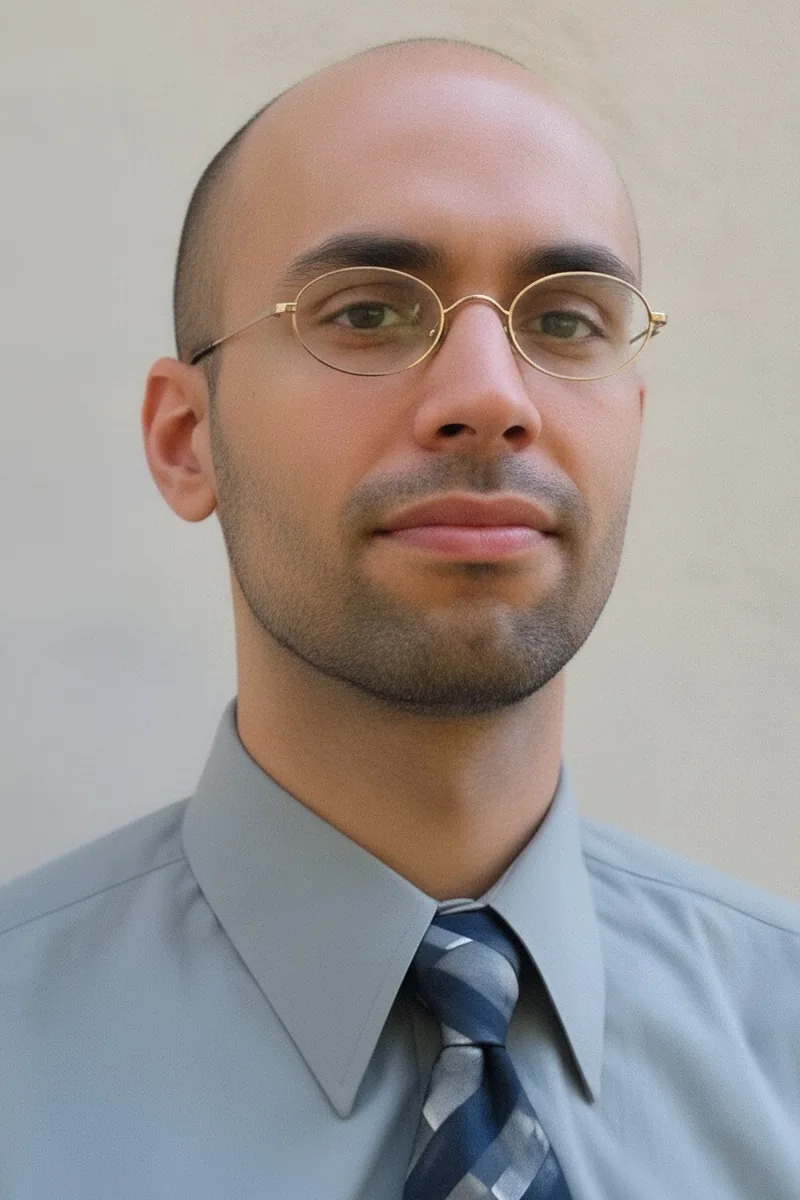
A PhD in statistics built on a biomedical engineering foundation means Sam has spent years where calculus isn't a course — it's the machinery underneath everything, from deriving probability distributions to modeling biological systems. That depth shows when teaching limits and the Fundamental Theorem, where he can trace each concept forward into the math students will actually use in college. Rated 4.9 by students.
The jump from Pre-Calculus to AP Calculus AB is where many students first encounter limits, derivatives, and the chain rule as genuinely new ideas rather than extensions of old ones. Viktor's UChicago math degree means he can explain the reasoning behind each rule so that related rates and accumulation problems start to feel logical rather than formulaic. His 1600 SAT speaks to the precision he brings to every concept.
Teaching calculus at Harvard as a Course Assistant gives Sanjana a front-row seat to the mistakes students make most often — and the explanations that actually click. She breaks down AB topics like related rates, the Fundamental Theorem, and integration techniques by connecting each one back to the graphical intuition behind it.
Pre-med biology and chemistry at Northwestern means Kade is constantly using calculus to make sense of other disciplines — enzyme kinetics, population growth models, dose-response curves — which keeps the AB material grounded in something tangible. He's especially good at walking through limit definitions and continuity arguments, the early-course concepts that quietly determine whether the rest of the year clicks or collapses. His 1550 SAT reflects the kind of precise, methodical thinking that pays off on AP free-response questions.
Most AB students can differentiate a polynomial just fine — it's the moment a free-response question asks them to interpret the meaning of a derivative or set up an integral from a word problem that things fall apart. Zac tackles those conceptual gaps head-on, breaking application problems into smaller reasoning steps before any computation starts. His 34 ACT and 4.9 rating point to the kind of structured, clear thinking that makes tough calculus concepts land.
Limits, derivatives, and the Fundamental Theorem of Calculus all require a shift in mathematical thinking that trips up even strong algebra students. Jake's quantitative training at Northwestern gives him a clear framework for walking through each concept step by step, connecting the graphical intuition to the formal rules. His 5.0 rating speaks to how well that approach lands.
Cognitive science at Northwestern taught Amanda to think about how people learn — and she applies that lens to the specific moments in AB Calculus where understanding collapses, like the jump from computing a derivative mechanically to interpreting what it means on a free-response question. Her 36 ACT and prior experience tutoring math at Mathnasium mean the computational side is second nature, freeing her to zero in on the conceptual gaps that actually cost students points. She's especially effective at teaching limits and continuity as a coherent story rather than disconnected epsilon-delta exercises.
Chemical engineering at the undergraduate level and then medical school means Siva has been setting up and solving calculus problems in high-stakes contexts for years — from modeling heat transfer and reaction kinetics to quantifying physiological rates of change. That depth shows when he teaches limits, continuity, and the mechanics of integration, because he can explain not just the procedure but the reasoning that makes free-response setups feel logical instead of mysterious. Rated 5.0 by students, with a 1560 SAT backing up the quantitative precision behind his approach.
Neuroscience majors don't usually get credit for their calculus chops, but Jhonatan's specialization required modeling membrane potentials and synaptic decay curves — problems where understanding what a derivative captures about a changing system is the whole point. He brings that same instinct to the AB curriculum's trickiest conceptual territory, like connecting the behavior of a function to the graph of its derivative or interpreting a definite integral as net change. Rated 5.0 by students.
Most tutors on this page come from STEM backgrounds — Jack's economics training at Northwestern means he learned calculus as the language of optimization, marginal analysis, and cost modeling, which gives him a distinctive angle on the AB curriculum's application problems. He's especially sharp at teaching students how to translate word problems into the correct derivative or integral setup, a skill his 35 ACT confirms he's mastered himself. Rated 5.0 by students.
Pursuing a math degree at Vanderbilt with a focus on secondary education means Alyssa is training specifically to make concepts like limits, derivative applications, and the Fundamental Theorem accessible to the students who'll encounter them for the first time in AB. She breaks tricky free-response setups into smaller reasoning steps — identifying what's changing, naming the rate, then building the equation — so the problem-solving process feels repeatable rather than improvised. Rated 5.0 by students, with a 34 ACT backing up her quantitative instincts.
I am a graduate of Cornell University's College of Arts and Sciences. I received my Bachelor of Arts in Chemistry with Distinction in 2015. Since graduation, I was a physics/chemistry teacher and soccer coach at a private school in Virginia for a year, where I led the soccer team to an undefeated season. Before teaching and coaching professionally, I was a Teaching Assistant for the Cornell Math and Physics Departments, where I taught many subjects including calculus, mechanics, electromagnetism. Throughout my time at Cornell and as a teacher, I tutored subjects ranging from the SAT to AP Physics and Algebra II, which is where my true talents lie: in small group or one-on-one settings where I can give students the full attention they deserve and tailor my approach specifically to their learning styles. This is why I am now pursuing tutoring as a part-time occupation at Varsity Tutors. I embrace teaching all math and science subjects, especially physics and calculus, at both the college and high school level and will go above and beyond to make sure all of my students succeed, according to their definition of success. In my spare time, I enjoy playing league soccer, basketball, tennis and guitar, and also like to travel and see as much of the world as I can.
A University of Chicago math degree means John didn't just learn calculus — he studied the theory underneath it. For AP Calculus AB students, he unpacks limits, derivatives, and the Fundamental Theorem in ways that build genuine understanding of why the rules work. That conceptual grounding tends to pay off when students face the less predictable free-response questions on exam day.
Studying computer science and neuroscience at MIT means Mercy writes code that leans heavily on calculus concepts — gradient descent, optimization, modeling neural signals — so she teaches the AB curriculum with a sense of where these ideas actually lead. She's especially sharp at breaking down limits and the chain rule, the two areas where students most often lose the thread between what they're computing and why. Her 1560 SAT reflects the quantitative precision she brings to exam-style problems.
Having TAed calculus courses while earning her biomedical engineering degree, Maggie knows exactly which AB concepts trip students up most — limits that require algebraic manipulation before evaluation, the transition from average to instantaneous rate of change, and setting up definite integrals from word problems. Her doctoral work in biomedical sciences keeps her fluent in the applied side of calculus, so she teaches techniques like the chain rule and integration by substitution with the confidence of someone who still uses them daily.
Limits, derivatives, and integrals each build on the last, so a shaky understanding of one concept can quietly derail everything that follows. Will's approach is to nail down the general principle — say, what a derivative actually represents — before working through specific techniques like the chain rule or implicit differentiation. Studying physics at Rice means he uses calculus daily and can show students why these tools matter beyond the exam.
Having both a computer science degree and a 36 ACT, Benjamin brings an algorithmic precision to AP Calculus AB — he teaches limit definitions and derivative rules as logical sequences rather than formulas to memorize, which mirrors how proofs and algorithms work in CS. That structured thinking pays off especially on the exam's trickier conceptual questions, like interpreting a function's behavior from its derivative graph or reasoning through the Mean Value Theorem. Rated 5.0 by students.
The jump from memorizing derivative rules to actually applying integration techniques and the Fundamental Theorem is where most AP Calc AB students stall out. Michael breaks down each concept using the intuition he's built through his engineering program at Northwestern, where calculus isn't just a class — it's a daily tool for circuit analysis and system modeling.
Between a nuclear engineering undergrad and an electrical engineering master's, Moe has taken — and taught — more calculus-heavy coursework than most tutors will ever encounter, from solving differential equations in reactor physics to analyzing signal behavior through integration. That depth means he can unpack the AB exam's trickiest limit and continuity questions by connecting them to the bigger mathematical picture students rarely see in a standard classroom. Rated 4.9 by students.
Neuroscience coursework at UIC's Honors College means Rohan regularly encounters calculus in context — modeling neural firing rates with derivatives, quantifying signal accumulation with integrals — which shapes how he teaches the AB curriculum. He's especially effective at demystifying the chain rule and Riemann sums by tying each technique back to concrete scenarios where the math describes something real. His 33 ACT and 4.8 rating reflect the kind of precision that pays off on AP free-response questions.
Studying neuroscience at Yale means Grace regularly works with rate-of-change models — neural firing frequencies, membrane potential shifts — that are pure calculus dressed in biological language. That crossover makes her especially effective at teaching students to interpret what a derivative or integral actually represents, which is exactly what the AB exam's free-response section demands. Her experience tutoring math at Mathnasium through high school gives her a deep playbook for breaking down limit definitions and integration techniques at whatever level a student needs.
I am a sophomore at UIUC studying agricultural and biological engineering. Eventually, I hope to work on environmental engineering related projects concerning the improvement of ecosystem management and reducing the harmful effects of pollutants in the environment. As an aspiring engineer, my favorite subjects to teach students are math and science. I've been working with kids as a swim instructor and music teacher for the past six years now. As I've begun developing experience tutoring students, my favorite part about helping students learn math and science concepts is teaching them how these different concepts interconnect and later helping them to develop critical thinking skills to work through difficult material.
Limits, derivatives, and integrals each build on the last, so a shaky grasp of one concept tends to snowball through the rest of the AP Calculus AB curriculum. Thomas treats each new idea as a problem-solving tool rather than a formula to memorize — connecting, for instance, the chain rule to how real physical systems change over time. His physics background at Notre Dame keeps the math grounded in intuition rather than abstraction.
I am a 2009 graduate of the University of Chicago in Statistics and Political Science. I have been a tutor for test prep (including ACT, SAT, LSAT and AP testing), academic and creative writing, and general academic assistance for three years.
Holding a master's degree in mathematics, Demirhan teaches AP Calculus AB with the formal rigor of someone who's studied the proofs behind every theorem students encounter — from the epsilon-delta definition of a limit to the precise reasoning underpinning the Fundamental Theorem. That depth means he can diagnose whether a student's mistake is computational or conceptual, then address the actual gap instead of re-explaining the same procedure. Rated 5.0 by students, with a decade of experience spanning college lectures to one-on-one tutoring.
Three physics degrees mean James has spent years where calculus isn't a course — it's the language, used every day to describe how objects move, how fields behave, and how energy transforms. That deep fluency shows up most when he teaches limits and the connection between derivatives and motion, giving students a physical anchor for concepts that otherwise feel purely symbolic. His 4.9 rating across 27 subjects reflects someone who genuinely knows how to make tough material land.
Chemical and biomolecular engineering forced Steve to internalize calculus at a level most AP students never see — computing derivatives to track reaction kinetics and setting up integrals to model mass and energy balances across complex systems. That training makes him especially effective at teaching the AB exam's application-heavy questions, where building the right mathematical model from a word problem is the real challenge. Rated 5.0 by students.
Limits, derivatives, and integrals form the backbone of every engineering course Ryan took at Carnegie Mellon, so he teaches AB Calculus with a clear sense of where each concept leads and why it matters. He's especially sharp at unpacking the chain rule in context — related rates, implicit differentiation, and optimization problems that trip students up when they try to rely on formulas alone. His 4.8 rating speaks to an approach that builds genuine understanding of each theorem before moving to the next.
Limits, derivatives, and integrals each build on the last, so a shaky grasp of one concept snowballs fast in AP Calculus AB. David breaks down each layer methodically — connecting, for instance, the chain rule to real-world rate-of-change problems from his engineering background at UIUC. His 5.0 client rating speaks to how well that structured approach clicks with students.
Bioengineering students at UIC don't get to treat calculus as an abstraction — Kishore uses derivatives and integrals daily to model everything from enzyme kinetics to fluid transport in biological systems, which means he teaches the AB curriculum with a built-in sense of what the math physically describes. He's particularly strong at walking through limit definitions and continuity arguments, the conceptual groundwork that prevents students from hitting a wall once the course reaches integration. Rated 4.9 by students.
When students can explain *why* the limit definition leads to the power rule — not just recite it — the rest of the AB curriculum starts to fall into place. Kaley's mathematics degree means she teaches that conceptual scaffolding from the ground up, connecting each differentiation and integration technique back to the reasoning that makes it work. Her 34 ACT and deep comfort with pure math show up in how cleanly she walks through the multi-step logic behind free-response problems.
Limits, derivatives, and the fundamental theorem of calculus all click faster when a student is working problems instead of watching someone else solve them. Spencer builds each AP Calculus AB session around doing — sketching curves, setting up related rates, reasoning through accumulation functions. His 36 ACT and engineering background at UIUC speak to the depth of his mathematical fluency.
Limits, derivatives, and integrals each build on the one before, so a shaky understanding of limit behavior can quietly derail everything that follows. Thomas spent two to three years grading calculus assignments at Valparaiso and saw firsthand which mistakes students make most often on related rates, chain rule applications, and Riemann sums. That pattern recognition lets him zero in on trouble spots quickly — rated 4.9 by students.
Grading thousands of AP Calculus free-response exams as an official Reader gave Timothy a precise understanding of where students lose points — incomplete limit definitions, shaky chain rule applications, and poorly justified Riemann sum interpretations. He teaches AB students to think and write the way the exam rewards. His 5.0 rating speaks to how well that translates into score gains.
Limits, derivatives, and integrals each build on the last — and Christine teaches them that way, connecting each new concept back to the reasoning that makes it click. As a Biological Sciences major at UIC, she regularly applies calculus to model real-world systems, which gives her a practical lens on the AP Calculus AB curriculum that goes beyond rote problem-solving.
Limits, derivatives, and integrals each build on the last, and a shaky grasp of one concept can quietly undermine everything that follows. Eitan breaks down each AB topic — related rates, Riemann sums, the Fundamental Theorem — by tying it back to what's physically happening, drawing on the way he applied calculus daily as a physics major.
The moment limits stop being abstract and start connecting to derivatives and integrals is when AP Calculus AB finally makes sense — but many students never get that moment in a crowded classroom. Miriam teaches the chain rule, related rates, and the Fundamental Theorem by grounding each in the graphical and numerical reasoning the AP exam actually tests, not just symbolic manipulation.
Finance majors live in derivatives — not just the financial kind, but the calculus behind pricing models, rate-of-change analysis, and optimization of cost functions, which is exactly the training Michal brings from his undergraduate work. He's especially sharp at teaching students how to set up and interpret optimization and accumulation problems, the application-heavy questions that separate strong AB scores from mediocre ones. His 32 ACT and 4.8 rating back up an approach built on making the math mean something concrete.
Limits, derivatives, and integrals click faster when a student sees how each concept builds on the last rather than treating every unit as a separate hurdle. Sareen earned her degrees summa cum laude in science-heavy programs that demanded fluency in calculus, and she applies that depth to walking through AP Calculus AB's trickiest free-response problems step by step.
Testimonials
Because the right AP Calculus AB tutor makes all the difference.
Average Session Rating – Based on 3.4M Learner Ratings
Practice AP Calculus AB
Free practice tests, flashcards, and AI tutoring for AP Calculus AB
Nearby AP Calculus AB Tutors
Other Round Lake Beach Tutors
Related Math Tutors in Round Lake Beach
Frequently Asked Questions
Varsity Tutors matches Round Lake Beach students with expert AP Calculus AB tutors for 1-on-1 instruction. We pair each student with a tutor based on their specific needs, learning style, and goals.
Whether you need homework help, exam prep, or want to get ahead, our AP Calculus AB tutors are ready to help.
Common challenges include gaps from earlier material, difficulty with specific concepts, and trouble applying learning to new problems. These issues can snowball quickly in AP Calculus AB.
A tutor identifies where you're stuck, fills in gaps, and provides targeted practice. The 1-on-1 format means you get help exactly where you need it.
Tutors work with your student's actual coursework—homework assignments, class notes, and upcoming tests. This keeps tutoring directly relevant to what's happening in the classroom.
When you share information about your student's school and curriculum, we can match you with a tutor who has relevant experience.
All tutors complete background checks, credential verification, and teaching evaluation. Many of our AP Calculus AB tutors hold advanced degrees or have years of teaching experience.
You can review tutor profiles to find someone with the right background for your student's level and needs.
Many students see improved grades within a few weeks, along with better understanding of AP Calculus AB concepts and more confidence tackling challenging material.
Tutors track progress and adjust their approach to ensure continued improvement.
Most students benefit from 1-2 sessions per week. More frequent sessions help if your student is significantly behind or has an important exam coming up.
Your tutor can recommend a schedule based on your student's specific situation and goals.
Tutoring is purchased in packages of hours, with rates varying by tutor experience. Varsity Tutors offers several options to fit different budgets and needs.
You can discuss pricing during your consultation to find what works best.
Your tutor will assess where your student is, discuss goals, and start working on priority areas. Most students bring current homework or upcoming test material to focus on.
By the end, you'll have a clear sense of how the tutor can help and a plan for moving forward.
Let’s find your perfect tutor
Answer a few quick questions. We’ll recommend the right plan and match you with a top 5% tutor.