Award-Winning Pre-Calculus Tutors
serving Round Lake Beach, IL
Pre-Calculus
Tutors in Round Lake Beach
Private 1-on-1 tutoring, weekly live classes for academic support, test prep & enrichment, practice tests and diagnostics, and more to elevate grades and test scores.
Based on 3.4M Learner Ratings
UniversitiesSchools & Universities
DeliveredHours Delivered
ProficiencyGrowth in Proficiency
Who needs tutoring?
No obligation. Takes ~1 minute.
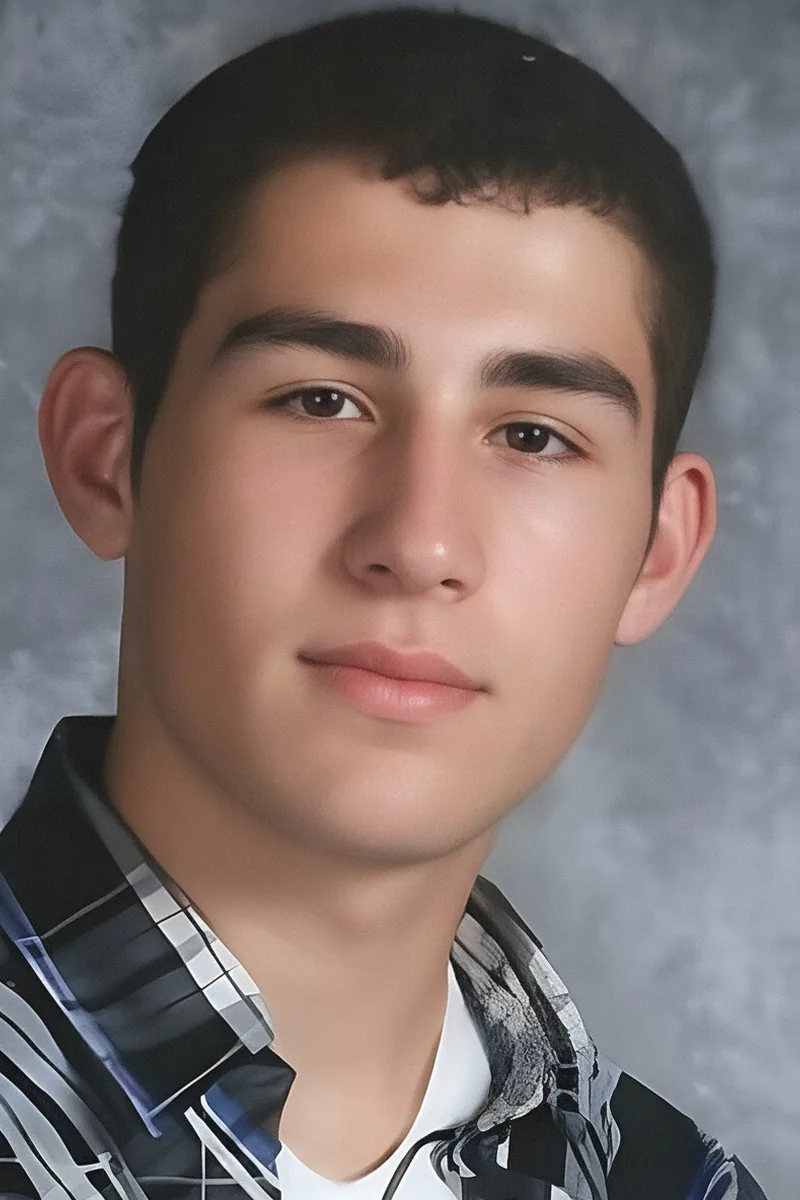
Mechanical engineering at Harvard means Christopher spends most of his time in calculus and differential equations — but he knows exactly which pre-calculus skills hold that work together, especially fluency with trigonometric graphs, composite functions, and the algebraic manipulation that makes limits possible later. He teaches each topic by gradually removing scaffolding until a student can tackle problems independently, flagging the specific mistakes that tend to snowball in calculus. His 35 ACT and 4.8 rating reflect a tutor who's recently built the same bridge his students are crossing now.
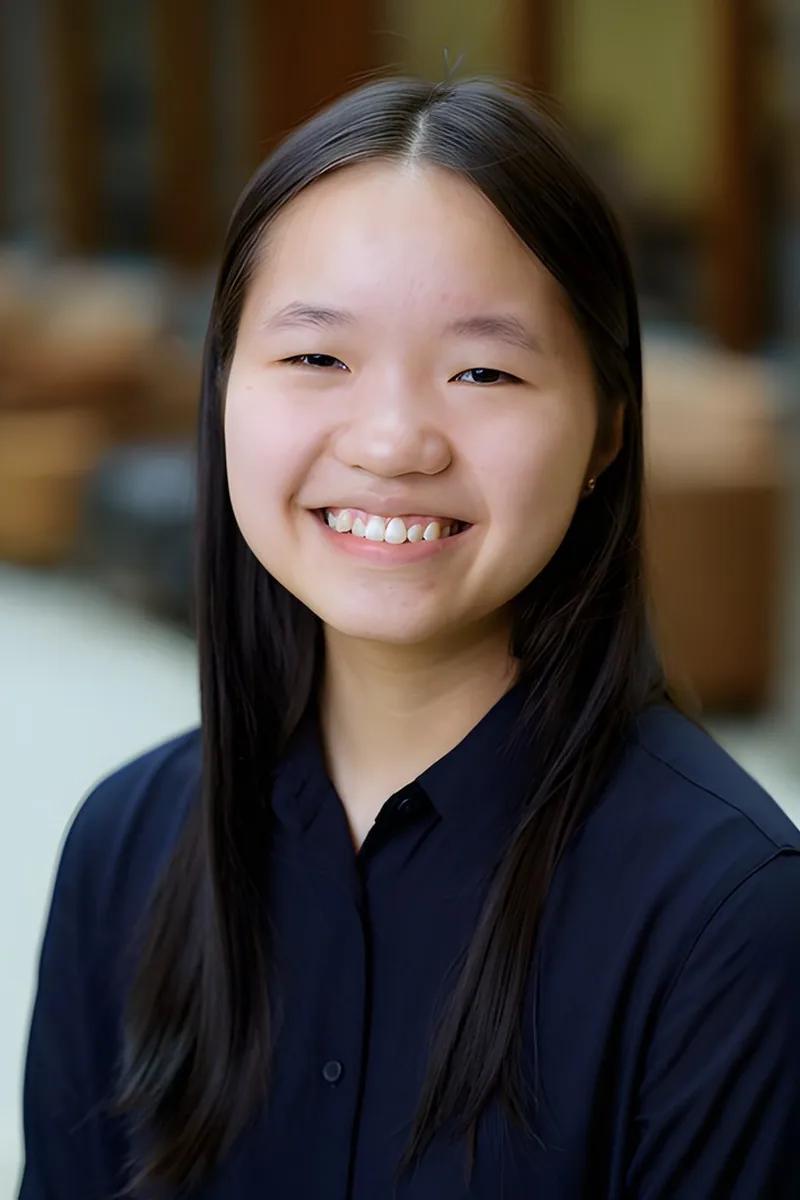
Biomedical engineering at Northwestern throws Ingrid into differential equations and signal processing that all trace back to pre-calculus fundamentals — so she knows exactly which skills in trigonometric manipulation, function composition, and exponential modeling need to be rock-solid before calculus arrives. She zeroes in on the conceptual gaps that trip students up, particularly around graph transformations and the behavior of rational and piecewise functions, building each idea from the algebra underneath it. Her 1540 SAT and 33 ACT reflect the quantitative grounding she brings to every session.
A PhD in statistics and a biomedical engineering degree mean Sam has spent years where pre-calculus isn't a course — it's the scaffolding holding together regression models, signal processing, and experimental design. He digs into the transition points that trip students up most, like moving from polynomial arithmetic to analyzing rational function behavior or connecting trig identities to their geometric origins. Rated 4.9 by students.
Until age 16, Viktor saw math as mindless formula memorization — then a series of great teachers revealed the deeper logic underneath, and he ended up majoring in mathematics at UChicago. That conversion story shapes how he teaches pre-calculus: he digs into *why* the unit circle works or what a logarithm actually means, so students build real understanding instead of a formula sheet they'll forget by finals. His 1600 SAT and 35 ACT confirm the mathematical fluency behind that approach.
I've been working with students for over seven years, from middle school all the way through college, across subjects like math, calculus, statistics, linear algebra, chemistry, and physics, with a lot of SAT and ACT prep mixed in. My background is perhaps a little unconventional. I have two bachelor's degrees, one in Engineering and one in Communication Studies, plus a Master's in Design. That combination means I can guide you through challenging technical material and communicate it in a way that is easy to grasp. What I care most about is helping students get to a place where they don't need me anymore. I know that sounds like a strange thing for a tutor to say, but I think it's the right goal. I'm not here to walk you through steps to copy down. I want you to understand why something works, because that's what holds up under pressure, on a test you haven't seen before. If you're ready to ace that test or prove that theorem that's been bugging you, reach out and let's work together
The jump into limits, trigonometric identities, and composite functions can feel overwhelming without someone who knows how to sequence the ideas clearly. Pinelopi has tutored math from pre-algebra through calculus, which means she can pinpoint exactly which earlier concept a student is missing when pre-calc material stops making sense. Rated 5.0 by students.
As a Course Assistant for Harvard's introductory calculus sequence, Sanjana sees exactly where pre-calculus gaps — shaky grasp of limits intuition, weak trigonometric identities, or incomplete understanding of function transformations — trip students up once the pace accelerates. She teaches those topics with that forward view, building each concept so it holds weight in the calculus course that's coming next. Holds a 5.0 rating and a 1560 SAT.
The jump into pre-calculus — trigonometric identities, limits intuition, complex rational functions — is where many students realize they can't rely on memorized shortcuts anymore. Benjamin's economics coursework at the University of Chicago keeps him immersed in the kind of rigorous mathematical thinking that pre-calc demands. He connects each new concept back to its underlying logic so students actually retain it.
Todd's biology degree from UIUC built the quantitative reasoning that pre-calculus demands — modeling population dynamics with exponential and logarithmic functions, analyzing periodic phenomena with trig, interpreting rate-of-change problems that preview calculus. He draws on that science background to give function families a concrete meaning, so topics like transformations and composite functions feel like tools with a purpose rather than abstract exercises. His 33 ACT and 5.0 rating back that up.
A statistics major at Northwestern, Jake knows exactly where pre-calculus concepts like polynomial behavior, exponential models, and function transformations show up in real data analysis — because he uses them constantly. He zeroes in on the algebraic reasoning that makes these topics intuitive, building each lesson around the specific gaps standing between a student and genuine confidence with the material. Holds a 5.0 rating and a 34 ACT.
The jump from Algebra 2 to Pre-Calculus is where many students first encounter the idea that functions are objects you can transform, compose, and invert. Amanda tackles this conceptual shift head-on, connecting topics like rational functions and trigonometric identities back to patterns students already recognize so the material feels like an extension rather than a wall.
The jump from Algebra 2 to Pre-Calculus is where many students lose their footing, especially around trigonometric identities, polar coordinates, and the behavior of rational functions. Michael approaches these topics by connecting them to the calculus concepts they're designed to prepare for, so students understand the purpose behind each new technique. His engineering degree means he's used every one of these tools in practice, not just on paper.
The jump into Pre-Calculus trips students up when trigonometric identities, limits, and complex rational functions all pile up at once. Brett tackles each topic by building intuition around graphs and behavior before diving into the algebra, so students understand what a function is doing and why. His 5.0 client rating speaks to how well that approach clicks.
Rachel's education and psychology background at Northwestern gives her a sharp read on where students get stuck in pre-calculus — particularly the conceptual jump from manipulating equations to reasoning about function behavior, transformations, and graphical analysis. She teaches those transitions by connecting new material to the algebraic thinking students already have, building each idea step by step rather than dumping a wall of new notation. Her 1490 SAT and 5.0 rating back that up.
I am a student at the University of Chicago majoring in mathematics & comparative human development. I sing in an acapella group, play violin, and on weekends I love to go for bike rides or long runs, see local theater and music performances, and explore the city of Chicago. Through my studies and bike rides and runs, I enjoy working hard and building personalized, step-by-step plans for pursuing the goals I set. Nonetheless, I also believe in the importance of having fun and finding enjoyment in my day-to-day life, which I do through music and geographic exploration. I believe that this enthusiasm, curiosity, and steady work ethic are the keys to achieving goals once thought impossible, and I hope to inspire such a mindset in the people with whom I work.
The jump into pre-calculus often overwhelms students because it layers trigonometric functions, complex numbers, and limits onto algebra skills that may still be developing. Amber's training in biological sciences at Northwestern required heavy quantitative coursework, so she's comfortable unpacking how exponential and logarithmic functions actually behave — not just how to graph them mechanically.
The jump to Pre-Calculus is often where students realize they can't rely on memorized procedures anymore — trigonometric identities, polar coordinates, and limits all demand a deeper kind of reasoning. Jack approaches each topic by connecting it to what's coming next in calculus, so the material has a purpose beyond the current chapter test.
With degrees in both mathematics and education, Alan tackles the pre-calculus curriculum from a teacher's vantage point — he knows exactly where students tend to lose the thread, whether it's piecing together piecewise functions or making sense of why inverse trig notation works the way it does. He builds each lesson around the specific conceptual gap a student is hitting, rather than marching through a generic sequence of topics. Rated 4.8 by students.
The jump into Pre-Calculus — trigonometric identities, limits, and complex functions — trips up students who coasted through earlier math courses. Hanlu tackles these topics by building each lesson around the underlying logic, so students understand why a unit circle works the way it does instead of just memorizing coordinates. Her broad math background across multiple levels gives her a clear picture of what foundational gaps to address.
I am a graduate of Cornell University's College of Arts and Sciences. I received my Bachelor of Arts in Chemistry with Distinction in 2015. Since graduation, I was a physics/chemistry teacher and soccer coach at a private school in Virginia for a year, where I led the soccer team to an undefeated season. Before teaching and coaching professionally, I was a Teaching Assistant for the Cornell Math and Physics Departments, where I taught many subjects including calculus, mechanics, electromagnetism. Throughout my time at Cornell and as a teacher, I tutored subjects ranging from the SAT to AP Physics and Algebra II, which is where my true talents lie: in small group or one-on-one settings where I can give students the full attention they deserve and tailor my approach specifically to their learning styles. This is why I am now pursuing tutoring as a part-time occupation at Varsity Tutors. I embrace teaching all math and science subjects, especially physics and calculus, at both the college and high school level and will go above and beyond to make sure all of my students succeed, according to their definition of success. In my spare time, I enjoy playing league soccer, basketball, tennis and guitar, and also like to travel and see as much of the world as I can.
Perfect scores on SAT math, SAT II Math IIC, and the BC Calculus AP exam mean Richard didn't just pass through pre-calculus — he mastered every concept in it and kept going. He teaches the course with an eye toward what's ahead, unpacking topics like logarithmic properties and trigonometric identities by showing exactly how they'll reappear in calculus and beyond. Rated 5.0 by students.
Connie's double major in Mathematical Data Science and Chinese at Dartmouth means her probability and linear algebra coursework constantly builds on the pre-calculus toolkit — polynomial behavior, composite functions, and the trigonometric reasoning that holds higher math together. She zeroes in on the conceptual bridges between algebra and calculus, particularly how transformations and rate-of-change intuition develop through careful work with function families. Her 34 ACT and 5.0 rating back that up.
A math degree from the University of Chicago means John didn't just pass through pre-calculus — he spent four years in one of the most rigorous undergraduate math programs in the country, where concepts like limits, continuity, and proof-based reasoning demanded that earlier material be truly internalized. He teaches pre-calc topics like polynomial behavior and trigonometric identities by connecting them forward to the calculus ideas they're quietly setting up. His current legal studies have only sharpened his ability to build careful, step-by-step arguments — a skill that translates directly to working through multi-step function analysis.
Most pre-calculus courses throw trigonometric identities, rational functions, and limits-preview material at students in rapid succession — Felix tackles the course by slowing down at the exact transition points where algebraic thinking has to become functional thinking. His math degree and 1520 SAT mean the underlying theory is second nature, so he can zero in on the conceptual shifts that actually trip students up, like why composition of functions behaves differently than arithmetic with them. Rated 5.0 by students.
The jump from algebra to pre-calculus is really a jump in how you think about functions — suddenly you're composing them, inverting them, and tracking their behavior across domains instead of just solving for x. Will is a physics major at Rice, which means he hits these concepts daily in contexts where getting the trig or the logarithmic relationship wrong means the physics falls apart. That constant applied pressure gives him a sharp eye for the specific conceptual gaps that trip students up before calculus.
Bioengineering grad work throws Mark into the deep end of the math that pre-calculus is building toward — signal processing, systems modeling, and differential equations all trace back to mastering trigonometric functions, limits of sequences, and the behavior of rational expressions. He zeroes in on making the leap from algebraic manipulation to thinking in terms of function families, so students actually understand what's changing when they shift, stretch, or compose functions. His 34 ACT reflects the quantitative instincts he brings to breaking down that transition.
The jump to Pre-Calculus is often where students realize they can't just memorize procedures anymore — trigonometric identities, polar coordinates, and limit intuition all demand genuine understanding. Rohan tackles this by showing how each topic serves as a direct setup for calculus, giving students a reason to care about why csc and sec behave the way they do. His background tutoring math through the high school sequence means he knows exactly where the common stumbling blocks hide.
Trigonometric identities, polar coordinates, and the behavior of rational functions all converge in Pre-Calculus to build the toolkit students need before calculus. Grace approaches each of these topics by showing how they connect to one another rather than treating them as isolated chapters. Her math background at Yale means she can explain not just the procedure but the reasoning behind it.
The jump from Algebra 2 to calculus stalls for most students somewhere in Pre-Calculus, usually around trigonometric identities or the shift from manipulating equations to analyzing function behavior. Lee tackles these sticking points by building intuition for what functions do graphically before diving into algebraic manipulation. His engineering training makes him especially sharp on the trigonometry and limits concepts that preview calculus.
Mechanical engineering at Carnegie Mellon throws Zhaleh into pre-calculus material constantly — her coursework in dynamics and thermodynamics depends on fluency with trigonometric identities, parametric equations, and the function behavior that bridges algebra to calculus. She zeroes in on how graph transformations actually work mechanically, building intuition for why a stretch or shift changes a function's output so students aren't just memorizing rules. Her 34 ACT confirms the quantitative skill behind that engineering perspective.
Robotics and control systems at Northwestern demand constant fluency in the exact material pre-calculus covers — polar coordinates, sinusoidal functions, vector components, and the behavior of complex expressions. Michael teaches these topics as an engineer who actually relies on them, breaking down concepts like conic sections and parametric equations by showing the mechanical intuition underneath the algebra. His 34 ACT confirms the quantitative backbone behind that approach.
Pre-med students often hit pre-calculus thinking it's just a speed bump before the courses that 'actually matter' — Aleeza, who scored a 36 ACT and is on the medical school track herself, teaches it as the toolkit it really is, connecting trigonometric identities and exponential models to the quantitative reasoning that shows up in everything from MCAT prep to pharmacology. She's especially sharp at diagnosing where a student's algebra intuition breaks down and rebuilding it before the gaps compound in calculus. Rated 4.9 by students.
Nuclear engineering and electrical engineering degrees mean Moe has solved thousands of problems where trigonometric identities, complex number operations, and function transformations weren't textbook exercises — they were the only way to model reactor behavior or analyze circuit responses. He digs into the mechanics of why a particular identity simplifies a problem or how shifting a parent function changes its graph, connecting each pre-calculus tool to the calculus concepts waiting on the other side. Rated 4.9 by students.
Working in a neurobiology lab with fifty octopuses means Sofia regularly encounters the exponential decay curves, logarithmic scaling, and periodic function models that pre-calculus is built around — she's not recalling these concepts from a textbook but from active research at UChicago. Her biology and physical sciences training gives her a knack for making abstract function families feel concrete, especially when students hit the wall between algebraic computation and the kind of functional thinking calculus will demand.
Having already pushed through Calculus 2 and Calculus 3 in his Chemical and Biomolecular Engineering program, Thomas knows exactly which pre-calculus skills actually matter when the stakes get higher — and which shaky spots in trigonometric reasoning or function composition tend to quietly snowball. He teaches the course with that backward clarity, drilling into the specific gaps that trip students up once limits and derivatives enter the picture. His 1560 SAT confirms the quantitative sharpness behind that perspective.
A physics degree means Thomas spent years watching pre-calculus concepts do real work — vectors decomposing along sine and cosine components, exponential decay governing radioactive samples, logarithmic scales compressing enormous datasets into readable graphs. He teaches the course with that applied instinct, connecting each new function family to the physical behavior it describes so the abstraction has somewhere to land. His 33 ACT and 5.0 rating back up the approach.
I am a sophomore at UIUC studying agricultural and biological engineering. Eventually, I hope to work on environmental engineering related projects concerning the improvement of ecosystem management and reducing the harmful effects of pollutants in the environment. As an aspiring engineer, my favorite subjects to teach students are math and science. I've been working with kids as a swim instructor and music teacher for the past six years now. As I've begun developing experience tutoring students, my favorite part about helping students learn math and science concepts is teaching them how these different concepts interconnect and later helping them to develop critical thinking skills to work through difficult material.
Having tutored math at every level from elementary through calculus, Hannah knows exactly where pre-calculus tends to lose students — the jump from manipulating equations to reasoning about function behavior, especially with rational expressions and trigonometric graphs. Her psychology background gives her a sharp read on how individual learners process abstraction, so she adapts her explanations in real time rather than recycling a single approach. Rated 5.0 by students.
The jump from Algebra 2 to Pre-Calculus is where many students first encounter trigonometric identities, polar coordinates, and the formal idea of limits — all at once. Brea taught Pre-Calc in the classroom for four years and knows which conceptual gaps from earlier courses tend to surface here, so she can patch those while pushing students toward calculus-level thinking.
I am a 2009 graduate of the University of Chicago in Statistics and Political Science. I have been a tutor for test prep (including ACT, SAT, LSAT and AP testing), academic and creative writing, and general academic assistance for three years.
Testimonials
Because the right Pre-Calculus tutor makes all the difference.
Average Session Rating – Based on 3.4M Learner Ratings
Practice Pre-Calculus
Free practice tests, flashcards, and AI tutoring for Pre-Calculus
Nearby Pre-Calculus Tutors
Other Round Lake Beach Tutors
Related Math Tutors in Round Lake Beach
Frequently Asked Questions
Varsity Tutors matches Round Lake Beach students with expert Pre-Calculus tutors for 1-on-1 instruction. We pair each student with a tutor based on their specific needs, learning style, and goals.
Whether you need homework help, exam prep, or want to get ahead, our Pre-Calculus tutors are ready to help.
Common challenges include gaps from earlier material, difficulty with specific concepts, and trouble applying learning to new problems. These issues can snowball quickly in Pre-Calculus.
A tutor identifies where you're stuck, fills in gaps, and provides targeted practice. The 1-on-1 format means you get help exactly where you need it.
Tutors work with your student's actual coursework—homework assignments, class notes, and upcoming tests. This keeps tutoring directly relevant to what's happening in the classroom.
When you share information about your student's school and curriculum, we can match you with a tutor who has relevant experience.
All tutors complete background checks, credential verification, and teaching evaluation. Many of our Pre-Calculus tutors hold advanced degrees or have years of teaching experience.
You can review tutor profiles to find someone with the right background for your student's level and needs.
Many students see improved grades within a few weeks, along with better understanding of Pre-Calculus concepts and more confidence tackling challenging material.
Tutors track progress and adjust their approach to ensure continued improvement.
Most students benefit from 1-2 sessions per week. More frequent sessions help if your student is significantly behind or has an important exam coming up.
Your tutor can recommend a schedule based on your student's specific situation and goals.
Tutoring is purchased in packages of hours, with rates varying by tutor experience. Varsity Tutors offers several options to fit different budgets and needs.
You can discuss pricing during your consultation to find what works best.
Your tutor will assess where your student is, discuss goals, and start working on priority areas. Most students bring current homework or upcoming test material to focus on.
By the end, you'll have a clear sense of how the tutor can help and a plan for moving forward.
Let’s find your perfect tutor
Answer a few quick questions. We’ll recommend the right plan and match you with a top 5% tutor.