Award-Winning AP Calculus BC Tutors
serving Round Lake Beach, IL
AP Calculus BC
Tutors in Round Lake Beach
Private 1-on-1 tutoring, weekly live classes for academic support, test prep & enrichment, practice tests and diagnostics, and more to elevate grades and test scores.
Based on 3.4M Learner Ratings
UniversitiesSchools & Universities
DeliveredHours Delivered
ProficiencyGrowth in Proficiency
Who needs tutoring?
No obligation. Takes ~1 minute.
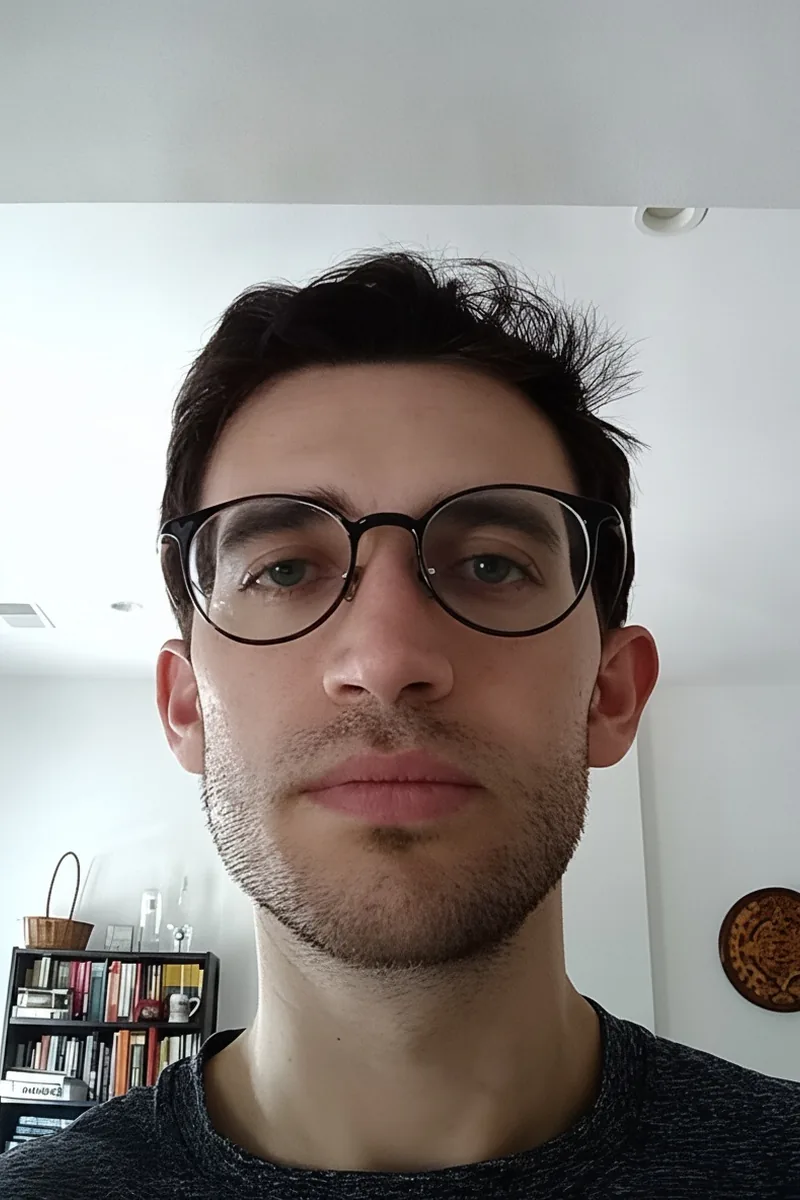
Until age 16, Viktor saw math as blind formula memorization — then a series of teachers at the right moment revealed the deeper logic underneath, and he ended up majoring in math at UChicago, where rigorous proof-based coursework made concepts like convergence and infinite series feel inevitable rather than arbitrary. That shift from "memorize the ratio test" to "understand why it works" is exactly what he brings to BC Calculus, especially when students hit the wall where AB intuition stops and formal reasoning about Taylor polynomials and error bounds needs to take over. His 1600 SAT and current CS master's work at NYU keep that analytical edge sharp.
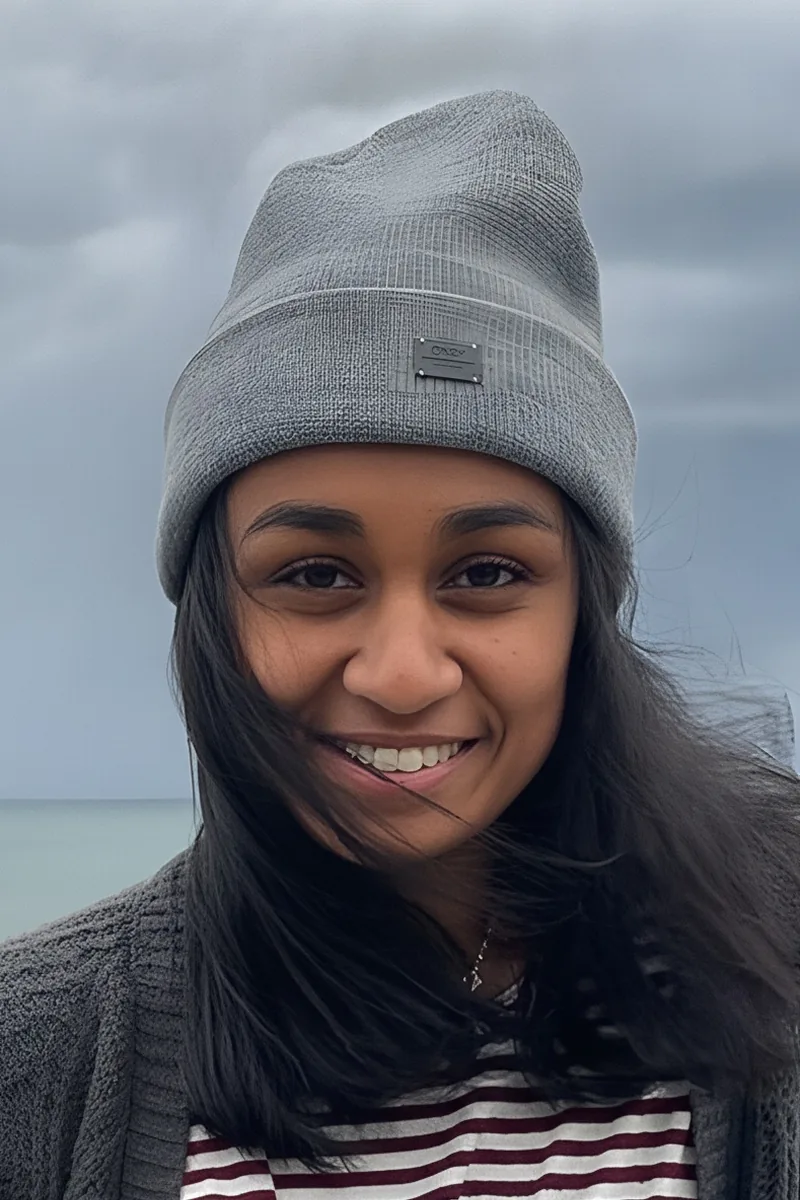
Sanjana doesn't just know AP Calculus BC — she teaches it, serving as a Course Assistant for Harvard's introductory calculus sequence. That means she's seen exactly where students stumble on Taylor series, parametric equations, and convergence tests, and she knows how to untangle those concepts in real time. Rated 5.0 by students.
I am a graduate of Cornell University's College of Arts and Sciences. I received my Bachelor of Arts in Chemistry with Distinction in 2015. Since graduation, I was a physics/chemistry teacher and soccer coach at a private school in Virginia for a year, where I led the soccer team to an undefeated season. Before teaching and coaching professionally, I was a Teaching Assistant for the Cornell Math and Physics Departments, where I taught many subjects including calculus, mechanics, electromagnetism. Throughout my time at Cornell and as a teacher, I tutored subjects ranging from the SAT to AP Physics and Algebra II, which is where my true talents lie: in small group or one-on-one settings where I can give students the full attention they deserve and tailor my approach specifically to their learning styles. This is why I am now pursuing tutoring as a part-time occupation at Varsity Tutors. I embrace teaching all math and science subjects, especially physics and calculus, at both the college and high school level and will go above and beyond to make sure all of my students succeed, according to their definition of success. In my spare time, I enjoy playing league soccer, basketball, tennis and guitar, and also like to travel and see as much of the world as I can.
A math degree from the University of Chicago means John didn't just learn to compute integrals and series — he learned to construct proofs and think rigorously about why convergence criteria work, which is exactly the depth BC demands beyond AB. Now a law student at WashU, he brings that same precision to breaking down topics like Taylor polynomial error bounds and integration by parts, treating each step as an argument that needs to hold up logically.
Studying mathematics at the University of Chicago — where even introductory courses demand proof-based rigor — Felix treats BC topics like convergence tests and Taylor series as ideas to reason through, not just procedures to memorize. His 1520 SAT and 5.0 tutoring rating back up an approach that traces every new BC concept to the AB logic underneath it, so students see series and parametric work as natural extensions rather than unfamiliar territory.
Physics majors at Rice don't just take BC Calculus — they rely on it daily, and Will is deep in that overlap right now, using series approximations in wave mechanics and integration techniques in electromagnetism problems. That real-time application sharpens how he teaches topics like convergence tests and parametric equations, because he can trace each procedure back to the underlying calculus intuition instead of letting it float as an isolated recipe.
Robotics and control systems at Northwestern mean Michael is constantly working with differential equations, series approximations, and integration techniques — the exact toolkit BC Calculus builds. He teaches topics like polar curves and convergence tests through the lens of someone who applies them to real engineering problems, like designing algorithms that let autonomous systems correct themselves in real time. His 34 ACT composite reflects the same analytical rigor he brings to breaking down BC's most demanding units.
I am a sophomore at UIUC studying agricultural and biological engineering. Eventually, I hope to work on environmental engineering related projects concerning the improvement of ecosystem management and reducing the harmful effects of pollutants in the environment. As an aspiring engineer, my favorite subjects to teach students are math and science. I've been working with kids as a swim instructor and music teacher for the past six years now. As I've begun developing experience tutoring students, my favorite part about helping students learn math and science concepts is teaching them how these different concepts interconnect and later helping them to develop critical thinking skills to work through difficult material.
Thomas earned his physics degree at Notre Dame and is heading into a Ph.D. in electrical engineering — a trajectory that means BC topics like series expansions, parametric equations, and advanced integration techniques are tools he's actively using, not distant memories from a textbook. He's sharp at isolating exactly where the AB-to-BC transition trips students up, whether it's a shaky intuition about convergence or a mechanical gap in integration by parts. Holds a 5.0 rating and a 33 ACT.
I am a 2009 graduate of the University of Chicago in Statistics and Political Science. I have been a tutor for test prep (including ACT, SAT, LSAT and AP testing), academic and creative writing, and general academic assistance for three years.
Computer engineering at UIUC means David is using series expansions and integration techniques in his signal processing and circuits coursework right now — so when he teaches BC topics like Taylor polynomials or convergence tests, he's drawing on problems he solved last week, not formulas he memorized years ago. His 35 ACT and 5.0 rating back up an approach that traces every new BC idea to the AB reasoning underneath it, keeping the jump between courses from feeling like a free fall.
Studying chemical engineering and physics simultaneously at UIUC means Victoria is knee-deep in the calculus that most students only see on an AP exam — series approximations in thermodynamics, parametric modeling in mechanics, integration techniques threaded through every lab report. That dual-degree perspective makes her especially effective at demystifying the BC leap, particularly when students hit polar area integrals or the logic behind choosing one convergence test over another. Holds a 5.0 rating from students.
Carnegie Mellon's mechanical engineering program front-loads BC Calculus topics like series approximations and integration techniques because they're prerequisites for everything from thermodynamics to structural analysis — Ryan worked through that gauntlet firsthand and knows exactly where the abstraction outruns intuition. He breaks down topics like polar area integrals and the logistics of choosing the right convergence test by grounding each one in the derivative and integral mechanics students already trust from AB. Rated 4.8 by students.
Grading math assignments at Valpo for nearly three years gave Thomas a detailed map of where students' reasoning actually breaks — and in BC Calculus, those breakdowns cluster around series convergence, Taylor polynomial error analysis, and the shift from rectangular to parametric and polar frameworks. His math and statistics degree means he can trace a shaky ratio test or a botched integration by parts back to the specific algebraic or AB-level gap causing the problem. Rated 4.9 by students.
Physics majors don't just take BC Calculus — they breathe it, using series expansions to model physical systems and integration techniques to solve equations of motion long after the AP exam is over. Eitan's physics degree means he can trace a student's confusion with, say, the Lagrange error bound back to how they're thinking about approximation itself, then rebuild the intuition from there. He holds a 5.0 rating and a 34 ACT.
As an AP Calculus exam Reader (grader), Timothy knows exactly how the BC scoring rubric rewards justification on series convergence tests, parametric derivatives, and polar area problems. That insider perspective shapes how he teaches students to write solutions that earn full credit on free-response questions. Rated 5.0 by students.
Spencer scored a 36 on the ACT and teaches the full calculus sequence through Calc 2, so BC's extension into series, parametric equations, and advanced integration techniques sits squarely in his wheelhouse. His environmental engineering coursework at UIUC means he's actively using convergence analysis and improper integrals in modeling contexts — which translates into explanations rooted in why a method works, not just how to execute it on an exam.
I am a Northwestern University graduate and received my Bachelor of Science in Mechanical Engineering with a concentration in Robotics. I have an extensive background tutoring middle and high school students in Standardized Tests as well as helping incoming freshmen acclimate to the college environment as a Peer Advisor. Due to my concentration in STEM, I am well-adept in teaching Math and Physics, though am open to tutoring outside those subjects. I believe that working on one's education outside of regular school hours shows a strong initiative to learn, and I want to encourage this drive for learning in my students.
Scoring a perfect 1600 SAT and 36 ACT required Kshitij to master the kind of rapid, precise calculus reasoning that BC demands — but as a Ross School of Business student at Michigan, he also sees how series approximations and integration techniques power the quantitative modeling behind economic and financial analysis. He breaks down the BC-specific jump — convergence tests, Taylor polynomials, parametric and polar problems — by grounding each new idea in the AB logic students already trust, so the course builds rather than overwhelms. Rated 4.8 by students.
Mechanical engineering lives and dies by the calculus that BC introduces — parametric motion, series approximations for complex systems, integration techniques that show up in thermodynamics and fluid mechanics. Amol's engineering training at the undergraduate level means he teaches these topics as tools he's actually used to solve design problems, not as abstract procedures. His 35 ACT speaks to the kind of precision he brings when walking through convergence logic or polar coordinate setups.
I have helped many students achieve excellent grades in math by focusing on what really matters: building confidence and a clear understanding of concepts. My teaching style is simple I make sure students fully understand the basics, then guide them step by step to solve problems on their own. I encourage lots of practice and always take time to clear doubts, so that no student feels left behind. Math doesn't have to be scary with the right approach, it becomes logical and even enjoyable! My aim is to make every student feel confident, independent, and capable of solving problems successfully.
Mechanical engineering eats BC Calculus for breakfast — Grant's current coursework has him applying series expansions to model physical systems, using parametric equations to describe motion, and solving differential equations that govern everything from heat transfer to structural loading. That daily, hands-on repetition means he can walk through something like constructing a Taylor polynomial or choosing the right convergence test with the confidence of someone who just used it in a lab report last week.
AP Calculus BC piles on convergence tests, parametric equations, and Taylor series on top of an already demanding AB curriculum, and the pacing leaves little room to fall behind. Ben's graduate training in Mathematics Education gives him a structured way to unpack topics like integration by parts or the Lagrange error bound so students see the logic rather than just memorizing setups. He's taught across the full calculus sequence and holds a 5.0 client rating.
BC Calculus is where series convergence, parametric equations, and integration techniques all collide in a single exam. Noah's actuarial science training demands fluency in these exact tools, so he breaks down Taylor series and integration by parts with the kind of precision that comes from using them regularly. Rated 4.9 by students.
Most BC struggles Tony sees trace back to a specific gap from an earlier math course — a shaky grasp of limits that derails L'Hôpital applications, or rusty integration fundamentals that make series convergence feel impossible. As a math major at Roosevelt, he digs into those underlying weak spots first, then rebuilds the BC concept on top so that topics like Taylor polynomials or parametric derivatives actually stick. Rated 4.9 by students.
When a student blanks on how to set up a polar area integral or freezes mid-convergence test, the real issue is almost always buried a layer deeper in their AB reasoning — Nicholas is sharp at tracing those gaps back to the specific derivative or integral concept that needs reinforcing. His physics degree means he's worked with series approximations and differential equations as modeling tools, not just exam problems, so he teaches Taylor polynomial construction and integration techniques with a sense of where each tool actually leads. Rated 4.9 by students.
BC Calculus layers on concepts like Taylor series, parametric equations, and convergence tests that demand real comfort with the AB material underneath. Nick scored a 1580 SAT and 35 ACT, and as an industrial engineering major he uses series approximations and integration techniques regularly in his coursework. He breaks down each BC-specific topic by connecting it to the AB foundation students already have.
Most BC students can memorize the list of convergence tests but freeze when deciding which one to actually use on a given series — Zain zeroes in on that decision-making process, teaching the reasoning behind each test so the choice becomes intuitive rather than a guessing game. His engineering coursework at Michigan means he's actively using Taylor expansions and parametric equations in physics and CS applications, which keeps his explanations grounded in how these tools actually behave outside an exam. Rated 4.6 by students.
Biomedical engineering at Johns Hopkins means Bidyut uses series approximations and differential equations to model biological systems — the same convergence tests and integration techniques that define the BC curriculum beyond AB. He's especially sharp at showing how a topic like Taylor polynomial error bounds connects back to the derivative reasoning students already trust, turning what feels like a wall of new material into a logical extension. Holds a 5.0 rating and a 36 ACT composite.
Most people who breeze through math can't explain it — Daniel learned BC Calculus by grinding through the logic of every convergence test, every parametric derivative, every series expansion until it genuinely made sense, and that's exactly how he teaches it. As an applied mathematics undergrad, he's currently using these tools in upper-level coursework, so he knows which BC concepts tend to feel arbitrary and how to make the reasoning behind them stick.
Derek scored a 5 on the AP Calculus BC exam and now studies applied mathematics at Harvard, which means series convergence tests, parametric equations, and polar area problems are still part of his daily toolkit. He breaks down intimidating topics like Taylor series error bounds and integration by parts into repeatable strategies that click on exam day. Rated 4.9 by students.
Biochemistry lab work at Columbia demands comfort with the calculus that models reaction kinetics and molecular behavior — Andrew has spent years using integration techniques and series approximations in that context, which gives his BC teaching a practical edge when students ask "why does this matter?" He's especially effective at breaking down the transition from AB to BC, tracing topics like Taylor polynomial construction and convergence criteria back to the derivative and integral logic students already trust. Rated 4.9 by students.
Notre Dame's Science-Computing program front-loads calculus-heavy coursework — Aidan moved through multivariable calc and differential equations while simultaneously applying integration techniques and series in his science courses, so BC topics like Taylor polynomials and convergence tests landed as tools he actually needed, not just exam hurdles. He's especially sharp at tracing where a BC struggle — say, setting up an integral in polar coordinates or choosing the right convergence test — traces back to an AB concept that needs reinforcing. His 35 ACT and premed science background keep explanations precise and grounded.
Winning Duke's DT Stallings Award for sustained tutoring of local school students means Taariq has logged serious hours watching where calculus understanding actually breaks down — and BC's leap into series, parametric curves, and advanced integration is where breakdowns happen fastest. His math degree from Duke gives him the theoretical grounding to trace a student's confusion with, say, a ratio test or a polar area integral back to the specific AB concept that isn't solid yet. Rated 4.9 by students.
Managing an immunology research lab at Columbia means Matthew lives in the quantitative deep end — modeling biological systems, analyzing experimental data — and his physics degree built the calculus fluency that makes that possible. He's especially sharp on the BC topics that trip students up after AB: constructing Taylor series from scratch, navigating convergence tests systematically, and connecting parametric or polar problems back to the derivative logic underneath them.
Duke's computer science program required Michelle to live inside the calculus that powers algorithm analysis — convergence behavior, recursive sequences, and the kind of series manipulation that BC students encounter when Taylor polynomials and ratio tests suddenly demand more than AB intuition. She breaks down those topics by tracing each one back to the underlying limit and derivative logic, so the leap to BC feels like a natural next step rather than a wall. Holds a 5.0 rating from students.
Kenan's mathematical economics training means he's comfortable with the kinds of series, parametric equations, and integration techniques that make BC a step up from AB. He walks through convergence tests and Taylor polynomials by connecting each tool to the problem it was invented to solve, which keeps the logic clear even when the notation gets dense.
Having worked as a teaching assistant for multiple engineering courses at Washington University in St. Louis, Ava spent hours breaking down the calculus that trips students up most — and BC's jump into series convergence, parametric derivatives, and advanced integration techniques is exactly the material she kept revisiting with struggling engineers. Her dual degree in mechanical and energy engineering means she's applied Taylor expansions and improper integrals to real thermodynamic and fluid systems, giving her a concrete vocabulary for explaining why these tools matter beyond the AP exam.
Teaching discrete math at Penn while finishing a CS master's means Keenan lives in the world of rigorous mathematical argument — the same mindset that separates students who survive BC from those who actually understand it, especially when series convergence proofs and error bound reasoning demand more than mechanical computation. His philosophy undergraduate training adds an unusual edge: he treats each BC concept like a logical claim that needs justification, which makes topics like the Lagrange remainder or comparison tests feel structured rather than arbitrary. Rated 5.0 by students.
Chemical and biomolecular engineering at Johns Hopkins means Joshitha is actively using series approximations and integration techniques in thermodynamics and transport courses — so when she teaches Taylor polynomial construction or walks through convergence test logic, it comes from current, hands-on application rather than distant memory. Her 1580 SAT and 5.0 tutoring rating back up an approach that prioritizes building problem-solving intuition over drilling formulas.
Testimonials
Because the right AP Calculus BC tutor makes all the difference.
Average Session Rating – Based on 3.4M Learner Ratings
Practice AP Calculus BC
Free practice tests, flashcards, and AI tutoring for AP Calculus BC
Nearby AP Calculus BC Tutors
Other Round Lake Beach Tutors
Related Math Tutors in Round Lake Beach
Frequently Asked Questions
Varsity Tutors matches Round Lake Beach students with expert AP Calculus BC tutors for 1-on-1 instruction. We pair each student with a tutor based on their specific needs, learning style, and goals.
Whether you need homework help, exam prep, or want to get ahead, our AP Calculus BC tutors are ready to help.
Common challenges include gaps from earlier material, difficulty with specific concepts, and trouble applying learning to new problems. These issues can snowball quickly in AP Calculus BC.
A tutor identifies where you're stuck, fills in gaps, and provides targeted practice. The 1-on-1 format means you get help exactly where you need it.
Tutors work with your student's actual coursework—homework assignments, class notes, and upcoming tests. This keeps tutoring directly relevant to what's happening in the classroom.
When you share information about your student's school and curriculum, we can match you with a tutor who has relevant experience.
All tutors complete background checks, credential verification, and teaching evaluation. Many of our AP Calculus BC tutors hold advanced degrees or have years of teaching experience.
You can review tutor profiles to find someone with the right background for your student's level and needs.
Many students see improved grades within a few weeks, along with better understanding of AP Calculus BC concepts and more confidence tackling challenging material.
Tutors track progress and adjust their approach to ensure continued improvement.
Most students benefit from 1-2 sessions per week. More frequent sessions help if your student is significantly behind or has an important exam coming up.
Your tutor can recommend a schedule based on your student's specific situation and goals.
Tutoring is purchased in packages of hours, with rates varying by tutor experience. Varsity Tutors offers several options to fit different budgets and needs.
You can discuss pricing during your consultation to find what works best.
Your tutor will assess where your student is, discuss goals, and start working on priority areas. Most students bring current homework or upcoming test material to focus on.
By the end, you'll have a clear sense of how the tutor can help and a plan for moving forward.
Let’s find your perfect tutor
Answer a few quick questions. We’ll recommend the right plan and match you with a top 5% tutor.