Award-Winning AP World History Tutors
serving Atlanta, GA
AP World History
Tutors in Atlanta
Private 1-on-1 tutoring, weekly live classes for academic support, test prep & enrichment, practice tests and diagnostics, and more to elevate grades and test scores.
Based on 3.4M Learner Ratings
UniversitiesSchools & Universities
DeliveredHours Delivered
ProficiencyGrowth in Proficiency
Who needs tutoring?
No obligation. Takes ~1 minute.

Covering ten thousand years of global history means students need a framework, not just a timeline. Jean's Latin American History specialization at Duke gave her deep practice in cross-cultural comparison — exactly the skill AP World History's essay prompts demand. She teaches students to identify patterns like empire-building, trade network expansion, and cultural diffusion, then deploy those patterns in timed writing.
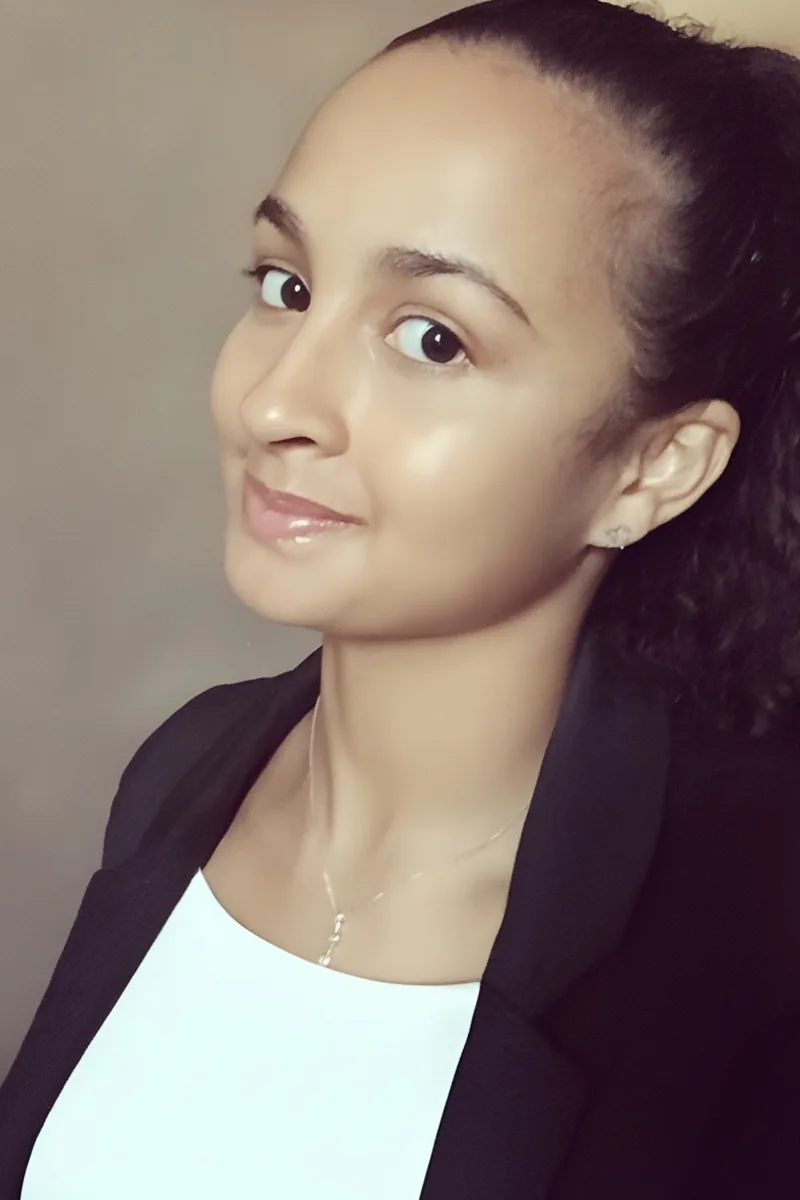
I am able to offer tutoring in a wide variety of History classes and standardized tests because I have spent the last two years as a high school History teacher for Teach For America, which has made me familiar with teaching practices that translate well into one-on-one instruction. I am also familiar with test-taking strategies and test preparation in the SAT, LSAT, GMAT and AP Exams because I have taken each exam myself and have previous experience tutoring others for those exams. My approach to tutoring focuses on building self-confidence and connecting each student's individual strengths and experiences to the subject matter to make it easier to master.
Covering thousands of years across every continent, AP World History overwhelms students who try to memorize everything instead of learning to spot patterns — trade networks, empire-building, cultural diffusion. Paula's Communication Studies background makes her especially effective at teaching the comparative and continuity-and-change essay formats the exam demands, where clear argumentation matters more than encyclopedic recall.
Studying international affairs and economics at UGA while speaking five languages — Gujarati, Hindi, Spanish, Arabic, and French — Sahar has an intuitive grasp of how trade networks, cultural diffusion, and imperial expansion actually worked across regions, not just how textbooks describe them. That multilingual, cross-cultural lens is especially useful on continuity-and-change essays where students need to explain how interactions along routes like the Indian Ocean or trans-Saharan networks transformed societies over centuries. Rated 5.0 by students.
Scoring a 1600 SAT and 35 ACT through self-study taught Dhruv something directly useful for AP World History: how to break massive amounts of material into patterns that stick, then deploy that knowledge under timed pressure. He applies that same structured approach to the exam's nine periods, teaching students to spot the recurring threads — trade networks, empire-building, cultural diffusion — that turn a mountain of content into manageable, essay-ready arguments. Rated 4.9 by students.
Covering thousands of years of global history means AP World students need a framework, not a timeline to memorize. Ethan zeroes in on the comparison and continuity-and-change skills the exam tests, teaching students to link developments across regions — like connecting Mongol trade networks to the spread of the Black Death — so they can tackle any prompt the College Board throws at them.
Political science at UGA means Monroe spends most of his time analyzing how states form, consolidate power, and collapse — the exact throughline that connects AP World History's nine periods, from early empires to twentieth-century decolonization. That government lens is especially useful on the LEQ and comparative prompts where students need to explain why similar political structures emerged independently across regions. His 35 ACT and 4.9 rating speak to the timed analytical writing chops the exam's free-response sections demand.
Covering thousands of years across every continent, AP World History overwhelms students who try to memorize their way through it. Samantha turns the course into a set of recurring themes — trade networks, empire-building, cultural diffusion — so students can compare the Mongol expansion to the Columbian Exchange without losing the thread. Her background in writing and literature also sharpens the essay skills the exam demands.
Practicing law in Georgia sharpened Ryan's ability to build arguments from documentary evidence under time pressure — the same skill AP World History's DBQ section tests when students must synthesize unfamiliar sources into a coherent thesis in minutes. His history degree grounds him in the periodization and cross-regional analysis the exam demands, while his legal training makes him especially effective at teaching students to construct claims that are precise, evidence-driven, and structured to satisfy rubric criteria. Rated 5.0 by students.
Covering ten thousand years of human history means AP World History students need a framework, not just a timeline. Taylor breaks the course into recurring themes — trade networks, empire-building, cultural diffusion — so students can tackle comparison and continuity-and-change essays with real analytical depth. Her humanities training at NYU gives her the cross-cultural perspective the exam demands, especially for periods and regions that textbooks tend to rush through.
Christopher's double major in Economics and History at UCLA means he naturally reads AP World History through the lens of trade systems, labor patterns, and resource competition — the economic engines behind empire-building, colonialism, and globalization that thread through nearly every period on the exam. That background is especially useful on LEQ and DBQ prompts where students need to explain *why* civilizations rose or fell, not just narrate the sequence. Rated 4.7 by students.
Sociology trains you to ask how societies organize, stratify, and transform — which is essentially what every AP World History essay prompt is getting at when it asks why empires rise, trade networks reshape cultures, or revolutions spread across borders. Caio brings that sociological lens from his studies at Rice to the exam's comparative and causation questions, teaching students to analyze documents through the structures of power, class, and cultural exchange rather than just chronology. Rated 5.0 by students.
Studying political science and international studies at Northwestern means Parag spends his coursework tracing how states form, compete, and collapse — the same dynamics AP World History tests when it asks students to compare imperial administration from the Han Dynasty to the Ottoman Empire. He's especially sharp on the modern periods where political ideology and foreign policy reshape entire regions, and he teaches students to build DBQ arguments that connect specific documents to those larger power shifts. Rated 5.0 by students.
Having studied both history and Spanish as undergraduate majors, Adam reads AP World History's cross-cultural content — Islamic Spain, the Columbian Exchange, Latin American independence movements — with the kind of bilingual, dual-perspective lens that makes primary source analysis richer than a single-language approach allows. He digs into the document-based questions by teaching students to interrogate authorship and purpose before summarizing content, a skill honed through his library science graduate work in evaluating sources. His 1500 SAT speaks to the timed analytical reading the exam's free-response sections demand.
Jonah's history degree and 1590 SAT give him both the content depth and the timed analytical writing skills that AP World History's essay sections punish students for lacking — particularly on LEQ prompts where a vague thesis about, say, imperialism's impact across regions earns almost no credit. He teaches students to anchor broad comparative claims in specific evidence, turning a sprawling nine-period timeline into arguments that actually score.
I'm a graduate of Columbia University with a B.A. in History. I'm passionate about history and English, but I'm a competent math tutor as well. I have received outstanding scores on my SAT and AP tests, and am confident in my ability to pass on these skills to the next generation.
Felix's Classical, Ancient Mediterranean, and Near Eastern Studies degree at Brown means he's spent serious time with the pre-1200 CE civilizations that many AP World History students rush past — Mesopotamian state-building, Greco-Roman political models, and the trade networks connecting the Mediterranean to Central and South Asia. That deep familiarity with early periods gives him a real edge when teaching students to tackle periodization questions and trace how foundational developments in governance and belief systems ripple forward through the entire course timeline. His 1540 SAT and fluency in Japanese add particular strength on comparative prompts involving East Asian content.
The comparison and continuity-and-change essays in AP World History trip students up because they require thinking across civilizations and centuries simultaneously. Daniel approaches these by teaching students to identify structural patterns — how trade networks, empire-building, or religious diffusion operated differently in, say, Song China versus Abbasid Baghdad — and turn those observations into coherent, evidence-backed arguments.
Bethany's Master's in Religious Studies from Duke pairs unusually well with AP World History — she spent years tracing how belief systems like Christianity, Islam, and Buddhism didn't just spread but reshaped governance, trade, and social hierarchies across entire regions. That background makes her especially sharp on the cultural diffusion and cross-cultural interaction themes that dominate the exam's essay prompts, where students need to explain *why* ideas spread rather than just *that* they did. Rated 5.0 by students.
Most AP World History students can memorize key dates and empires but struggle when the exam asks them to compare how, say, labor systems in the Americas differed from those in the Indian Ocean world — the kind of cross-regional synthesis that separates 3s from 5s. Richard's broad grounding across both history and writing subjects means he tackles those comparison and continuity-and-change prompts by teaching students to build arguments, not just recall facts. Rated 5.0 by students.
Connecting civilizations across time periods is the core challenge of AP World History, and Alyssa tackles it by teaching students to think in terms of continuity-and-change frameworks rather than isolated facts. She zeroes in on the comparative and causation skills that the exam rewards most heavily — like linking trade networks across the Indian Ocean to broader patterns of cultural diffusion. Her 5.0 rating speaks to how well that structured approach clicks with students.
Testimonials
Because the right AP World History tutor makes all the difference.
Average Session Rating – Based on 3.4M Learner Ratings
Practice AP World History
Free practice tests, flashcards, and AI tutoring for AP World History
Nearby AP World History Tutors
Other Atlanta Tutors
Related Social Studies Tutors in Atlanta
Frequently Asked Questions
The AP World History exam tests your knowledge across six historical periods from 1200 CE to the present, focusing on major themes like technological innovation, cultural exchange, political structures, and social change. The exam includes 55 multiple-choice questions (40% of your score), three short-answer questions (20%), one document-based question (25%), and one long essay question (15%). Success requires understanding both broad historical patterns and specific examples that illustrate key concepts across different regions and time periods.
Score improvement depends on your starting point and how consistently you engage with tutoring. Students who work with tutors typically see gains by developing stronger document analysis skills, improving their ability to identify historical patterns, and practicing timed essay writing. Many students jump from a 2 or 3 to a 4 or 5 by focusing on the specific skills the exam rewards—particularly learning to construct clear thesis statements and support arguments with specific historical evidence.
Many students struggle with the sheer volume of content—covering 800 years of global history is daunting—and knowing which details matter most for the exam. Others find it difficult to write timed essays that clearly connect evidence to their arguments, or they misunderstand what the document-based question is actually asking. Time management during the exam is another frequent issue, as students run out of time before completing all sections. Personalized tutoring helps you prioritize content, practice essay strategies, and build confidence in your approach.
Effective strategies include reading the essay prompts first to guide your multiple-choice approach, annotating documents quickly during the DBQ to identify key themes, and budgeting your time (roughly 55 minutes for multiple-choice, 40 minutes for short answers, 50 minutes for the DBQ, and 40 minutes for the long essay). Many students benefit from learning how to identify the historical period and theme of a question before diving into answer choices, which helps eliminate distractors. Tutors can help you practice these strategies under timed conditions so they become automatic on test day.
Varsity Tutors connects you with expert tutors who specialize in AP World History and understand the specific demands of the exam. When you get matched with a tutor, you'll work with someone experienced in helping students master document analysis, essay construction, and content mastery. You can discuss your current score, your target score, and the areas where you need the most support—whether that's understanding certain historical periods, improving your writing, or building test confidence.
Practice tests are essential because they help you identify weak content areas, build stamina for the full 3-hour exam, and get comfortable with the question formats and timing constraints. Taking full-length practice tests under timed conditions reveals whether you're struggling with specific historical periods, particular question types, or time management. Many tutors recommend taking your first practice test early to establish a baseline, then using subsequent tests to track improvement and focus your studying on areas that still need work.
Ideally, students benefit from starting tutoring 3-4 months before the exam, which gives you time to build content knowledge, practice essays, and take multiple practice tests. However, even 6-8 weeks of focused tutoring can help if you already have a solid foundation and mainly need to refine your essay skills or test-taking strategy. Your tutor can assess your current level and create a personalized study plan that targets your specific needs and timeline.
Absolutely. With 19 school districts across Atlanta serving over 93,000 students, classroom instruction varies widely, and many students benefit from personalized tutoring that fills gaps or moves at a different pace. A tutor can clarify concepts your teacher covered quickly, provide extra practice on challenging topics, help you develop stronger essay skills, or simply give you one-on-one attention that's difficult in a classroom setting. Tutoring works best when it reinforces what you're learning in class while also preparing you specifically for the exam format and timing.
Let’s find your perfect tutor
Answer a few quick questions. We’ll recommend the right plan and match you with a top 5% tutor.