Award-Winning Middle School Math Tutors
serving Atlanta, GA
Middle School Math
Tutors in Atlanta
Private 1-on-1 tutoring, weekly live classes for academic support, test prep & enrichment, practice tests and diagnostics, and more to elevate grades and test scores.
Based on 3.4M Learner Ratings
UniversitiesSchools & Universities
DeliveredHours Delivered
ProficiencyGrowth in Proficiency
Who needs tutoring?
No obligation. Takes ~1 minute.
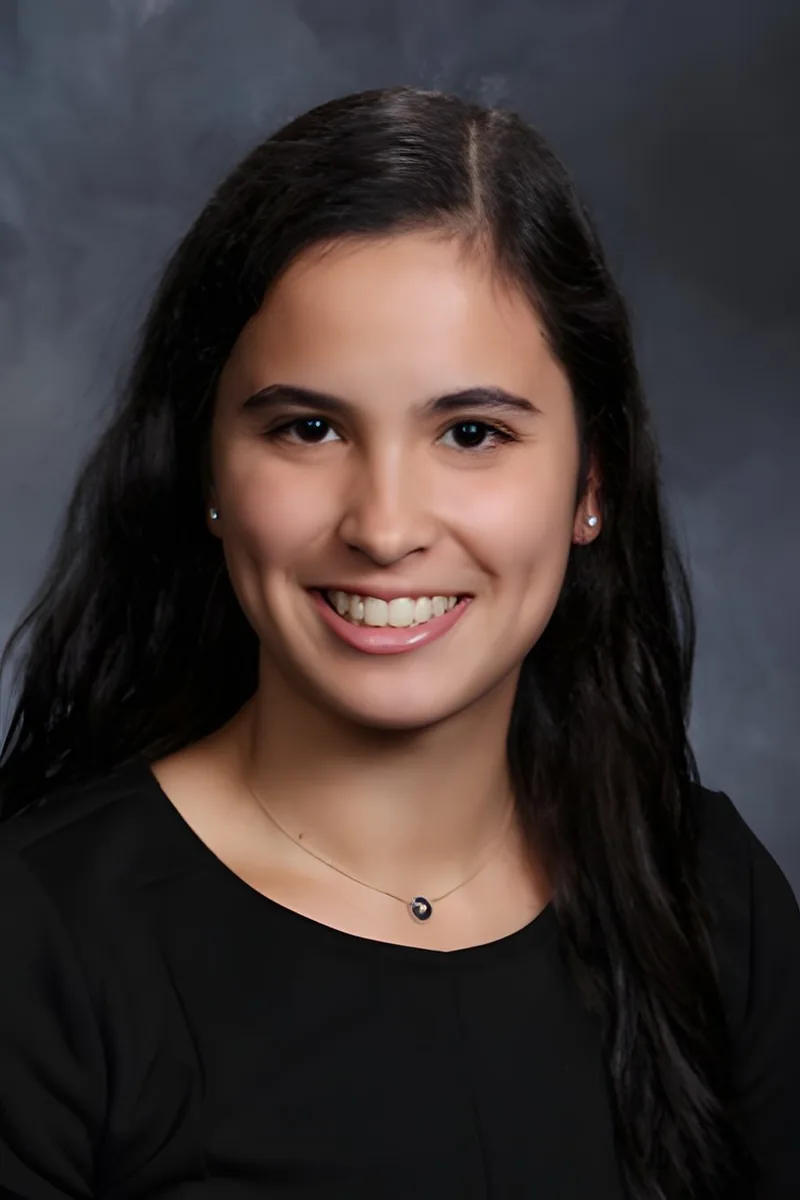
Teaching math to middle schoolers at gifted summer programs taught Isabella that this age group thrives when they understand the "why" behind a procedure, not just the steps. She digs into topics like ratios, proportional reasoning, and introductory linear relationships with the depth you'd expect from someone who earned a math degree at MIT. Her 5.0 rating speaks to how well that approach lands with younger students.

The jump from elementary arithmetic to middle school math trips up a lot of students, especially when ratios, proportional reasoning, and negative numbers enter the picture. Jean tackles these sticking points by linking new concepts to real-world scenarios that make the logic click. Her patient, structured teaching style keeps students from falling behind during these critical bridge years.
From fractions and decimals to early equation-solving, middle school math covers a huge range of skills that all need to feel solid before high school hits. Alice taught at a math learning center for K-12 students and brings a conversational style — she'll find the explanation angle that actually makes sense to your kid rather than repeating the same textbook approach.
The jump from arithmetic to middle school math — fractions, proportions, basic geometry, negative numbers — is often less about difficulty and more about confidence. Juliana adapts her explanations to match how each student thinks, a skill she honed teaching across disciplines at Northwestern. Her 5.0 rating speaks to how well that approach lands with younger learners.
Fractions, ratios, and integer operations click faster when a student sees how the pieces connect — and Christopher's volunteer tutoring with middle school-aged kids gave him a clear sense of where students typically get stuck. His Rice University science background means he can tie concepts like proportional reasoning and basic statistics to real examples that make the math feel purposeful.
The jump from arithmetic to proportional reasoning, basic equations, and coordinate graphing is one of the biggest conceptual leaps in a student's math journey. David breaks these ideas down by connecting them to patterns students already recognize, building the algebraic thinking they'll need before they ever see a formal algebra course. His 5.0 rating speaks to how well that approach lands.
Fractions, ratios, and early equation-solving can feel like a sudden jump from elementary arithmetic — Maddie bridges that gap by connecting each new concept to something concrete students already understand. She taught algebra and geometry to middle schoolers as an assistant teacher in her high school's math department, so she knows exactly where the common stumbling blocks are.
Fitting equations to spectroscopic data from baby stars is Alexandra's day job as a PhD astronomer — which means the proportional reasoning, graphing, and equation-solving that middle schoolers are learning isn't abstract to her; it's the same toolkit she uses to decode the universe. She brings that real-world fluency to tutoring, making it easy to show a sixth or seventh grader exactly what a variable *does* rather than just how to solve for one. Rated 4.9 by families.
Fractions, ratios, and proportional reasoning are the concepts that tend to separate students who feel confident in math from those who start to dread it. Matthew tackles these topics by finding concrete examples a middle schooler can grab onto — splitting a recipe, comparing speeds, scaling a drawing — before moving into the abstract notation. His 5.0 client rating speaks to how well that approach lands.
The transition in middle school math — from straightforward arithmetic to variables, proportional reasoning, and early algebraic thinking — is one of the biggest conceptual leaps students face. Michael approaches these topics by building number sense first, making sure operations with fractions, decimals, and integers feel intuitive before layering on equations and graphing.
Having a younger brother recently in high school keeps Adel connected to what middle schoolers actually struggle with — integer operations one week, proportional reasoning the next, then suddenly pre-algebra expressions. He tackles each topic by tying it to something concrete, whether that's using sports stats to teach ratios or cooking measurements to make fractions click.
The jump from arithmetic to algebraic thinking is one of the biggest conceptual leaps in a student's math education — variables, proportional reasoning, and negative numbers all arrive at once. Yilin tackles these transitions by building number sense first, making sure students understand why operations work before layering on pre-algebra notation. Her 5.0 rating speaks to how well that approach clicks with middle schoolers.
I'm always up for the challenge of changing my methods of instruction and breaking down topics to foster a deeper understanding of a subject. On a different note, I generally spend my spare time playing lacrosse or running outdoors when possible. I also play the violin with a school quartet, and teach lessons to beginning students working through the Suzuki program.
Fractions, ratios, and proportions often trip students up not because the math is hard, but because the word problems disguise what's being asked. Jennifer breaks down that translation step — turning sentences into equations — so middle schoolers build real confidence with each new concept. Rated 5.0 by students.
The jump from arithmetic to abstract thinking is the real challenge in middle school math — suddenly there are negative numbers, coordinate planes, and proportional reasoning everywhere. Travis tackles these concepts by tying them to concrete examples and building each skill incrementally, drawing on an engineering background that required mastering every level of math from the ground up.
I'm a 25 year old recent J.D. graduate of Georgia State College of Law. I attended Emory University for my undergraduate studies where I was awarded a double major in Political Science and History. Currently I am interning with CAIR as I prepare for the February Georgia Bar Exam.
The jump from arithmetic to middle school math — ratios, proportions, coordinate graphing, introductory geometry — is where a lot of students start deciding they're "not a math person." Jade pushes back against that narrative by making each concept feel approachable and logical. Her math and computer science background gives her a deep toolkit for explaining the same idea multiple ways until it lands.
Fractions, ratios, and proportional reasoning trip up a lot of middle schoolers because the concepts feel abstract until someone connects them to real situations. Audrey breaks these topics down using concrete examples and builds up to the kind of multi-step problem solving that prepares students for algebra. Rated 4.8 by her students, she keeps sessions structured but low-pressure.
Sixth through eighth grade is where math stops being purely arithmetic and starts asking students to think abstractly — variables, proportional reasoning, and basic equation solving all show up for the first time. Corey is patient with that transition and teaches organizational habits alongside the math itself, so students build routines that carry them through high school. He's particularly strong at turning word problems into manageable equations.
After an 11-year hiatus, I am excited to return to one-on-one tutoring in high school and college-level precalculus, calculus, and physics. My goal is to build students' confidence in subjects that often feel overwhelming by identifying the root of their challenges - whether it's a forgotten foundational skill or a mismatch in teaching and learning styles - and helping them work through those roadblocks with clarity and patience. I discovered my passion for tutoring in high school through volunteer mentoring and later assisted classmates in physics at my teacher's request. Since then, I have supported students in courses ranging from geometry to upper-level calculus. I am currently tutoring while pursuing my next full-time opportunity, most recently having worked for a railroad construction products supplier.
The jump from elementary math to middle school math trips students up in predictable places: fractions become operations, geometry gets coordinate-based, and word problems suddenly require multi-step reasoning. Chandler teaches students to slow down and translate each problem into manageable pieces before reaching for a calculator. His 5.0 rating speaks to how well that approach clicks with younger learners.
Fractions, ratios, and proportional reasoning trip up a lot of middle schoolers because the concepts look simple but require genuinely new ways of thinking about numbers. Bruce breaks these ideas down using real-world examples — cooking ratios, distance problems, percentage discounts — that make abstract operations feel concrete. His philosophy background means he's comfortable asking 'why does this rule work?' until a student truly gets it.
I'm Ryan, and I'm dedicated to empowering you and your words as much as possible. I even got an English degree from Davidson College to back it up. I've also worked as a College Advisor, so I have experience filling out hundreds of FAFSAs and college applications, editing quite a bit of last-minute essays, and assisting students in the best strategies for the ACT/SAT. I hope to help you present and uncover all your truths!
Sixth through eighth grade is when math shifts from arithmetic to algebraic thinking — variables replace specific numbers, and proportional reasoning becomes the backbone of every problem. Darien makes that transition less intimidating by walking students through the logic behind each step, whether they're solving two-step equations or interpreting graphs for the first time.
Fractions, decimals, ratios, and proportional reasoning can feel like a jumble of disconnected rules at the middle school level. Cole tackles each topic by walking through the logic behind the procedure first, then reinforcing it with practice — an approach that turns confusion into genuine confidence. He's rated 5.0 by students.
The jump from arithmetic to pre-algebra thinking — variables, proportional reasoning, negative numbers — is one of the biggest conceptual leaps in a student's math life. Jenny breaks these ideas down into concrete steps, connecting new concepts to the number sense students already have so the transition feels manageable instead of overwhelming.
Editing a school newspaper and running Model UN cases both demand quick, accurate mental math — budgets, vote counts, statistical claims — so Jessica's comfort with numbers is more practical than theoretical. She brings that same no-nonsense clarity to topics like ratios, basic equations, and integer operations, breaking each problem into logical steps the way she'd outline an argument. Holds a 5.0 rating and a 35 ACT composite.
Having tutored middle schoolers extensively, Rodrigo knows the specific spots where students get stuck — whether it's fraction operations, proportional reasoning, or translating word problems into equations. His industrial engineering training at Georgia Tech means he approaches each concept with clear, step-by-step logic that makes math feel less intimidating.
Growing up with six siblings gave Alexander a lot of practice explaining things patiently and in different ways until something lands. For middle school math — fractions, decimals, ratios, intro to equations — that patience matters more than advanced credentials, though his math background at Boston College means he can spot exactly where a concept is breaking down. He's rated 5.0 by students and keeps sessions structured but low-pressure.
Engineering coursework at Georgia Tech means Corey solves equations and manipulates variables every day — so when a sixth or seventh grader hits a wall with negative numbers or basic algebraic expressions, he can trace the concept back to something concrete and mechanical rather than just restating the textbook rule. His 33 ACT composite and 4.9 rating from students point to someone who both knows the math and communicates it clearly.
Between competition math and AP Physics, Tahmeed operates comfortably at the high end of mathematical reasoning — which means he can trace a middle schooler's confusion with, say, negative number operations or fraction division back to the exact conceptual gap causing it. His computer science training reinforces a habit of thinking in precise, logical steps, a skill he brings to teaching students how to set up and solve equations methodically. Rated 4.9 by families.
Having trained as a physics teacher and now pursuing graduate work in nuclear engineering, Serdar treats middle school math as the foundation for everything he does daily — variables, proportions, and geometric reasoning all show up in reactor calculations and physics modeling. He breaks down each concept with the precision of someone who genuinely depends on these skills, which gives students a concrete answer to "when will I ever use this?" Rated 5.0 by students.
The jump from arithmetic to algebraic thinking is one of the biggest conceptual leaps in all of math, and it happens in middle school. Matthew tackles this transition by connecting new ideas like variables, proportional reasoning, and integer operations to concrete situations students already understand. His liberal arts training at Williams gave him a knack for explaining abstract concepts in plain, relatable language.
Studying neuroscience at Emory means Kaustubh spends his days knee-deep in statistics and quantitative analysis, so the foundational skills middle schoolers are developing — working with variables, interpreting data, reasoning through multi-step problems — are things he uses and thinks about constantly. He's particularly effective at teaching students to check their own logic rather than just their answers, building the kind of self-correction habits that pay off once math gets faster in high school. Rated 4.9 by families.
The jump from arithmetic to algebraic thinking is one of the biggest cognitive shifts in a student's math life, and it happens in middle school. Kellie tackles topics like proportional reasoning, integer operations, and intro to linear equations by grounding them in concrete examples before moving to abstract notation. She's the kind of tutor who notices the exact step where confusion starts and addresses it before it compounds.
Proportional reasoning, integer operations, and early equation-solving set the trajectory for every math class that follows. Brittany breaks these middle school concepts into clear, repeatable steps and ties them to real scenarios — mixing recipes, calculating distances, budgeting — so the logic sticks long before students hit algebra.
The jump from arithmetic to algebraic thinking is one of the biggest shifts in a student's math life, and it usually happens in middle school. Aaron makes that transition smoother by teaching proportional reasoning, integer operations, and early equation-solving through real-world scenarios that give abstract ideas a tangible anchor.
I am a graduate of Emory University in Atlanta, GA, where I received my Bachelor of Sciences in Anthropology and Human Biology with a minor in Predictive Health. After I graduated, I worked as a laboratory assistant at a cardiology lab at Emory University School of Medicine. While I am interested in chemistry, math among others in STEM, I am very passionate about biotechnology and general biology including genetics, physiology, and cell biology. As an aspiring dentist, I am currently working towards getting a dental degree. During my undergraduate career, I had several experiences of helping other students with learning materials and quiz/exam preparation. I am excited to have another opportunity to help other students again through Varsity Tutors because I truly believe that education is absolutely imperative to a better quality of life and that everyone is fully capable of learning and making potentials to reality. As for tutoring, I put much emphasis on active participation and positive reinforcement. A learning environment should stay interactive, fun, but challenging. By encountering challenges, I believe a student's potential could rise. Besides my life in academia, I enjoy traveling, photography, and physical activities including hiking, running, and skiing during winter.
As a Harvard Kennedy School graduate, I bring a strong academic background and a passion for empowering students. My experience as a Peace Corps teacher and public policy and governance expert has honed my ability to simplify complex concepts and adapt lessons to diverse learning styles. I am committed to creating an engaging, supportive environment that fosters curiosity, critical thinking, and confidence. Let's work together to achieve your academic goals!
Getting past the Jeopardy! Online Test takes quick mental math and pattern recognition — two skills Paula now brings to teaching middle schoolers topics like ratios, integer operations, and basic geometry. Her psychology background also gives her a read on how students process new information, so she adjusts her explanations based on what's actually clicking rather than just repeating the same steps louder. Rated 4.8 by students.
Testimonials
Because the right Middle School Math tutor makes all the difference.
Average Session Rating – Based on 3.4M Learner Ratings
Nearby Middle School Math Tutors
Other Atlanta Tutors
Related Math Tutors in Atlanta
Frequently Asked Questions
Many middle school students in Atlanta find the jump from basic arithmetic to abstract algebraic thinking challenging. Common trouble spots include multi-step equations, word problems that require translating English into mathematical expressions, graphing on coordinate planes, and understanding why mathematical procedures work—not just how to perform them. These concepts build on each other, so gaps early on can compound quickly. Personalized tutoring helps students move beyond memorizing steps to truly understanding the reasoning behind mathematical concepts.
The shift from 'how to do it' to 'why it works' is one of the biggest transitions in middle school math. Expert tutors help students see patterns and connections by asking guiding questions rather than just providing answers. For example, instead of showing a student how to solve an equation step-by-step, a tutor might ask 'what happens to both sides when we multiply by the same number?' This approach builds genuine mathematical thinking and confidence. When students understand the underlying logic, they can tackle unfamiliar problems with strategy rather than guessing.
Yes. With 19 school districts and over 219 schools across Atlanta using different textbooks and approaches, curriculum alignment matters. When you connect with a tutor through Varsity Tutors, you can discuss your student's specific curriculum, textbook, and teacher's approach. Tutors adapt their instruction to reinforce what's being taught in class while filling gaps and deepening understanding. This personalized alignment helps students see tutoring as an extension of their classroom learning, not something separate.
Math anxiety is real and often stems from past negative experiences or trying to keep up with a fast-paced classroom. In personalized 1-on-1 instruction, students work at their own pace in a low-pressure environment where it's safe to ask questions and make mistakes. A supportive tutor helps students build confidence by celebrating small wins, showing them how they've progressed, and helping them see that struggle is a normal part of learning math—not a sign they're 'bad at it.' Over time, this positive experience can completely shift a student's relationship with math.
Look for someone who has experience with middle school math specifically (not just high school or test prep) and understands the conceptual challenges students face at this level. The best tutors ask questions to understand your student's learning style, can explain 'why' not just 'how,' and help students develop problem-solving strategies they can apply to new situations. They should also be able to communicate progress and adapt their approach based on what's working. When you connect with tutors through Varsity Tutors, you can discuss these qualities and find someone who's a good fit for your student.
The right frequency depends on your student's needs, goals, and current performance. Some students benefit from weekly sessions to reinforce what they're learning in class and build confidence. Others might meet twice a week if they're working to catch up or preparing for a placement test. Even one session per week can make a meaningful difference when the tutor focuses on understanding gaps and building deeper conceptual knowledge. When you connect with a tutor, you can discuss your student's situation and decide on a schedule that makes sense for your family.
Look for both short-term and long-term signs of progress. Short-term: your student shows more confidence tackling homework, asks fewer questions about how to get started, and seems less frustrated. Long-term: grades improve, test scores go up, and—most importantly—your student starts solving problems independently rather than needing step-by-step help. A good tutor will also communicate regularly about what they're working on and where your student is improving. Progress in math isn't always linear, but over a few weeks or months of consistent tutoring, you should see clear momentum.
Let’s find your perfect tutor
Answer a few quick questions. We’ll recommend the right plan and match you with a top 5% tutor.