Award-Winning Japanese Tutors
serving Hartford, CT
Japanese
Tutors in Hartford
Private 1-on-1 tutoring, weekly live classes for academic support, test prep & enrichment, practice tests and diagnostics, and more to elevate grades and test scores.
Based on 3.4M Learner Ratings
UniversitiesSchools & Universities
DeliveredHours Delivered
ProficiencyGrowth in Proficiency
Who needs tutoring?
No obligation. Takes ~1 minute.
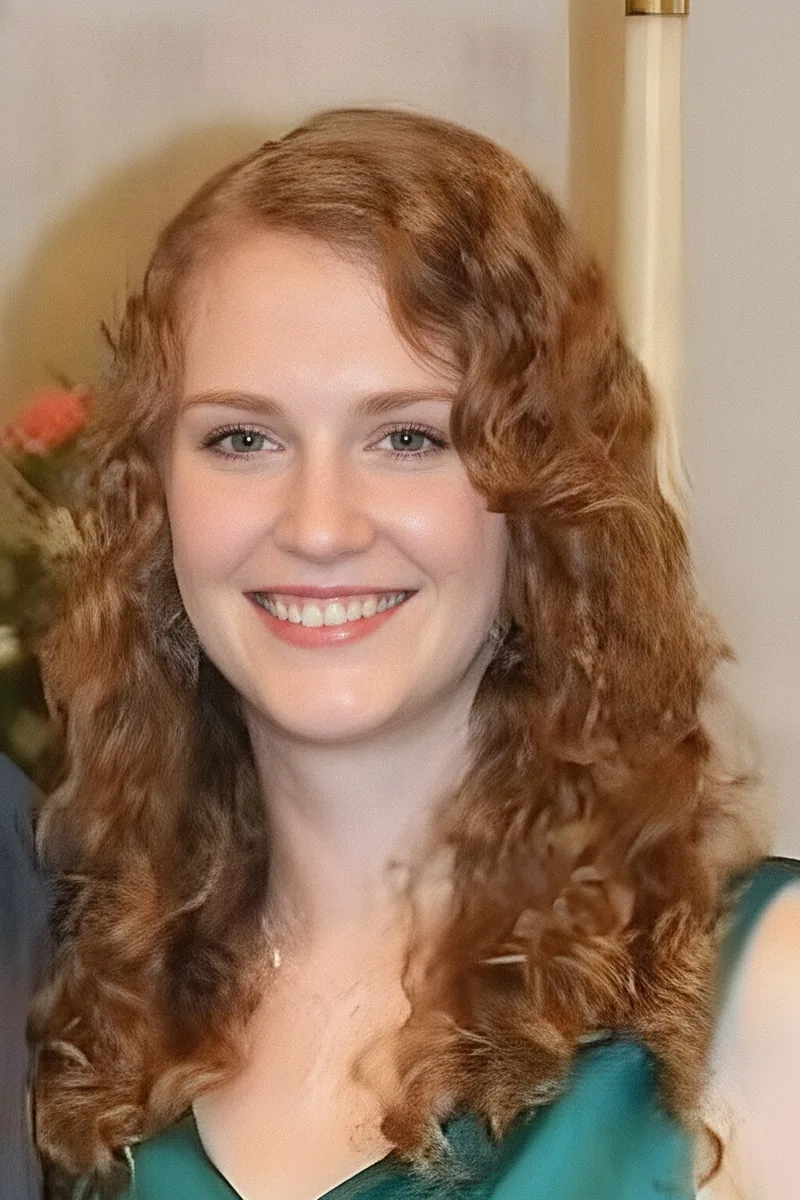
Briana minored in Japanese at Michigan State, giving her a grounded understanding of the language's grammar patterns, particle usage, and writing systems — hiragana, katakana, and introductory kanji. She approaches Japanese as someone who learned it systematically in an academic setting, which means she can explain the "why" behind structures that often confuse English speakers.

I'm currently a freshman at Brown University. I will most likely triple major in Ancient Greek & Sanskrit, Latin, and Japanese. I have had lots of experience tutoring those around me, such as friends, peers, and class mates, and I have always enjoyed seeing their progress as students. My tutoring experiences include after-school assistance to those struggling in Ancient Greek at my former high school, to helping Juniors and Sophomores help ace the SAT. My specialty is language and history, with an emphasis on Japanese, English, Latin, US history and World History, but I am also more than happy to help out those struggling with Algebra and Geometry. As someone who was once an ESL student himself, I believe that a good education rests upon the ability to comprehend, interact, and apply ideas. Besides academic matters, I am also fond of running, calisthenics, and Enka music.
Linguistics training gives Andrew a structural advantage when teaching Japanese — he understands how languages build meaning differently, which matters when explaining why particles replace prepositions or why verbs land at the end of every sentence. His background in Korean and German means he's personally navigated multiple grammar systems far removed from English, and he applies that comparative instinct to make Japanese word order and conjugation feel logical rather than arbitrary.
Rachel's International Relations coursework exposes her to multiple language systems and cross-cultural communication, which she channels into teaching Japanese fundamentals like hiragana recognition, basic particle usage, and everyday vocabulary. Her relaxed, adaptive style — reflected in a 5.0 rating — is especially useful for beginners who tense up when faced with an entirely new writing system and unfamiliar grammar order.
Jacob's degree in East Asian Languages and Civilizations from the University of Chicago means his Japanese instruction is rooted in deep study of the culture, history, and linguistic traditions behind the language. He connects vocabulary and grammar to their cultural logic — explaining why certain verb endings carry social weight or how kanji compounds reflect Chinese origins — giving students a richer understanding than drills alone provide. Rated 5.0 by students.
Though her degrees are in biology and science education, Sarah lists Japanese among her interests and brings a teacher's instinct for breaking complex systems into learnable parts — useful when students are wrestling with hiragana stroke order or the logic behind particle placement. Her 5.0 rating and four years of classroom teaching mean she knows how to pace a lesson and adjust when something isn't landing.
Having taught himself Japanese alongside his formal studies in public policy and education, James knows firsthand where English speakers get tripped up — especially with particles, basic verb conjugation, and the leap from hiragana to katakana. His education background means he's trained to spot where understanding breaks down and adjust his explanations on the fly, which is exactly what beginners need when nothing about Japanese grammar maps onto what they already know.
Most students learning Japanese hit a wall somewhere between mastering hiragana and actually constructing sentences with particles, verb conjugations, and counters. Kai has been teaching Japanese through the student organization meetings on campus, building lessons that move learners from basic self-introductions to reading short passages and holding simple conversations.
Emily minored in Japanese at Texas A&M and continues to engage with the language through media and self-study. She teaches hiragana, katakana, and foundational grammar patterns like particle usage with the same structured approach she applies to her other languages, making the writing systems feel systematic rather than overwhelming.
I am open to tutoring in a broad range of subjects, including Algebra, Spanish I/II, ESL and Biology (SAT II, AP, and MCAT).
I'm a student at Brown University with an eclectic set of interests. I am trilingual, analytical, and creative and look forward to tutoring you! :)
Triple-majoring in Japanese, linguistics, and computer science at UMass Amherst, Connor brings both fluency and analytical rigor to teaching the language. He unpacks grammar patterns like particle usage and verb conjugation groups by connecting them to the underlying logic of how Japanese sentences are built — making new structures easier to internalize and recall.
Testimonials
Because the right Japanese tutor makes all the difference.
Average Session Rating – Based on 3.4M Learner Ratings
Nearby Japanese Tutors
Other Hartford Tutors
Related Languages Tutors in Hartford
Frequently Asked Questions
Fluency depends on your starting level and study intensity. The Foreign Service Institute estimates approximately 2,200 hours of study to reach professional proficiency in Japanese—roughly 2-3 years of consistent, focused learning. With personalized 1-on-1 instruction combined with regular practice, you can accelerate progress significantly. A tutor can help you prioritize the most useful vocabulary and grammar patterns for your specific goals, whether that's conversational ability, business communication, or academic proficiency.
Speaking is essential because it forces you to retrieve vocabulary and grammar patterns from memory in real time—a proven technique for retention and fluency. In a typical Hartford classroom with a 14.3:1 student-teacher ratio, individual speaking time is limited. Personalized 1-on-1 instruction gives you consistent, pressure-free conversation practice where you can make mistakes, receive immediate feedback, and build confidence without worrying about peer judgment. This direct interaction is one of the most effective ways to develop natural pronunciation and conversational rhythm.
Japanese grammar—including verb conjugation, particles, and politeness levels—is best learned through pattern recognition and repeated practice rather than memorization alone. A tutor can explain the logic behind grammar rules (why certain particles are used, how verb tenses connect to context) and then guide you through targeted exercises that build automaticity. The key is understanding when and why to use different forms in real conversation, not just conjugating verbs in isolation. Personalized instruction lets your tutor adjust pacing based on which patterns challenge you most.
Vocabulary sticks best through spaced repetition—reviewing words at increasing intervals—combined with using them in context. Rather than memorizing isolated word lists, a tutor can help you learn vocabulary in thematic groups tied to your interests or goals, and then practice using those words in conversations and writing. Connecting new words to cultural context (understanding when and how words are used in Japanese society) also strengthens retention. Your tutor can recommend strategies like keeping a personal phrase journal or practicing with example sentences rather than single words.
Reading and writing in Japanese require learning three writing systems—hiragana, katakana, and kanji—which can feel overwhelming. A tutor can help you build these skills progressively, starting with the phonetic systems and gradually introducing kanji in a logical order based on frequency and usefulness. For writing, personalized instruction means your tutor can review your compositions, correct errors in real time, and help you develop a personal writing voice. Many students find that reading and writing practice reinforces speaking and listening skills, creating a complete language foundation.
Absolutely. Language and culture are deeply connected—understanding Japanese social norms, communication styles, and cultural references makes the language more meaningful and memorable. For example, learning about politeness levels (keigo) makes sense only when you understand Japanese social hierarchy and respect customs. A tutor can weave cultural context into lessons, explaining why certain phrases are used in specific situations and helping you understand authentic media like films, music, or news. This immersion-style approach builds both linguistic and cultural fluency.
Look for tutors with native or near-native fluency, ideally combined with formal teaching experience or language certification. The best tutors understand both Japanese grammar and how to teach it to English speakers—they know which concepts are hardest for learners and how to explain them clearly. Experience with your specific goals matters too, whether that's conversational Japanese, test preparation, or academic study. Varsity Tutors connects you with expert tutors who can demonstrate their qualifications and teaching approach during an initial consultation.
Your first session is typically a get-to-know-you conversation where your tutor assesses your current level, learns about your goals, and discusses your learning style. They'll ask about your background with Japanese, what you want to achieve, and any specific challenges you're facing. This information helps your tutor create a personalized learning plan tailored to you—whether you're starting from scratch, preparing for a test, or building on existing knowledge. You'll leave with a clear sense of how personalized instruction can help you reach your goals.
Let’s find your perfect tutor
Answer a few quick questions. We’ll recommend the right plan and match you with a top 5% tutor.