Award-Winning Geometry Tutors
serving Hartford, CT
Geometry
Tutors in Hartford
Private 1-on-1 tutoring, weekly live classes for academic support, test prep & enrichment, practice tests and diagnostics, and more to elevate grades and test scores.
Based on 3.4M Learner Ratings
UniversitiesSchools & Universities
DeliveredHours Delivered
ProficiencyGrowth in Proficiency
Who needs tutoring?
No obligation. Takes ~1 minute.
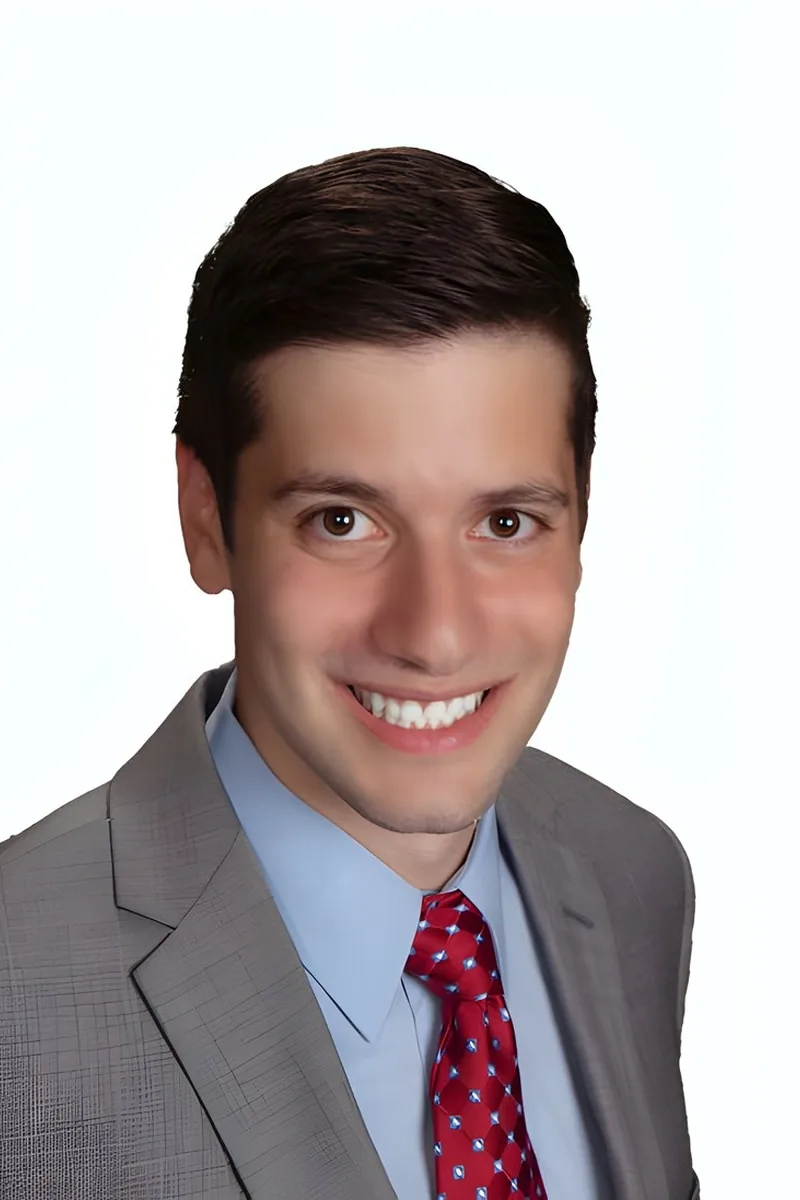
Proofs are usually the first place geometry students get stuck, because suddenly math requires structured argumentation instead of computation. Sami approaches geometric reasoning the way he learned to build logical arguments in computer science at Duke — step by step, with each claim justified before moving to the next. He covers everything from triangle congruence to circle theorems with that same emphasis on clear, connected thinking.

Proofs are usually where geometry stops feeling intuitive and starts feeling arbitrary. Anthony approaches them as logical arguments rather than rote templates, drawing on his background in math and philosophy to teach students how to construct reasoning step by step. His 5.0 rating speaks to how well that approach clicks.
Proofs are where most geometry students lose confidence — the leap from calculating angles to constructing logical arguments feels like a different subject entirely. Jon breaks that transition down by connecting each theorem to a visual intuition first, then building the formal reasoning step by step. His pre-med background at UCLA required rigorous analytical thinking that translates directly to geometric logic.
Proofs are usually the first place Geometry students get stuck, because suddenly math requires logical argumentation instead of just computation. Maxwell approaches each proof as a chain of small, justifiable claims — teaching students to identify given information, spot congruence relationships, and build toward a conclusion one step at a time.
Proofs are usually the first place Geometry students feel stuck, because suddenly math asks them to argue logically instead of just compute. Ethan walks through proof structure like building an argument in a debate: state what you know, identify what connects to what, and justify every step. That logical framework also sharpens how students approach triangle congruence, circle theorems, and coordinate geometry problems.
Proofs are usually where geometry gets intimidating, because suddenly students need to justify every step instead of just computing an answer. Tessa teaches proof-writing as a form of logical argument — identifying what's given, what's needed, and how postulates and theorems connect the two. Her approach turns congruence, similarity, and circle theorems into puzzles with satisfying solutions rather than exercises in memorization.
Proof-writing is usually the first time students encounter math as logical argument rather than calculation, and it trips up even strong math students. Daria approaches geometry proofs the way she approaches engineering problems at Cornell: identify what you know, figure out what connects to what, and build the chain one justified step at a time. She also digs into triangle congruence, circle theorems, and coordinate geometry with an emphasis on visualizing before computing.
Circle theorems — inscribed angles, arc-chord relationships, tangent lines — tend to pile up fast near the end of a geometry course, right when students are already exhausted from proofs. Max breaks these down by tying each theorem back to a single core idea about how angles and arcs relate, which cuts the memorization load dramatically. His 1580 SAT and 5.0 rating speak to how well that approach clicks.
Spoken word poetry and geometry both demand structure — every line has to land in the right place, whether it's a stanza or a two-column proof. Louie's math background spans pre-algebra through calculus, so he teaches geometric concepts like triangle congruence and circle properties with a clear sense of how they connect to the algebra students already know. His 1540 SAT score speaks to the kind of precise, methodical thinking that keeps multi-step geometry problems from falling apart.
Proofs are where most geometry students panic — the idea of building a logical argument from axioms feels foreign after years of computation-heavy math. Joshua studied formal logic as part of his philosophy degree, so he teaches proof-writing as a skill in structured reasoning rather than a mysterious ritual.
An economics degree from Princeton might not scream geometry, but Neil's training in building structured logical arguments — the kind that hold up under scrutiny — translates directly to two-column proofs and deductive reasoning about congruence and similarity. He approaches each theorem as a claim that needs evidence, teaching students to construct airtight chains of logic rather than memorize proof templates. Rated 5.0 by students.
Proofs are usually where geometry students hit a wall: the logic feels nothing like the computation they're used to. Bowen teaches students to treat each proof like a puzzle, identifying given information and working backward from what needs to be shown. His structured, objective-driven sessions keep the focus tight on whichever skill — congruence, similarity, or circle theorems — actually needs attention.
Proofs are where most geometry students panic — the logic feels completely different from anything they've done in math before. Chantel tackles this by teaching students to read diagrams like arguments, identifying given information and building toward conclusions one justified step at a time. She also covers coordinate geometry and triangle congruence with the same structured, visual approach.
Proofs are usually the first time a math student has to construct a logical argument rather than just compute an answer, and that shift trips up even strong students. Christina treats geometry proofs the way she'd approach a case study in her Yale MBA program — breaking the reasoning into clear, defensible steps. She also covers coordinate geometry and triangle relationships with the same structured approach.
Proofs are where most geometry students freeze up — the leap from calculating angles to constructing logical arguments feels like a different subject entirely. AJ's math degree and education training at Central Connecticut State gave him a toolbox of ways to break down two-column and paragraph proofs so the reasoning clicks. He also digs into triangle congruence, circle theorems, and coordinate geometry with an emphasis on sketching things out before reaching for formulas.
Proofs are usually the first place geometry students hit a wall, because suddenly math requires written logical arguments instead of calculations. Francis approaches proof-writing as a skill that can be taught step by step — identifying given information, choosing the right postulate or theorem, and building a chain of reasoning. Over twenty years in the classroom have given him a deep catalog of strategies for making congruence, similarity, and circle theorems click.
A chemistry major at Harvard, James is used to thinking in three dimensions — molecular geometries, orbital shapes, bond angles — which gives him a natural fluency with the spatial reasoning geometry requires. He tackles circle theorems and polygon properties by encouraging students to sketch, label, and reason through diagrams before jumping to formulas, building the kind of geometric intuition that makes even multi-step problems feel manageable. Rated 4.9 by students.
Neurobiology at Harvard meant Emma spent years interpreting complex diagrams of neural pathways and brain structures — skills that translate directly to reading the dense, multi-layered figures in geometry where you have to pull out the right angle relationship or identify similar triangles buried inside a larger shape. She tackles the subject from the logic side, treating each proof like a scientific hypothesis that needs step-by-step evidence. Rated 5.0 by students.
Proofs are usually where geometry stops feeling intuitive and starts feeling intimidating. Allen tackles that head-on by teaching students to read a diagram like a puzzle — identifying congruent triangles, parallel-line angle relationships, or circle theorems before writing a single line of formal reasoning. His Yale-trained analytical rigor translates well to the logical structure geometry demands.
Mechanical and aerospace engineering at Princeton means Matthew lives in a world of geometric constraints — fitting components into tight spaces, calculating load-bearing angles, reasoning about three-dimensional shapes on paper before they ever get built. He brings that same step-by-step precision to teaching triangle properties, angle relationships, and the logic behind constructions, typically demonstrating a technique and then handing students progressively harder problems until the reasoning becomes automatic.
Proofs are usually the part of geometry that makes students want to quit, so Eileen spends real time unpacking the logic behind each theorem instead of rushing to the next formula. She also tackles coordinate geometry and circle theorems with a visual, diagram-heavy approach that makes spatial reasoning click.
Most geometry struggles aren't about the shapes — they're about constructing logical arguments. Writing a two-column proof or reasoning through circle theorems requires a style of thinking that Justin, trained in mathematical proof at both the undergraduate and doctoral level, breaks down into concrete steps. He treats each theorem as a claim that needs defending, which builds reasoning skills students carry into every future math class.
Proofs trip up a lot of Geometry students because they require a completely different kind of thinking — constructing logical arguments instead of just computing answers. Michelle approaches proofs and spatial reasoning the way she approaches scientific problems: systematically, breaking each claim into smaller pieces until the conclusion becomes obvious.
Proofs are where most geometry students start to struggle, because suddenly math requires building logical arguments instead of just computing answers. Margaret's background in both computer science and political science at Stanford means she thinks in structured logic all day — and she brings that same rigor to angle relationships, congruence, and circle theorems.
Proofs are usually the part of geometry that makes students want to quit, but they're also the part that teaches the most transferable thinking skills. Benjamin approaches geometric proofs as structured arguments — each statement needs evidence, each step needs justification — which clicks especially well for students who think verbally. His background spanning both math and writing makes him effective at bridging that gap between visual intuition and formal reasoning.
Having taught Geometry at a charter high school, Wamweni knows exactly where students get stuck — whether it's writing two-column proofs, applying triangle congruence theorems, or visualizing transformations on the coordinate plane. She approaches each topic by connecting it to something concrete before moving into formal reasoning. Her 5.0 rating speaks to how well that method lands with students.
Proofs trip up a lot of geometry students because they require a completely different kind of thinking — constructing logical arguments instead of just computing answers. Kirstie's liberal arts background actually strengthens her approach here, since she treats geometric proofs the way she'd treat building a persuasive essay: claim, evidence, reasoning. She also covers the computational side, from triangle congruence to circle theorems.
Proofs are usually the first place geometry students get stuck, because suddenly math asks them to argue logically instead of just compute. Ian approaches proof-writing the way he approaches physics derivations at Yale — step by step, with each claim grounded in a specific theorem or postulate. He also covers triangle congruence, circle theorems, and coordinate geometry with the same structured clarity.
Testimonials
Because the right Geometry tutor makes all the difference.
Average Session Rating – Based on 3.4M Learner Ratings
Practice Geometry
Free practice tests, flashcards, and AI tutoring for Geometry
Nearby Geometry Tutors
Other Hartford Tutors
Related Math Tutors in Hartford
Frequently Asked Questions
Many students struggle with the shift from algebra to geometry's visual and spatial reasoning. Common pain points include writing proofs (especially understanding the logical flow), visualizing 3D shapes from 2D diagrams, and applying geometric concepts to word problems. Students also often find it challenging to move beyond memorizing formulas and instead develop a deeper understanding of why geometric relationships work the way they do.
Proofs require both logical thinking and clear communication—skills that benefit greatly from personalized instruction. Tutors can break down the proof-writing process step-by-step, help students understand why each statement and reason matters, and guide them to see the underlying geometric principles rather than just memorizing formats. With practice and feedback tailored to how each student thinks, proofs become less intimidating and more like solving a puzzle.
The first session focuses on understanding where you are right now. Tutors will review recent assignments, quizzes, or tests to identify specific gaps—whether that's trouble with angle relationships, coordinate geometry, or proof structure. They'll also learn your learning style and what's causing the most frustration, so they can build a personalized plan that addresses your unique needs rather than using a one-size-fits-all approach.
Spatial reasoning—the ability to visualize and manipulate shapes in your mind—is a skill that improves with guided practice. Tutors use various strategies like drawing diagrams together, rotating shapes mentally, and connecting 2D representations to 3D objects. By working through problems step-by-step and asking questions that encourage visualization, students build stronger spatial intuition and confidence tackling geometry problems that initially felt abstract.
Geometry word problems require students to translate real-world descriptions into diagrams, identify relevant information, and apply the right geometric relationships—a multi-step process that's easy to get stuck on. Tutors teach problem-solving strategies like sketching the scenario, labeling known values, and breaking complex problems into smaller parts. With practice and feedback, students learn to see the geometry hidden in the words and approach these problems systematically.
Yes. Hartford's 10 school districts use different textbooks and approaches to teaching geometry, and tutors are familiar with the major curricula used across Connecticut schools. Whether your course emphasizes coordinate geometry, transformations, or classical proofs, tutors can align their instruction with what you're learning in class and help clarify concepts using the same methods your teacher uses.
Math anxiety is real, especially in geometry where the jump to abstract reasoning can feel overwhelming. Personalized instruction allows tutors to work at your pace, celebrate small wins, and help you see that you're capable of understanding these concepts. When you get one-on-one support working through problems without judgment, asking questions freely, and receiving immediate feedback, confidence grows naturally—and that confidence carries over to tests and classroom participation.
Varsity Tutors connects you with expert tutors who specialize in geometry and understand the needs of Hartford students. Simply tell us about your current geometry course, specific challenges, and your learning goals, and we'll match you with a tutor whose expertise and teaching style fit what you need. You can start with a single session to see if it's a good fit, with no long-term commitment required.
Let’s find your perfect tutor
Answer a few quick questions. We’ll recommend the right plan and match you with a top 5% tutor.