Award-Winning Pre-Calculus Tutors
serving Hartford, CT
Pre-Calculus
Tutors in Hartford
Private 1-on-1 tutoring, weekly live classes for academic support, test prep & enrichment, practice tests and diagnostics, and more to elevate grades and test scores.
Based on 3.4M Learner Ratings
UniversitiesSchools & Universities
DeliveredHours Delivered
ProficiencyGrowth in Proficiency
Who needs tutoring?
No obligation. Takes ~1 minute.
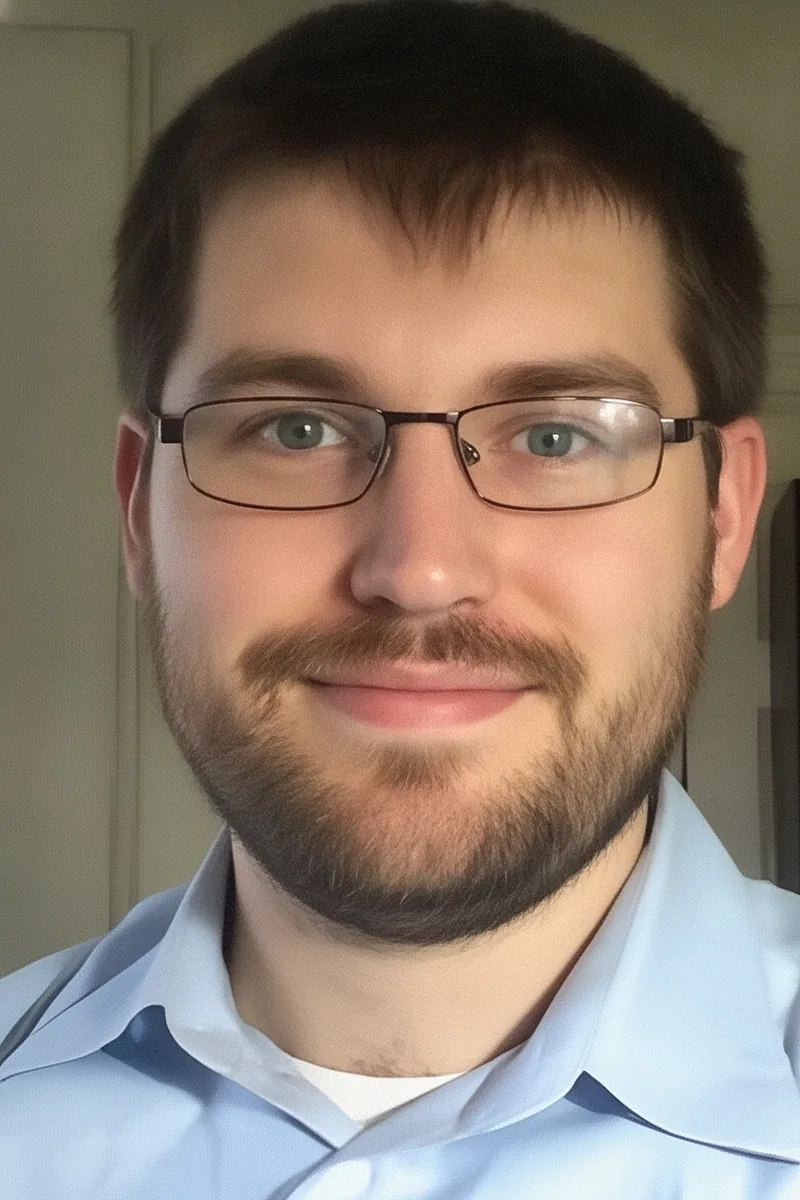
Competition math sharpens a particular skill that pays off enormously in pre-calculus: the ability to see multiple paths through a problem and pick the elegant one. James brings that competition background alongside a master's in mathematics, which means he can teach topics like rational functions or trigonometric identities by revealing the structural patterns that make them simple rather than presenting them as isolated procedures to memorize. His 1510 SAT and 34 ACT reflect the same quantitative fluency he brings to every session.
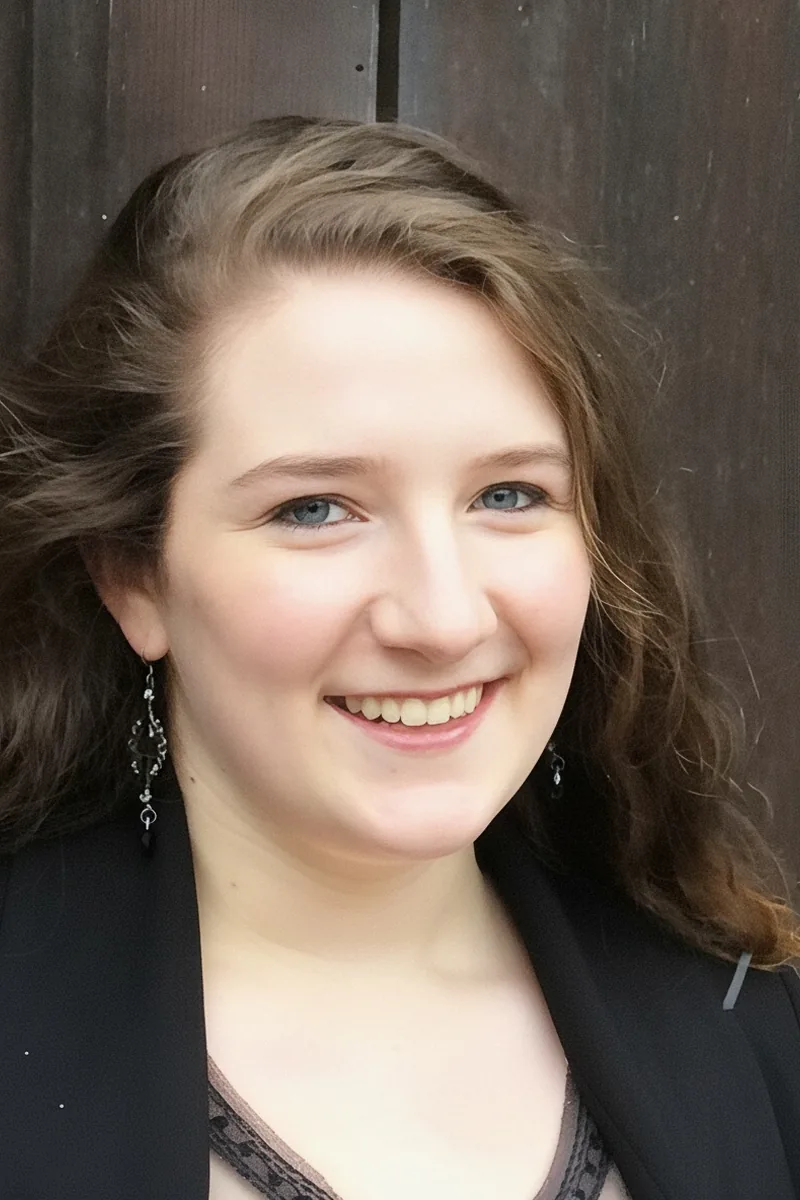
The University of Chicago's core curriculum put Valerie through rigorous math coursework alongside her Classics and Theatre studies, giving her a working command of the function families, transformations, and trigonometric reasoning that define pre-calculus. She's particularly sharp at demystifying sequences and series — breaking the pattern logic down step by step until the formulas feel inevitable rather than arbitrary. Her 1540 SAT confirms the quantitative skill behind her approach.
A dual BS in physics and math plus a PhD in economics at Yale means Anthony has moved through pre-calculus material from every possible direction — trigonometric reasoning in mechanics, function composition in mathematical proofs, exponential and logarithmic models in econometric analysis. He teaches the course as someone who knows exactly which skills carry forward and which shortcuts collapse under pressure in later coursework. Holds a 5.0 rating and a 1560 SAT.
Studying molecular biology at Yale means Maxwell constantly encounters the mathematical scaffolding that pre-calculus builds — exponential models for gene expression kinetics, logarithmic scales for concentration data, and trigonometric functions underlying structural biology. He zeros in on how these function families actually behave and transform, connecting the symbolic manipulation back to intuition so students aren't just memorizing identities in isolation. His 33 ACT and 5.0 rating back that up.
Environmental science trained Ethan to think in models — logistic growth curves for populations, sinusoidal cycles for climate data, logarithmic scales for pH and decibel measurements — all functions that pre-calculus students are learning to manipulate for the first time. He teaches the course by connecting each function family to the real-world behavior it describes, which makes transformations and asymptotic reasoning feel intuitive instead of arbitrary. His 36 ACT and 5.0 rating back up the approach.
Most pre-calculus courses throw the unit circle, polynomial end behavior, and rational function analysis at students in rapid succession without showing the thread connecting them — Tessa slows down at exactly those junctures to make the underlying logic visible. Her math major at Yale means she's actively working several levels above this material, so she can trace each concept forward into calculus and backward into the algebra students already own. A 36 ACT and 4.9 rating confirm that precision carries over into her teaching.
Kenneth's applied mathematics degree means he didn't just pass through pre-calculus — he built an entire career's worth of coursework on top of it, so he knows exactly which concepts in trigonometry, function analysis, and polynomial behavior need to be airtight before calculus starts. He zeroes in on the spots where algebra intuition breaks down, like interpreting composite functions or reasoning through end behavior, and rebuilds that understanding from scratch when needed. His 1570 SAT and 4.7 rating reflect the precision he brings to each session.
The jump from Algebra 2 to Pre-Calculus often stalls at trigonometric functions, rational expressions, or the unit circle. Joshua tackles these by connecting each new idea to what a student already understands, layering complexity gradually so that limits and function behavior make sense before calculus even starts.
Christina's MBA work at Yale demands the kind of quantitative modeling — optimization, rate analysis, forecasting — that traces directly back to pre-calculus concepts like logarithmic and exponential functions. She teaches these topics by showing how they actually get used in business and science contexts, which makes the abstract manipulation click. Rated 4.8 by students.
Mathematical physics at UConn means Alice doesn't just remember pre-calculus — she's still actively building on it, using trigonometric structures and function behavior as the scaffolding for advanced coursework in wave mechanics and differential equations. Her experience as both a tutor and an instructional assistant shows in how she bridges the gap between algebraic manipulation and the more abstract reasoning pre-calc demands, especially around composite functions and rational expressions. Holds a 5.0 rating and a 34 ACT.
A math degree with an education background means AJ didn't just learn pre-calculus concepts like polynomial end behavior and rational function asymptotes — he learned how to teach them, studying how students actually internalize the jump from algebraic manipulation to functional reasoning. He walks through each topic by connecting it to the algebra students already have down, building toward calculus readiness one concept at a time. His 1430 SAT confirms the quantitative skill behind his classroom-tested approach.
Twenty-plus years of teaching high school math — from foundational algebra through trigonometry — means Francis has watched hundreds of students hit the same pre-calculus stumbling blocks: the shift from manipulating equations to reasoning about function behavior, the leap into trigonometric identities, the sudden abstraction of limits and sequences. His master's in mathematics gives him the depth to explain why those concepts connect, not just how to survive the homework. Rated 4.8 by students.
The jump to pre-calculus is where many students first encounter trigonometric identities, polar coordinates, and limits — concepts that feel disconnected from anything they've done before. Eileen bridges that gap by tying each new idea back to familiar algebra and geometry, giving students a clear roadmap into calculus.
The jump into pre-calculus is really about learning to think in terms of functions — how they behave, transform, and connect to each other across trigonometric, polynomial, and rational families. Dane's engineering coursework at Duke means he uses these tools daily and can show students how concepts like limits, composite functions, and unit circle values actually build toward calculus rather than existing as isolated topics.
A philosophy major at Princeton with a certificate in Statistics and Machine Learning, Julie approaches pre-calculus proofs and function analysis with the logical rigor her coursework demands — she's especially sharp at breaking down the 'why' behind trigonometric identities and limit intuition before students hit calculus. She teaches across the full math ladder from elementary through Calculus II, so she knows exactly which algebraic instincts need to be solid and which conceptual leaps trip students up at the pre-calc stage. Rated 4.9 with a 1570 SAT.
Having earned a 35 ACT and a 1540 SAT while completing dual science and computing degrees at Notre Dame, Aidan built the kind of cross-disciplinary math fluency that makes him especially sharp on the pre-calculus topics where algebra starts becoming abstract — rational functions, composite functions, and the shift from manipulating expressions to analyzing their behavior. He zeroes in on the conceptual bridge between what students already know from algebra and the functional thinking calculus will demand, making sure each new idea has a logical foothold rather than floating as an isolated procedure.
Doing research in Spectral Graph Theory at MIT means Enrico encounters the full toolkit of pre-calculus — eigenvalue behavior, polynomial roots, matrix transformations — at a level where shaky fundamentals would be immediately exposed. He teaches the course by making definitions click intuitively, so that concepts like composite functions or rational expressions feel like natural extensions of algebra rather than arbitrary new rules. His 36 ACT, 1570 SAT, and 5.0 rating confirm the depth behind that intuition.
Mechanical engineering at the undergraduate level means Andrea spent semesters grinding through the exact transition pre-calculus prepares students for — mastering polar coordinates, parametric equations, and trigonometric identities before they became essential tools in dynamics and thermodynamics courses. She teaches that material as someone who knows precisely where each concept resurfaces, breaking down topics like composite functions and rational expressions by connecting them to the engineering problems they eventually power. Her 32 ACT and 4.8 rating reflect consistent results across a wide range of students.
A math degree from Penn means Ben didn't just pass through pre-calculus — he built everything that came after on top of it, from linear algebra to multivariable calculus. That depth lets him teach topics like rational functions and trigonometric identities by revealing the structural logic underneath, so students carry real understanding into calculus instead of a fragile set of memorized steps. Holds a 5.0 rating.
A PhD in statistics and a biomedical engineering degree mean Sam has spent years where pre-calculus isn't a course — it's the scaffolding holding together regression models, signal processing, and experimental design. He digs into the transition points that trip students up most, like moving from polynomial arithmetic to analyzing rational function behavior or connecting trig identities to their geometric origins. Rated 4.9 by students.
Biomedical engineering at Northwestern throws Ingrid into differential equations and signal processing that all trace back to pre-calculus fundamentals — so she knows exactly which skills in trigonometric manipulation, function composition, and exponential modeling need to be rock-solid before calculus arrives. She zeroes in on the conceptual gaps that trip students up, particularly around graph transformations and the behavior of rational and piecewise functions, building each idea from the algebra underneath it. Her 1540 SAT and 33 ACT reflect the quantitative grounding she brings to every session.
Environmental engineering coursework — modeling pollutant dispersion, watershed flow rates, decay of contaminants — runs on exactly the exponential, logarithmic, and trigonometric functions that pre-calculus introduces. Kate teaches these topics with the instinct of someone who's built real models around them through both her bachelor's and master's work, connecting each function family to the physical behavior it describes. Her 1580 SAT and 4.9 rating confirm the precision she brings to every session.
The jump into pre-calculus — trigonometric identities, limits, and complex functions — trips up even strong math students who breezed through earlier courses. Julia breaks these topics into logical building blocks, connecting each new idea back to the algebra and geometry students already know. Her Stanford coursework in economics and quantitative methods keeps her sharp on exactly the kind of function analysis pre-calc demands.
Researching cosmic ray acceleration at Princeton's astrophysics department meant Dennis had to model particle behavior using the exact toolkit pre-calculus teaches — parametric equations, vector components, and the interplay between exponential and trigonometric functions. He brings that research intuition to sessions, breaking down how and why transformations reshape a graph or how polar and rectangular forms connect, so the material clicks as a coherent system rather than a checklist. A 36 ACT and 4.7 rating back up the depth of understanding he brings.
Testimonials
Because the right Pre-Calculus tutor makes all the difference.
Average Session Rating – Based on 3.4M Learner Ratings
Practice Pre-Calculus
Free practice tests, flashcards, and AI tutoring for Pre-Calculus
Nearby Pre-Calculus Tutors
Other Hartford Tutors
Related Math Tutors in Hartford
Frequently Asked Questions
Different Hartford schools may use different textbooks and teaching approaches—some emphasize graphing and transformations early, while others focus on algebraic manipulation first. Tutors connected through Varsity Tutors work with you to understand your student's specific curriculum, textbook, and teacher's expectations, then tailor instruction to fill gaps and reinforce concepts in that same framework. This alignment ensures tutoring builds directly on what's being taught in class rather than introducing conflicting methods.
Pre-Calculus is where math transitions from "follow the steps" to "understand why those steps work." Students who only memorize procedures struggle when problems are worded differently or require applying concepts in new ways. Personalized tutoring helps students see the underlying patterns—why function transformations work, how trigonometric identities connect, what a limit really means—so they can solve unfamiliar problems with confidence rather than relying on memorized formulas.
Word problems require students to translate English into mathematical language, decide which concepts apply, and then execute the solution—three separate skills that often break down at different points. A tutor can help your student develop a systematic approach: identifying what's given, what's being asked, which Pre-Calculus tools fit the situation, and how to check if the answer makes sense. With guided practice on increasingly complex scenarios, word problems become manageable rather than overwhelming.
Clear work isn't just about writing more—it's about organizing thinking so someone else (or the student themselves later) can follow the logic. Tutors help students develop habits like labeling what they're solving for, writing out intermediate steps, explaining their reasoning for choosing a particular approach, and checking their answers. These skills matter for Pre-Calculus exams, standardized tests, and college math, where partial credit and communication of mathematical thinking are valued.
Graphing challenges often stem from weak connections between equations and visual representations. Tutors help students build this bridge by starting with basic parent functions, then systematically exploring how changes in equations create shifts, stretches, and reflections on the graph. With hands-on practice and visual explanations, students move from confusion to recognizing patterns—and this skill becomes essential for understanding calculus later.
Math anxiety often peaks in Pre-Calculus because the material is genuinely harder and mistakes feel more costly. In personalized tutoring, there's no pressure to keep up with a class pace or worry about being judged—just focused time to ask questions, make mistakes safely, and rebuild confidence. As students experience success with a tutor who explains concepts patiently and celebrates progress, anxiety typically decreases and motivation increases.
A tutor will typically assess where your student stands: which Pre-Calculus topics are solid, where gaps exist, and what's causing frustration. They'll ask about your student's learning style, goals (passing the class, preparing for AP Calculus, improving test scores), and any specific challenges. This diagnostic session sets the foundation for a personalized plan that targets the right concepts at the right pace, rather than generic review.
Pre-Calculus is the gateway to calculus and higher math—a strong foundation here directly impacts success in college courses. Tutors emphasize not just solving problems, but understanding the "why" behind concepts, developing problem-solving strategies, and building the confidence to tackle unfamiliar material independently. These habits of mind matter more in college than memorization, making personalized tutoring a smart investment in long-term academic success.
Let’s find your perfect tutor
Answer a few quick questions. We’ll recommend the right plan and match you with a top 5% tutor.