Award-Winning Algebra Tutors
serving Hartford, CT
Algebra
Tutors in Hartford
Private 1-on-1 tutoring, weekly live classes for academic support, test prep & enrichment, practice tests and diagnostics, and more to elevate grades and test scores.
Based on 3.4M Learner Ratings
UniversitiesSchools & Universities
DeliveredHours Delivered
ProficiencyGrowth in Proficiency
Who needs tutoring?
No obligation. Takes ~1 minute.
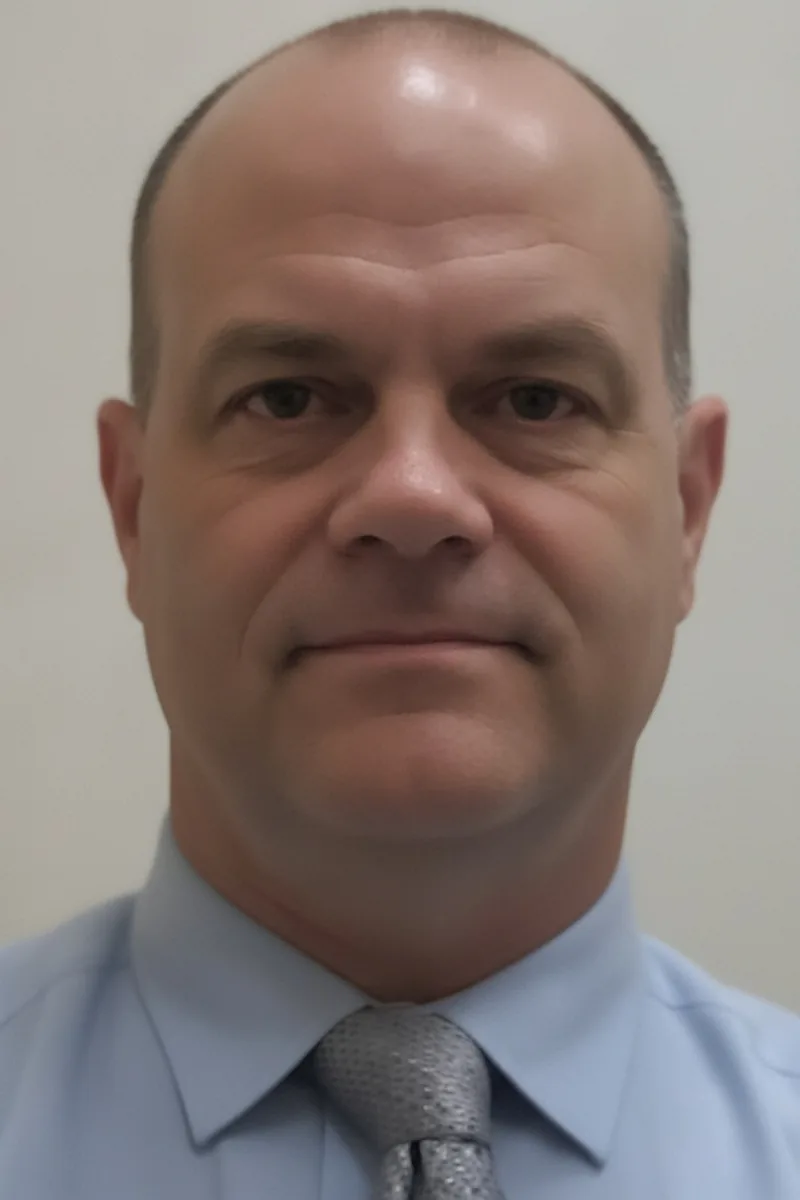
A philosophy and theology background might seem unrelated to algebra, but Jonathan's entire academic training revolves around formal logic and structured argumentation — skills that translate directly to solving equations, manipulating expressions, and building proofs. He approaches topics like systems of equations and inequalities as puzzles with clear rules, teaching students to think through each step rather than guess at procedures.

The leap from arithmetic to algebra trips students up when variables stop representing a single missing number and start representing relationships. James tackles this head-on by connecting equation manipulation to concrete scenarios — rate problems, mixture problems, geometric reasoning — so that solving for x feels purposeful. His MS in mathematics gives him a deep bench of techniques for making abstract symbolism click.
A solid grip on algebra is what separates students who struggle in later math and science courses from those who don't. Noah breaks down topics like systems of equations, polynomial manipulation, and function behavior by tying them to the quantitative reasoning he uses daily as a PhD chemistry researcher at UConn. Rated 5.0 by students, he makes abstract algebraic rules feel logical rather than arbitrary.
Factoring, systems of equations, and quadratic modeling all hinge on recognizing structure — seeing that a messy expression is really just a pattern in disguise. Valerie's analytical training at the University of Chicago sharpened her ability to teach students how to spot those patterns and translate word problems into solvable equations.
The jump from arithmetic to algebra trips students up when they can't see what a variable actually represents or why solving for x requires balancing both sides. Xaviera tackles this by connecting equations to concrete scenarios — translating word problems into expressions, demystifying distributive property, and building comfort with multi-step solving. She holds a 5.0 rating from her students.
The jump from arithmetic to algebra trips students up because letters suddenly replace numbers, and equations require thinking backward. Sami tackles this by grounding abstract ideas — like solving systems of equations or factoring quadratics — in concrete examples drawn from economics and everyday logic. His Duke training in both quantitative fields gives him multiple ways to explain the same concept until it lands.
A lot of algebra frustration comes from procedures that feel disconnected — why does completing the square work, and when would anyone actually use it? Anthony unpacks the logic underneath each technique so that factoring, rational expressions, and systems of equations become tools students can reason with. He holds a 5.0 client rating.
Most Algebra frustration comes from one place: students learn procedures without understanding what variables and equations actually represent. Maxwell connects abstract expressions to concrete situations — translating word problems into equations, interpreting slope as a real rate of change — so that solving for x starts to feel logical instead of mechanical.
A UCLA graduate now studying at Yale, Jon approaches algebra by anchoring abstract ideas — like systems of equations or quadratic behavior — in concrete problem-solving scenarios. He's especially effective at untangling word problems, teaching students to translate messy real-world language into clean algebraic expressions. That translation skill is something his interdisciplinary background reinforced across multiple fields.
A lot of algebra struggles come down to one thing: students learn procedures without understanding what the symbols actually represent. James tackles that head-on, connecting abstract ideas like systems of equations or rational expressions back to concrete reasoning — an approach sharpened by his dual focus in math and humanities at Yale.
Brittany treats algebra as a language — once students learn to read what an equation is actually saying, manipulating expressions and solving systems becomes intuitive rather than mechanical. Her approach builds from each student's specific sticking points, whether that's factoring, inequalities, or translating word problems into algebraic form.
Economics majors spend more time rearranging equations than most people realize — isolating variables in supply-demand models, solving for equilibrium prices, working through systems that describe entire markets. Ryan brings that algebraic fluency to tutoring, with a knack for showing students how to translate word problems into clean equations they can actually solve. His 1590 SAT and 5.0 rating speak for themselves.
Most algebra struggles come down to one thing: students learn to mimic steps without understanding what an equation is really saying. Tessa digs into the why behind each manipulation — what it means to isolate a variable, how factoring reveals structure in a quadratic, why the distributive property works — so that new problem types don't feel like starting from scratch. She's a Yale math major who brings genuine enthusiasm to the subject.
Most Algebra struggles come down to one thing: students learn steps without understanding why those steps work, so any unfamiliar problem feels impossible. Ethan tackles that by teaching the logic behind operations — why you can add the same thing to both sides, what distributing actually means geometrically, how a variable is just a number you haven't found yet. That foundation turns word problems and multi-step equations from guesswork into strategy.
As a Mu Alpha Theta member, Stephanie spent years tutoring peers and younger students through the exact sticking points that derail algebra learners — setting up word problems, factoring quadratics, and interpreting slope. Her IB and AP math background means she can explain not just *how* to solve a system of equations but *why* each method works. She holds a 5.0 client rating.
Hands-on experience in an Algebra 1 classroom taught Patrycja where students actually get stuck — not just on solving equations, but on understanding what a variable represents in the first place. She unpacks topics like systems of equations, factoring, and inequalities by connecting each procedure to the reasoning behind it, so the steps make sense instead of feeling arbitrary.
Most algebra struggles come down to one thing: students can follow a procedure but can't tell which procedure a problem is asking for. Daria teaches decision-making — how to look at an equation involving factoring, distributing, or combining like terms and choose an approach before jumping in. Her engineering training at Cornell means she treats algebra as a toolkit and shows students how each tool works and when to reach for it.
When a student stares at a word problem and doesn't know where to start, the issue usually isn't algebra — it's translating English into equations. Kenneth zeroes in on that translation step, teaching students to identify variables, set up expressions, and check their own logic before solving. It's an approach that makes factoring, inequalities, and systems of equations feel far less intimidating.
Learning to manipulate variables and solve equations shares more with language study than most people realize — both require recognizing structural patterns and applying rules systematically. Niko draws on that pattern-recognition instinct, honed through years of PhD-level linguistic analysis, to make algebraic reasoning click for students who struggle with abstraction.
The jump from arithmetic to algebraic thinking trips up a lot of students, especially when variables start replacing numbers in equations and inequalities. Mia tackles that transition by connecting abstract expressions back to concrete situations — translating word problems into equations, for instance — so the notation feels less like a foreign language.
Mackenzie approaches algebra the way she approaches a philosophical argument — by identifying the underlying structure and building from there. Whether it's solving systems of equations or simplifying rational expressions, she walks through each step so the logic is visible, not just the answer.
Instead of drilling procedures, Maddie uses a question-driven approach to algebra — walking students through why factoring works, what a function actually represents, or how to set up an equation from a word problem. Her five years of tutoring experience and STEM coursework at Yale mean she can connect algebraic thinking to real applications in science and beyond.
Most algebra struggles come down to one thing: students learn procedures without understanding what the equation is actually saying. Max teaches algebra by making the structure visible — why you isolate a variable, what a system of equations represents graphically, how factoring connects to the zero-product property. He's rated 5.0 across his students.
The jump from arithmetic to algebraic thinking trips up a lot of students, especially when variables start replacing numbers in expressions and equations. Jordan breaks down that transition by teaching students to read equations as sentences — each term has a role, and solving means figuring out what's missing. His 1510 SAT score speaks to the kind of mathematical fluency he brings to the subject.
When a student stares at a system of equations or a quadratic and doesn't know where to start, the issue is usually that earlier concepts — like distributing, combining like terms, or reading word problems — never fully solidified. Diana traces those gaps backward and rebuilds understanding from the exact point where things got shaky. Her deliberate, patient approach turns algebra from a guessing game into a logical process.
Most Algebra struggles come down to one thing: students learn procedures without understanding what the symbols actually mean. Aaron, a Yale math graduate, tackles that head-on by connecting abstract steps — like isolating a variable or factoring a quadratic — to concrete reasoning about what an equation is really saying.
The jump into algebra trips students up when they try to memorize steps instead of understanding what an equation actually represents. Reta zeroes in on translating word problems into expressions and solving systems logically, building the kind of algebraic reasoning that carries into geometry and beyond.
A Yale education required Nathan to think structurally across disciplines — the same skill that makes him effective at breaking algebraic concepts into logical steps. Whether a student is struggling with systems of equations or getting comfortable with polynomial manipulation, he builds each lesson around the specific gap holding them back.
A lot of algebra struggles come down to one thing: students learn procedures without understanding what the symbols actually represent. Louie digs into the reasoning behind each step — why you flip an inequality when multiplying by a negative, how factoring connects to the graph's x-intercepts — so that solving equations becomes a thinking process. He's tutored math extensively and calls it his favorite subject to teach.
I am a musician, educator, and philosopher based in New Haven, Connecticut. I studied at UCLA graduating Cum Laude with degrees in Music Performance, Education, and Philosophy. I have been tutoring private music lessons and academic subjects for over 5 years now, and I work as a substitute teacher across Connecticut. My favorite subjects to tutor are Music, English, and Reading/Writing Skills, but I am capable of tutoring various Historical subjects, Math, and Science as well.
I am a PhD student in Inorganic Chemistry at Yale University. I've been spreading my love of chemistry for the past several years as a TA for general chemistry, and I'm excited to share my passion with you! Prior to Yale, I got my B.S. in chemistry from Caltech, where I also served as a TA for both general chemistry lab and advanced inorganic chemistry. Outside of teaching and research, I enjoy fencing, reading, and playing piano.
The jump from arithmetic to algebra trips students up when they can't see what a variable actually represents. Neil tackles this by grounding every equation and inequality in a concrete scenario — his background in economics gives him a deep well of real-world examples for topics like linear equations, slope, and systems. He holds a 5.0 client rating.
A medical degree requires surprisingly heavy quantitative reasoning, and Muhammad built his algebra fluency solving dosage calculations, dilution ratios, and systems of equations long before tutoring them. He breaks down topics like quadratic functions and inequalities by tying each one to a concrete problem worth solving.
Before students can handle higher math, they need fluency with core algebra skills — manipulating expressions, solving systems of equations, and reasoning about inequalities. Alex breaks these down by connecting each technique to a clear logical purpose, drawing on the same step-by-step rigor that earned him honors in economics at UChicago.
When a student stalls on algebra, it's usually one specific skill causing a chain reaction — maybe distributing negatives, maybe translating word problems into equations. Yossi diagnoses that sticking point quickly and rebuilds confidence from there, drawing on a math-heavy Yale engineering curriculum that keeps algebraic manipulation sharp.
A solid grip on algebra is what separates students who cruise through higher math from those who struggle, and Luke treats it that way. He digs into the logic behind manipulating equations and inequalities so that when a student hits systems of equations or quadratic factoring, the steps feel intuitive rather than memorized.
When a student stares at a system of equations and doesn't know where to start, the issue is usually conceptual, not computational. Stephen diagnoses exactly where the confusion lives — whether it's variable isolation, distributing negatives, or translating word problems into expressions — and rebuilds understanding from that specific point.
When a student says they're "bad at algebra," it usually means one foundational idea — like how to manipulate equations or interpret word problems — never fully landed. Joshua pinpoints that gap and rebuilds from there, whether the sticking point is factoring polynomials, graphing linear systems, or translating real-world scenarios into expressions.
The jump from arithmetic to algebra is really a jump into abstract thinking — suddenly letters stand in for numbers, and equations become puzzles with structure. Ardis tackles everything from factoring polynomials to solving systems of equations by teaching students to read an equation the way you'd read a sentence, figuring out what it's actually saying before manipulating it.
Tolu's History and Philosophy of Science degree trained her to trace how ideas build on each other — a skill that maps surprisingly well onto algebra, where each concept (order of operations, linear equations, inequalities) depends on truly understanding the one before it. She teaches algebra by making those connections explicit, so students see why distributing or combining like terms works instead of treating each problem type as its own isolated task. Rated 5.0 by students.
Testimonials
Because the right Algebra tutor makes all the difference.
Average Session Rating – Based on 3.4M Learner Ratings
Practice Algebra
Free practice tests, flashcards, and AI tutoring for Algebra
Nearby Algebra Tutors
Other Hartford Tutors
Related Math Tutors in Hartford
Frequently Asked Questions
Many students in Hartford schools struggle with the transition from basic arithmetic to abstract algebraic thinking—especially understanding why we use variables and how to manipulate equations. Multi-step equations, word problems, and graphing are frequent pain points, as they require students to connect procedural steps with deeper conceptual understanding. Math anxiety can also make these challenges feel bigger than they are, which is why personalized instruction that builds confidence alongside skills is so valuable.
Your first session is about understanding where your student is starting from. A tutor will assess their current skills, identify specific gaps (like trouble with multi-step equations or word problem setup), and talk about learning goals. This personalized approach helps the tutor build a plan that addresses your student's unique challenges rather than following a generic curriculum.
Showing work isn't just about getting the right answer—it's about building problem-solving strategies and catching mistakes. Tutors help students develop a systematic approach to organizing their steps, explaining their reasoning, and understanding why each step matters. This skill transfers to tests, standardized exams, and higher-level math where clear thinking is essential.
Word problems require students to translate real-world language into mathematical equations—a skill that doesn't come naturally to everyone. Tutors break this down into manageable steps: identifying what you know, defining variables, setting up the equation, and solving. With practice and pattern recognition, students start seeing the structure in different problem types and build confidence tackling unfamiliar scenarios.
Graphing connects abstract equations to visual patterns, which helps many students understand algebra more deeply. A tutor can use multiple approaches—plotting points, identifying slopes, recognizing patterns—to help your student see how equations and graphs relate. This visual-conceptual bridge often clicks when students work through it with personalized guidance.
Yes. Hartford's 10 school districts may use different textbooks and teaching approaches, and tutors are familiar with these variations. Whether your student's school uses a traditional sequence, an integrated approach, or a specific curriculum, Varsity Tutors connects you with tutors who can align their instruction with what's being taught in class and help reinforce those concepts.
Absolutely. Math anxiety often stems from feeling lost or behind, and personalized 1-on-1 instruction rebuilds confidence by working at your student's pace and celebrating small wins. Tutors create a low-pressure environment where mistakes are learning opportunities, not failures. As students experience success and understand concepts more deeply, anxiety typically decreases.
Varsity Tutors connects you with expert tutors who have strong backgrounds in mathematics and experience teaching algebra to students at various levels. Tutors understand both the procedural skills (solving equations) and conceptual foundations (why algebra works) needed to help students build real understanding. Each tutor brings their own teaching style, so you can find someone who clicks with your student's learning preferences.
Let’s find your perfect tutor
Answer a few quick questions. We’ll recommend the right plan and match you with a top 5% tutor.