Award-Winning Biostatistics Tutors
serving Victorville, CA
Biostatistics
Tutors in Victorville
Private 1-on-1 tutoring, weekly live classes for academic support, test prep & enrichment, practice tests and diagnostics, and more to elevate grades and test scores.
Based on 3.4M Learner Ratings
UniversitiesSchools & Universities
DeliveredHours Delivered
ProficiencyGrowth in Proficiency
Who needs tutoring?
No obligation. Takes ~1 minute.
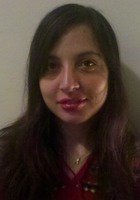
A physics and mathematics degree means Sarah spent years working with error analysis, probability distributions, and the kind of rigorous data interpretation that underpins biostatistics — skills she built not from a textbook overview but from labs and problem sets where getting the statistics wrong meant getting the physics wrong. She approaches topics like measures of central tendency, variance, and hypothesis testing with the mathematical precision her training demands, breaking down formulas into the logic behind them.

Karista's PhD in Environmental Science meant analyzing messy field data — the kind where uneven sample sizes, non-normal distributions, and confounding variables force you to think carefully about which statistical approach actually fits. That experience designing and defending her own analyses carries over directly when she teaches concepts like ANOVA, multivariate regression, and experimental design in biostatistics. Rated 5.0 by students.
Having earned a PhD in Statistics, Sam digs into biostatistics with the depth that graduate and pre-med students actually need — survival analysis, logistic regression, study design, and interpreting odds ratios in clinical contexts. His undergraduate training in biomedical engineering gives him a native fluency with the biological applications that make this field distinct from general stats.
Ingrid's biomedical engineering coursework at Northwestern — including undergraduate research in the John Rogers Lab — gave her hands-on experience designing experiments and interpreting the statistical methods that underpin clinical and biological research. She breaks down concepts like survival analysis, logistic regression, and confidence intervals by tying them to real biomedical datasets rather than abstract formulas.
Sima's Master of Science in Epidemiology with a concentration in Biostatistics means she doesn't just teach survival analysis, regression modeling, and study design — she uses them daily in her cancer research at Mount Sinai. She walks students through everything from interpreting p-values to building multivariate models, grounding each concept in real epidemiological datasets.
Bioengineering lab courses at UIC's Honors College don't let you hand-wave through your data — Shouvik has had to choose appropriate statistical tests for biological experiments, interpret p-values from tissue engineering datasets, and justify sample sizes in formal reports. That firsthand experience with real biological variability makes him effective at teaching concepts like hypothesis testing, descriptive statistics, and study design. Rated 4.9 by students.
Applying to medical school while pursuing a Master's in Public Health means Jakobi is knee-deep in the kind of data analysis biostatistics courses demand — study design, hypothesis testing, and interpreting results in health contexts. His biology degree gives him the scientific grounding to explain why a particular statistical method fits a biological question, whether students are wrestling with relative risk calculations or figuring out when to use a t-test versus ANOVA.
Between a neuroscience bachelor's, a biotechnology master's, and current medical training, Rithi has run into biostatistics from every angle — analyzing neural data in research, evaluating clinical study designs, and interpreting the kind of messy biological datasets where a wrong assumption about normality can derail an entire analysis. She breaks down concepts like survival curves, relative risk calculations, and test selection by walking through the actual research scenarios that make each method necessary. Rated 4.9 by students.
As a teaching assistant for a graduate-level biostatistics and R programming course at Nova Southeastern University, Tyler has walked students through everything from ANOVA designs to logistic regression in biological contexts. His own master's research on marine fish ecology keeps him actively using these methods — running power analyses, interpreting p-values, and building statistical models from messy field data.
Courage's training sits at an unusual intersection — dual bachelor's degrees in computer science and biological/physical sciences, plus a master's in environmental science — which means he's worked with biological datasets from both the programming and the scientific sides. That crossover makes him especially sharp at teaching concepts like data distributions, hypothesis testing, and regression analysis using tools like Python and SQL, bridging the gap between understanding the biology behind a study and actually crunching the numbers.
Casey's bioengineering degree required designing and analyzing experiments where statistical choices — picking the right test for biological variability, interpreting p-values from cell culture data, calculating sample sizes for meaningful results — were baked into every project. That training means she teaches concepts like probability distributions, hypothesis testing, and regression by tying them to the kinds of biological datasets students will actually encounter in research and clinical coursework.
Graduate coursework in global health and population at Harvard means Sarah's biostatistics training is rooted in real epidemiological research — calculating measures of association, building regression models, and interpreting results in the context of population-level health questions. Her undergraduate biology degree adds fluency with the scientific reasoning behind study design, so she can unpack why a particular statistical test fits a given dataset rather than just drilling the formula. Rated 5.0 by students.
Sitting at the intersection of biology and statistics, biostatistics trips up students who are strong in one field but shaky in the other. Pallavi's dual background — a master's in biology plus a BS in economics with a policy concentration — means she's fluent in both experimental design and the quantitative methods (regression, survival analysis, hypothesis testing) that make sense of biological data.
Testimonials
Because the right Biostatistics tutor makes all the difference.
Average Session Rating – Based on 3.4M Learner Ratings
Nearby Biostatistics Tutors
Other Victorville Tutors
Related Science Tutors in Victorville
Frequently Asked Questions
Varsity Tutors matches Victorville students with expert Biostatistics tutors for 1-on-1 instruction. We pair each student with a tutor based on their specific needs, learning style, and goals.
Whether you need homework help, exam prep, or want to get ahead, our Biostatistics tutors are ready to help.
Common challenges include gaps from earlier material, difficulty with specific concepts, and trouble applying learning to new problems. These issues can snowball quickly in Biostatistics.
A tutor identifies where you're stuck, fills in gaps, and provides targeted practice. The 1-on-1 format means you get help exactly where you need it.
Tutors work with your student's actual coursework—homework assignments, class notes, and upcoming tests. This keeps tutoring directly relevant to what's happening in the classroom.
When you share information about your student's school and curriculum, we can match you with a tutor who has relevant experience.
All tutors complete background checks, credential verification, and teaching evaluation. Many of our Biostatistics tutors hold advanced degrees or have years of teaching experience.
You can review tutor profiles to find someone with the right background for your student's level and needs.
Many students see improved grades within a few weeks, along with better understanding of Biostatistics concepts and more confidence tackling challenging material.
Tutors track progress and adjust their approach to ensure continued improvement.
Most students benefit from 1-2 sessions per week. More frequent sessions help if your student is significantly behind or has an important exam coming up.
Your tutor can recommend a schedule based on your student's specific situation and goals.
Tutoring is purchased in packages of hours, with rates varying by tutor experience. Varsity Tutors offers several options to fit different budgets and needs.
You can discuss pricing during your consultation to find what works best.
Your tutor will assess where your student is, discuss goals, and start working on priority areas. Most students bring current homework or upcoming test material to focus on.
By the end, you'll have a clear sense of how the tutor can help and a plan for moving forward.
Let’s find your perfect tutor
Answer a few quick questions. We’ll recommend the right plan and match you with a top 5% tutor.