Award-Winning Biostatistics Tutors
serving Riverside, CA
Biostatistics
Tutors in Riverside
Private 1-on-1 tutoring, weekly live classes for academic support, test prep & enrichment, practice tests and diagnostics, and more to elevate grades and test scores.
Based on 3.4M Learner Ratings
UniversitiesSchools & Universities
DeliveredHours Delivered
ProficiencyGrowth in Proficiency
Who needs tutoring?
No obligation. Takes ~1 minute.
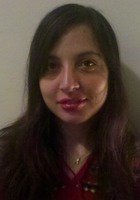
A physics and mathematics degree means Sarah spent years working with error analysis, probability distributions, and the kind of rigorous data interpretation that underpins biostatistics — skills she built not from a textbook overview but from labs and problem sets where getting the statistics wrong meant getting the physics wrong. She approaches topics like measures of central tendency, variance, and hypothesis testing with the mathematical precision her training demands, breaking down formulas into the logic behind them.
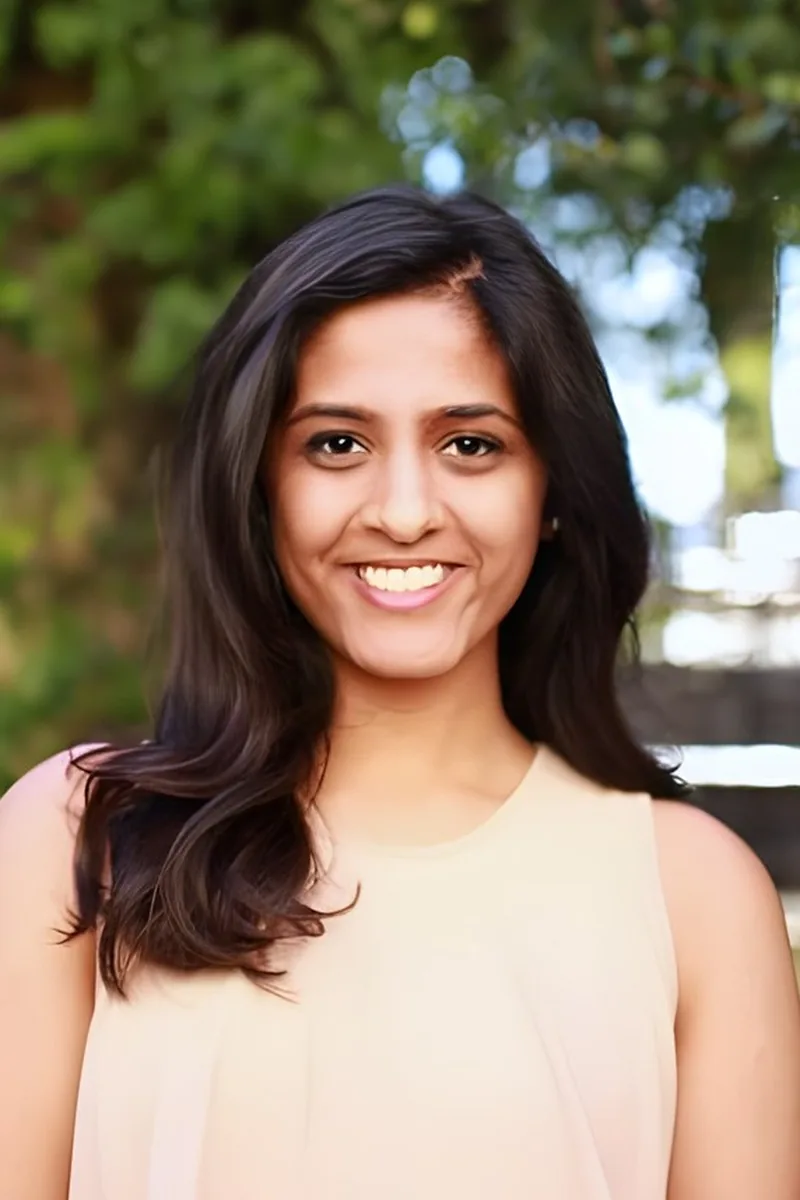
Neurobiology research at UT Austin meant Hiral couldn't just run experiments — she had to make sense of the data coming out of them, from deciding whether a t-test or ANOVA fit her experimental design to interpreting p-values that determined whether her results meant anything at all. That direct experience wrangling biological datasets gives her a practical grip on concepts like probability, measures of central tendency, and hypothesis testing. Rated 5.0 by students.
Graduate coursework in Health Services Administration means Alan regularly encounters the statistical side of healthcare — interpreting study outcomes, evaluating public health data, and understanding how measures like relative risk and confidence intervals shape administrative decisions. His biology degree gives him the scientific literacy to contextualize the datasets, while his 5.0 rating speaks to how clearly he breaks down concepts like hypothesis testing and descriptive statistics for students who find the quantitative side intimidating.
Studying behavioral neuroscience at Lehigh and now pursuing a Master's in Public Health at George Washington, Katherine has lived inside biostatistics — from chi-square tests and logistic regression to survival analysis and epidemiological study design. She teaches the subject the way she learned to use it: tied to real research questions about populations and health outcomes, so formulas stop feeling arbitrary and start making sense.
Elliot's PhD in neuroscience meant wrestling with the kinds of biological datasets where choosing the wrong statistical test can invalidate years of research — from analyzing neural firing rates with repeated-measures designs to modeling dose-response curves with logistic regression. That firsthand experience with experimental data makes him especially sharp at teaching concepts like power analysis, ANOVA, and survival analysis, because he's had to defend those choices in his own published work. Rated 5.0 by students.
Currently pursuing a graduate degree in statistics while holding a sociology background, Evan knows how to bridge the gap between raw quantitative methods and the population-level questions that drive biostatistics — things like interpreting odds ratios, building regression models, or deciding when a nonparametric test makes more sense than a parametric one. His sociology training means he's worked with survey data and demographic datasets where sloppy statistical reasoning leads to misleading conclusions. Rated 5.0 by students.
Dan's graduate work in plant biology meant running his own statistical analyses on biological datasets — the kind where understanding ANOVA designs, choosing appropriate post-hoc tests, and interpreting interaction effects isn't theoretical but determines whether your thesis holds up. That research experience, combined with a 5.0 rating from students, grounds his biostatistics teaching in the practical decisions researchers actually face when moving from raw data to publishable results.
A PhD in Statistics paired with a mathematics foundation means Bahaeddine doesn't just teach biostatistics formulas — he can explain the probabilistic theory underneath methods like logistic regression, survival analysis, and hypothesis testing, then show how those methods apply to biological and clinical datasets. Fifteen years of teaching statistics at the college level have given him a deep catalog of examples for making abstract concepts like p-values, confidence intervals, and study design feel concrete and intuitive.
Three years of bench genetics and clinical research gave Selamawit hands-on experience designing studies, running statistical tests, and interpreting p-values in contexts where the results actually mattered. She brings that practical fluency to biostatistics topics like regression analysis, survival curves, and hypothesis testing. Her University of Pennsylvania public health training means she knows exactly how these methods apply to epidemiological and clinical data.
Three years teaching high school biology in New Jersey meant Sasha was constantly designing assessments and interpreting student performance data — skills that map directly onto biostatistics concepts like distributions, variability, and drawing valid inferences from samples. Her master's in science education and undergraduate biology training give her a dual grasp of both the life science context behind biological datasets and the statistical reasoning needed to analyze them. She breaks down topics like chi-square tests and descriptive statistics by rooting them in the kinds of biological questions that make the math feel purposeful.
Between a neuroscience bachelor's, a biotechnology master's, and current medical training, Rithi has run into biostatistics from every angle — analyzing neural data in research, evaluating clinical study designs, and interpreting the kind of messy biological datasets where a wrong assumption about normality can derail an entire analysis. She breaks down concepts like survival curves, relative risk calculations, and test selection by walking through the actual research scenarios that make each method necessary. Rated 4.9 by students.
As a first-year med student at Pitt with a biology degree from Tufts, Danielle is encountering biostatistics exactly where it becomes unavoidable — interpreting clinical study results, calculating sensitivity and specificity, and evaluating whether a paper's p-value actually means what the authors claim. Her 36 ACT composite reflects the kind of precise analytical thinking she brings to breaking down concepts like confidence intervals, relative risk, and study design for students who find the statistical side of biology intimidating. Rated 5.0 by students.
Psychology research lives and dies by statistics — every study Katelyn encountered during her degree required interpreting effect sizes, understanding when to apply a chi-square test, and evaluating whether a sample actually supports a paper's claims. That training in research methods translates directly to biostatistics concepts like probability, measures of central tendency, and hypothesis testing, especially for students who need the statistical logic explained through behavioral and health science examples rather than pure math.
Testimonials
Because the right Biostatistics tutor makes all the difference.
Average Session Rating – Based on 3.4M Learner Ratings
Nearby Biostatistics Tutors
Other Riverside Tutors
Related Science Tutors in Riverside
Frequently Asked Questions
Biostatistics is taught differently across universities and graduate programs, with varying emphasis on theoretical foundations versus applied software skills. Tutors connect with you understand your specific curriculum—whether your course focuses on frequentist or Bayesian methods, uses particular software like R or SAS, or emphasizes epidemiological applications. This means personalized instruction targets exactly what your course requires, rather than generic statistics help.
Many students can plug numbers into formulas without grasping why those formulas work or when they're appropriate to use. Real understanding of biostatistics means seeing how hypothesis testing, confidence intervals, and study design connect to biological questions. Expert tutors help you move beyond "follow these steps" to recognizing patterns—like understanding why randomization matters in experimental design, or how sample size relates to statistical power. This conceptual foundation makes advanced topics like survival analysis or mixed models much more manageable.
Students often find these areas most challenging: understanding p-values and what statistical significance actually means (not the same as practical significance), distinguishing between different study designs and their appropriate analyses, interpreting interaction effects in multivariable models, and applying assumptions-checking in real datasets. Word problems and study design scenarios require connecting statistical concepts to biological context, which can feel overwhelming without personalized guidance. Tutors break down these difficult bridges one step at a time, helping you see the logic rather than memorize rules.
Yes—many modern biostatistics courses require hands-on coding in R, Python, or SAS. Beyond syntax, tutors help you understand what your code is actually doing statistically, debug analyses that aren't producing expected results, and develop problem-solving strategies for real datasets. This combines both the statistical reasoning and technical skills you need, so you're not just copying code but building competence in both areas.
Statistics anxiety is real and common, especially when biostatistics feels disconnected from the biological problems you care about. Working with a tutor creates a judgment-free space to ask "why" questions repeatedly, move at your own pace, and connect abstract statistical concepts to concrete applications in public health, clinical trials, or research. When you understand the reasoning—not just memorize procedures—confidence builds naturally. Personalized instruction means addressing your specific worry points, whether that's interpreting results or designing analyses from scratch.
Multivariable models (logistic regression, Cox regression, linear mixed models) build on foundational concepts but add real complexity in interpretation and assumptions. Students often struggle with confounding versus mediation, model selection strategies, and what it means when coefficients change after adding variables. Tutors help you work through problems systematically, showing how to build models step-by-step and interpret results in biological terms. This bridges the gap between theory and the messy reality of analyzing actual research data.
Varsity Tutors connects you with tutors who have strong backgrounds in biostatistics, statistical methods, and often research experience. When you describe your specific course focus—whether that's epidemiology, clinical trials, computational biology, or general biostatistics—you get matched with someone whose expertise aligns with your needs. This means you're learning from tutors who understand not just the statistics, but the biological context where these methods actually apply.
Let’s find your perfect tutor
Answer a few quick questions. We’ll recommend the right plan and match you with a top 5% tutor.