Award-Winning Biostatistics Tutors
serving Los Angeles, CA
Biostatistics
Tutors in Los Angeles
Private 1-on-1 tutoring, weekly live classes for academic support, test prep & enrichment, practice tests and diagnostics, and more to elevate grades and test scores.
Based on 3.4M Learner Ratings
UniversitiesSchools & Universities
DeliveredHours Delivered
ProficiencyGrowth in Proficiency
Who needs tutoring?
No obligation. Takes ~1 minute.
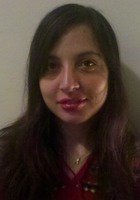
A physics and mathematics degree means Sarah spent years working with error analysis, probability distributions, and the kind of rigorous data interpretation that underpins biostatistics — skills she built not from a textbook overview but from labs and problem sets where getting the statistics wrong meant getting the physics wrong. She approaches topics like measures of central tendency, variance, and hypothesis testing with the mathematical precision her training demands, breaking down formulas into the logic behind them.

Applying to medical school while pursuing a Master's in Public Health means Jakobi is knee-deep in the kind of data analysis biostatistics courses demand — study design, hypothesis testing, and interpreting results in health contexts. His biology degree gives him the scientific grounding to explain why a particular statistical method fits a biological question, whether students are wrestling with relative risk calculations or figuring out when to use a t-test versus ANOVA.
Preparing for medical school means Serena has worked through the full gauntlet of premed coursework — and biostatistics sits right at the intersection of her biology degree and the quantitative reasoning she's built through years of tutoring math from algebra through calculus. She breaks down concepts like study design, measures of central tendency, and statistical significance by keeping the biological question front and center, so the formulas serve the science rather than the other way around. Holds a 5.0 rating from students.
Biostatistics sits right at the intersection of Michael's two strengths — biology and quantitative analysis. His master's research required designing experiments, selecting appropriate statistical models, and interpreting output from tools like R, so he walks students through survival analysis, logistic regression, and study design with the confidence of someone who's applied each method to real data.
Having earned a PhD in Statistics, Sam digs into biostatistics with the depth that graduate and pre-med students actually need — survival analysis, logistic regression, study design, and interpreting odds ratios in clinical contexts. His undergraduate training in biomedical engineering gives him a native fluency with the biological applications that make this field distinct from general stats.
Nina is finishing a doctorate in biostatistics at NYU after completing her master's at Columbia, which means she lives and breathes this subject — logistic regression for clinical outcomes, survival curves, study design for epidemiological research. She was a teaching assistant in Columbia's biostatistics department and brings that classroom-tested ability to unpack dense material into clear, structured explanations. If you're wrestling with SAS output or trying to interpret an odds ratio for a thesis, she's been there recently.
As a biomedical engineering undergrad at Rice, Aurnab regularly works with biological datasets where statistical decisions — selecting the right test for variable sample sizes, interpreting p-values from experimental results — directly shape whether a project's conclusions hold up. That engineering-driven statistical thinking translates naturally to teaching concepts like probability distributions, hypothesis testing, and confidence intervals in a biostatistics context. Rated 4.9 by students.
Neurobiology research at UT Austin meant Hiral couldn't just run experiments — she had to make sense of the data coming out of them, from deciding whether a t-test or ANOVA fit her experimental design to interpreting p-values that determined whether her results meant anything at all. That direct experience wrangling biological datasets gives her a practical grip on concepts like probability, measures of central tendency, and hypothesis testing. Rated 5.0 by students.
Studying neuroscience on a pre-med track, Jessica encounters biostatistics constantly — from interpreting p-values in research papers to running regression analyses on experimental data. She teaches concepts like hypothesis testing, confidence intervals, and study design by grounding them in actual biological questions rather than abstract formulas.
Running a program that teaches elementary school girls math and science means Kara regularly translates quantitative concepts for audiences who need clarity over jargon — a skill that carries directly into breaking down biostatistics topics like descriptive measures, basic probability, and interpreting study results. Her biology coursework on the pre-med track at UVA, combined with her public health studies, gives her familiarity with the kinds of epidemiological data and research designs that biostatistics problems are built around.
Studying biology at Duke while conducting field research on Hawaiian monk seals meant Emma had to grapple with real ecological datasets — the kind where choosing between a t-test and a Mann-Whitney U actually changes your conclusions. That hands-on experience with biological data analysis, paired with her 4.9 rating from students, makes her especially effective at teaching the statistical reasoning behind study design and data interpretation.
Between a neuroscience bachelor's, a biotechnology master's, and current medical training, Rithi has run into biostatistics from every angle — analyzing neural data in research, evaluating clinical study designs, and interpreting the kind of messy biological datasets where a wrong assumption about normality can derail an entire analysis. She breaks down concepts like survival curves, relative risk calculations, and test selection by walking through the actual research scenarios that make each method necessary. Rated 4.9 by students.
Wall Street research demands a kind of statistical fluency that translates surprisingly well to biostatistics — Frank spent years dissecting datasets, evaluating risk models, and stress-testing assumptions before pivoting to teaching statistics at both the AP and college level. He breaks down concepts like hypothesis testing, probability distributions, and regression by emphasizing the logic behind choosing a method, drawing on the same analytical rigor he applied to financial research. His MBA and quantitative background give him a practical, numbers-first approach that cuts through the abstraction many students struggle with.
Testimonials
Because the right Biostatistics tutor makes all the difference.
Average Session Rating – Based on 3.4M Learner Ratings
Nearby Biostatistics Tutors
Other Los Angeles Tutors
Related Science Tutors in Los Angeles
Frequently Asked Questions
Biostatistics combines statistical methods with biological and health sciences. A typical course covers probability distributions, hypothesis testing, confidence intervals, regression analysis, and study design (randomized controlled trials, observational studies, etc.). Many courses also include survival analysis, categorical data analysis, and the practical application of these methods to real-world health research problems. The emphasis is on understanding not just how to calculate statistics, but why certain statistical approaches are appropriate for specific types of biological data.
Biostatistics requires connecting abstract statistical theory to concrete biological applications—a transition many students struggle with. Personalized 1-on-1 instruction allows tutors to identify whether you're struggling with the underlying math, the conceptual reasoning, or the interpretation of results. A tutor can break down complex ideas like p-values and confidence intervals into digestible explanations, show you how to approach word problems step-by-step, and help you see the patterns that make statistical methods click. This personalized approach builds genuine understanding rather than memorization.
Effective problem-solving in Biostatistics starts with clearly identifying what you're being asked to find and what type of data you're working with. A strong approach involves: (1) sketching or visualizing the problem, (2) deciding which statistical test or method applies, (3) checking assumptions for that method, (4) performing calculations, and (5) interpreting results in the context of the original question. Many students rush to calculations without understanding why they're using a particular method. Working through problems with a tutor helps you develop this systematic thinking and learn to justify your choices—a critical skill in research and professional settings.
Choosing the right test depends on several factors: the type of data (continuous vs. categorical), the number of groups being compared, whether data is paired or independent, and whether assumptions like normality are met. For example, you'd use a t-test for comparing means of two independent groups with normally distributed data, but a Mann-Whitney U test if that data violates normality assumptions. This decision-making process is where many students get stuck. Personalized instruction helps you build a mental framework for these choices rather than memorizing rules, so you can confidently approach new problems and explain your reasoning to professors or colleagues.
Biostatistics is challenging because it requires both mathematical reasoning and the ability to translate real-world research questions into statistical language. Many students find the abstract nature of probability and inference difficult, or struggle with the gap between textbook examples and messy real data. Confidence builds when you understand the 'why' behind methods, not just the 'how.' A tutor can help by working through problems at your pace, answering conceptual questions without judgment, and gradually building your problem-solving toolkit. As you see patterns emerge and solve increasingly complex problems, your confidence naturally grows.
Interpreting statistical output is a skill that requires practice and clear thinking. When you see results from statistical software, you need to understand: What does this p-value tell me? What does this confidence interval mean? How do I explain this to someone who isn't a statistician? These interpretations require connecting back to the research question and understanding what the numbers actually represent in biological context. Tutors can help you develop a systematic approach to reading output, spotting common misinterpretations, and communicating findings clearly—skills that are invaluable whether you're writing a research paper or working in public health or pharmaceutical research.
Varsity Tutors connects you with expert tutors in Los Angeles who understand Biostatistics at both the conceptual and applied levels. When you work with a tutor through Varsity Tutors, you get matched with someone who can teach you the statistical foundations while grounding those concepts in real biological and health research applications. Whether you're working through your first course in Biostatistics or need help preparing for exams, you can find a tutor with expertise in your specific curriculum and learning goals. The personalized 1-on-1 format means instruction is tailored to your pace and style.
Let’s find your perfect tutor
Answer a few quick questions. We’ll recommend the right plan and match you with a top 5% tutor.