Award-Winning Math Tutors
serving Little Rock, AR
Math
Tutors in Little Rock
Private 1-on-1 tutoring, weekly live classes for academic support, test prep & enrichment, practice tests and diagnostics, and more to elevate grades and test scores.
Based on 3.4M Learner Ratings
UniversitiesSchools & Universities
DeliveredHours Delivered
ProficiencyGrowth in Proficiency
Who needs tutoring?
No obligation. Takes ~1 minute.

From pre-algebra through calculus, Matt covers a wide span of math — but his engineering background means he's especially sharp at showing students why a concept matters before drilling the procedure. Whether it's simplifying fractions or computing integrals, he ties abstract operations back to concrete problems so the logic clicks.
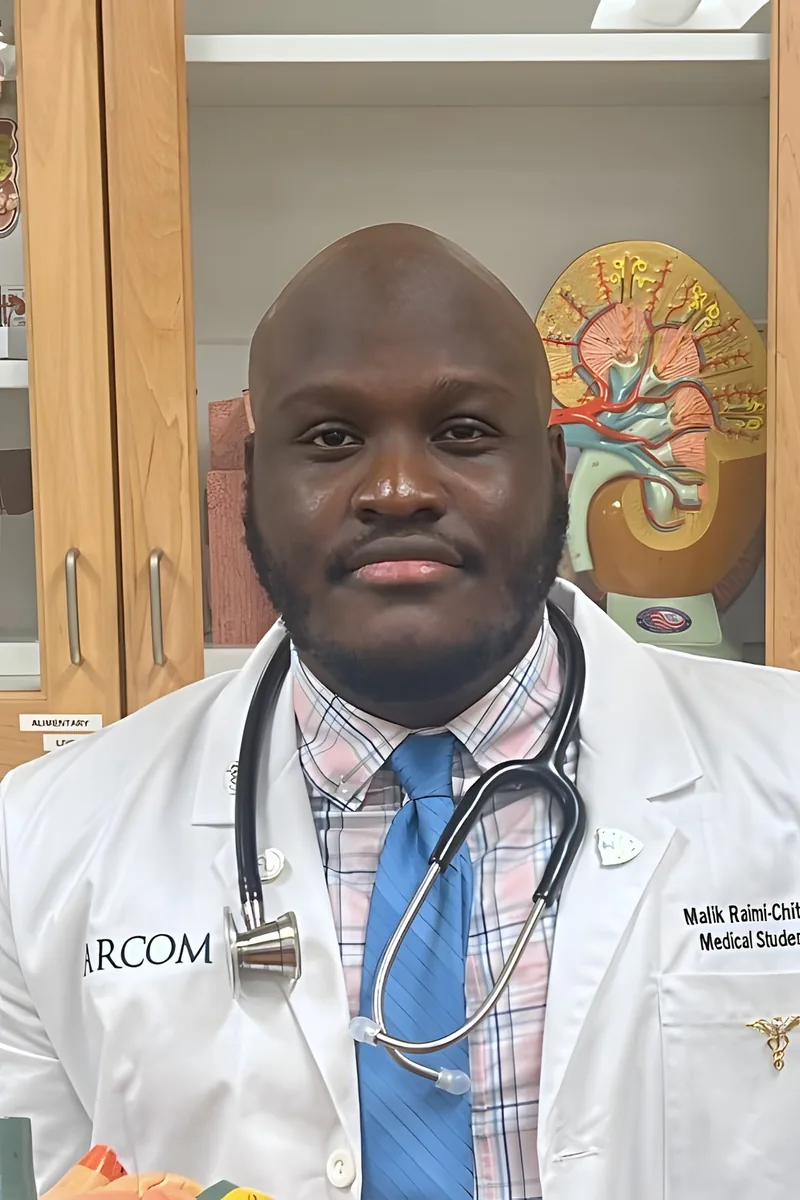
As a second-year medical student with a strong foundation in science and a passion for education, I specialize in making tough subjects easier to understand. I excel in math, biology, physics, and other challenging topics that often intimidate students and I genuinely enjoy helping others master them. My approach combines patience, clarity, and high-level understanding to break down complex ideas into manageable, confidence-boosting lessons. Whether it's reviewing homework or prepping for exams, I'm here to support and motivate students at any level below mine to reach their full academic potential. My interests include: Weightlifting and fitness training (especially strength and hypertrophy programs) Morning cardio and physical conditioning Studying medicine with a focus on anatomy, physiology, and clinical problem-solving Teaching and tutoring tough academic subjects like math, biology, and physics Watching anime as a way to relax and recharge (especially after a long day) Cooking (with a focus on high-protein, keto/carnivore meals)
From basic arithmetic through algebra and geometry, Melanie ties abstract math concepts to tangible scenarios — calculating dosages in her pre-med coursework, for instance, or using trigonometry to model wave patterns in marine science. That habit of connecting numbers to real situations makes procedures like order of operations or solving proportions feel purposeful rather than arbitrary.
I am a graduate of Arkansas Tech University with a Bachelor of Science in Computer Science. I also received certificates of proficiency for Mathematics and Applied Statistics while I attended. Education in our society is required for one to be successful, to not be taken advantage of. I believe that students need the skills that math and programming teaches to be able to navigate the world around them. If I can also instill a passion for math along the way, that is merely a bonus.
Sash's 1560 SAT required serious math performance under pressure, and her Comparative Literature training — constantly analyzing structures, patterns, and logical progressions across texts — gives her an unexpected but effective lens for tackling math problems that demand careful, sequential reasoning. She's especially useful for students who freeze up on word-heavy questions, since parsing dense language and extracting what actually matters is literally what her degree trained her to do.
Few tutors can teach pre-algebra and multivariable calculus with equal clarity, but Justin's math background runs from a double bachelor's in physics and mathematics through a PhD in Computational Mathematics at the University of Chicago. He pinpoints exactly where a concept breaks down for a student — whether that's fraction operations, quadratic factoring, or function transformations — and rebuilds understanding from that specific gap.
Mechanical engineering at Harvard means Christopher lives in math daily — calculus, trigonometry, and algebra aren't abstract exercises for him but tools he uses to model physical systems and solve design problems. That applied perspective lets him show students exactly where a concept like derivatives or trig identities actually goes, which tends to unlock motivation alongside understanding. He scored a 35 on the ACT and is rated 4.8 by students.
A Cornell biology graduate, Josef regularly applies quantitative reasoning to scientific problems — from calculating reaction rates to modeling population dynamics — which keeps his math sharp and grounded in real applications. He breaks down concepts like proportional reasoning, unit conversions, and algebraic manipulation by tying them to tangible scenarios students can visualize. Rated 5.0 by students.
From pre-algebra fundamentals through Calculus 2, Aaron covers the full math pipeline and knows exactly where the common stumbling blocks sit — fractions-to-ratios in middle school, the abstraction jump in algebra, and the conceptual leap into limits and integration. His mechanical engineering grad work keeps him using this math daily, so he explains it as a living toolset rather than isolated procedures. Rated 5.0 by students.
Solange approaches math as a subject that rewards structured thinking over speed, breaking problems into logical steps students can follow and eventually internalize. Her 34 ACT composite reflects sharp quantitative reasoning, and she applies that same methodical approach to arithmetic, pre-algebra, and foundational concepts that younger or struggling students need to build confidence.
Whether a student is working through fraction operations in middle school or tackling precalculus concepts, Nishad connects each new math skill to the reasoning behind it so that procedures actually stick. His premed and SAT math background means he's comfortable across the full K-12 spectrum, from proportional reasoning to polynomial behavior. He's especially effective at diagnosing exactly where a student's understanding breaks down and rebuilding from that point.
Valerie scored a 1540 on the SAT and has tutored math from pre-algebra through calculus, so she's comfortable across the full K-12 sequence. She's especially good at translating word problems into equations — a skill her writing background sharpens, since parsing a math problem is really an exercise in precise reading.
Between competition math experience and a Stanford cognitive science degree that included heavy quantitative coursework, David approaches math problems by teaching the reasoning behind each step — whether that's factoring polynomials or setting up related rates in calculus. His 1570 SAT speaks to the precision he brings to mathematical thinking at every level.
From simplifying fractions in pre-algebra to tackling derivatives in calculus, Michelle covers the full math pipeline and knows where the common stumbling blocks are at each level. Her biochemistry training at Rice required heavy quantitative coursework, so she's comfortable connecting abstract math concepts — like logarithmic functions or rate-of-change problems — to real applications that make them click.
While Victoria's primary training is in the humanities, her SAT composite of 1520 required strong quantitative performance, and she tutors foundational math concepts like proportional reasoning, basic algebra, and arithmetic fluency. She approaches math the way an anthropologist approaches fieldwork — methodically, with attention to why each step matters before moving to the next one.
Not every math student needs calculus-level intensity — sometimes the gap is in foundational skills like fraction operations, proportional reasoning, or translating word problems into equations. Connor identifies exactly where the disconnect is and rebuilds confidence from that point, drawing on the quantitative rigor his dual science degrees required.
Testimonials
Because the right Math tutor makes all the difference.
Average Session Rating – Based on 3.4M Learner Ratings
Practice Math
Free practice tests, flashcards, and AI tutoring for Math
Nearby Math Tutors
Other Little Rock Tutors
Related Math Tutors in Little Rock
Frequently Asked Questions
Students across Little Rock's school districts often struggle with the transition from memorizing procedures to truly understanding the concepts behind them. Word problems, multi-step equations, graphing, and geometry proofs are frequent pain points where students know the steps but can't apply them flexibly. Many students also experience math anxiety, which can block their ability to think clearly even when they know the material. Personalized 1-on-1 instruction helps students move beyond "just getting the answer" to seeing the patterns and connections that make math click.
The first session is focused on understanding where your student is starting from. A tutor will work through a few problems together to identify specific gaps—whether it's foundational skills, conceptual misunderstandings, or test-taking anxiety. They'll also learn about your student's learning style, what's been tried before, and what your goals are. This diagnostic approach means the tutoring plan is tailored from day one, not generic.
Yes. Little Rock's 18 school districts use different textbooks and approaches, and tutors are experienced working with all of them. Whether your student is using a traditional textbook, a standards-based curriculum, or a hybrid approach, tutors can align their instruction to match what's happening in the classroom. This consistency helps students make faster progress because they're not learning conflicting methods.
Showing work isn't just about following a rule—it's about communicating mathematical thinking clearly. Tutors help students understand why each step matters and how to organize their work so it's easy to follow and debug if something goes wrong. This skill becomes increasingly important in higher math, standardized tests, and real problem-solving. When students can articulate their reasoning, they also catch their own mistakes faster.
Absolutely. Math anxiety often stems from past negative experiences or feeling lost in a large classroom setting. Personalized instruction in a low-pressure environment helps rebuild confidence by breaking problems into manageable pieces and celebrating small wins. When students experience success repeatedly and understand the "why" behind concepts, anxiety naturally decreases. Many students discover they actually enjoy math once the frustration clears.
Rather than just solving problems for students, tutors teach strategies like drawing diagrams, breaking multi-step problems into smaller parts, checking answers, and recognizing problem patterns. These metacognitive skills help students become independent problem-solvers who can tackle unfamiliar questions, not just repeat practiced examples. This approach is especially valuable for standardized tests and advanced math courses where novel problems are common.
Procedural understanding is knowing the steps to follow ("do this, then that"), while conceptual understanding is knowing why those steps work and when to use them. For example, a student might memorize how to solve equations but not understand what an equation represents. Tutors help students build conceptual understanding by connecting procedures to visual models, real-world examples, and underlying principles. This foundation makes advanced math accessible and helps students retain what they learn.
Varsity Tutors connects you with expert tutors who work with students in Little Rock and can personalize their approach to your student's needs, goals, and learning style. You can share details about your student's current challenges, grade level, and what you're hoping to achieve, and we'll match them with a tutor who's a great fit. Most students see progress within the first few sessions once the personalized plan is in place.
Let’s find your perfect tutor
Answer a few quick questions. We’ll recommend the right plan and match you with a top 5% tutor.