Award-Winning AP Calculus BC Tutors
serving Little Rock, AR
AP Calculus BC
Tutors in Little Rock
Private 1-on-1 tutoring, weekly live classes for academic support, test prep & enrichment, practice tests and diagnostics, and more to elevate grades and test scores.
Based on 3.4M Learner Ratings
UniversitiesSchools & Universities
DeliveredHours Delivered
ProficiencyGrowth in Proficiency
Who needs tutoring?
No obligation. Takes ~1 minute.
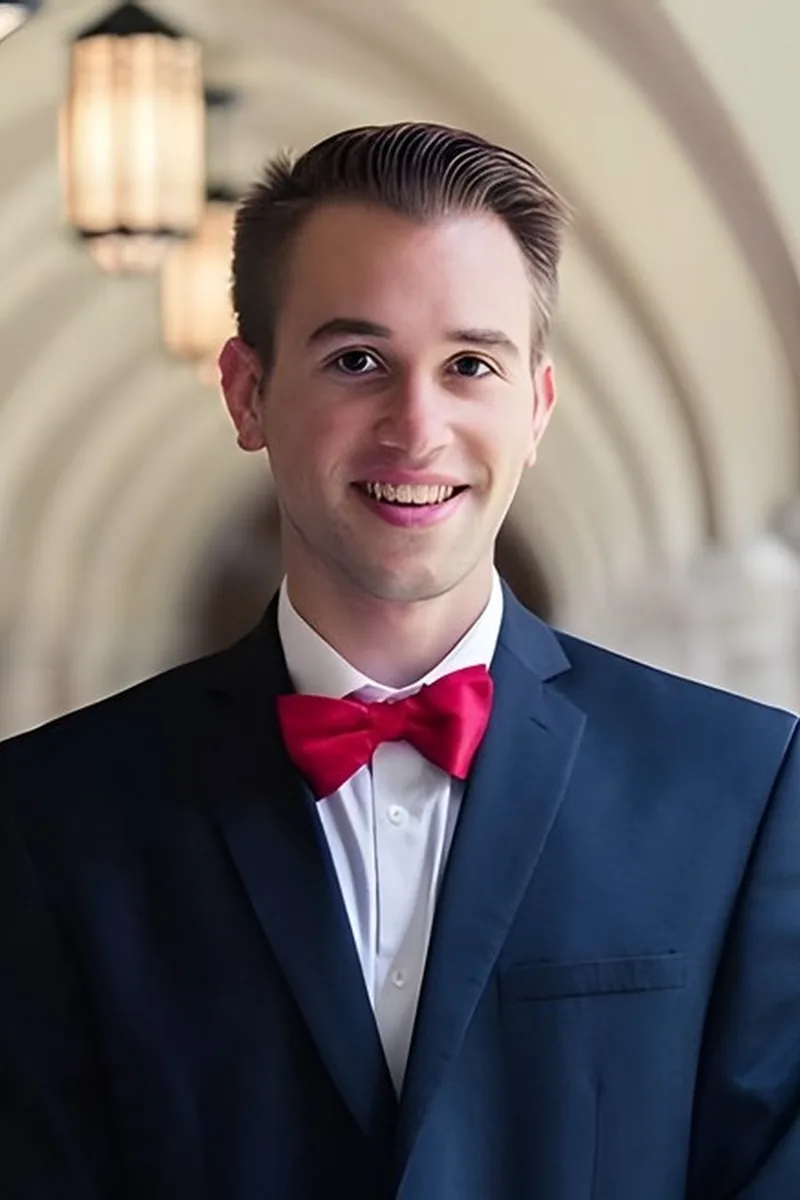
Biochemistry lab work at Columbia demands comfort with the calculus that models reaction kinetics and molecular behavior — Andrew has spent years using integration techniques and series approximations in that context, which gives his BC teaching a practical edge when students ask "why does this matter?" He's especially effective at breaking down the transition from AB to BC, tracing topics like Taylor polynomial construction and convergence criteria back to the derivative and integral logic students already trust. Rated 4.9 by students.
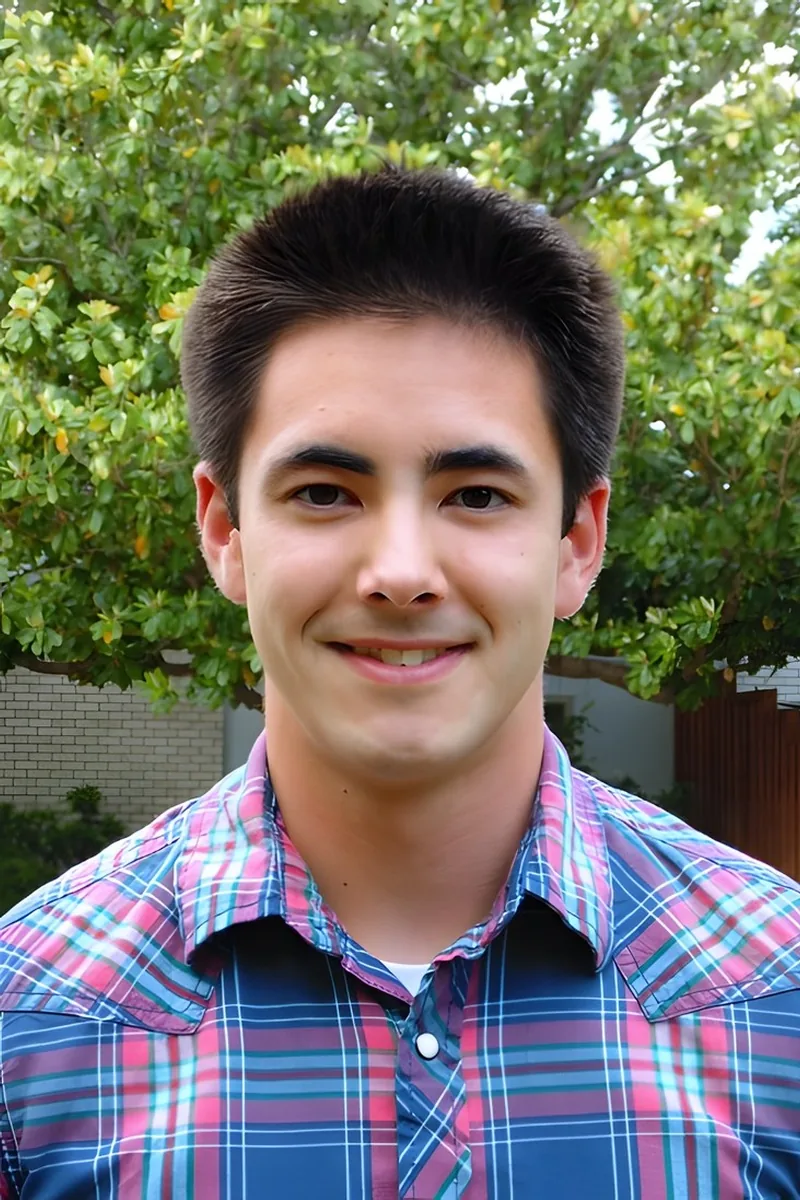
Kenan's mathematical economics training means he's comfortable with the kinds of series, parametric equations, and integration techniques that make BC a step up from AB. He walks through convergence tests and Taylor polynomials by connecting each tool to the problem it was invented to solve, which keeps the logic clear even when the notation gets dense.
Scoring a 36 on the ACT while studying economics at Vanderbilt means Kerr lives comfortably in the quantitative reasoning that BC Calculus demands — and his computer science focus sharpens the algorithmic thinking behind recursive sequences and series convergence. He teaches BC's trickiest leaps, like moving from basic integration to constructing Taylor polynomials, by grounding each new idea in the conceptual logic rather than just the procedural steps. Rated 4.9 by students.
I am a graduate of Cornell University's College of Arts and Sciences. I received my Bachelor of Arts in Chemistry with Distinction in 2015. Since graduation, I was a physics/chemistry teacher and soccer coach at a private school in Virginia for a year, where I led the soccer team to an undefeated season. Before teaching and coaching professionally, I was a Teaching Assistant for the Cornell Math and Physics Departments, where I taught many subjects including calculus, mechanics, electromagnetism. Throughout my time at Cornell and as a teacher, I tutored subjects ranging from the SAT to AP Physics and Algebra II, which is where my true talents lie: in small group or one-on-one settings where I can give students the full attention they deserve and tailor my approach specifically to their learning styles. This is why I am now pursuing tutoring as a part-time occupation at Varsity Tutors. I embrace teaching all math and science subjects, especially physics and calculus, at both the college and high school level and will go above and beyond to make sure all of my students succeed, according to their definition of success. In my spare time, I enjoy playing league soccer, basketball, tennis and guitar, and also like to travel and see as much of the world as I can.
Running a peer-tutoring program in high school meant Ryan spent years diagnosing exactly where classmates got stuck on calculus problems — a skill he's sharpened further through his civil engineering coursework at Cornell, where series expansions and integration techniques show up constantly in structural analysis and fluid mechanics. He breaks down the BC-specific leap into convergence tests and Taylor polynomials by grounding each new idea in the derivative and integral logic students built in AB. His 35 ACT and 4.7 rating speak to the precision he brings to every session.
Molecular biology might seem distant from BC Calculus, but Agustin's 1560 SAT and deep comfort with competition math mean he's built the kind of rigorous problem-solving instincts that make topics like convergence tests and parametric derivatives tractable rather than terrifying. He breaks down the logic behind each technique — why the ratio test actually tells you something, how polar area integrals connect back to Riemann sums — so the BC extension from AB feels like a natural next step. Rated 4.5 by students.
Engineering physics at Cornell means Daniel is currently neck-deep in the math that BC Calculus builds toward — using series to model oscillating systems, applying integration techniques to energy problems, and solving differential equations that describe real physical behavior. That context gives him a clear picture of which BC skills actually matter and how to teach something like the ratio test or parametric arc length by grounding it in the AB intuition a student already carries. Rated 5.0 by students.
Scoring a 36 on the ACT while studying Human Biology at Cornell means Sharan lives at the intersection of rigorous quantitative thinking and applied science — exactly where BC Calculus sits when series approximations and integration techniques start modeling real biological systems. She breaks down the AB-to-BC jump by treating topics like Taylor polynomials and convergence tests as logical extensions of limits and derivatives, not a separate universe of formulas to memorize. Rated 5.0 by students.
Studying applied physics at Cornell, Ritesh encounters BC-level calculus constantly — parametric motion in mechanics, series approximations in wave theory, integration techniques in electromagnetism — so he teaches these topics as interconnected tools rather than isolated chapters. He's especially sharp at walking through the logic of convergence tests, where students often memorize steps without understanding which test to reach for and why. His 1440 SAT and 4.6 rating speak to that clarity.
BC Calculus piles on convergence tests, parametric equations, and polar curves right when students think they've mastered AB material. Jake tackles series and sequences by teaching students to build a decision tree for which convergence test applies, turning one of the most overwhelming units into a systematic process.
Biomedical engineering eats BC Calculus for breakfast — Spencer's coursework has him building models with differential equations, approximating functions with series, and integrating across complex domains before he even opens his calc textbook. That real-time immersion means he can walk through something like the Lagrange error bound or a tricky polar area setup with the fluency of someone who just used it in a lab report, not someone dusting off old notes. His 1550 SAT and 35 ACT speak to the test-taking precision he pairs with that technical depth.
BC Calculus piles on series convergence, parametric equations, and polar coordinates on top of an already demanding AB curriculum. Julie's Princeton training in statistics and machine learning means she regularly uses advanced calculus as a tool, giving her an intuitive sense for which techniques apply where. She tackles integration strategies and Taylor series by connecting each method back to the core idea it extends.
Testimonials
Because the right AP Calculus BC tutor makes all the difference.
Average Session Rating – Based on 3.4M Learner Ratings
Practice AP Calculus BC
Free practice tests, flashcards, and AI tutoring for AP Calculus BC
Nearby AP Calculus BC Tutors
Other Little Rock Tutors
Related Math Tutors in Little Rock
Frequently Asked Questions
AP Calculus BC covers all topics from AP Calculus AB plus additional advanced material. Core topics include limits, derivatives, applications of derivatives, integrals, differential equations, sequences, series, and parametric equations. The course emphasizes both computational skills and conceptual understanding, with about 60% of the exam focusing on calculus concepts and 40% on problem-solving applications. For students in Little Rock, connecting these abstract concepts to real-world scenarios can help solidify understanding before test day.
AP Calculus BC requires strong foundational algebra and trigonometry skills combined with abstract reasoning about rates of change and accumulation. Many students struggle with the transition from computational math to conceptual understanding, particularly when applying derivatives and integrals to unfamiliar contexts. The series and parametric equations units at the end of the course often feel rushed, leaving students underprepared for those exam questions. Personalized 1-on-1 instruction can help identify exactly where your understanding breaks down and build confidence in these challenging areas.
AP Calculus BC scores range from 1-5, with a 3 typically considered passing for college credit. Your score depends on your current understanding, how much time you dedicate to preparation, and your test-taking skills. Most students who work consistently with focused tutoring improve by 1-2 score points over a semester. Rather than predicting a specific score, expert tutors focus on identifying your weak areas and building mastery in those concepts so you're fully prepared for exam day.
The AP Calculus BC exam has two sections: a 105-minute multiple-choice section and a 90-minute free-response section, with calculators allowed for parts of each. Effective pacing means spending roughly 1-2 minutes per multiple-choice question and 15-20 minutes per free-response problem. A common mistake is getting stuck on difficult questions early—it's better to skip and return later. Tutors can help you develop a personalized pacing strategy through practice tests, building the timing skills and confidence you need to manage stress on test day.
Most students benefit from taking 4-6 full-length practice tests starting 6-8 weeks before the exam. The first practice test helps identify weak areas; subsequent tests build stamina and refine your pacing strategy. Taking practice tests under timed conditions is crucial—it simulates exam pressure and reveals timing issues you wouldn't notice in untimed practice. After each test, spend time reviewing mistakes with a tutor to understand not just what you got wrong, but why, so you avoid similar errors on exam day.
Students typically struggle most with series convergence tests, parametric and polar equations, and applying calculus concepts to word problems. Many students memorize derivative and integral rules without understanding when and why to use them, which causes problems on application questions. Integration techniques—particularly u-substitution and integration by parts—also trip up many test-takers. Connecting with a tutor early in the course to build conceptual understanding in these areas prevents last-minute cramming and builds the deeper knowledge the AP exam rewards.
Your first session focuses on understanding where you currently stand. A tutor will review your recent classwork, discuss which topics feel solid and which feel shaky, and likely work through a few problems to assess your conceptual understanding versus memorization. This diagnostic helps create a personalized study plan targeting your specific needs rather than generic test prep. Whether you're starting early in the school year or prepping intensively before the exam, that first session sets the direction for all future work together.
Look for tutors with strong mathematics backgrounds—ideally a degree in mathematics, engineering, or a related field—and proven experience teaching AP Calculus BC specifically. Tutors should understand both the technical content and the AP exam format, including common student misconceptions and high-yield topics. Experience working with students at various skill levels and the ability to explain abstract concepts clearly are equally important. Varsity Tutors connects you with expert tutors who bring both deep subject knowledge and the teaching skills to help you truly understand calculus, not just memorize formulas.
Let’s find your perfect tutor
Answer a few quick questions. We’ll recommend the right plan and match you with a top 5% tutor.