Award-Winning AP Calculus AB Tutors
serving Little Rock, AR
AP Calculus AB
Tutors in Little Rock
Private 1-on-1 tutoring, weekly live classes for academic support, test prep & enrichment, practice tests and diagnostics, and more to elevate grades and test scores.
Based on 3.4M Learner Ratings
UniversitiesSchools & Universities
DeliveredHours Delivered
ProficiencyGrowth in Proficiency
Who needs tutoring?
No obligation. Takes ~1 minute.

Teaching calculus at Harvard as a Course Assistant gives Sanjana a front-row seat to the mistakes students make most often — and the explanations that actually click. She breaks down AB topics like related rates, the Fundamental Theorem, and integration techniques by connecting each one back to the graphical intuition behind it.
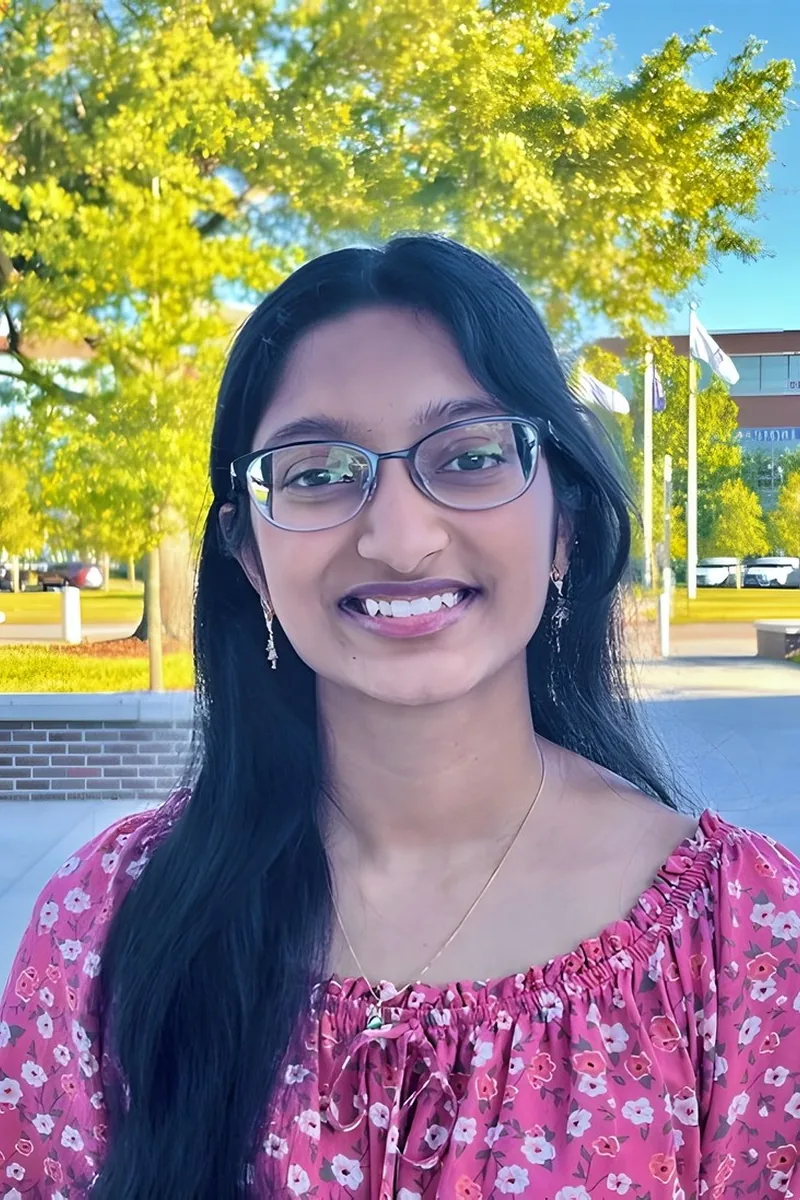
The jump from memorizing derivative rules to actually applying them — related rates, optimization, accumulation functions — is where most AP Calc AB students stall. Joshitha teaches problem-solving frameworks that make it clear which technique fits which scenario, so students aren't guessing on free-response questions. Rated 5.0 by her students.
Limits, derivatives, and the Fundamental Theorem of Calculus all require a shift in mathematical thinking that trips up even strong algebra students. Jake's quantitative training at Northwestern gives him a clear framework for walking through each concept step by step, connecting the graphical intuition to the formal rules. His 5.0 rating speaks to how well that approach lands.
Three engineering degrees mean Andrea has spent years where calculus isn't a course but a daily language — computing derivatives to analyze mechanical stress, integrating to find volumes and energy transfers across systems. That fluency shows up most when she teaches limits and continuity, building the conceptual scaffolding that keeps students from hitting a wall once the AB curriculum reaches the Fundamental Theorem. Her 32 ACT and 4.8 rating back up an approach grounded in genuine mechanical intuition.
The jump from memorizing derivative rules to applying them on AP free-response questions is where most Calc AB students lose points. Adam breaks down each problem type — related rates, accumulation functions, slope fields — by teaching the reasoning behind setups so students can handle unfamiliar prompts on exam day.
Limits, derivatives, and integrals become far more intuitive when a student sees why they matter, not just how to compute them. Dennis's physics background means he can ground every AB Calculus concept — from the chain rule to Riemann sums — in tangible problems involving motion, area, and rates of change.
Most AB students can differentiate a polynomial just fine — it's the moment a free-response question asks them to interpret the meaning of a derivative or set up an integral from a word problem that things fall apart. Zac tackles those conceptual gaps head-on, breaking application problems into smaller reasoning steps before any computation starts. His 34 ACT and 4.9 rating point to the kind of structured, clear thinking that makes tough calculus concepts land.
The jump from memorizing derivative rules to actually applying them — related rates, optimization, accumulation functions — is where most AP Calc AB students get stuck. Nima breaks each problem type into a decision-making process so students learn to read a question and know which tool to reach for, rather than guessing formulas.
Mechanical engineering at Harvard means Christopher builds with calculus daily — every force balance is a derivative, every energy calculation an integral — so the AB curriculum maps directly onto problems he's already solving in his coursework. He's especially sharp at teaching students how to navigate optimization and area-between-curves setups, where translating the scenario into the right expression is the real challenge. His 35 ACT and 4.8 rating back up an approach grounded in engineering intuition rather than formula memorization.
Brett spent his senior year at Syracuse tutoring student athletes through AP-level calculus, breaking down limits, derivatives, and integration techniques for students who needed concepts explained more than once and in more than one way. His engineering background at Penn means he can show exactly how the chain rule or a Riemann sum connects to real problems in science and design.
When limits and derivatives feel like arbitrary rules, it often helps to have a tutor who genuinely enjoys the logic underneath — James pairs a math background with the kind of close-reading discipline that comes from studying paleography, which means he's unusually patient at walking through each step of a proof or free-response setup until the reasoning is airtight. His 1590 SAT and 5.0 rating back up an approach that prioritizes understanding why L'Hôpital's Rule or the Fundamental Theorem works, not just when to apply it.
Limits, derivatives, and integrals each build on the last, so a shaky grasp of one topic can quietly undermine everything that follows. Brooke tackles AP Calculus AB by connecting each concept back to its graphical and physical meaning — something her engineering training at Duke reinforces every day. She scored a 1550 on the SAT and carries that same precision into calculus.
Testimonials
Because the right AP Calculus AB tutor makes all the difference.
Average Session Rating – Based on 3.4M Learner Ratings
Practice AP Calculus AB
Free practice tests, flashcards, and AI tutoring for AP Calculus AB
Nearby AP Calculus AB Tutors
Other Little Rock Tutors
Related Math Tutors in Little Rock
Frequently Asked Questions
AP Calculus AB covers limits, continuity, derivatives, applications of derivatives, and integrals with their applications. The course focuses on understanding rates of change and accumulation, which form the foundation for the exam. You'll study concepts like optimization, related rates, area under curves, and the Fundamental Theorem of Calculus—all essential for success on the May AP exam.
Personalized 1-on-1 instruction is particularly effective for calculus because it allows tutors to identify exactly where you're struggling—whether that's conceptual understanding, procedural fluency, or exam strategy. Most students see meaningful improvement when they work with a tutor to fill knowledge gaps and practice problem-solving under timed conditions, though the amount of improvement depends on your starting point and how consistently you engage with the material.
Many students struggle with the transition from algebra to calculus thinking—understanding limits and why derivatives represent instantaneous rates of change can feel abstract. Others find the procedural work (computing derivatives and integrals) tedious, or they rush through free-response questions without showing complete reasoning. Pacing is another major challenge; the AP exam requires both conceptual understanding and speed, which is hard to balance without targeted practice.
Your first session will focus on understanding where you stand. A tutor will likely review your recent tests or assignments, ask about topics that feel shaky, and assess your problem-solving approach. From there, they'll work with you to create a personalized study plan that targets your specific gaps—whether that's building conceptual understanding, improving calculation speed, or developing test-taking strategies for the May exam.
Practice tests are essential for AP Calculus AB success. They help you get comfortable with the exam format, develop pacing strategies for the 3-hour test, and identify weak areas before test day. Working through full-length practice tests under timed conditions—then reviewing your mistakes with a tutor—is one of the most effective ways to improve your score and build confidence going into May.
Varsity Tutors connects you with expert tutors for AP Calculus AB for students in Little Rock. When you get matched with a tutor, you can discuss your timeline, specific topics you need help with, and your target score. Tutors bring deep knowledge of the AP curriculum and exam, and they tailor each session to your learning style and goals.
Test anxiety often stems from feeling unprepared or uncertain about your approach. Working with a tutor to build genuine confidence through repeated practice—especially timed practice tests—reduces anxiety significantly. Tutors can also teach you specific strategies like tackling easier problems first, managing your time across multiple-choice and free-response sections, and techniques for staying calm when you encounter a difficult problem.
Ideally, you should begin focused AP exam preparation 2-3 months before the May test date. If you're already enrolled in AP Calculus AB, starting tutoring in February or March gives you enough time to review tough concepts, practice extensively, and refine your test-taking strategy. Starting earlier is fine too—it simply means you have more time to build a strong foundation and practice at a comfortable pace.
Let’s find your perfect tutor
Answer a few quick questions. We’ll recommend the right plan and match you with a top 5% tutor.