Award-Winning SAT Tutors
serving Little Rock, AR
SAT
Tutors in Little Rock
Private 1-on-1 tutoring, weekly live classes for academic support, test prep & enrichment, practice tests and diagnostics, and more to elevate grades and test scores.
Based on 3.4M Learner Ratings
UniversitiesSchools & Universities
DeliveredHours Delivered
ProficiencyGrowth in Proficiency
Who will be getting tutoring?
No obligation. Takes ~1 minute.

Scoring a 1550 on the SAT herself, Kiersten spent two semesters as a CollegeSpring Mentor preparing charter school juniors for test day — breaking down everything from evidence-based reading passages to no-calculator math strategies. Her screenwriting background at USC gives her a unique edge on the Reading and Writing sections, where she teaches students to dissect argument structure and pinpoint rhetorical choices under time pressure.
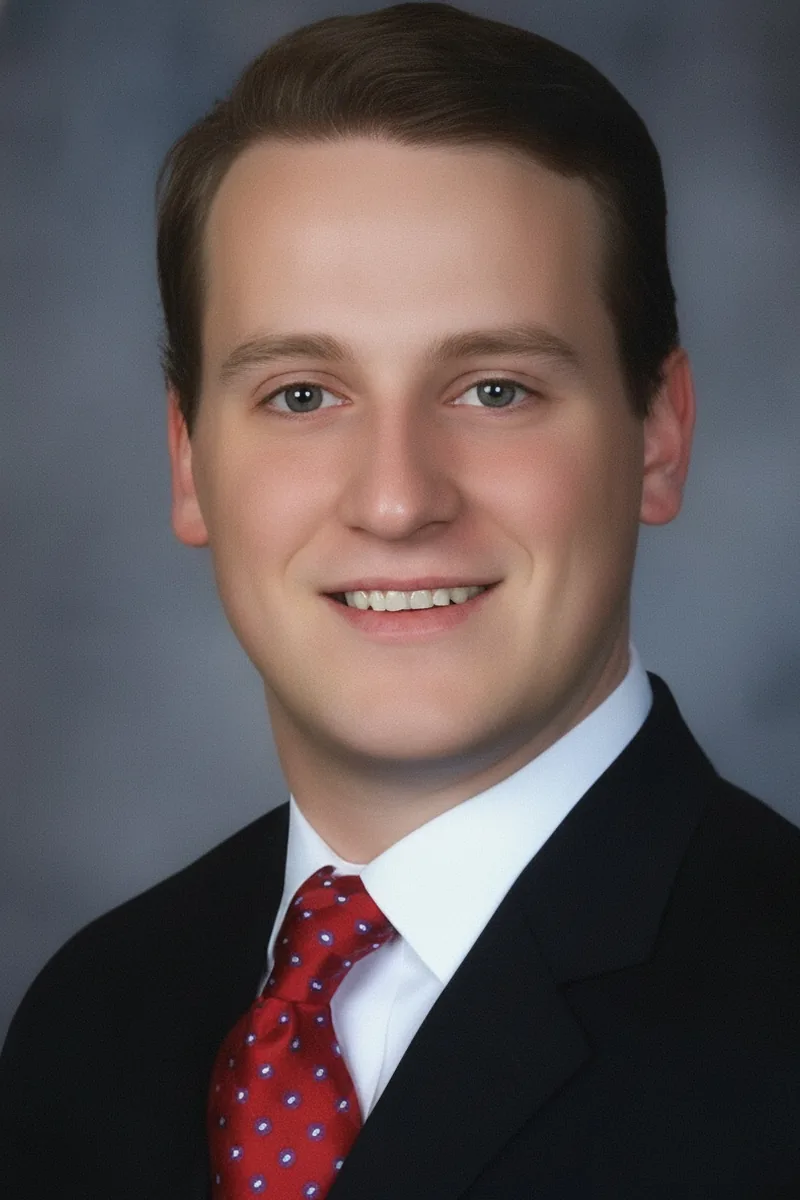
Georgetown's math program trained Peter to think in precise, logical steps — exactly the skill that turns the SAT Math section's multi-step word problems and data analysis questions into straightforward solves. His 1580 SAT score and years of tutoring both math and writing mean he covers the full exam without switching gears, connecting algebraic reasoning on one section to evidence-based reading strategy on the next. Rated 5.0 by students.
A 1400 SAT and a communication background give Logan a dual advantage: he knows the test's structure cold and can clearly articulate the reasoning behind every answer choice. His approach to the Reading and Writing sections leans heavily on argument analysis — identifying claims, evaluating evidence, and spotting the rhetorical moves that the College Board loves to test. Rated 5.0 by students, he also brings strong math fundamentals from his 36 ACT composite to shore up the quantitative side.
A perfect 1600 on the SAT gives Richard firsthand knowledge of what it takes to navigate every section — from evidence-based reading passages to the no-calculator math grid-ins that trip up even strong students. As a Harvard government major, he brings particularly sharp critical reading and argument-analysis skills to the Reading and Writing sections, where identifying an author's central claim quickly can save crucial minutes. He also spent a year as a math course assistant at Harvard, so the quantitative side is equally covered.
The SAT's Writing and Language section rewards students who understand grammar rules cold — comma splices, subject-verb agreement, parallel structure — and Daniela's English major coursework means she can explain the logic behind each rule instead of just drilling corrections. Her 1560 SAT score also reflects real strength on the Reading side, where she teaches students to trace an author's argument through paired evidence questions. She rounds out prep on the math sections with a focus on translating word problems into solvable setups.
Keith's political science and history coursework at Williams built exactly the kind of dense, argument-heavy reading that mirrors SAT Evidence-Based Reading passages — he teaches students to trace an author's claim through supporting evidence and spot the distractor answers designed to punish skimming. His 1560 SAT score backs up a full-test approach that extends to the math and Writing & Language sections, where he emphasizes the repeatable grammar rules and algebraic setups that appear on every administration.
Having once struggled as a test-taker himself, Ritik developed a systematic approach to the SAT that emphasizes building intuition over memorizing tricks — particularly on the Math section, where his aerospace engineering training at Purdue means he can unpack everything from algebraic modeling to data analysis with real clarity. He scored a 1420 on the SAT and uses that experience to teach pacing strategies and pattern recognition across both sections. His six years of tutoring students from elementary school through college means he's quick at diagnosing where points are being lost and adjusting accordingly.
Jenna's double major in French and Biochemistry means she's equally comfortable coaching the verbal and quantitative sides of the SAT — she reads passages like a humanities student and attacks the math section like a scientist. Her own 1570 puts her in the top fraction of test-takers, and she uses that experience to teach specific pacing and elimination techniques rather than generic advice. Rated 5.0 by students.
Katherine's music training — parsing complex scores, tracking multiple voices, recognizing structural patterns — turns out to be surprisingly useful preparation for the SAT, where both the Reading passages and the Math section reward methodical pattern recognition under time pressure. She scored a 1500 and uses that cross-disciplinary lens to teach students how to decode evidence-based reading questions and spot the algebraic setups that repeat across practice tests.
A perfect 1600 on the SAT gives Christopher credibility that's hard to argue with — he knows exactly how the test rewards certain reading strategies, grammar patterns, and math shortcuts. His history degree from Columbia also means he brings serious reading comprehension chops to the Evidence-Based Reading section, where dense passages trip up even strong students. He breaks the exam into repeatable systems so students can replicate his results on test day.
Perry's dual science degrees from Rice University built the exact quantitative reasoning and data interpretation skills that dominate the SAT Math section, while his medical humanities minor sharpened the close-reading habits needed for Evidence-Based Reading and Writing. He scored a 1570 on the SAT and knows which algebra shortcuts and passage-analysis techniques make the biggest difference under time pressure. Rated 5.0 by students.
Medical school demands the same skill the SAT rewards — extracting the right answer from dense, unfamiliar material under serious time pressure. Alex, who scored a 1590, teaches students to treat the Reading section like a data problem: find the claim, locate the evidence, eliminate what doesn't match. His chemical engineering training at Washington and Lee also means the math section's algebra and data analysis questions are territory he can break down cold.
Testimonials
Because the right SAT tutor makes all the difference.
Average Session Rating – Based on 3.4M Learner Ratings
Practice SAT
Free practice tests, flashcards, and AI tutoring for SAT
Nearby SAT Tutors
Other Little Rock Tutors
Related Test Prep Tutors in Little Rock
Frequently Asked Questions
The University of Arkansas typically looks for SAT scores around 1140-1340, while UALR generally accepts students with scores in the 1000-1200 range. However, these are middle 50% ranges—strong grades and extracurriculars can help with lower scores, and higher scores strengthen your application. If you're aiming for competitive scholarships at either school, a score of 1250+ significantly improves your chances.
Most students see 100-200 point improvements with focused, personalized prep—especially when they identify specific weak areas like Reading time management or Math problem-solving. The amount depends on your starting score and how consistently you practice; students starting around 950 often see larger gains than those already scoring 1300+. Varsity Tutors connects you with tutors who can diagnose exactly where you're losing points and create a targeted strategy.
Most students benefit from starting prep in the spring of junior year (about 6-8 months before their target test date) or early fall of senior year if you're testing in November or December. Starting earlier gives you time to build foundational skills without cramming, though even 3-4 months of focused prep can yield meaningful improvements. If you're aiming for a competitive score of 1300+, starting earlier helps you avoid test-day pressure.
Both tests are equally accepted by colleges, but the ACT has traditionally been more popular in Arkansas. However, the SAT is gaining ground, and many Little Rock students now take both to see which test plays to their strengths—the SAT emphasizes evidence-based reading and data analysis, while the ACT tests more straightforward content knowledge. Most colleges superscore or accept your best attempt, so choose the test format that feels more natural to you.
The Reading section's 65 minutes for 52 questions is tight—most students struggle with pacing rather than content. Effective strategies include reading the questions first to know what to look for, tackling easier passages before harder ones, and using line references to avoid rereading entire passages. A tutor can help you practice these tactics and find the reading speed that works for you, typically targeting 12-13 minutes per passage.
Multi-step problems trip up students because they require tracking multiple pieces of information and knowing when to use calculator versus no-calculator strategies. Common mistakes include misreading what the question is asking, making arithmetic errors midway through, or not checking if your answer makes sense in context. Working with a tutor on problem-solving strategies—like drawing diagrams, testing answer choices, and double-checking your setup—can help you catch these errors before test day.
Most students take the SAT 2-3 times: once in the fall or winter of senior year to establish a baseline, then again 4-6 weeks later after targeted prep. A third attempt in spring is reasonable if you're still working toward a specific goal, but diminishing returns typically kick in after that. Since colleges superscore (combine your best section scores), retaking is often worth it if you know which sections need work.
Your first session focuses on understanding where you stand: you'll likely take a diagnostic test or review your most recent SAT attempt to identify which sections and question types are costing you points. From there, a tutor can build a personalized plan targeting your biggest gaps—whether that's Reading pacing, Math accuracy, or test-day anxiety management. This diagnostic approach means you're not wasting time on skills you already have.
Let’s find your perfect tutor
Answer a few quick questions. We’ll recommend the right plan and match you with a top 5% tutor.