Award-Winning College Physics Tutors
serving Little Rock, AR
College Physics
Tutors in Little Rock
Private 1-on-1 tutoring, weekly live classes for academic support, test prep & enrichment, practice tests and diagnostics, and more to elevate grades and test scores.
Based on 3.4M Learner Ratings
UniversitiesSchools & Universities
DeliveredHours Delivered
ProficiencyGrowth in Proficiency
Who needs tutoring?
No obligation. Takes ~1 minute.
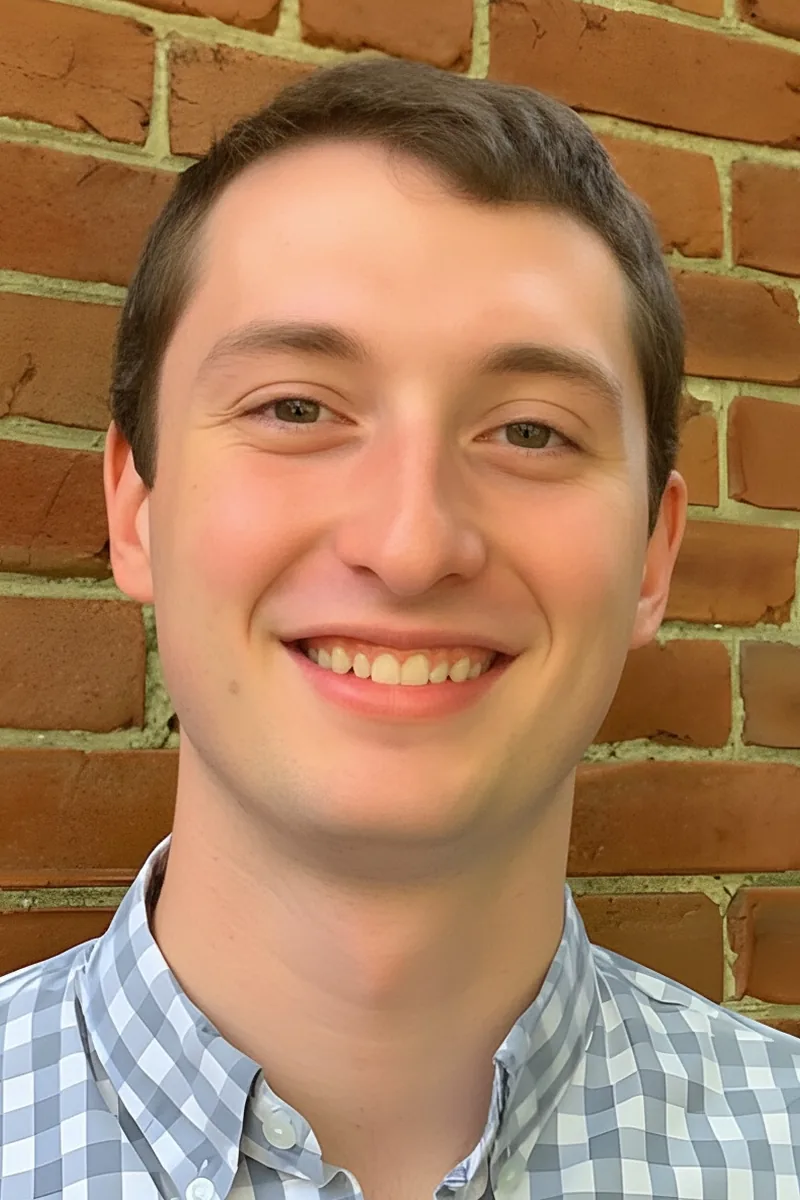
Biomedical engineering at Brown means Phillip solves physics problems with real biological stakes — modeling fluid flow through vessels, analyzing stress on implant materials, calculating electrical signals in tissue. That daily overlap with mechanics, thermodynamics, and electromagnetism gives him a practical fluency that makes college physics problem sets feel less abstract and more like puzzles with actual answers. Rated 5.0 by students.
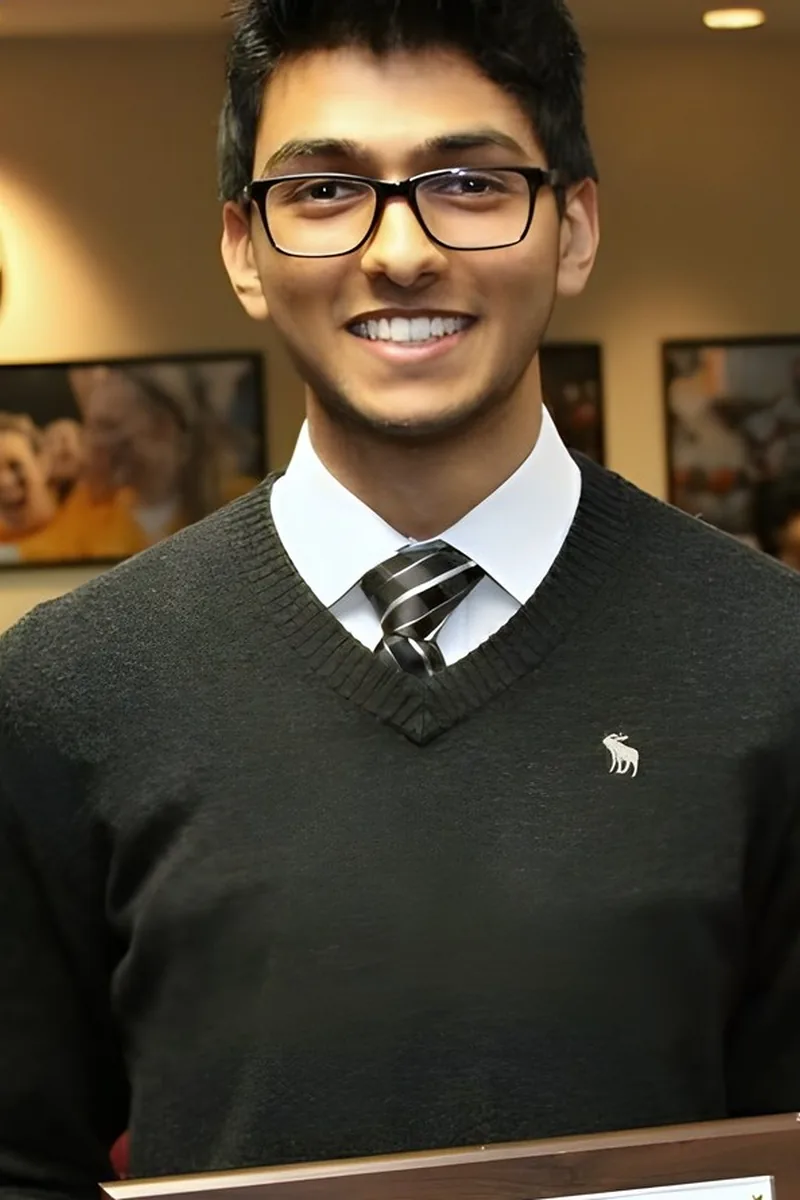
Studying molecular biophysics at Brown means Srini lives at the intersection of physics and biology — applying thermodynamics, electromagnetism, and wave mechanics to understand how molecules actually behave in living systems. That dual perspective makes him especially effective at unpacking the conceptual reasoning behind problems in mechanics, circuits, and optics that trip up so many college students.
Molecular biology might seem like a different world from physics, but Annabel's coursework lives in the overlap — understanding diffusion requires thermodynamics, membrane potentials are voltage problems, and imaging techniques depend on wave optics and electromagnetism. She brings that life-sciences lens to college physics topics like energy conservation and fluid dynamics, making the material click for pre-med students who need to see why these concepts matter beyond the problem set.
Building things that actually work — which is what mechanical engineering is — means Vania spent her degree applying Newton's laws to real structures, calculating heat transfer through materials, and analyzing fluid flow, not as textbook exercises but as design requirements. That hands-on engineering intuition shows up when she breaks down free-body diagrams or walks through energy conservation problems, because she's solved versions of them that had to hold up in the physical world. Her 1590 SAT underscores the quantitative precision she brings to calculus-based problem solving.
Princeton's mechanical and aerospace engineering program is essentially a four-year immersion in applied physics — Fred spent it solving problems in fluid dynamics, thermodynamics, structural mechanics, and orbital motion, which maps directly onto the topics that fill college physics syllabi. He breaks down force diagrams and energy methods by connecting them to the engineering contexts where those concepts actually get used, making abstract problem sets feel more concrete. His 1550 SAT reflects the quantitative precision he brings to calculus-heavy coursework.
Studying civil engineering at Cornell means Ryan solves physics problems for a living — calculating load distributions, analyzing force vectors in structural systems, and applying fluid mechanics principles that come straight out of college physics coursework. He scored a 35 ACT, which speaks to the quantitative precision he brings when breaking down mechanics or electromagnetism problems step by step. Rated 4.7 by students.
College-level physics demands comfort with calculus-based reasoning — deriving equations of motion, integrating force over a path for work, or applying differential equations to oscillations. Kathleen's math degree from Washington University and her experience teaching through multivariable calculus mean she can unpack both the physics intuition and the mathematical machinery simultaneously.
Graduate work in Chemical and Physical Biology at Vanderbilt meant Dennis spent years applying thermodynamics, fluid dynamics, and electromagnetism to biological systems — the same core physics concepts that fill college problem sets, just in a research context where getting the physics wrong meant failed experiments. He breaks down force, energy, and field problems by connecting them to the physical intuition behind the math, which is especially useful for pre-med and life science students navigating calculus-based physics for the first time. Holds a 5.0 rating.
Premed coursework and a computing degree at Notre Dame meant Aidan sat through the full sequence of calculus-based physics — mechanics, E&M, waves — while simultaneously learning to think algorithmically about complex problems. That combination is particularly useful when students hit the wall where physics stops being plug-and-chug and starts requiring multi-step reasoning, like connecting free-body diagrams to energy methods or translating a word problem into the right integral. His 35 ACT speaks to the quantitative fluency he brings to those tougher setups.
Four years teaching undergraduate physics labs at the University of Michigan — especially courses designed for non-STEM majors — taught Michael how to strip intimidating topics like electromagnetism, circuits, and wave optics down to their physical intuition before layering the math back on. His PhD research deepened that fluency across the full spectrum of college physics, from introductory mechanics through advanced electrodynamics and special relativity. Rated 4.7 by students.
Biomedical engineering at VCU meant Waleed spent years applying physics to biological systems — modeling forces on prosthetic joints, analyzing fluid flow through vessels, understanding the electromagnetic principles behind imaging equipment like MRI and ultrasound. That gives him a concrete hook for the mechanics, thermodynamics, and E&M topics that fill college physics problem sets, since he can ground abstract equations in systems students can actually picture. Holds a 5.0 rating.
A dual BS in physics and math from Yale means Anthony didn't just take college physics — he took the honors sequence and then kept going through differential equations, multivariable calculus, and upper-division mechanics. His PhD work in economics at Yale still draws on that training daily, since building economic models requires the same setup-and-solve discipline as a multi-step Newton's law problem. Rated 5.0 by students.
Testimonials
Because the right College Physics tutor makes all the difference.
Average Session Rating – Based on 3.4M Learner Ratings
Nearby College Physics Tutors
Other Little Rock Tutors
Related Science Tutors in Little Rock
Frequently Asked Questions
College Physics usually covers mechanics (motion, forces, energy), thermodynamics, waves and sound, electricity and magnetism, and often includes optics and modern physics. The curriculum emphasizes both conceptual understanding and problem-solving skills, with significant focus on applying physics principles to real-world situations. Most courses require lab work to help you connect theoretical concepts to experimental observations and develop hands-on scientific reasoning.
Many students struggle with translating word problems into equations, managing unit conversions, and visualizing abstract concepts like electromagnetic fields or energy transformations. The jump from high school physics often involves more complex mathematics and deeper conceptual reasoning. Additionally, balancing memorization of formulas with true understanding of *why* those formulas work is a common challenge that separates passing grades from mastery.
Yes—tutors can help you understand the scientific method, interpret experimental results, and connect lab observations to theoretical concepts. They can also guide you through data analysis, help you troubleshoot experimental design, and explain how to write clear lab reports that demonstrate your understanding. This support strengthens both your experimental skills and your ability to think like a physicist.
Expert tutors work with you to develop a systematic approach to physics problems: identifying what you know, choosing the right principles to apply, setting up equations correctly, and checking whether your answer makes physical sense. Rather than just showing you solutions, tutors help you build confidence in your reasoning and teach you strategies for tackling unfamiliar problems. This approach builds deeper understanding and better prepares you for exams and real-world applications.
Your first session focuses on understanding your current level, identifying specific challenges (whether it's conceptual gaps, math skills, or exam preparation), and discussing your goals. The tutor will likely work through a problem or concept with you to assess your approach and find where support would be most helpful. This personalized assessment ensures your tutoring plan targets exactly what you need to succeed.
Varsity Tutors connects you with expert tutors in your area who have strong backgrounds in physics and experience teaching at the college level. You can specify your needs—whether you're preparing for exams, working through difficult units, or building foundational understanding—and get matched with someone who fits your learning style. The process is straightforward and designed to get you started quickly with personalized instruction.
Tutors focus on building conceptual understanding by explaining *why* physics principles work and how they connect to observable phenomena. They use real-world examples, visual explanations, and guided problem-solving to help you see the big picture rather than treating formulas as isolated facts. When you truly understand the concepts, you can apply them to new situations and retain the material much longer than through memorization alone.
Absolutely. Tutors can help you review key concepts, practice problem-solving under timed conditions, identify weak areas, and build test-taking strategies specific to physics. They can also help you understand common mistakes and misconceptions that often appear on exams. With personalized preparation, you'll feel more confident and better equipped to demonstrate what you've learned.
Let’s find your perfect tutor
Answer a few quick questions. We’ll recommend the right plan and match you with a top 5% tutor.