Award-Winning Science Tutors
serving Phoenix, AZ
Science
Tutors in Phoenix
Private 1-on-1 tutoring, weekly live classes for academic support, test prep & enrichment, practice tests and diagnostics, and more to elevate grades and test scores.
Based on 3.4M Learner Ratings
UniversitiesSchools & Universities
DeliveredHours Delivered
ProficiencyGrowth in Proficiency
Who needs tutoring?
No obligation. Takes ~1 minute.
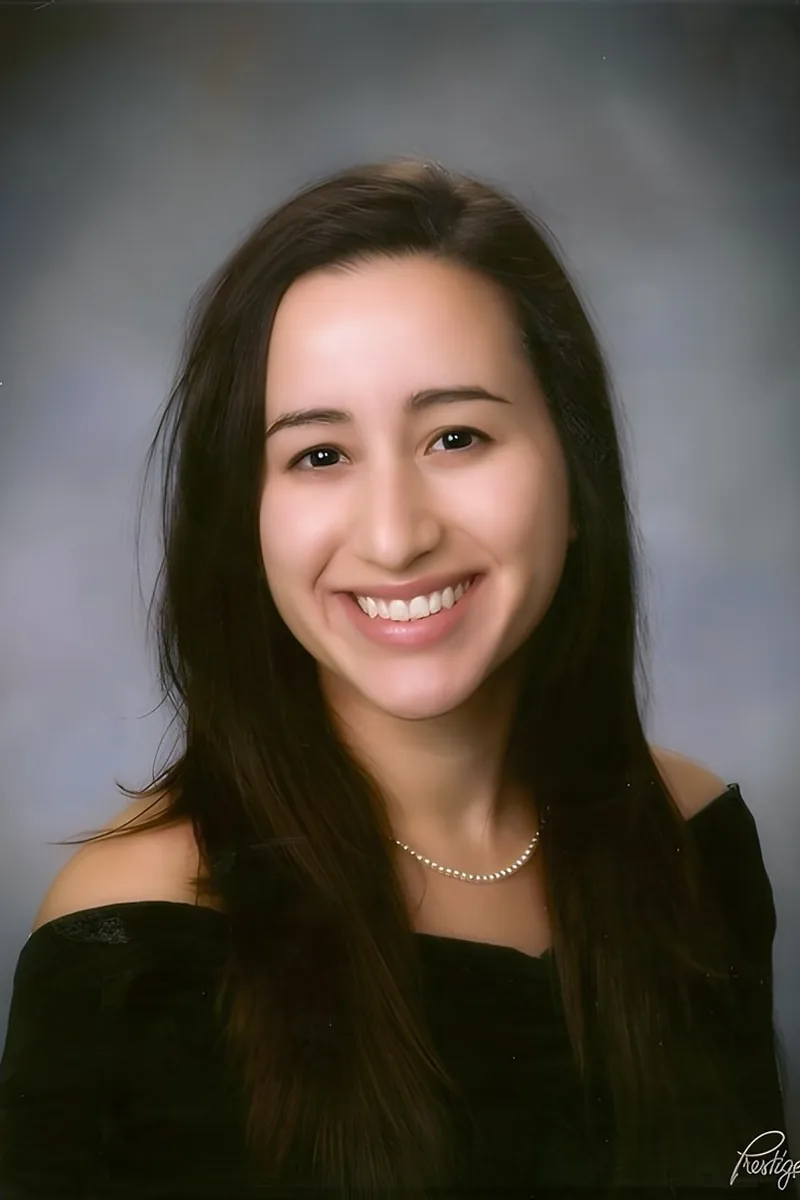
Preparing for law school means Alexis lives in a world of evidence evaluation and structured argumentation — skills she applies when teaching students to work through hypotheses, interpret data tables, and explain experimental outcomes in their own words. Her 32 ACT confirms she can handle the quantitative and reasoning demands science throws at students, and her 5.0 rating shows she makes those concepts accessible.
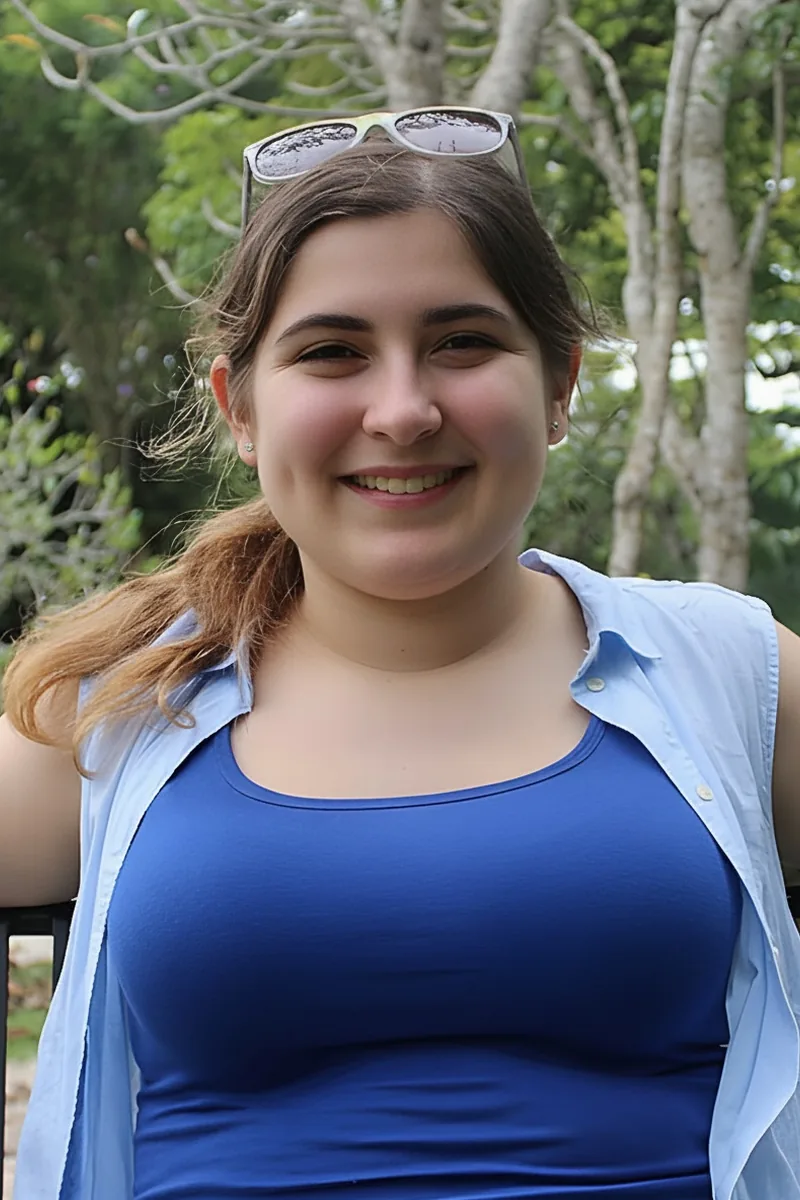
While science sits outside Elizabeth's core degrees, her graduate research training built the kind of analytical and evidence-evaluation skills that transfer directly to scientific reasoning. She's a strong fit for students who need to improve how they read data, interpret experiments, and connect observations to broader concepts in introductory-level coursework.
Two philosophy degrees trained Linda to do exactly what science demands at its core — construct logical arguments, weigh evidence carefully, and identify where reasoning breaks down. She applies that same rigor to teaching students how to form testable hypotheses and interpret what experimental results actually show, particularly when the task shifts from recall to explanation. Her 5.0 rating suggests that analytical framework clicks for students who need science to feel less like memorization and more like structured thinking.
Between her dual astrophysics and Earth & Planetary Science degrees from Harvard and her current PhD research at Arizona State, Kristi has worked across physics, chemistry, geology, and biology in both classroom and lab settings. She unpacks scientific reasoning — forming hypotheses, interpreting data, connecting observations to underlying principles — in a way that makes the process feel intuitive rather than intimidating.
A philosophy degree might not scream science, but Rachelle's Summa Cum Laude training at Arizona State built exactly the kind of rigorous logical reasoning that makes the scientific method click — constructing hypotheses, identifying flawed assumptions, and evaluating whether evidence actually supports a conclusion. Her broad tutoring range across biology, chemistry, and anatomy means she can connect concepts across disciplines, showing students how cellular respiration ties to chemical reactions ties to organ systems rather than treating each topic as an isolated chapter.
Alex's chemical engineering degree from Washington and Lee means he learned science by solving real problems — thermodynamics calculations, reaction yield predictions, biological system modeling. Whether a student is struggling with balancing chemical equations or interpreting data in a biology lab report, he connects abstract scientific concepts to concrete, step-by-step reasoning. Rated 4.8 by students.
A medical degree from Creighton and a biomedical sciences background at Marquette — where she also TA'd organic chemistry lab and tutored general biology — give Elise deep fluency across the sciences. She unpacks topics like cellular respiration, Newtonian mechanics, or chemical bonding by connecting them to real phenomena rather than treating each chapter as an isolated set of definitions.
As an assistant instructor at the Arizona Science Center's Camp Innovation, Megan designed and delivered hands-on science programming that made concepts like states of matter, force, and energy click for young learners. Her Computer Science coursework at Harvey Mudd keeps her sharp on scientific reasoning and data analysis, so she can connect classroom topics to real experiments and observations that stick.
Currently on the pre-med track at Duke, Thara is immersed in biology and chemistry courses every semester, which means the concepts she teaches are ones she's actively using. She's especially strong at connecting life science topics — cell structure, genetics, ecosystems — to concrete examples that make abstract processes easier to visualize and remember.
Strong science performance often comes down to reading skills most students overlook — interpreting graphs, parsing dense lab instructions, and connecting vocabulary to real processes. Jeff's background in analytical reading and his 31 ACT composite give him the tools to tackle those exact bottlenecks with students who feel lost in their science coursework.
A double major in biology and psychology plus three years of medical school gives Claire unusually broad science coverage — from cellular respiration and genetics to human physiology and immunology. She teaches students to think in systems, linking individual facts to larger mechanisms so the material sticks beyond the next exam.
Tucker's theater training actually builds a skill most people overlook in science: the ability to read a scenario closely, figure out what's really being asked, and explain your reasoning out loud in a way that makes sense. He uses that performance-honed clarity to walk students through experimental design, data interpretation, and the kind of cause-and-effect reasoning that separates a memorized answer from a understood one. His 33 ACT and 5.0 rating back up the approach.
Breaking down lab reports, data interpretation, and scientific vocabulary into manageable pieces, Shannon makes science coursework feel less overwhelming. She draws on her broad tutoring background across math and analytical subjects to reinforce the quantitative reasoning that often trips students up in biology, chemistry, or earth science units.
Science isn't Tracey's primary teaching area, but her math background gives her a real advantage when students hit the quantitative side — unit conversions, graphing relationships, interpreting data tables. She's particularly useful for students who understand the science concepts but freeze when the numbers show up.
Between general chemistry, organic chemistry, physics, and genetics, Sebastian has spent the last few years immersed in science at Arizona State — learning to interpret experimental data, balance equations, and trace biological processes at the molecular level. He breaks down intimidating topics by linking new concepts to ones students already understand, the same method that carried him through some of the toughest courses in a pre-med curriculum.
Studying chemical engineering gives Adrian a hands-on perspective on science that textbooks often lack — he can explain why gas laws matter in a reactor or how energy conservation plays out in real systems. He teaches students to read data carefully and reason through problems step by step, building the kind of scientific thinking that transfers across biology, chemistry, and physics.
Having taught English in public high schools while earning her law degree in Uruguay, Veronica developed a knack for making dense, technical material accessible to students who aren't yet comfortable with academic language — a skill that pays off when science vocabulary and textbook reading become the main barriers to understanding. She walks students through how to organize information from a chapter or lab activity into something they can actually explain back, treating science content the way a lawyer treats case facts: piece by piece, with nothing glossed over.
Running an organic farm means troubleshooting real scientific problems daily — soil chemistry, pest biology, weather patterns, plant growth cycles — and Wallace draws on that hands-on experience to make science concepts tangible instead of abstract. His philosophy training at Williams College also sharpened his ability to construct logical arguments from evidence, which he applies directly to teaching students how to form hypotheses and explain experimental outcomes.
Having earned a 1590 SAT — a score that demands precise reading of data tables, graphs, and experimental passages — Jared knows how to teach the analytical side of science that textbooks often gloss over. His state teaching certification and background in romance languages means he's also unusually good at helping students decode scientific terminology, since so much of it traces back to Latin roots he already knows cold.
Holding a PhD in Genetics means Cameron has lived inside the scientific method — designing experiments, analyzing results, and connecting molecular-level mechanisms to big-picture biological questions. He teaches science by emphasizing that same process of inquiry, whether the topic is chemical bonding, cell division, or ecological systems. Students come away understanding not just the facts but how scientists arrived at them.
A geology degree means Paul spent years connecting physics, chemistry, and biology to real-world systems — from mineral crystallography to plate tectonics to the chemistry of groundwater. He brings that cross-disciplinary perspective to science tutoring, breaking down concepts like energy transfer, atomic structure, and the scientific method by tying them to tangible examples students can visualize.
Studying Applied Biological Sciences with a concentration in secondary education gives Anita a dual advantage: deep content knowledge and training in how to actually teach it. She unpacks topics like cell biology, genetics, and ecology by linking textbook concepts to real experimental design and data interpretation. Students walk away understanding the why behind the science, not just the vocabulary.
A psychology master's student with an applied mathematics minor, Chris knows how to teach the quantitative backbone of science — reading data tables, calculating averages, interpreting graphs — alongside the conceptual reasoning that ties experiments together. Three and a half years as a peer tutor across math and science subjects means he's seen the specific spots where students stall out and knows how to reroute around them. Holds a 5.0 rating.
Elementary and middle school science is where curiosity either takes root or gets buried under vocabulary lists. Maurice connects concepts like the water cycle, ecosystems, or states of matter to things students can observe in their own lives, making abstract ideas concrete. His teaching spans biology, chemistry, and physics, so he's comfortable wherever a young scientist's questions lead.
Physics is Naveen's favorite subject to teach, and his aerospace engineering background at Georgia Tech means he lives inside the physical sciences every day — mechanics, thermodynamics, electromagnetism, fluid dynamics. He connects abstract science concepts to tangible examples, like explaining energy conservation through rocket propulsion or wave behavior through sound design.
A computer science degree builds the same systematic thinking science demands — isolating variables, testing predictions, and debugging when results don't match expectations — and Shadman applies that mindset to topics like energy systems, classification, and experimental design. He's strong at walking students through the quantitative pieces (reading data tables, calculating averages, converting units) that often trip people up more than the concepts themselves. Rated 5.0 by students.
Latin fluency turns out to be a genuine advantage in science — Isabel can break down terms like "photosynthesis," "mitochondria," or "endothermic" into their Greek and Latin roots on the spot, which makes dense vocabulary chapters far less intimidating for students encountering them for the first time. Her creative writing background also means she's unusually good at coaching students through lab write-ups, where explaining a procedure clearly and drawing conclusions from observations is really just structured storytelling.
Jamison's math-heavy tutoring background — spanning pre-algebra through calculus — means he's comfortable with the quantitative side of science that often trips students up: reading data tables, converting units, and making sense of formulas in physics or chemistry problems. He's especially good at finding analogies that connect abstract scientific concepts to something a student already cares about, which makes new material stick instead of just surviving until the test. Rated 5.0 by students.
Pursuing a biology degree at the University of Houston means Pooja lives in the sciences daily — from cell biology and genetics to the chemistry and physics that underpin them. She connects scientific concepts across disciplines, so a student struggling with energy in physics can see how it links to metabolic pathways in biology or bond energy in chemistry.
Samuel's physics background gives him a concrete advantage when teaching science — he can walk students through force diagrams, energy calculations, and motion problems with the fluency of someone who genuinely thinks in equations. That quantitative comfort extends to the broader skills science courses require, like setting up controlled experiments, reading data tables, and converting units without second-guessing the math.
A psychology degree means Teresa spent serious time with research design, statistical analysis, and the scientific method — skills that don't just live in a psych lab but underpin every branch of science students encounter. She's particularly strong at walking through how to set up controlled experiments, identify dependent and independent variables, and interpret results with precision rather than guesswork. Her 4.9 rating across 46 subjects speaks to how clearly she communicates even unfamiliar material.
A mechanical engineering degree meant Daniel spent years living inside physics and chemistry problems — force diagrams, thermodynamics, stoichiometry, reaction kinetics. He teaches science by connecting abstract formulas to tangible scenarios, like explaining energy conservation through a roller coaster or gas laws through a car engine. That real-world wiring makes concepts stick instead of evaporating after the exam.
A biochemistry degree from UC Berkeley — plus co-teaching an organic chemistry lab section — means Yuxuan has spent years doing science, not just reading about it: designing experiments, demonstrating techniques, and explaining results to students in real time. That hands-on lab experience makes him especially effective at teaching the practical side of science, from understanding chemical reactions and biological processes to interpreting data and writing up findings. Rated 4.9 by students.
Building structures that don't fall down requires a deep understanding of physics, chemistry, and earth science — forces, material properties, weather loads, soil behavior. Emeka unpacks scientific concepts by tying them to real examples from his architecture and engineering work, which tends to make topics like energy transfer and states of matter click faster for younger learners.
A psychology degree means Mladen spent semesters designing studies, controlling for confounding variables, and interpreting behavioral data — all core scientific reasoning skills that translate well beyond the psych lab. He teaches students to approach science questions the way a researcher reads results: figure out what's actually being tested, what the controls are, and whether the conclusion follows from the evidence.
I have over two years of tutoring and teaching experience at Case Western Reserve University. I served as a Supplemental Instructor for ENGR 145 (Chemistry of Materials), where I created worksheets, led review sessions, and helped students develop strong conceptual foundations. I later worked as a Teaching Assistant for ENGR 210 (Circuits and Instrumentation), grading assignments and assisting students with hands-on circuit building and lab work. As a Biomedical Engineering major on the pre-med track, I specialize in tutoring pre-health and engineering courses, including General and Physical Chemistry, Math, Biology, Physics, and Anatomy and Physiology. I also provide MCAT preparation in the B/B, C/P, and P/S sections. My teaching approach focuses on clear explanations, active problem-solving, and adapting to each student's learning style. I strive to make challenging material approachable while helping students build confidence and independent learning skills.
Hi, I recently earned my Ph.D. in Organic Chemistry from Purdue University and have entered the private sector. In my program, I found that teaching and instructing students was very enjoyable and I wish to continue that by being a tutor. I have been a successful tutor for over a decade and know how to instruct to a variety of different skill sets and learning abilities.
Testimonials
Because the right Science tutor makes all the difference.
Average Session Rating – Based on 3.4M Learner Ratings
Practice Science
Free practice tests, flashcards, and AI tutoring for Science
Other Phoenix Tutors
Related Science Tutors in Phoenix
Frequently Asked Questions
Many Phoenix-area students struggle with connecting abstract scientific concepts to real-world applications, especially in chemistry and physics where visualization is critical. Lab skills and experimental design are also challenging when classroom resources are limited, and with an average student-teacher ratio of 17.6:1 in Phoenix schools, students often don't get individualized feedback on their understanding. Personalized tutoring helps students work through these gaps by focusing on their specific misconceptions and learning pace.
During the first session, a tutor will assess your current understanding of science concepts, identify specific areas where you're struggling, and learn about your learning style and goals. Whether you're working on foundational skills like the scientific method or preparing for AP exams, the tutor uses this initial meeting to create a personalized plan. You'll leave with a clear picture of how tutoring will help you improve and what to expect in future sessions.
Varsity Tutors connects you with tutors who understand Arizona's science standards and the specific curriculum used across Phoenix's 195 school districts. Whether you're in middle school life science, high school biology, chemistry, or physics, tutors are familiar with the concepts and pacing your school follows. They can also help with AP Science courses and standardized test preparation like the SAT and ACT science sections.
Yes. Tutors can help you understand lab procedures, interpret results, and develop strong experimental design skills—areas that are especially important for AP Biology, AP Chemistry, and AP Physics courses. They can walk you through how to form hypotheses, control variables, and analyze data, which strengthens both your lab performance and your conceptual understanding. This personalized guidance is particularly valuable when classroom lab time is limited.
Absolutely. Tutors work with Phoenix students preparing for the SAT science section, ACT science reasoning, AP exams (Biology, Chemistry, Physics, Environmental Science), and state-level assessments. They focus on test-specific strategies, content gaps, and practice with real exam questions. With personalized 1-on-1 instruction, you get targeted help on the exact topics that will improve your score.
Personalized tutoring breaks down complex concepts into manageable pieces and addresses your specific misconceptions—something that's difficult in a classroom of 20+ students. Whether you're struggling with photosynthesis, atomic structure, or Newton's laws, a tutor can use multiple explanations, visuals, and examples until the concept clicks. This targeted approach typically leads to faster improvement and more confidence in the subject.
Yes. For students excelling in science, tutors can help you tackle advanced topics, prepare for AP exams at a deeper level, explore connections between different science disciplines, and develop research or project skills. Personalized instruction allows you to move at your own pace and dive into areas that interest you most, whether that's organic chemistry, quantum mechanics, or environmental science applications.
Varsity Tutors connects you with tutors who have strong backgrounds in science—many hold degrees in biology, chemistry, physics, or related fields, and many have teaching experience or advanced certifications. All tutors go through a vetting process to ensure they can explain concepts clearly and adapt to different learning styles. You can review tutor qualifications and experience before connecting to find the right fit for your needs.
Let’s find your perfect tutor
Answer a few quick questions. We’ll recommend the right plan and match you with a top 5% tutor.