Award-Winning AP Psychology Tutors
serving Avondale, AZ
AP Psychology
Tutors in Avondale
Private 1-on-1 tutoring, weekly live classes for academic support, test prep & enrichment, practice tests and diagnostics, and more to elevate grades and test scores.
Based on 3.4M Learner Ratings
UniversitiesSchools & Universities
DeliveredHours Delivered
ProficiencyGrowth in Proficiency
Who needs tutoring?
No obligation. Takes ~1 minute.

Robert is currently completing his Master's in Psychology, which means the AP Psych curriculum — from Piaget's stages to the nuances of the DSM — covers ground he's actively working in at the graduate level, not material he's revisiting from an intro course. His research background is especially useful for the research methods unit, where he breaks down concepts like operational definitions, control groups, and statistical significance with the precision of someone who designs studies and is currently working toward publication in peer-reviewed journals.
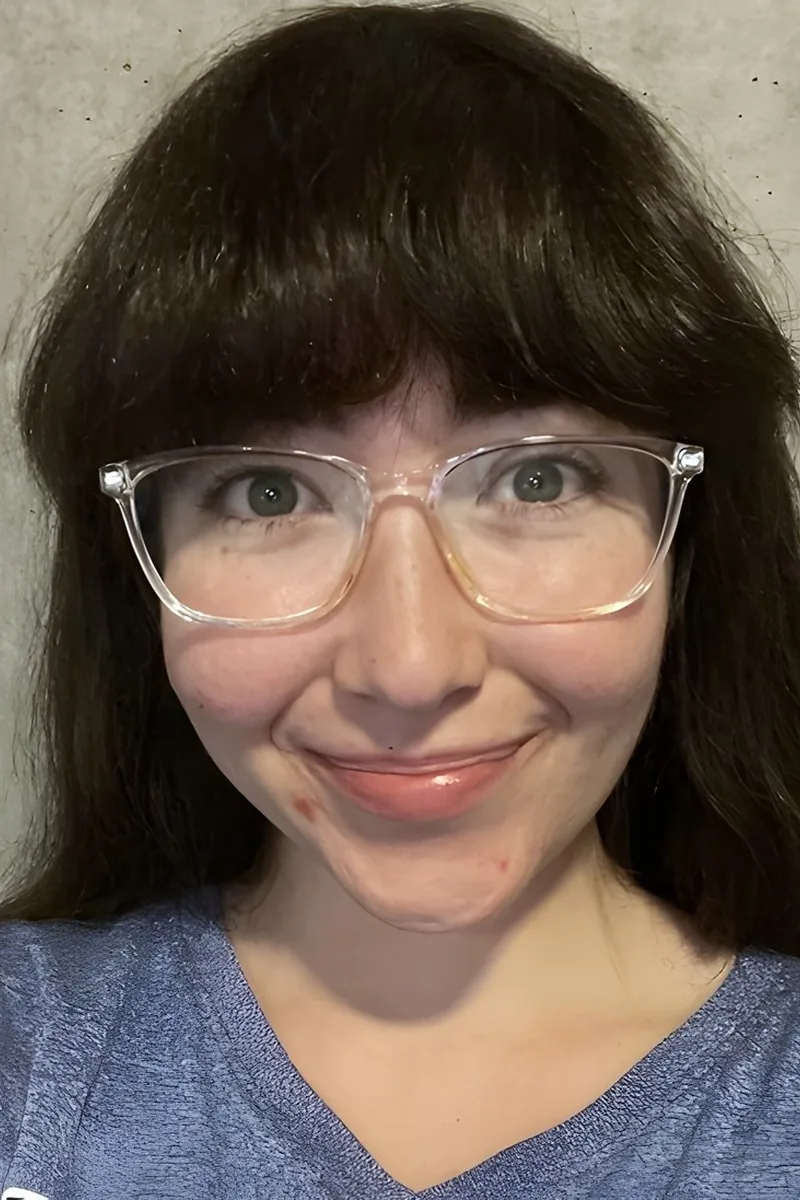
Madeleine's applied mathematics background makes her unusually comfortable with AP Psychology's research methods unit — experimental design, statistical significance, correlation vs. causation — where many students lose easy points because the quantitative reasoning feels foreign in a social science course. Her life sciences coursework and path toward nursing also ground her in the biological bases of behavior, so she explains neurotransmitter function and brain anatomy with the confidence of someone who's studied those systems outside a psych textbook. Rated 5.0 by students.
Biomedical engineering coursework at Arizona State gave Ekta a detailed understanding of the nervous system, neurotransmitter pathways, and brain anatomy — topics that come up constantly in AP Psychology's biological bases of behavior unit but trip up students who've never encountered them in a science class. She carries that same systematic, step-by-step approach into the terminology-heavy units like learning theory and abnormal psychology, breaking dense vocab into manageable pieces that actually stick for the exam. Rated 4.9 by students.
Liana's biological sciences coursework gives her a running start on the AP Psych units that trip up most students — biological bases of behavior, sensation-perception, and the neuroscience threading through topics like memory and motivation. She tackles the terminology-dense sections by tying psychological concepts back to the underlying biology, turning flashcard-style definitions into something students can actually reason through on free-response questions. Rated 4.9 by students.
A biology master's student researching evolution and bioanthropology, Alex brings a lens to AP Psychology that's rooted in how organisms actually develop and behave — making units like biological bases of behavior and developmental psychology feel like natural extensions of what he already studies. His dual English and Theater training at Bowdoin also sharpens the free-response side, where crafting precise, well-structured answers under time pressure is essentially a writing and performance exercise. Rated 4.8 by students.
A biology major at Cornell, Drishti brings genuine science fluency to the biological bases of behavior unit — but her edge in AP Psych is actually how she bridges that biology knowledge into the more conceptual units like memory, learning theory, and sensation-perception, where students often lose points by treating terms as disconnected vocabulary. She tackles free-response prep by drilling students on precise term application within scenario prompts, a skill her own 1500 SAT writing practice sharpened. Rated 5.0 by students.
Studying neuroscience at Johns Hopkins means Christopher encounters AP Psychology concepts — from neural signaling and brain anatomy to memory encoding and cognitive biases — in his own coursework on a daily basis. He breaks down dense units like biological bases of behavior and research methods by tying them to real experiments and clinical examples. Students preparing for the AP exam get someone who understands both the science and the test format.
A psychology degree gives Maggie direct familiarity with the AP Psych curriculum — she studied the theories of Erikson, Piaget, and Kohlberg in depth, which is especially useful for the developmental psychology unit where students need to distinguish overlapping stage models under exam pressure. Her strong writing and reading background also translates to the free-response section, where she coaches precise term definitions woven into scenario-based answers that earn full credit.
Cognitive science at Rice meant Adam studied the AP Psych curriculum from the inside out — perception, memory, language processing, and the neural underpinnings of behavior were core coursework, not elective reading. That training makes him especially sharp on the cognition and biological bases units, where he connects concepts like dual-process theory and neural plasticity to the real research behind them rather than treating them as isolated vocabulary terms.
Elliot's PhD in Neuroscience means the biological bases of behavior unit — neurotransmitter systems, brain lateralization, neural plasticity — is his actual research territory, not a chapter he's reviewing from a prep book. That depth reshapes how he teaches the rest of the AP Psych curriculum too: units like sensation-perception, memory, and abnormal psychology all snap into focus when a student genuinely understands the neural machinery underneath. Rated 5.0 by students.
I am a sophomore at Duke University with a strong academic background and a passion for helping students build both confidence and mastery in challenging subjects. Having recently completed AP coursework myself, I understand not only the content but also the strategies needed to succeed under time pressure, particularly on exams and free-response questions. My approach to tutoring is highly structured but adaptable. I focus on breaking down complex concepts into clear, manageable steps while reinforcing patterns that help students recognize how to approach different types of questions. I also emphasize active learningworking through problems together, identifying mistakes, and developing efficient study methods that students can apply independently. In addition to content review, I help students improve test-taking skills, including time management, question interpretation, and organization of written responses. I aim to create a supportive environment where students feel comfortable asking questions and engaging with the material at a deeper level. I am reliable, responsive, and committed to meeting students where they are, whether they need ongoing support or targeted help before an exam. My goal is not only to improve grades but to help students feel more confident and capable in their academic work.
Engineering students at Carnegie Mellon don't typically study psychology — but Ryan's coursework in human factors and systems design required him to learn how people perceive, process, and respond to information, which maps directly onto AP Psychology units like cognition, sensation-perception, and memory. He brings an analytical, pattern-based approach to the exam's terminology-heavy content that works especially well for students who think more like scientists than social scientists. Rated 4.8 by students.
Martha's PhD research at Michigan sits at the intersection of culture and self-concept — the exact territory AP Psychology's social psychology and personality units cover, except she's generating original data on it, not just reviewing textbook summaries. That active research background, built on a Duke psychology degree and global health training, gives her a way to teach concepts like attribution theory, conformity, and identity formation through real cross-cultural examples rather than Western-only defaults. Rated 5.0 by students.
As a psychology major who currently directs a research study on sleep and academic performance in adolescents, Margaret brings AP Psychology concepts like experimental design, neuroscience, and developmental theory out of the textbook and into real-world context. She knows which free-response question formats the exam favors and teaches students to write answers that earn full credit by hitting every scoring rubric point.
A psychology and linguistics degree from the University of Chicago means Sherry didn't just survey the AP Psych curriculum — she studied the underlying science of language, cognition, and behavior at a research university where the field's foundational theories were developed. That linguistics training is especially useful for the language-and-thought debates in the cognition unit and for unpacking Chomsky, Whorf, and the biological underpinnings of communication that the exam tests in ways students rarely expect. Rated 5.0 by students.
Testimonials
Because the right AP Psychology tutor makes all the difference.
Average Session Rating – Based on 3.4M Learner Ratings
Practice AP Psychology
Free practice tests, flashcards, and AI tutoring for AP Psychology
Other Avondale Tutors
Related Social Sciences Tutors in Avondale
Frequently Asked Questions
Varsity Tutors matches Avondale students with expert AP Psychology tutors for 1-on-1 instruction. We pair each student with a tutor based on their specific needs, learning style, and goals.
Whether you need homework help, exam prep, or want to get ahead, our AP Psychology tutors are ready to help.
Common challenges include gaps from earlier material, difficulty with specific concepts, and trouble applying learning to new problems. These issues can snowball quickly in AP Psychology.
A tutor identifies where you're stuck, fills in gaps, and provides targeted practice. The 1-on-1 format means you get help exactly where you need it.
Tutors work with your student's actual coursework—homework assignments, class notes, and upcoming tests. This keeps tutoring directly relevant to what's happening in the classroom.
When you share information about your student's school and curriculum, we can match you with a tutor who has relevant experience.
All tutors complete background checks, credential verification, and teaching evaluation. Many of our AP Psychology tutors hold advanced degrees or have years of teaching experience.
You can review tutor profiles to find someone with the right background for your student's level and needs.
Many students see improved grades within a few weeks, along with better understanding of AP Psychology concepts and more confidence tackling challenging material.
Tutors track progress and adjust their approach to ensure continued improvement.
Most students benefit from 1-2 sessions per week. More frequent sessions help if your student is significantly behind or has an important exam coming up.
Your tutor can recommend a schedule based on your student's specific situation and goals.
Tutoring is purchased in packages of hours, with rates varying by tutor experience. Varsity Tutors offers several options to fit different budgets and needs.
You can discuss pricing during your consultation to find what works best.
Your tutor will assess where your student is, discuss goals, and start working on priority areas. Most students bring current homework or upcoming test material to focus on.
By the end, you'll have a clear sense of how the tutor can help and a plan for moving forward.
Let’s find your perfect tutor
Answer a few quick questions. We’ll recommend the right plan and match you with a top 5% tutor.