Award-Winning AP Psychology Tutors
serving Glendale, AZ
AP Psychology
Tutors in Glendale
Private 1-on-1 tutoring, weekly live classes for academic support, test prep & enrichment, practice tests and diagnostics, and more to elevate grades and test scores.
Based on 3.4M Learner Ratings
UniversitiesSchools & Universities
DeliveredHours Delivered
ProficiencyGrowth in Proficiency
Who needs tutoring?
No obligation. Takes ~1 minute.

Robert is currently completing his Master's in Psychology, which means the AP Psych curriculum — from Piaget's stages to the nuances of the DSM — covers ground he's actively working in at the graduate level, not material he's revisiting from an intro course. His research background is especially useful for the research methods unit, where he breaks down concepts like operational definitions, control groups, and statistical significance with the precision of someone who designs studies and is currently working toward publication in peer-reviewed journals.
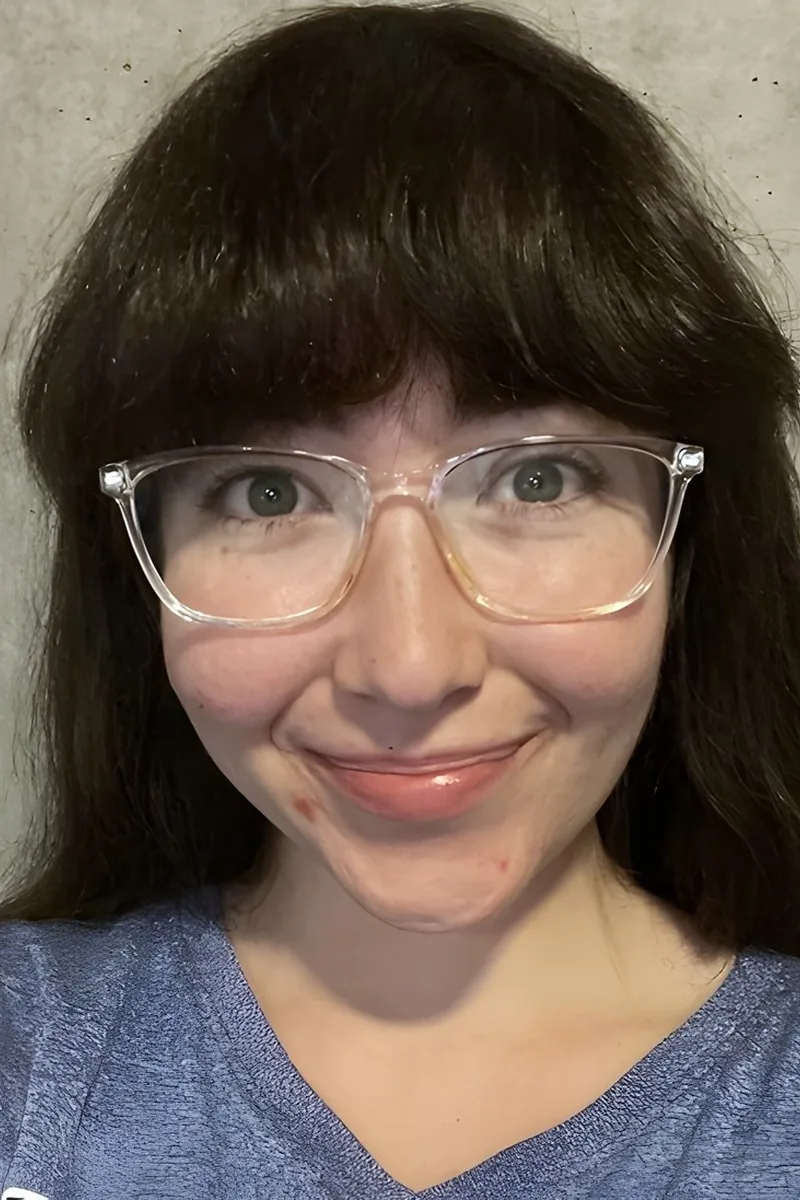
Madeleine's applied mathematics background makes her unusually comfortable with AP Psychology's research methods unit — experimental design, statistical significance, correlation vs. causation — where many students lose easy points because the quantitative reasoning feels foreign in a social science course. Her life sciences coursework and path toward nursing also ground her in the biological bases of behavior, so she explains neurotransmitter function and brain anatomy with the confidence of someone who's studied those systems outside a psych textbook. Rated 5.0 by students.
Biomedical engineering coursework at Arizona State gave Ekta a detailed understanding of the nervous system, neurotransmitter pathways, and brain anatomy — topics that come up constantly in AP Psychology's biological bases of behavior unit but trip up students who've never encountered them in a science class. She carries that same systematic, step-by-step approach into the terminology-heavy units like learning theory and abnormal psychology, breaking dense vocab into manageable pieces that actually stick for the exam. Rated 4.9 by students.
Martha's PhD research at Michigan sits at the intersection of culture and self-concept — the exact territory AP Psychology's social psychology and personality units cover, except she's generating original data on it, not just reviewing textbook summaries. That active research background, built on a Duke psychology degree and global health training, gives her a way to teach concepts like attribution theory, conformity, and identity formation through real cross-cultural examples rather than Western-only defaults. Rated 5.0 by students.
Ian's premed coursework gives him a solid handle on the biological bases of behavior — neurotransmitter systems, brain anatomy, hormonal influences — while his breadth across biology, Spanish, and literature means he can pull examples from multiple disciplines when explaining concepts like language acquisition or cultural influences on perception. He tackles the free-response section by drilling students on precise term application, turning vague definitions into the kind of specific, scenario-linked answers that earn full credit. Rated 5.0 by students.
Years of teaching English overseas in Thailand and Laos gave Gabriel firsthand experience with how culture shapes cognition, communication, and social behavior — exactly the kind of cross-cultural thinking that AP Psychology's social psychology and developmental units test on free-response questions. His TEFL background also means he's practiced at breaking down dense terminology for learners who need concepts explained clearly and concretely, a skill that transfers directly to vocabulary-heavy units like memory, learning theory, and abnormal psychology. Rated 4.9 by students.
Studying neuroscience at Johns Hopkins means Christopher encounters AP Psychology concepts — from neural signaling and brain anatomy to memory encoding and cognitive biases — in his own coursework on a daily basis. He breaks down dense units like biological bases of behavior and research methods by tying them to real experiments and clinical examples. Students preparing for the AP exam get someone who understands both the science and the test format.
Nicole's chemistry background gives her a tangible way to teach the biological bases of behavior unit — she explains neurotransmitter pathways and synaptic signaling with the precision of someone who studied those molecules, not just their psychological effects. Her English literature training then kicks in for the free-response section, where she coaches students to construct tight, definition-rich answers that don't waste words. Rated 5.0 by students.
Medical school at the Medical College of Georgia means Vraj has studied the brain and behavior far beyond the AP Psych syllabus — he brings real depth to the biological bases of behavior unit, but his pre-med biology training also sharpens how he teaches sensation-perception, states of consciousness, and the pharmacology behind psychoactive drugs. Where he especially adds value is bridging the science-heavy units with the clinical concepts in abnormal psychology, since diagnostic thinking is something he practices daily, not just something he reads about in a review book. Rated 4.9 by students.
Elliot's PhD in Neuroscience means the biological bases of behavior unit — neurotransmitter systems, brain lateralization, neural plasticity — is his actual research territory, not a chapter he's reviewing from a prep book. That depth reshapes how he teaches the rest of the AP Psych curriculum too: units like sensation-perception, memory, and abnormal psychology all snap into focus when a student genuinely understands the neural machinery underneath. Rated 5.0 by students.
Irene's neuroscience and behavior degree means the biological bases of behavior unit isn't a detour for her — it's home territory, and she teaches neurotransmitter systems, brain anatomy, and neural signaling with the detail of someone who studied those topics as her major, not as a chapter in a psych textbook. That depth also reshapes how she approaches units like sensation-perception and memory, where she grounds abstract models in the actual neural mechanisms behind them. Her 1470 SAT and college essay experience add a practical edge when it comes to coaching precise, well-structured free-response answers.
Shant's psychobiology degree from UCLA means AP Psychology isn't a subject he studied adjacent to — it's the core of his training, from neural signaling and brain anatomy to research methodology and statistical analysis. He breaks down dense units like cognition, abnormal psychology, and sensation/perception by tying them to real biological mechanisms. Rated 5.0 by students, he knows exactly which free-response pitfalls cost points on exam day.
Alexis earned her psychology degree and knows exactly which theories, experiments, and terminology the AP exam emphasizes — from Milgram's obedience studies to the nuances of classical versus operant conditioning. She breaks down the trickiest free-response prompts by teaching students to weave multiple perspectives (biological, cognitive, sociocultural) into a single cohesive answer. Rated 5.0 by students.
Having studied psychology alongside microbiology and the biological sciences, Felix brings a dual lens to AP Psych — particularly in units like biological bases of behavior and sensation-perception, where his science training makes neurotransmitter pathways and neural signaling click rather than feel like rote vocabulary. He also teaches the research methods unit with the rigor of someone trained in scientific methodology, breaking down experimental design and variable identification in concrete terms. Rated 5.0 by students.
Trishani is currently pursuing her psychology degree at the University of Michigan, which means she's learning the same theories, studies, and frameworks covered in AP Psych — Erikson's stages, Milgram's obedience experiments, the biopsychosocial model — in real time rather than reviewing them from memory. That currency shows up especially in the developmental and social psychology units, where she can walk through concepts using the same examples and research her own professors emphasize. Rated 5.0 by students.
Testimonials
Because the right AP Psychology tutor makes all the difference.
Average Session Rating – Based on 3.4M Learner Ratings
Practice AP Psychology
Free practice tests, flashcards, and AI tutoring for AP Psychology
Other Glendale Tutors
Related Social Sciences Tutors in Glendale
Frequently Asked Questions
Varsity Tutors matches Glendale students with expert AP Psychology tutors for 1-on-1 instruction. We pair each student with a tutor based on their specific needs, learning style, and goals.
Whether you need homework help, exam prep, or want to get ahead, our AP Psychology tutors are ready to help.
Common challenges include gaps from earlier material, difficulty with specific concepts, and trouble applying learning to new problems. These issues can snowball quickly in AP Psychology.
A tutor identifies where you're stuck, fills in gaps, and provides targeted practice. The 1-on-1 format means you get help exactly where you need it.
Tutors work with your student's actual coursework—homework assignments, class notes, and upcoming tests. This keeps tutoring directly relevant to what's happening in the classroom.
When you share information about your student's school and curriculum, we can match you with a tutor who has relevant experience.
All tutors complete background checks, credential verification, and teaching evaluation. Many of our AP Psychology tutors hold advanced degrees or have years of teaching experience.
You can review tutor profiles to find someone with the right background for your student's level and needs.
Many students see improved grades within a few weeks, along with better understanding of AP Psychology concepts and more confidence tackling challenging material.
Tutors track progress and adjust their approach to ensure continued improvement.
Most students benefit from 1-2 sessions per week. More frequent sessions help if your student is significantly behind or has an important exam coming up.
Your tutor can recommend a schedule based on your student's specific situation and goals.
Tutoring is purchased in packages of hours, with rates varying by tutor experience. Varsity Tutors offers several options to fit different budgets and needs.
You can discuss pricing during your consultation to find what works best.
Your tutor will assess where your student is, discuss goals, and start working on priority areas. Most students bring current homework or upcoming test material to focus on.
By the end, you'll have a clear sense of how the tutor can help and a plan for moving forward.
Let’s find your perfect tutor
Answer a few quick questions. We’ll recommend the right plan and match you with a top 5% tutor.