Award-Winning AP Psychology Tutors
serving Phoenix, AZ
AP Psychology
Tutors in Phoenix
Private 1-on-1 tutoring, weekly live classes for academic support, test prep & enrichment, practice tests and diagnostics, and more to elevate grades and test scores.
Based on 3.4M Learner Ratings
UniversitiesSchools & Universities
DeliveredHours Delivered
ProficiencyGrowth in Proficiency
Who needs tutoring?
No obligation. Takes ~1 minute.

Robert is currently completing his Master's in Psychology, which means the AP Psych curriculum — from Piaget's stages to the nuances of the DSM — covers ground he's actively working in at the graduate level, not material he's revisiting from an intro course. His research background is especially useful for the research methods unit, where he breaks down concepts like operational definitions, control groups, and statistical significance with the precision of someone who designs studies and is currently working toward publication in peer-reviewed journals.
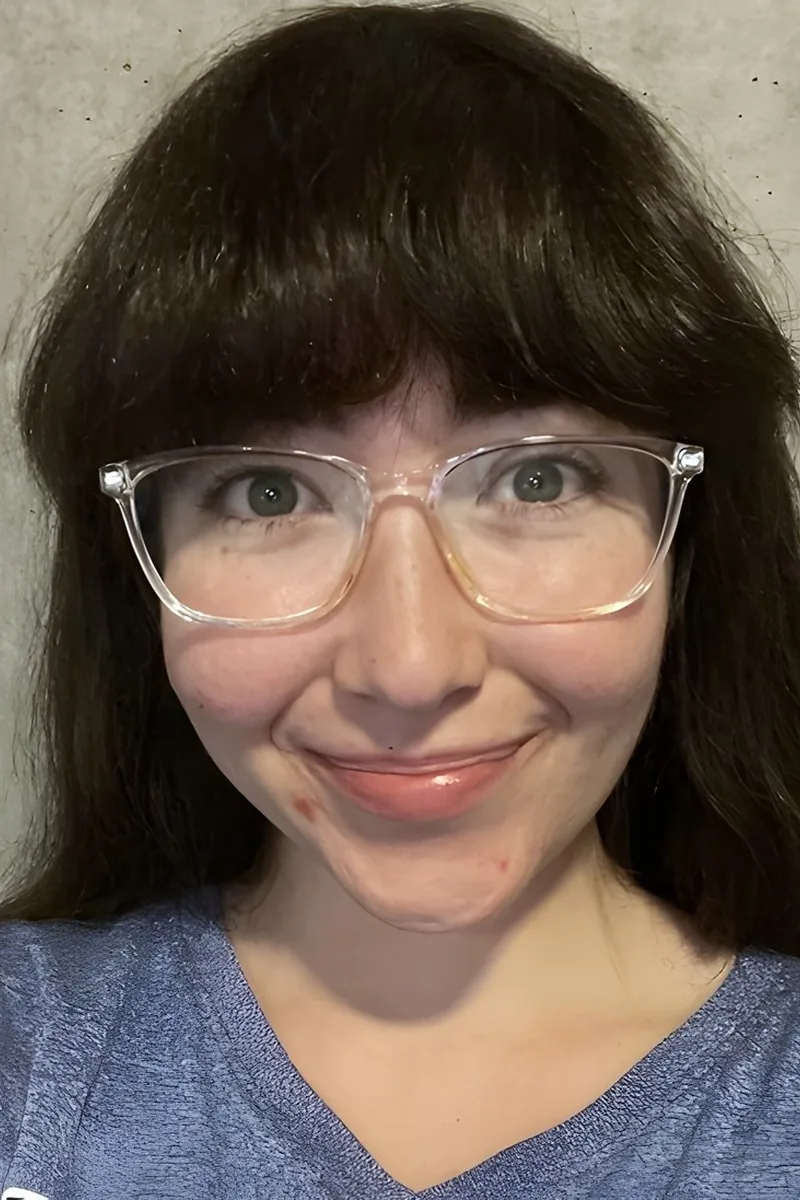
Madeleine's applied mathematics background makes her unusually comfortable with AP Psychology's research methods unit — experimental design, statistical significance, correlation vs. causation — where many students lose easy points because the quantitative reasoning feels foreign in a social science course. Her life sciences coursework and path toward nursing also ground her in the biological bases of behavior, so she explains neurotransmitter function and brain anatomy with the confidence of someone who's studied those systems outside a psych textbook. Rated 5.0 by students.
Biomedical engineering coursework at Arizona State gave Ekta a detailed understanding of the nervous system, neurotransmitter pathways, and brain anatomy — topics that come up constantly in AP Psychology's biological bases of behavior unit but trip up students who've never encountered them in a science class. She carries that same systematic, step-by-step approach into the terminology-heavy units like learning theory and abnormal psychology, breaking dense vocab into manageable pieces that actually stick for the exam. Rated 4.9 by students.
Pharmacy school forces you to learn the biological bases of behavior from the inside out — neurotransmitter pathways, drug mechanisms, receptor interactions — which gives Lillian unusual depth in the AP Psych unit most students find most abstract. She also draws on her chemistry and statistics background to demystify the research methods unit, where interpreting experimental design and data analysis trips up students who treat it as pure memorization. Rated 4.9 by students.
Neuroscience and psychology share enormous overlap — from brain anatomy and neurotransmitter function to research methodology and statistical analysis. Deana's B.S. in Neuroscience means she doesn't just teach AP Psychology vocabulary; she unpacks the biological mechanisms behind concepts like memory consolidation, classical conditioning, and neural signaling. That depth turns rote definitions into ideas students actually understand.
Film production trains you to understand how audiences perceive, remember, and emotionally respond to information — skills that map surprisingly well onto AP Psychology units like cognition, sensation-perception, and social influence. Justine pairs that visual-storytelling intuition with strong writing chops honed through her arts coursework, which she brings to the free-response section where scenario-based answers need crisp definitions and clear structure to earn full marks.
Nicole's chemistry background gives her a tangible way to teach the biological bases of behavior unit — she explains neurotransmitter pathways and synaptic signaling with the precision of someone who studied those molecules, not just their psychological effects. Her English literature training then kicks in for the free-response section, where she coaches students to construct tight, definition-rich answers that don't waste words. Rated 5.0 by students.
William studied psychology as his undergraduate major, so the AP Psych curriculum — from Piaget's stages to the nuances of the DSM — maps directly onto coursework he's already completed rather than material he's reverse-engineering from a prep book. His neuroscience background adds particular depth to the biological bases of behavior unit, where he breaks down neurotransmitter systems and brain region functions with the confidence of someone planning a PhD in neuropsychology. A 34 ACT also means he knows standardized testing strategy inside and out, which translates into sharper free-response technique.
Economics at Duke teaches you to model how people make decisions under uncertainty — which is essentially what AP Psychology's cognition, motivation, and social psychology units are about, just with different vocabulary. Devanshi leans on that behavioral economics overlap to make concepts like heuristics, cognitive biases, and group decision-making feel intuitive rather than like a wall of flashcards. Her 35 ACT also signals the kind of precise, fast reading that pays off on the exam's dense multiple-choice passages.
Alexis earned her psychology degree and knows exactly which theories, experiments, and terminology the AP exam emphasizes — from Milgram's obedience studies to the nuances of classical versus operant conditioning. She breaks down the trickiest free-response prompts by teaching students to weave multiple perspectives (biological, cognitive, sociocultural) into a single cohesive answer. Rated 5.0 by students.
Neuroscience and psychology overlap more than most AP students realize — concepts like neurotransmitter function, brain lateralization, and action potentials show up heavily on the AP Psychology exam. Rithi's neuroscience degree and current medical training mean she can explain the biological underpinnings behind every major psychological theory rather than asking students to memorize disconnected terms. Rated 4.9 by students.
Political science trains you to analyze how people form beliefs, respond to authority, and behave in groups — which overlaps directly with AP Psychology's social psychology and cognition units, where concepts like obedience, conformity, and groupthink show up on nearly every exam. Linnea pairs that analytical background with strong writing and editing skills, coaching students to construct the kind of precise, term-rich free-response answers that separate 4s from 5s.
Hi there! I'm Emily, and I love helping students feel more confident and capable when tackling challenging material. Whether you're trying to strengthen your understanding of a course, improve your writing, or prepare for an exam, I'm here to make learning feel approachable, supportive, and a lot less overwhelming. As a Teaching Fellow at the University of Chicago with a PhD in experimental psychology, I bring both subject expertise and years of teaching and mentoring experience to every session. My students often tell me that concepts finally "click" after we work together, and I believe every student can succeed with the right support, encouragement, and strategies. If you are looking for support in psychology or social science courses, or want to feel more confident working through challenging material, I would love to work with you!
Elliot's PhD in Neuroscience means the biological bases of behavior unit — neurotransmitter systems, brain lateralization, neural plasticity — is his actual research territory, not a chapter he's reviewing from a prep book. That depth reshapes how he teaches the rest of the AP Psych curriculum too: units like sensation-perception, memory, and abnormal psychology all snap into focus when a student genuinely understands the neural machinery underneath. Rated 5.0 by students.
Years of teaching English overseas in Thailand and Laos gave Gabriel firsthand experience with how culture shapes cognition, communication, and social behavior — exactly the kind of cross-cultural thinking that AP Psychology's social psychology and developmental units test on free-response questions. His TEFL background also means he's practiced at breaking down dense terminology for learners who need concepts explained clearly and concretely, a skill that transfers directly to vocabulary-heavy units like memory, learning theory, and abnormal psychology. Rated 4.9 by students.
Testimonials
Because the right AP Psychology tutor makes all the difference.
Average Session Rating – Based on 3.4M Learner Ratings
Practice AP Psychology
Free practice tests, flashcards, and AI tutoring for AP Psychology
Other Phoenix Tutors
Related Social Sciences Tutors in Phoenix
Frequently Asked Questions
The AP Psychology exam covers 9 major units: Scientific Foundations of Psychology, Research Methods and Statistics, Sensation and Perception, Learning, Cognition, Motivation/Emotion/Personality, Clinical Psychology, Social Psychology, and States of Consciousness. The exam is 2 hours long with 100 multiple-choice questions (66% of score) and 2 free-response essays (34% of score). Understanding how these units connect and being able to apply concepts to real-world scenarios is key to scoring well.
A score of 3 or higher is considered "passing" and earns college credit at most institutions, though some colleges require a 4 or 5 for credit. The national average score is around 2.5, so aiming for a 3 or 4 puts you above average. Your target should depend on your college goals and the specific requirements of schools you're applying to—many competitive schools prefer scores of 4 or 5.
Many students struggle with memorizing the large volume of terminology and research studies, distinguishing between similar psychological concepts, and applying theories to novel scenarios on the free-response questions. Test-taking strategy is also critical—students often spend too much time on difficult multiple-choice questions and don't leave enough time for the essays. Personalized tutoring helps you identify which units are your weak spots and develop targeted study strategies.
For the 66 multiple-choice questions, aim to spend about 1 minute per question, which gives you roughly 66 minutes for that section. Read questions carefully—AP Psychology questions often have subtle wording differences that change the correct answer. For the 2 free-response essays (50 minutes total), spend time outlining your response and making sure you directly address what the prompt is asking. Practice tests are essential for building pacing confidence and identifying which question types trip you up.
Most students benefit from 3-4 months of consistent preparation leading up to the May exam. If you're starting later in the school year, focus on the units you find most challenging and use practice tests strategically to identify gaps. A typical study schedule might include weekly review of class notes, monthly full-length practice tests, and targeted review of weak areas 2-3 weeks before the exam. Working with a tutor can help you create a personalized timeline based on your starting point and goals.
Tutors help you clarify confusing concepts, develop effective study strategies, practice free-response essays with feedback, and work through practice tests to identify patterns in your mistakes. For students in Phoenix with access to expert tutors, personalized 1-on-1 instruction is especially valuable for AP Psychology because the exam requires both memorization and critical thinking—a tutor can help you move beyond rote learning to truly understand and apply psychological concepts. They can also help you manage test anxiety and build confidence in your test-taking approach.
Taking 4-6 full-length practice tests under timed conditions is ideal for AP Psychology preparation. Your first practice test establishes a baseline and helps you identify which units need the most work. After that, focus on targeted practice with specific question types or units, then take full-length tests every 2-3 weeks as you get closer to exam day. Review every practice test thoroughly—understanding why you missed questions is more valuable than the score itself.
The 2 free-response essays on AP Psychology typically ask you to apply concepts to scenarios, explain research findings, or design hypothetical studies. Practice writing essays under timed conditions (25 minutes each) and focus on directly addressing the prompt with specific terminology and examples. Common mistakes include writing too generally, not citing relevant research, or running out of time. Working with a tutor who can provide detailed feedback on your essays helps you refine your approach and build the confidence to earn high scores on this section.
Let’s find your perfect tutor
Answer a few quick questions. We’ll recommend the right plan and match you with a top 5% tutor.