Award-Winning AP Psychology Tutors
serving Scottsdale, AZ
AP Psychology
Tutors in Scottsdale
Private 1-on-1 tutoring, weekly live classes for academic support, test prep & enrichment, practice tests and diagnostics, and more to elevate grades and test scores.
Based on 3.4M Learner Ratings
UniversitiesSchools & Universities
DeliveredHours Delivered
ProficiencyGrowth in Proficiency
Who needs tutoring?
No obligation. Takes ~1 minute.

Robert is currently completing his Master's in Psychology, which means the AP Psych curriculum — from Piaget's stages to the nuances of the DSM — covers ground he's actively working in at the graduate level, not material he's revisiting from an intro course. His research background is especially useful for the research methods unit, where he breaks down concepts like operational definitions, control groups, and statistical significance with the precision of someone who designs studies and is currently working toward publication in peer-reviewed journals.
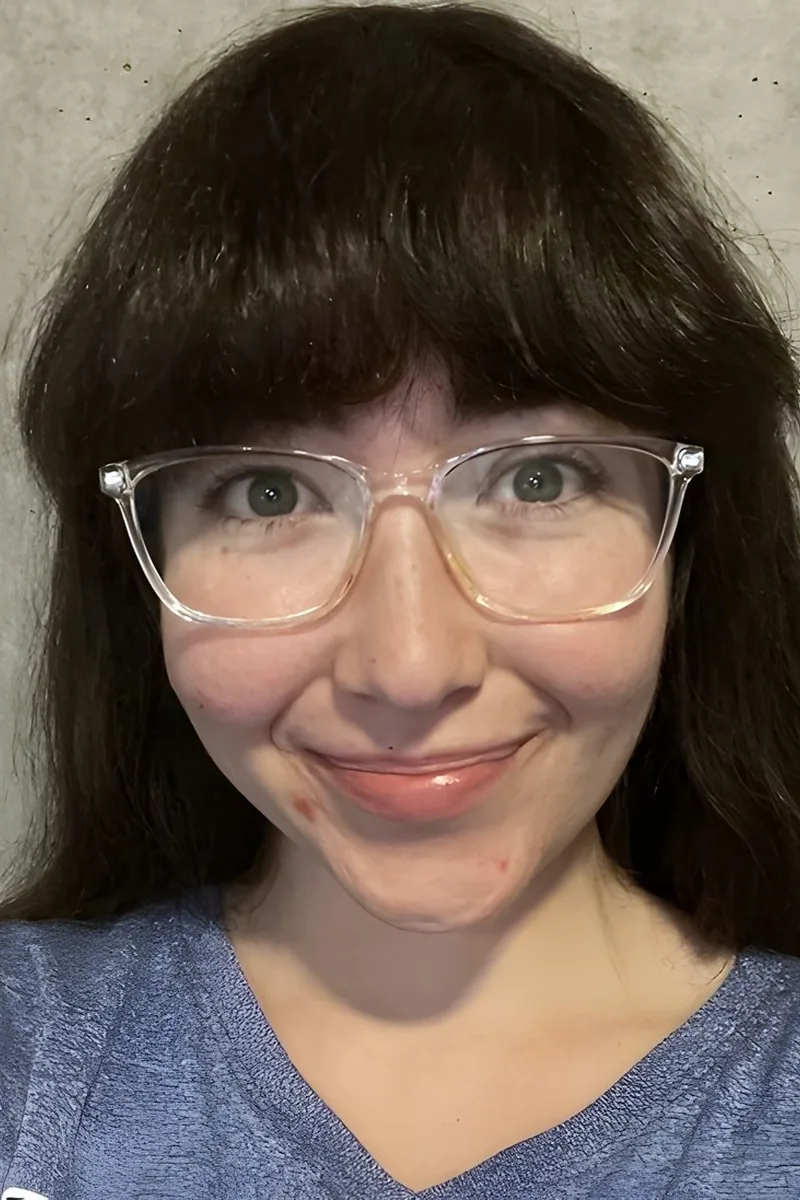
Madeleine's applied mathematics background makes her unusually comfortable with AP Psychology's research methods unit — experimental design, statistical significance, correlation vs. causation — where many students lose easy points because the quantitative reasoning feels foreign in a social science course. Her life sciences coursework and path toward nursing also ground her in the biological bases of behavior, so she explains neurotransmitter function and brain anatomy with the confidence of someone who's studied those systems outside a psych textbook. Rated 5.0 by students.
Biomedical engineering coursework at Arizona State gave Ekta a detailed understanding of the nervous system, neurotransmitter pathways, and brain anatomy — topics that come up constantly in AP Psychology's biological bases of behavior unit but trip up students who've never encountered them in a science class. She carries that same systematic, step-by-step approach into the terminology-heavy units like learning theory and abnormal psychology, breaking dense vocab into manageable pieces that actually stick for the exam. Rated 4.9 by students.
William studied psychology as his undergraduate major, so the AP Psych curriculum — from Piaget's stages to the nuances of the DSM — maps directly onto coursework he's already completed rather than material he's reverse-engineering from a prep book. His neuroscience background adds particular depth to the biological bases of behavior unit, where he breaks down neurotransmitter systems and brain region functions with the confidence of someone planning a PhD in neuropsychology. A 34 ACT also means he knows standardized testing strategy inside and out, which translates into sharper free-response technique.
Martha's PhD research at Michigan sits at the intersection of culture and self-concept — the exact territory AP Psychology's social psychology and personality units cover, except she's generating original data on it, not just reviewing textbook summaries. That active research background, built on a Duke psychology degree and global health training, gives her a way to teach concepts like attribution theory, conformity, and identity formation through real cross-cultural examples rather than Western-only defaults. Rated 5.0 by students.
Kristen is a psychology major on the pre-med track at UIC, which means she's not just reviewing AP Psych material — she's actively studying it at the college level. She breaks down tricky units like biological bases of behavior and research methods by tying them to real experiments and clinical examples that make the content click on exam day.
A psychology degree gives Maggie direct familiarity with the AP Psych curriculum — she studied the theories of Erikson, Piaget, and Kohlberg in depth, which is especially useful for the developmental psychology unit where students need to distinguish overlapping stage models under exam pressure. Her strong writing and reading background also translates to the free-response section, where she coaches precise term definitions woven into scenario-based answers that earn full credit.
Todd's Master of Social Work gives him direct clinical exposure to concepts that dominate AP Psychology's abnormal psychology and social psychology units — diagnostic frameworks, group dynamics, cognitive-behavioral models — all material he's applied in practice, not just studied in a textbook. His biology undergraduate degree also means the biological bases of behavior unit, from neurotransmitter pathways to brain structure, clicks naturally rather than feeling like a detour from the social science content. Rated 5.0 by students.
Having earned both a psychology degree and a Doctor of Medicine, Sydny has studied the AP Psych curriculum from two distinct angles — the theoretical frameworks in units like developmental and abnormal psychology, and the biological underpinnings of behavior that her medical training made tangible. She breaks down the interplay between neurotransmitters, brain structures, and clinical diagnoses with the specificity of someone who carried those concepts from a psych lecture hall into anatomy labs and clinical rotations.
Lauren's education degree means she's studied learning theory and developmental psychology from the teaching side — Piaget's stages, Vygotsky's scaffolding, Erikson's identity crises — which gives her a practitioner's fluency with concepts that make up a significant chunk of the AP Psych exam. She also teaches study skills alongside psychology, so she builds vocabulary-retention strategies directly into her sessions for the units where sheer terminology volume tends to overwhelm students.
Studying cognitive science on a pre-med track at Rice, Natalie digs into the overlap between brain structure and behavior every day — exactly the territory AP Psych tests hardest. She's especially sharp on the cognitive and biological units, breaking down topics like memory models, perception, and states of consciousness in ways that go beyond vocabulary flashcards and into the kind of conceptual reasoning the exam's scoring rubrics actually reward.
Natalie's neurobiology major at Penn means she's studied the brain systems behind AP Psych's biological bases of behavior unit — neural signaling, neurotransmitter pathways, brain anatomy — in far more depth than the course requires, which lets her explain those concepts with real precision rather than surface-level definitions. That science backbone also sharpens how she approaches units like sensation-perception and memory, where understanding the underlying biology turns abstract terminology into something students can actually reason through on free-response questions.
Liana's biological sciences coursework gives her a running start on the AP Psych units that trip up most students — biological bases of behavior, sensation-perception, and the neuroscience threading through topics like memory and motivation. She tackles the terminology-dense sections by tying psychological concepts back to the underlying biology, turning flashcard-style definitions into something students can actually reason through on free-response questions. Rated 4.9 by students.
Jacob's biology degree from Wesleyan included deep study of behavioral science — he even conducted behavioral research on chimpanzees — which maps directly onto AP Psychology topics like learning theory, biological bases of behavior, and research methodology. He teaches students to think like scientists when designing experiments and interpreting data, skills that show up heavily on the AP exam's free-response questions.
I am an enthusiastic and detail-oriented English and test prep tutor with a strong academic background in communications.
Testimonials
Because the right AP Psychology tutor makes all the difference.
Average Session Rating – Based on 3.4M Learner Ratings
Practice AP Psychology
Free practice tests, flashcards, and AI tutoring for AP Psychology
Other Scottsdale Tutors
Related Social Sciences Tutors in Scottsdale
Frequently Asked Questions
Varsity Tutors matches Scottsdale students with expert AP Psychology tutors for 1-on-1 instruction. We pair each student with a tutor based on their specific needs, learning style, and goals.
Whether you need homework help, exam prep, or want to get ahead, our AP Psychology tutors are ready to help.
Common challenges include gaps from earlier material, difficulty with specific concepts, and trouble applying learning to new problems. These issues can snowball quickly in AP Psychology.
A tutor identifies where you're stuck, fills in gaps, and provides targeted practice. The 1-on-1 format means you get help exactly where you need it.
Tutors work with your student's actual coursework—homework assignments, class notes, and upcoming tests. This keeps tutoring directly relevant to what's happening in the classroom.
When you share information about your student's school and curriculum, we can match you with a tutor who has relevant experience.
All tutors complete background checks, credential verification, and teaching evaluation. Many of our AP Psychology tutors hold advanced degrees or have years of teaching experience.
You can review tutor profiles to find someone with the right background for your student's level and needs.
Many students see improved grades within a few weeks, along with better understanding of AP Psychology concepts and more confidence tackling challenging material.
Tutors track progress and adjust their approach to ensure continued improvement.
Most students benefit from 1-2 sessions per week. More frequent sessions help if your student is significantly behind or has an important exam coming up.
Your tutor can recommend a schedule based on your student's specific situation and goals.
Tutoring is purchased in packages of hours, with rates varying by tutor experience. Varsity Tutors offers several options to fit different budgets and needs.
You can discuss pricing during your consultation to find what works best.
Your tutor will assess where your student is, discuss goals, and start working on priority areas. Most students bring current homework or upcoming test material to focus on.
By the end, you'll have a clear sense of how the tutor can help and a plan for moving forward.
Let’s find your perfect tutor
Answer a few quick questions. We’ll recommend the right plan and match you with a top 5% tutor.