Award-Winning AP Psychology Tutors
serving Tucson, AZ
AP Psychology
Tutors in Tucson
Private 1-on-1 tutoring, weekly live classes for academic support, test prep & enrichment, practice tests and diagnostics, and more to elevate grades and test scores.
Based on 3.4M Learner Ratings
UniversitiesSchools & Universities
DeliveredHours Delivered
ProficiencyGrowth in Proficiency
Who needs tutoring?
No obligation. Takes ~1 minute.

Robert is currently completing his Master's in Psychology, which means the AP Psych curriculum — from Piaget's stages to the nuances of the DSM — covers ground he's actively working in at the graduate level, not material he's revisiting from an intro course. His research background is especially useful for the research methods unit, where he breaks down concepts like operational definitions, control groups, and statistical significance with the precision of someone who designs studies and is currently working toward publication in peer-reviewed journals.
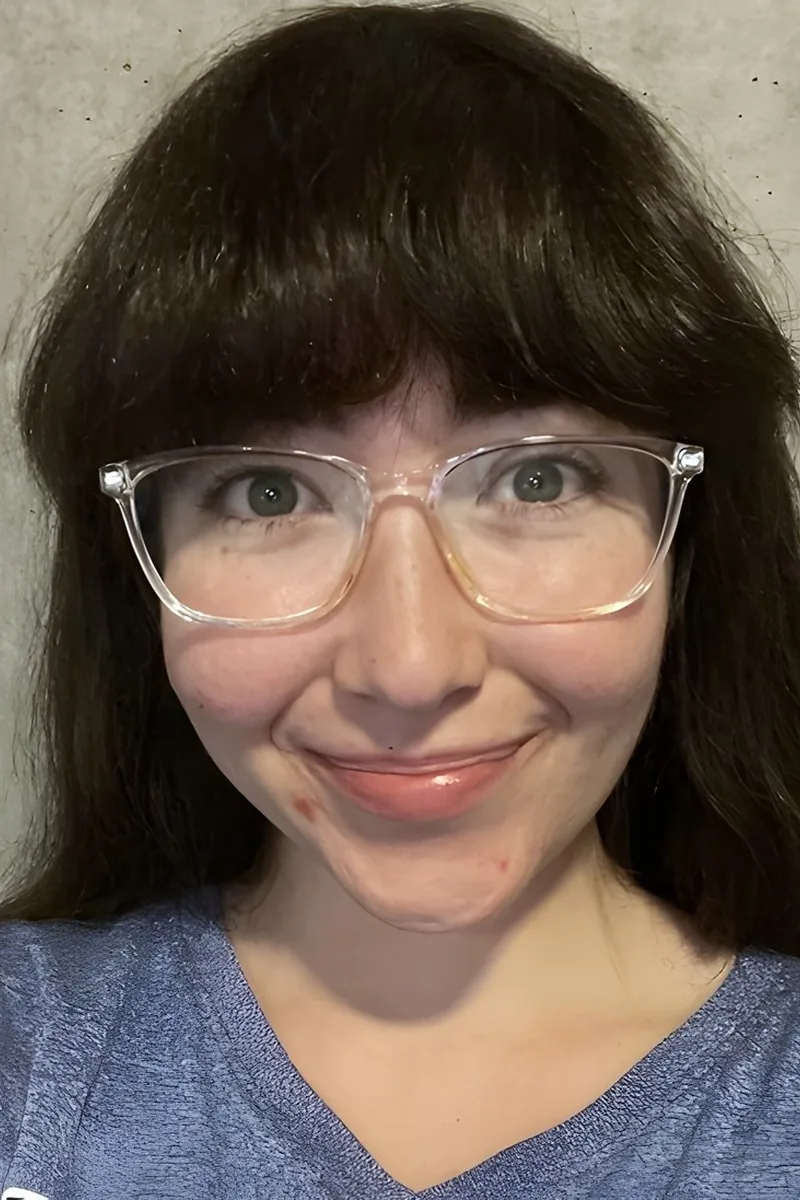
Madeleine's applied mathematics background makes her unusually comfortable with AP Psychology's research methods unit — experimental design, statistical significance, correlation vs. causation — where many students lose easy points because the quantitative reasoning feels foreign in a social science course. Her life sciences coursework and path toward nursing also ground her in the biological bases of behavior, so she explains neurotransmitter function and brain anatomy with the confidence of someone who's studied those systems outside a psych textbook. Rated 5.0 by students.
Biomedical engineering coursework at Arizona State gave Ekta a detailed understanding of the nervous system, neurotransmitter pathways, and brain anatomy — topics that come up constantly in AP Psychology's biological bases of behavior unit but trip up students who've never encountered them in a science class. She carries that same systematic, step-by-step approach into the terminology-heavy units like learning theory and abnormal psychology, breaking dense vocab into manageable pieces that actually stick for the exam. Rated 4.9 by students.
Anuj earned his degree in psychology, so the AP Psych curriculum — from classical conditioning paradigms to the DSM's diagnostic categories — draws on material he studied firsthand rather than picked up from a prep book. He's especially effective at teaching students how to structure free-response answers that earn full credit by precisely defining terms and linking them to specific studies or scenarios. Rated 4.8 by students.
Neuroscience and psychology overlap more than most AP students realize — concepts like neurotransmitter function, brain lateralization, and action potentials show up heavily on the AP Psychology exam. Rithi's neuroscience degree and current medical training mean she can explain the biological underpinnings behind every major psychological theory rather than asking students to memorize disconnected terms. Rated 4.9 by students.
A psychology and linguistics degree from the University of Chicago means Sherry didn't just survey the AP Psych curriculum — she studied the underlying science of language, cognition, and behavior at a research university where the field's foundational theories were developed. That linguistics training is especially useful for the language-and-thought debates in the cognition unit and for unpacking Chomsky, Whorf, and the biological underpinnings of communication that the exam tests in ways students rarely expect. Rated 5.0 by students.
Natalie's neurobiology major at Penn means she's studied the brain systems behind AP Psych's biological bases of behavior unit — neural signaling, neurotransmitter pathways, brain anatomy — in far more depth than the course requires, which lets her explain those concepts with real precision rather than surface-level definitions. That science backbone also sharpens how she approaches units like sensation-perception and memory, where understanding the underlying biology turns abstract terminology into something students can actually reason through on free-response questions.
As a psychology major who currently directs a research study on sleep and academic performance in adolescents, Margaret brings AP Psychology concepts like experimental design, neuroscience, and developmental theory out of the textbook and into real-world context. She knows which free-response question formats the exam favors and teaches students to write answers that earn full credit by hitting every scoring rubric point.
Sally's CLEP Introductory Psychology background and her science-technology-culture concentration at Georgia Tech give her a solid handle on the research methods, biological bases of behavior, and cognitive psychology concepts that dominate the AP exam. She teaches students to distinguish between similar-sounding theories — like the difference between classical and operant conditioning — so they can tackle free-response questions with confidence.
Kristen is a psychology major on the pre-med track at UIC, which means she's not just reviewing AP Psych material — she's actively studying it at the college level. She breaks down tricky units like biological bases of behavior and research methods by tying them to real experiments and clinical examples that make the content click on exam day.
Medical school immerses Evelyn in the very systems AP Psychology tests — neurotransmitter pathways, brain anatomy, stress physiology, abnormal behavior classifications — so she teaches the biological bases and abnormal psychology units with clinical specificity rather than flashcard-level definitions. Her experience learning English as a second language also gives her a practical understanding of the language-and-cognition topics in the curriculum, from Whorfian linguistic relativity to how memory encoding shifts across languages.
Neuroscience is Alex's self-described favorite subject, and that shows up most clearly in how she tackles AP Psychology's biological bases of behavior unit — breaking down neurotransmitter systems, brain regions, and neural pathways with the depth of someone heading into a doctorate program at Washington University's OT school this fall. Her psychology major and neuroscience minor mean the rest of the curriculum, from developmental theory to abnormal psychology, draws on coursework she's already completed with honors. Rated 5.0 by students.
Josh's AP Statistics training gives him a practical edge in the research methods unit of AP Psych, where interpreting experimental design, correlation vs. causation, and statistical significance trips up students who treat it as pure vocabulary memorization. He also tutors AP Micro and Macroeconomics, which means concepts like decision-making heuristics, motivation, and behavioral economics in the social psychology and cognition units come with built-in real-world examples rather than abstract definitions.
Lisa's history training taught her to trace how ideas evolve across time periods — a skill that translates directly to AP Psychology, where understanding the progression from Freud to cognitive-behavioral frameworks makes dense theory units like personality and abnormal psychology far more intuitive than rote memorization allows. Her strong writing and editorial background also gives her a practical edge coaching students through free-response questions, where defining terms like "schema" or "self-serving bias" with precision and applying them to scenario prompts is what separates 3s from 5s. Rated 4.9 by students.
Todd's Master of Social Work gives him direct clinical exposure to concepts that dominate AP Psychology's abnormal psychology and social psychology units — diagnostic frameworks, group dynamics, cognitive-behavioral models — all material he's applied in practice, not just studied in a textbook. His biology undergraduate degree also means the biological bases of behavior unit, from neurotransmitter pathways to brain structure, clicks naturally rather than feeling like a detour from the social science content. Rated 5.0 by students.
Testimonials
Because the right AP Psychology tutor makes all the difference.
Average Session Rating – Based on 3.4M Learner Ratings
Practice AP Psychology
Free practice tests, flashcards, and AI tutoring for AP Psychology
Other Tucson Tutors
Related Social Sciences Tutors in Tucson
Frequently Asked Questions
The AP Psychology exam covers 9 major units: scientific foundations, research methods, sensation and perception, learning, cognition, motivation and emotion, personality, clinical psychology, and social psychology. Each unit is weighted differently on the exam, with clinical and social psychology accounting for roughly 25% of the test. A tutor can help you prioritize study time based on these weightings and ensure you understand both the foundational concepts and how they connect across units.
The exam has two sections: a 70-minute multiple-choice section with 100 questions (66% of your score) and a 50-minute free-response section with 2 essays (34% of your score). The multiple-choice questions test recall and application of concepts, while the essays require you to synthesize information and apply psychological principles to real-world scenarios. Practicing with official AP materials and timed practice tests is essential for building the pacing and confidence you'll need.
Many students struggle with distinguishing between similar theories and psychologists (like Erikson vs. Piaget), memorizing the sheer volume of vocabulary, and applying concepts to unfamiliar scenarios on the free-response section. Additionally, the clinical psychology unit often feels overwhelming because of its breadth. A tutor can help you build effective memory strategies, create concept maps to show relationships between ideas, and practice applying theories to new situations so you're ready for anything the exam throws at you.
Score improvement depends on your starting point and how consistently you study, but students who work with a tutor typically see gains of 1-3 points on the 5-point AP scale. If you're starting at a 2 and aiming for a 4, focused tutoring on high-weighted units, consistent practice testing, and targeted review of weak areas can make a real difference. The key is identifying your specific gaps early and addressing them systematically rather than cramming.
The two AP Psychology essays require you to apply psychological concepts to novel situations, so practice is critical. A tutor can teach you how to structure your responses (thesis, evidence, explanation), show you how to use precise vocabulary that demonstrates mastery, and help you practice under timed conditions. Working through released free-response prompts and getting feedback on your answers helps you understand what graders are looking for and build confidence in your ability to synthesize information quickly.
Ideally, you'll begin focused exam prep 8-10 weeks before the test, but if you're already in the spring semester, even 4-6 weeks of consistent study can yield meaningful improvement. For students in Tucson's school districts, many teachers begin AP Psychology content in the fall, so you can build a strong foundation throughout the year and then intensify your review in the final weeks. A tutor can help you create a personalized study schedule that fits your timeline and identifies which units need the most attention.
Test anxiety is common, especially on high-stakes exams, but it's manageable with the right strategies. Practicing with timed, full-length practice tests helps you build familiarity and confidence so the real exam feels less overwhelming. A tutor can also teach you breathing and grounding techniques to use during the test, help you develop a pre-test routine, and work with you to identify whether your anxiety stems from content gaps (which tutoring can address) or test-taking nerves. The more prepared you feel, the calmer you'll be on test day.
Look for a tutor who has strong knowledge of the AP Psychology curriculum, experience helping students prepare for the exam, and familiarity with the exam format and scoring rubric. They should be able to explain complex concepts clearly, help you identify your specific weak areas, and provide targeted practice with real AP questions. Varsity Tutors connects you with expert tutors for students in Tucson who understand the demands of AP Psychology and can tailor their approach to your learning style and goals.
Let’s find your perfect tutor
Answer a few quick questions. We’ll recommend the right plan and match you with a top 5% tutor.