Award-Winning Statistics Tutors
serving Youngstown, OH
Statistics
Tutors in Youngstown
Private 1-on-1 tutoring, weekly live classes for academic support, test prep & enrichment, practice tests and diagnostics, and more to elevate grades and test scores.
Based on 3.4M Learner Ratings
UniversitiesSchools & Universities
DeliveredHours Delivered
ProficiencyGrowth in Proficiency
Who needs tutoring?
No obligation. Takes ~1 minute.
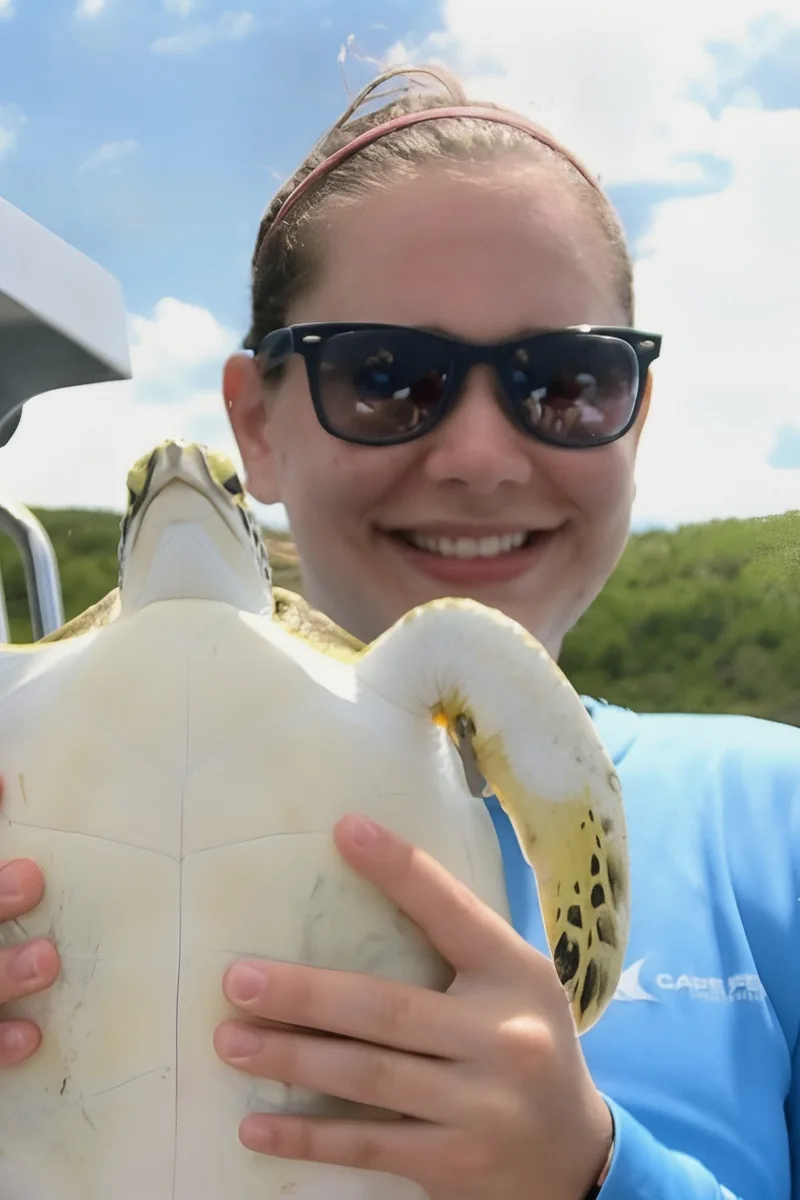
Probability distributions, hypothesis testing, and confidence intervals make a lot more sense when you've actually used them to analyze real data. Emma applied statistical methods throughout her biology research at Duke — including fieldwork on Hawaiian monk seals — so she teaches stats as a practical tool rather than an abstract formula sheet. Rated 4.9 by students.

Understanding probability distributions or interpreting a confidence interval requires a different kind of thinking than most math classes demand. Dillon spent years applying statistics in engineering contexts — quality control, data analysis, experimental design — and he brings that applied lens to topics like standard deviation, z-scores, and regression so students see what the numbers actually tell them.
Cognitive science is essentially applied statistics — Emma's degree required her to design experiments, interpret distributions, and run hypothesis tests on real behavioral data. She breaks down concepts like standard deviation, p-values, and regression by tying them to concrete research questions so the logic behind the math actually clicks.
Understanding mean, median, standard deviation, and probability distributions requires a different kind of mathematical thinking than most students are used to. Patrick approaches statistics by grounding every formula in a real-world scenario — what the numbers actually describe — which makes interpretation problems far less intimidating. His psychology background means he's spent serious time working with data analysis and research methods firsthand.
Probability distributions, hypothesis testing, and regression analysis all require a different kind of mathematical thinking — less computation, more interpretation. Kevin walks students through how to read a problem, choose the right test, and explain results in plain language. His engineering training gives him constant practice with real data sets, so he teaches statistics as a decision-making tool rather than an abstract exercise.
Pre-med coursework and MCAT preparation forced Ishaan to get comfortable with the statistical reasoning that shows up in research design — interpreting data spreads, evaluating significance, and deciding whether a result actually means something. He brings that science-oriented lens to topics like probability, hypothesis testing, and variability, making the concepts stick for students who need statistics to serve a larger goal. Rated 5.0 by students.
Understanding when to use a z-test versus a t-test, or how to interpret a p-value without overstating a result, requires more than plugging numbers into formulas. Brian's computer science studies at Case Western Reserve gave him daily exposure to statistical methods in data analysis, so he explains these concepts from experience. Sessions are built around working through problems until the reasoning behind each method becomes intuitive.
Sunay's neuroscience coursework at Emory required heavy statistical analysis — hypothesis testing, regression, probability distributions — so he teaches AP Statistics with the fluency of someone who actually uses these tools. He's especially sharp at translating word-heavy inference problems into the specific test or interval a question is really asking for.
Running experiments during his chemical engineering PhD meant Alexander lived in the world of hypothesis testing, confidence intervals, and regression analysis for years. He teaches statistics by emphasizing what each test is actually asking and when to use it, which builds the kind of judgment that carries over from homework sets to real data interpretation.
Engineering research lives and dies on data analysis, and Kevin's PhD in environmental engineering required extensive work with probability distributions, hypothesis testing, and regression modeling. He teaches statistics by connecting formulas to the questions they actually answer — why we use a t-test instead of a z-test, or what a p-value really tells you about your data.
Probability distributions, hypothesis testing, and regression analysis each require a different kind of thinking than most math classes demand. Steven tackles statistics by connecting each method to the question it's designed to answer, so students learn when to use a t-test versus a chi-square test — not just how to compute them. His engineering background, where statistical analysis informs real design decisions, keeps lessons grounded.
Between her economics training and her current medical school coursework, Hyerin has spent years interpreting data — running regressions, evaluating p-values, and distinguishing correlation from causation. She brings that applied perspective to statistics tutoring, teaching students to think critically about distributions, hypothesis tests, and confidence intervals rather than just plugging into formulas.
Engineering coursework at the University of Akron meant Joseph spent years applying statistics to real problems — analyzing experimental data, running hypothesis tests, and interpreting confidence intervals in biomedical research contexts. He teaches the logic behind probability distributions and statistical inference rather than just walking through calculator steps. Rated 4.9 by students.
Juggling calculus, biochemistry, and medical school applications means Robert encounters data analysis in multiple contexts — from lab results to research literature that demands fluency with p-values, confidence intervals, and experimental design. He teaches statistics by connecting it to the scientific reasoning students will actually need, walking through how to set up a hypothesis test or interpret a regression output with the same rigor his pre-med coursework demands.
Engineering students live inside data — probability distributions, regression models, hypothesis tests — and Sid is no exception. As a computer engineering major with a math minor at Cleveland State, he unpacks concepts like p-values, standard deviation, and sampling distributions using the same applied lens his own coursework demands.
Where many tutors teach statistics as its own island, Jacob's MA in mathematics lets him show students how concepts like probability distributions and hypothesis testing grow directly out of the algebra and calculus they've already studied. He spent years in the classroom watching students stumble on inference and experimental design, so he knows how to scaffold those topics in a way that builds genuine understanding rather than surface-level formula recall.
Actuarial science is essentially applied statistics, so John doesn't just know the formulas for standard deviation, confidence intervals, and hypothesis testing — he uses them. He teaches students to interpret what a p-value actually means and how to set up the right test for a given scenario, turning statistics from a memorization exercise into a decision-making tool.
Jenna graduated Honors from the University of Michigan with a double focus in Cellular and Molecular Biology and Applied Statistics, then spent time as a professional data analyst. That combination means she teaches concepts like probability distributions, hypothesis testing, and regression not as abstract formulas but as tools she's actually used to interpret real data sets.
Studying finance means Troy lives in data — probability distributions, hypothesis testing, and regression analysis are tools he uses in his own coursework every week. That practical fluency lets him explain statistics as a decision-making framework rather than a collection of formulas. He's especially effective at connecting abstract concepts like standard deviation and confidence intervals to real scenarios students can visualize.
I am a recent graduate of Ohio Dominican University. I earned my Bachelor of Science degree in Finance & Economics. While attending ODU, I worked part-time as a math tutor with the academic resource center. I tutored all four years in the subjects of algebra, statistics, pre-calculus, and calculus 1. I really enjoyed working with students and adult learners and it was a worthwhile experience. In the process, I was able to meet the requirements for CRLA Advanced Certified Tutor, Level 2. My tutoring style revolves around the use of socratic questioning, in which I push the student toward the right answer without giving the answer away. I believe this is the proper way to ensure a better understanding of the subject material.
Currently pursuing an MBA, Aaron applies statistics in a business context every week — from hypothesis testing to regression analysis to probability distributions. That real-world fluency means he can explain not just how to run a t-test, but why you'd choose it over a z-test and what the results actually tell you.
I am currently an honors undergraduate student at The Ohio State University studying Data Analytics with a focus on Biomedical and Public Health Analysis. My passion for tutoring comes from the belief that learning is supposed to be a fun and enriching process. I hope to help students find their love for learning. My tutoring experience comes from volunteer tutoring as part of National Honors Society in high school and by coaching/teaching the middle school academic challenge team. In my experience tutoring, I find that it is important to adapt to the learning style of each individual student. I tutor a variety of subjects including math ranging from Algebra through Calculus up to Linear Algebra, Biology, Chemistry, English, and Statistics. My favorite subject to tutor is any sort of math. In my spare time, I like to play sports like basketball or tennis, play video games, and read.
I'm in my final year of medical school and have an interest in specializing in Oncology. I did my undergraduate degree in Biology with a minor in Chemistry and a concentration in Pre-Professional Healthcare. I love to teach Biology, Chemistry, Anatomy, Biochemistry, Physiology, Microbiology, Pharmacology and Pathology. My teaching style relies heavily on the use of visual aids to help my students understand concepts in a 3D plane! In my free time I like to partake in boxing, play tennis, basketball and read mystery fiction novels. I hope that I can assist you in your future academic needs!
I am currently a P1 pharmacy student. I have had numerous opportunities to tutor students of various ages primarily in subjects that pertain to my program of study, especially chemistry. Throughout my years of study, I have come to the realization that only after meticulous examination of all the possible scenarios and exceptions of a particular phenomenon can we recognize patterns that may have facilitated our initial attempt to understand it in the first place. As a tutor, I hope to serve as a guide that aids students in discerning such patterns and integrating concepts to achieve a thorough and holistic understanding of the subject being studied. Besides tutoring, I enjoy playing the piano and cello, biking, and reading.
I am a graduate of Westlake High School and a student at the University of Michigan who is pursuing an accelerated master's program in computer engineering. Throughout my high school career, I tutored numerous students ranging from freshmen who are taking core classes to seniors who are taking AP classes. Due to this, it allowed me to communicate and learn various methods of teaching that can be understandable to all ages. While I do tutor a diverse set of subjects, I primarily focus on STEM-based ones. I am also passionate about improving standardized test scores like the ACT. The thrill of hearing a student hitting his or her goal is what motivates me to become a better tutor. I truly believe that education is the catalyst to innovation. Whether that innovation is improving life, facilitating jobs, or just making our everyday world a bit better, my contribution to tutoring to benefit our future is what drives me to be part of the education system.
I am especially passionate about presenting a new perspective on algebra, trigonometry, calculus, and linear algebra. In my experience, students have always appreciated my patience and flexibility when approaching challenging topics. I also follow sports closely, and in my spare time I enjoy running, watching movies, and playing games with friends.
I am very passionate about teaching, mentoring, precepting, and tutoring students! My favorite subjects to tutor are the NAPLEX and other pharmacy related topics. I have experience in didactic teaching, small group teaching, and experiential teaching in the pharmacy curriculum. I enjoy finding ways to engage learners through a variety of methods, including asking questions, presenting concepts through a discussion format, creating situations to engage critical thinking skills, and using analogies. My favorite moment is when I see my students' eyes light up when they make a connection and understand! I enjoy getting to know students and their learning styles to best engage them and help them to grow. I am very excited and passionate about the field of pharmacy, and wish to share that enthusiasm with you!
Hello! My name is AJ Eustace. I have five years of private tutoring experience working with students from middle school through college. I graduated from the University of Virginia with a double major in Statistics and Economics, and I'm currently enrolled in a Master of Social Work program at Ohio State. I specialize in helping students succeed in their math courses, particularly in algebra, geometry, and pre-calculus.
I am currently a student at Kent State University pursuing my Master's of Arts in Economics with a concentration in Economic Analysis. I tutored middle school Math, English and Social Studies throughout my senior year at my high school as part of our National Honor Society requirements. I also tutored US Government and American History that year as well. Throughout high school I was a member of our STEM club's robotics team, co-captain of the varsity softball team, and participated in Model UN. I am currently a member of the Student Economist Association at Kent State and continue to play softball as well.
Kathy's economics degree from Duke meant living inside datasets — regression analysis, probability distributions, hypothesis testing, and statistical inference were daily tools, not abstract concepts. She breaks down problems by connecting the math to what the numbers actually represent, which makes interpreting results feel intuitive rather than formulaic.
Understanding why you'd choose a t-test over a z-test, or what a standard deviation actually tells you about a dataset, matters more than plugging numbers into formulas. Blake runs statistical analyses as part of his neuroscience research at Vanderbilt, so he teaches distributions, hypothesis testing, and regression from firsthand experience with real data. He holds a 5.0 rating from students.
Probability distributions, hypothesis testing, and regression analysis all click faster when you understand the engineering problems they were designed to solve. Zora's Management Science and Engineering coursework at Stanford means she teaches statistics through real applications — modeling uncertainty, interpreting p-values, and designing experiments — not just formula sheets.
Industrial engineering at Georgia Tech is essentially applied statistics — probability distributions, hypothesis testing, and regression analysis were daily tools throughout Ilesh's coursework. He teaches statistics by grounding abstract formulas in real data scenarios, so concepts like standard deviation and confidence intervals actually make intuitive sense.
During her psychology degree at Penn, Brittany used statistics constantly — hypothesis testing, probability distributions, regression analysis — as core tools for understanding research. She also tutored middle schoolers in introductory statistics as a volunteer in West Philadelphia, so she's comfortable adjusting her explanations whether someone is learning mean and median or wrestling with p-values.
Probability distributions, hypothesis testing, and regression analysis are central to both engineering and business — and Caroline has graduate-level training in both. Her mechanical engineering M.S. from WashU built her statistical modeling skills, while her current MBA at MIT Sloan sharpens how she interprets data for real-world decisions. She teaches the reasoning behind each method so formulas stop feeling like black boxes.
Earning a 5 on the AP Statistics exam gave William a head start, but it's his engineering training at Vanderbilt — designing experiments, interpreting distributions, running hypothesis tests on real data — that makes him effective at teaching the subject. He digs into the reasoning behind concepts like p-values and confidence intervals so students can interpret results, not just calculate them.
Probability distributions, hypothesis testing, and regression analysis all click faster when you've actually used them to make decisions. Hari's finance background means he's applied statistical methods to real datasets — forecasting, risk analysis, variance modeling — and he teaches the logic behind each test so students can choose the right approach on their own.
Understanding when to use a standard deviation versus an interquartile range — or why a skewed distribution changes your entire analysis — requires more than formula memorization. Vinson approaches statistics through data interpretation first, walking through probability distributions, hypothesis testing, and regression with an emphasis on what the numbers actually tell you. He's studying computational math at Rice, where statistical reasoning is woven into his daily coursework.
Kaylah's graduate work in Computational Social Science at the University of Chicago is built almost entirely on statistical methods — probability distributions, hypothesis testing, regression modeling, and data interpretation. She teaches statistics the way she actually uses it: starting with what question you're trying to answer, then selecting and applying the right tool. Her background in cognitive neuroscience research means every example she pulls from is grounded in real data.
The hardest part of statistics for most students isn't the math — it's interpreting what a p-value or confidence interval actually means in context. Vy's training in cognitive studies at Vanderbilt, which is heavily research-methods driven, means she's spent real time designing studies and running analyses. She unpacks concepts like distributions, hypothesis testing, and regression by tying them to concrete research questions.
Testimonials
Because the right Statistics tutor makes all the difference.
Average Session Rating – Based on 3.4M Learner Ratings
Practice Statistics
Free practice tests, flashcards, and AI tutoring for Statistics
Other Youngstown Tutors
Related Math Tutors in Youngstown
Frequently Asked Questions
Varsity Tutors matches Youngstown students with expert Statistics tutors for 1-on-1 instruction. We pair each student with a tutor based on their specific needs, learning style, and goals.
Whether you need homework help, exam prep, or want to get ahead, our Statistics tutors are ready to help.
Common challenges include gaps from earlier material, difficulty with specific concepts, and trouble applying learning to new problems. These issues can snowball quickly in Statistics.
A tutor identifies where you're stuck, fills in gaps, and provides targeted practice. The 1-on-1 format means you get help exactly where you need it.
Tutors work with your student's actual coursework—homework assignments, class notes, and upcoming tests. This keeps tutoring directly relevant to what's happening in the classroom.
When you share information about your student's school and curriculum, we can match you with a tutor who has relevant experience.
All tutors complete background checks, credential verification, and teaching evaluation. Many of our Statistics tutors hold advanced degrees or have years of teaching experience.
You can review tutor profiles to find someone with the right background for your student's level and needs.
Many students see improved grades within a few weeks, along with better understanding of Statistics concepts and more confidence tackling challenging material.
Tutors track progress and adjust their approach to ensure continued improvement.
Most students benefit from 1-2 sessions per week. More frequent sessions help if your student is significantly behind or has an important exam coming up.
Your tutor can recommend a schedule based on your student's specific situation and goals.
Tutoring is purchased in packages of hours, with rates varying by tutor experience. Varsity Tutors offers several options to fit different budgets and needs.
You can discuss pricing during your consultation to find what works best.
Your tutor will assess where your student is, discuss goals, and start working on priority areas. Most students bring current homework or upcoming test material to focus on.
By the end, you'll have a clear sense of how the tutor can help and a plan for moving forward.
Let’s find your perfect tutor
Answer a few quick questions. We’ll recommend the right plan and match you with a top 5% tutor.