Award-Winning Math Tutors
serving Queens, NY
Math
Tutors in Queens
Private 1-on-1 tutoring, weekly live classes for academic support, test prep & enrichment, practice tests and diagnostics, and more to elevate grades and test scores.
Based on 3.4M Learner Ratings
UniversitiesSchools & Universities
DeliveredHours Delivered
ProficiencyGrowth in Proficiency
Who needs tutoring?
No obligation. Takes ~1 minute.
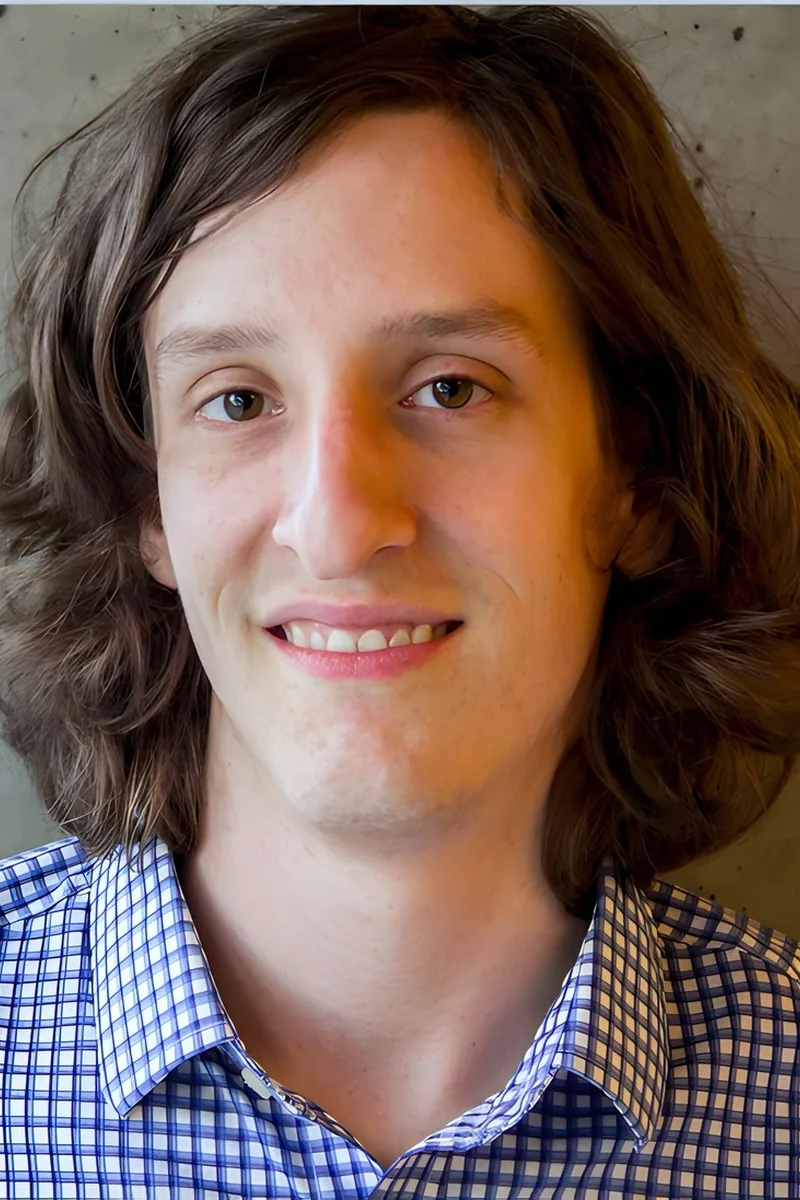
Jacob's astrophysics degree required coursework through advanced calculus, linear algebra, and differential equations, so he's comfortable across the full spectrum from pre-algebra fundamentals to college-level problem sets. He's especially good at unpacking word problems — translating messy real-world scenarios into clean mathematical setups — because his theater training makes him unusually precise about language.

Molly's strongest subjects are English and writing, but her SAT prep experience means she's spent real time inside the math that trips students up on standardized tests — arithmetic reasoning, algebraic word problems, and data interpretation. Her MFA-trained instinct for close reading actually pays off when a student needs to slow down and figure out what a problem is really asking before jumping into calculations.
Alexander scored a 1490 on the SAT, which demands fluency with algebra, data analysis, and problem-solving under time pressure. He approaches math by connecting procedures to the reasoning behind them, so students understand why they're cross-multiplying or factoring rather than just following steps mechanically.
Mimi approaches math through an inquiry-based lens shaped by her Harvard Ed.M., asking students to reason through problems rather than memorize procedures. Whether the topic is fractions, proportional reasoning, or early algebra concepts, she designs each session around the specific gaps a student brings in. Her creative, learner-centered style is especially effective for students who've decided they're 'not math people.'
From arithmetic through calculus and into graduate-level statistics, Nina has taught math at nearly every level as both a Columbia TA and a private tutor. She's especially effective at pinpointing the exact conceptual gap — whether it's fraction operations, proportional reasoning, or function notation — that's creating downstream confusion, then rebuilding understanding from that specific point.
Plenty of students decide early that they're "not math people" — Reid specializes in dismantling that belief. His approach connects abstract procedures to concrete reasoning, whether that means visualizing fractions on a number line or tracing why order of operations works the way it does, so that confidence builds alongside competence.
Solange approaches math as a subject that rewards structured thinking over speed, breaking problems into logical steps students can follow and eventually internalize. Her 34 ACT composite reflects sharp quantitative reasoning, and she applies that same methodical approach to arithmetic, pre-algebra, and foundational concepts that younger or struggling students need to build confidence.
Years of teaching middle school math at a Boston charter school gave Liz a toolbox of ways to break down fractions, ratios, proportions, and early algebraic thinking so they actually click. She's especially skilled at identifying where a student's understanding breaks down and rebuilding from that exact point — a strength sharpened by her special education training. Rated 4.7 by students and families.
Few tutors can teach pre-algebra and multivariable calculus with equal clarity, but Justin's math background runs from a double bachelor's in physics and mathematics through a PhD in Computational Mathematics at the University of Chicago. He pinpoints exactly where a concept breaks down for a student — whether that's fraction operations, quadratic factoring, or function transformations — and rebuilds understanding from that specific gap.
From basic operations through pre-algebra and into calculus, Daniel covers a wide math range and adjusts his explanations to wherever a student currently stands. He emphasizes translating word problems into equations — a skill that trips up students at every level — because once that click happens, the mechanics become far less intimidating.
Some students need to see a concept drawn out visually; others need to work backward from the answer to understand the steps. Sabira's applied mathematics degree at Johns Hopkins trained her to approach problems from multiple angles, whether that means arithmetic fundamentals, fraction operations, or early algebraic thinking. She adapts her explanations on the fly until the reasoning genuinely clicks.
From algebra through calculus, James has spent years teaching college and high school students to see math as a connected set of ideas rather than isolated procedures. His chemistry background means he constantly ties abstract concepts — like derivatives or systems of equations — back to tangible problems where the math actually does something. That context tends to make tricky topics click faster.
A triple Bachelor of Science holder, Sung has spent years working through math at every level — from proportional reasoning and equation-solving in middle school to the limit definitions and derivative rules of calculus. He breaks problems into smaller logical steps so students can see the reasoning behind each move, not just follow a memorized procedure.
From fraction operations in middle school to derivatives in calculus, Sherry covers a wide math range and zeroes in on the conceptual gaps that cause recurring mistakes. Her psychology training at UChicago also means she's attuned to math anxiety — she knows how to rebuild a student's confidence around word problems or multi-step equations without glossing over the rigor.
From pre-algebra fundamentals through calculus and linear algebra, Jai's engineering background means he's used every branch of math students typically encounter — and used it under pressure. He's especially sharp at showing why a technique works, not just demonstrating the steps, so that students can adapt when a problem looks slightly different from the textbook example. Rated on both his 1590 SAT and 35 ACT, his quantitative instincts run deep.
Meghan's 1520 SAT score reflects strong quantitative reasoning, and she applies that same structured, step-by-step thinking when walking students through math concepts like fractions, ratios, and word problems. Her journalism background means she's especially good at translating abstract math language into plain English that clicks.
A Cornell biology graduate, Josef regularly applies quantitative reasoning to scientific problems — from calculating reaction rates to modeling population dynamics — which keeps his math sharp and grounded in real applications. He breaks down concepts like proportional reasoning, unit conversions, and algebraic manipulation by tying them to tangible scenarios students can visualize. Rated 5.0 by students.
A chemistry degree from Yale means Zosia has lived inside calculus, algebra, and applied math problems far beyond the textbook — calculating reaction rates, modeling physical systems, and working with logarithmic relationships daily. She connects abstract math concepts to tangible applications so that topics like functions, proportional reasoning, and equation-solving feel purposeful rather than arbitrary. Students who need both procedural fluency and conceptual understanding get both.
Pursuing a certificate in Statistics and Machine Learning alongside her philosophy degree at Princeton, Julie brings both computational rigor and clear logical thinking to math at every level. She breaks down problems — whether it's fraction operations or function analysis — into reasoning steps students can follow and replicate on their own. Rated 4.9 by students.
Maya's ACT score of 34 included the math section, and her tutoring range spans algebra through calculus — but her real edge is that she came to math through writing and the humanities, which means she knows exactly how to translate abstract procedures into plain language for students who don't think of themselves as "math people." She's spent over seven years working across age groups, so she's quick to spot whether a student's struggle is conceptual or just notational confusion. Rated 5.0 by clients.
From basic arithmetic through trigonometry and calculus, Matthew covers the full math pipeline and considers it his specialty. His teaching method is deliberate: he demonstrates a concept step by step, then puts students in the driver's seat with progressively harder problems, asking targeted questions along the way to make sure understanding — not just memorization — is happening.
Sash's 1560 SAT required serious math performance under pressure, and her Comparative Literature training — constantly analyzing structures, patterns, and logical progressions across texts — gives her an unexpected but effective lens for tackling math problems that demand careful, sequential reasoning. She's especially useful for students who freeze up on word-heavy questions, since parsing dense language and extracting what actually matters is literally what her degree trained her to do.
Jennifer's tutoring background spans algebra through calculus, but her real strength in math is translating word-heavy problems into clear steps — a natural extension of her language arts training. She's especially effective with students who understand concepts in class but freeze when facing unfamiliar problem formats on their own.
Vivian's 36 ACT composite and 1530 SAT required mastery across every math domain tested — from algebraic manipulation and coordinate geometry to probability and data interpretation. She teaches the underlying logic of each problem type so students can adapt when a question looks unfamiliar, not just when it matches a formula they've memorized. Rated 4.9 by students.
Garrett's triple-major undergraduate path — including biology — meant he couldn't avoid math even if he wanted to: calculus, statistical analysis, and quantitative reasoning threaded through every science course he took. That constant application gives him a practical fluency with concepts like derivatives, data interpretation, and algebraic manipulation that he can translate into clear, step-by-step explanations. His 1530 SAT confirms the fundamentals are rock-solid.
A year as a course assistant in Harvard's math department gave Richard front-row experience watching where students get stuck — whether it's fraction operations in middle school or limit definitions in calculus. He earned a 1600 SAT and 36 ACT, and his approach to math emphasizes understanding the reasoning behind each step so that new problem types don't feel like starting from scratch.
Linguistics trains you to see hidden structure — phonological rules, syntactic trees, morphological patterns — and Nicholas applies that same structural thinking to math, where recognizing the underlying pattern in a problem matters more than memorizing individual procedures. His 1570 SAT and 33 ACT confirm he's sharp with quantitative reasoning, and his 5.0 rating suggests he's just as sharp at making that reasoning click for someone else.
Michelle's teaching spans everything from middle school arithmetic through calculus, which means she's seen exactly where gaps in foundational skills — like fraction operations or order of operations — start causing problems in later courses. She traces errors back to their root and rebuilds understanding from that point, so students stop making the same mistakes on autopilot.
MaryAnn covers foundational math concepts — fractions, proportions, order of operations, and early algebraic thinking — with an emphasis on translating word problems into equations. Her mentoring experience means she's skilled at identifying exactly where a student's understanding breaks down and rebuilding confidence from that point forward.
From fraction operations in elementary school to limits in calculus, Julia has tutored math at nearly every level, and her Stanford economics background keeps her grounded in how mathematical thinking applies outside the classroom. She uses a Socratic approach — asking targeted questions that push students to identify patterns themselves rather than waiting for the formula to be handed to them.
Camille started tutoring almost seven years ago teaching math to underserved students, and that foundation shaped how she approaches the subject — she pinpoints exactly where a concept breaks down, whether it's fraction operations in pre-algebra or function notation in algebra. Her 5.0 rating speaks to an ability to make abstract procedures click through clear, step-by-step explanations.
Tony's biology degree from Yale required a steady diet of quantitative coursework — biostatistics, population modeling, enzyme kinetics — which means he learned math not as an abstract exercise but as something that had to produce correct, meaningful answers in a lab setting. That applied mindset shapes how he teaches concepts like functions, rates of change, and proportional reasoning: he connects each one to a concrete scenario so the logic sticks. His 1540 SAT confirms the fundamentals are sharp across the board.
Brian tutored underclassmen in math throughout his time at Stuyvesant, one of the most rigorous math-and-science high schools in the country. He tackles everything from fraction operations and ratios up through early algebraic reasoning, pinpointing exactly where a concept breaks down for a student. His 1560 SAT speaks to the kind of quantitative fluency he brings to each session.
Whether a student is wrestling with fraction operations or building toward competition-level problem solving, Ian brings the perspective of someone who uses math daily as a physics major at Yale. He's especially sharp at identifying the specific step where understanding breaks down — a misread negative sign, a shaky grasp of order of operations — and rebuilding from there.
From arithmetic fundamentals through calculus, Mica covers a wide range of math levels and adapts her explanations to match where a student is getting stuck. Her 32 ACT composite reflects the kind of cross-subject quantitative fluency that lets her connect math concepts to science and real-world applications — particularly useful for students who need to see why a formula matters before they'll remember it.
Not every math tutor needs to be a math major — sometimes a well-rounded thinker who scored 1540 on the SAT brings a clearer way of explaining concepts to students who feel stuck. Ayako covers everything from fraction operations and proportional reasoning up through basic algebra and geometry, translating abstract procedures into language that actually makes sense.
Noah's 1540 SAT — earned through systematic mastery of the math section's particular logic — means he's deeply familiar with the algebra, geometry, and data analysis concepts that form the backbone of middle and high school math. He breaks problems into recognizable patterns so students learn to identify what a question is really asking before reaching for a formula.
Scoring a 34 ACT composite means Noah has the quantitative chops to cover everything from fraction operations and proportional reasoning up through algebraic problem-solving. He zeroes in on where a student's understanding breaks down — whether that's setting up word problems or working with negative numbers — and rebuilds confidence from that exact point.
Evan's 1510 SAT required strong performance on the math section, and his film background gives him an unexpected edge: screenwriting is fundamentally about structure, sequencing, and logical cause-and-effect — the same thinking that underpins solving equations and working through multi-step problems. He's especially good at reframing a confusing math question as a narrative with a clear setup, conflict, and resolution, which tends to unlock understanding for students who don't think of themselves as "math people."
Covering everything from basic arithmetic through calculus, Judah's math tutoring zeroes in on whatever concept is causing the bottleneck — whether that's fraction operations in middle school or function transformations in pre-calc. His 1580 SAT score reflects deep comfort with quantitative reasoning, and his approach emphasizes understanding why a method works so students can adapt it to unfamiliar problems.
Testimonials
Because the right Math tutor makes all the difference.
Average Session Rating – Based on 3.4M Learner Ratings
Practice Math
Free practice tests, flashcards, and AI tutoring for Math
Other Queens Tutors
Related Math Tutors in Queens
Frequently Asked Questions
During the initial session, a tutor will assess your current math level, identify specific areas where you're struggling (whether that's word problems, equations, or graphing), and discuss your learning goals. This helps the tutor create a personalized plan tailored to your needs and learning style, so subsequent sessions focus on what matters most to you.
Expert tutors focus on helping you understand the "why" behind math concepts, not just the "how." By working through problems step-by-step, asking guiding questions, and connecting new ideas to concepts you already know, tutors help you see patterns and build genuine understanding. This deeper knowledge makes it easier to tackle unfamiliar problems and retain what you've learned.
Word problems require translating real-world scenarios into math, which is a skill many students find challenging. Tutors teach strategies like breaking problems into smaller steps, identifying key information, and choosing the right approach. With guided practice and feedback on your problem-solving process, you'll build confidence in tackling these problems independently.
Showing work helps you catch your own mistakes, allows tutors to see where confusion happens, and demonstrates your understanding to teachers. Tutors guide you in organizing your steps clearly, explaining your reasoning, and developing good habits that improve both accuracy and communication of mathematical thinking.
Math anxiety is common and tutoring can help by breaking concepts into manageable pieces, celebrating small wins, and building confidence through successful problem-solving. When you work 1-on-1 with a tutor in a low-pressure environment, you can ask questions freely, learn at your own pace, and gradually shift from "I can't do this" to "I can figure this out."
Yes. When you connect with a tutor, you can share your textbook, curriculum, or specific assignments you're working on. Tutors are familiar with different math approaches and can help you understand the methods your school uses while also reinforcing core concepts that transfer across different curricula.
Multi-step equations require keeping track of several operations in sequence, which trips up many students. Tutors teach systematic approaches—like isolating variables step-by-step and checking your work—while helping you understand why each step matters. With practice and feedback, these problems become much more manageable.
Graphing and proofs are conceptually different from computational math and require visual or logical reasoning skills. Tutors break these down by showing how to interpret coordinates, understand transformations, or construct logical arguments step-by-step. They help you see the big picture while mastering the technical details, turning abstract concepts into concrete understanding.
Let’s find your perfect tutor
Answer a few quick questions. We’ll recommend the right plan and match you with a top 5% tutor.