Award-Winning AP Calculus AB Tutors
serving Queens, NY
AP Calculus AB
Tutors in Queens
Private 1-on-1 tutoring, weekly live classes for academic support, test prep & enrichment, practice tests and diagnostics, and more to elevate grades and test scores.
Based on 3.4M Learner Ratings
UniversitiesSchools & Universities
DeliveredHours Delivered
ProficiencyGrowth in Proficiency
Who needs tutoring?
No obligation. Takes ~1 minute.

The jump from "find the derivative" to "explain what the derivative means on this graph" is where most AP Calculus AB students lose points on free-response questions. Justin bridges that gap by teaching limits, Riemann sums, and the Fundamental Theorem as connected ideas rather than isolated procedures — an approach shaped by his dual background in physics and mathematics at Washington University in St. Louis.
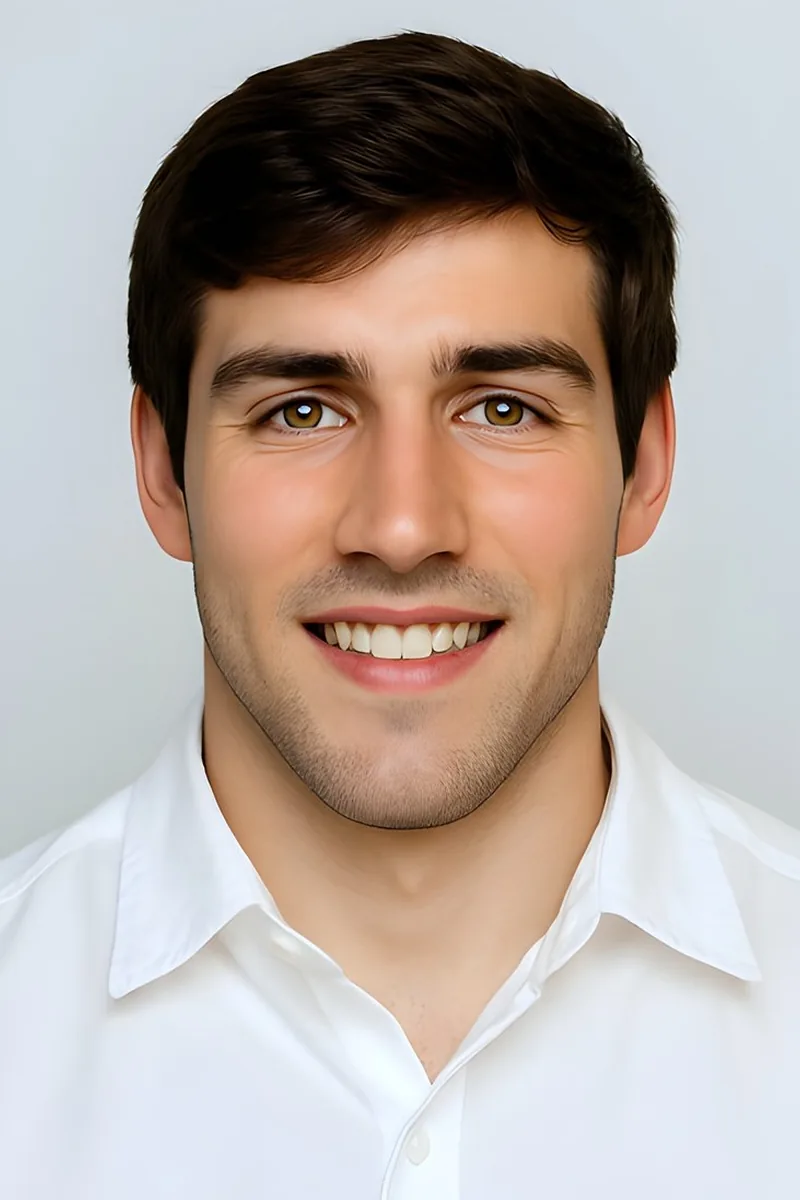
Having tutored college students through calculus at Harvard while majoring in chemistry, James knows exactly where AB students hit friction — limits that seem pointless, the conceptual jump to integration, and free-response problems that demand more than mechanical differentiation. His approach leans on building the reasoning behind each technique, so when the exam asks students to justify a answer using the Mean Value Theorem or interpret a definite integral in context, the logic is already there. A 1570 SAT and 4.9 rating back up the precision he brings to every session.
Mechanical and aerospace engineering at Princeton means Matthew builds on calculus daily — computing trajectories, analyzing forces, optimizing structural loads — so the AB curriculum's core techniques are second nature to him. He teaches each new concept by working through a few problems step by step, then hands students progressively harder variations, asking targeted questions that expose gaps before they become exam-day surprises. His 34 ACT underscores the quantitative precision behind that approach.
The jump from pre-calculus to AP Calculus AB is often the biggest conceptual shift in a student's math career — suddenly everything revolves around rates of change and accumulation. Julie's philosophy background at Princeton sharpened her ability to explain abstract ideas with clarity, and she applies that skill to unpacking limits, derivatives, and the Fundamental Theorem. She earned a 1570 SAT and teaches math at every level, so she knows how to bridge gaps in algebra or trig that can hold AB students back.
Having taught introductory calculus as a course assistant at Harvard, Richard has seen firsthand which AP Calculus AB concepts — limits, the chain rule, related rates, accumulation functions — trip students up most often. He builds intuition around why derivatives and integrals work the way they do, which makes the problem-solving on exam day feel less like guesswork.
The jump from memorizing derivative rules to actually applying them — related rates, optimization, accumulation functions — is where most AP Calc AB students stall. Matthew tackles these problems by tying them to physical intuition from his physics degree, making concepts like rate of change feel concrete instead of formulaic. His approach turns the AB exam's free-response section from a guessing game into a structured process.
The leap from memorizing derivative rules to actually understanding what a limit means — and why the Fundamental Theorem ties everything together — is where most AP Calc AB students struggle. Daniel approaches each concept by building the intuition first, then layering on the computation, drawing on his Engineering Physics training at Cornell where calculus is the daily language.
Having tutored AP Calculus students through New York State Regents and AP exams since her time at Phillips Exeter, Violet knows exactly where the AB curriculum trips people up — particularly the shift from computing derivatives mechanically to interpreting them on free-response questions about rates and accumulation. Her math degree from Brown means she can trace a concept like the Fundamental Theorem back to its foundations when a student's intuition stalls, then rebuild it with concrete examples that stick. She holds a 4.5 rating and a 1550 SAT that speaks to her precision under timed, high-stakes conditions.
Limits, derivatives, and integrals each represent a fundamentally new way of thinking about functions, and rushing past any one of them creates problems later. Rahi breaks down each concept visually and algebraically, drawing on his applied mathematics training to show students why the rules work — not just when to apply them. His 34 ACT composite reflects the same precision he brings to AP exam preparation.
Most students struggle with AP Calculus AB not because the computations are hard, but because they lose the thread connecting limits to derivatives to integrals as one unfolding idea. Samantha's approach leans on her 1490 SAT and broad math background — she teaches the AB curriculum by constantly circling back to what each new concept means graphically and numerically, so techniques like the chain rule or area under a curve never feel like isolated tricks. Her anthropology training also gives her an unusual patience for figuring out exactly how someone else sees a problem before jumping to a solution.
Limits, derivatives, and integrals each build on the last — and AP Calculus AB punishes students who memorize procedures without understanding why the chain rule or Fundamental Theorem actually works. Abismael's chemical engineering background means he's applied every one of these concepts to real modeling problems, and he pushes students with the kind of tough, unexpected questions that mirror what the AP exam actually throws at them.
When students can compute a derivative but can't explain what it means at a specific point — or can evaluate a definite integral but not set one up from a word problem — that's the gap Mariya zeroes in on. Her math degree gives her the formal grounding to teach limits, continuity, and the Fundamental Theorem as a connected story rather than isolated chapters. She holds a 5.0 rating and a perfect 1600 SAT, which speaks to the precision she brings to exam preparation.
Teaching gifted students means Esteban regularly works with kids who grasp derivative rules quickly but need to be pushed on the deeper why — what a limit actually captures, how the Fundamental Theorem ties rate and accumulation together, why continuity conditions matter before applying the Mean Value Theorem. His math degree and master's in education from Harvard give him both the mathematical rigor and the pedagogical instinct to know when a student needs a proof and when they need a picture. Rated 5.0 by students.
Limits, derivatives, and the Fundamental Theorem of Calculus all click faster when a student understands the "why" behind each rule — not just the mechanics. Blake approaches AP Calculus AB by building intuition for concepts like rates of change and accumulation, connecting abstract notation to real behavior. His 34 ACT and 5.0 student rating speak to how well that approach translates to exam performance.
Limits, derivatives, and integrals each require a different kind of thinking, and Victor breaks down exactly what the AP exam expects for each — from interpreting accumulation functions to setting up related rates problems from scratch. His bachelor's and master's degrees are both in mathematics, so the conceptual depth behind every shortcut is always within reach.
Scoring a 1580 on the SAT means Varun's quantitative reasoning is sharp enough to cut through the AB curriculum's trickiest moments — limits involving indeterminate forms, implicit differentiation setups, and the conceptual jump from average to instantaneous rate of change. His government and film studies background might seem unrelated, but it trained him to build structured arguments, a skill that translates surprisingly well to writing clear, logical free-response justifications the AP graders actually want to see. Rated 4.8 by students.
During her senior year at Cornell, Emily tutored student-athletes through Calculus I — breaking down limits, derivatives, and the chain rule for students who often came in convinced they couldn't do math. That hands-on experience with AP-level calculus concepts, combined with her pre-med coursework, means she knows exactly where students stall on topics like related rates and area under a curve. Rated 4.8 by students.
Every day in his Chemical Engineering Ph.D. program at NYU, Michael works through the exact calculus that AB students are learning for the first time — differential equations governing reactor behavior, integrals describing mass and energy balances — which means he can show students where techniques like the chain rule and u-substitution actually lead. His undergraduate training in Biological Systems Engineering adds a second layer of applied context, making it easier to explain what a rate of change or accumulation function represents rather than just how to compute one. Rated 4.9 by students.
Preparing for medical school meant Benjamin didn't just take calculus — he drilled it alongside physics and chemistry until derivatives and integrals became second nature for modeling biological change. That MCAT-driven intensity pays off when teaching AB topics like the chain rule and definite integral applications, where students need to move fluidly between computation and interpretation under exam pressure. Rated 5.0 by students, with a 33 ACT backing up the quantitative chops.
The jump from memorizing derivative rules to actually applying them — related rates, optimization, accumulation functions — is where most AP Calc AB students get stuck. Michael approaches each of these as a modeling problem, drawing on the way his Cornell physics courses frame calculus as a tool for describing real change. His 5.0 rating speaks to how well that approach clicks with students.
Biomedical engineering training turns calculus into a daily language — Robert uses derivatives to characterize physiological signals and integrals to quantify everything from blood flow to biomechanical loads, which means the AB curriculum's core concepts already have concrete meaning for him. He's especially sharp at teaching the limit definition of the derivative, the piece most students rush past but that unlocks genuine understanding of every rule that follows. His 1490 SAT reflects the quantitative precision he brings to exam-style problem solving.
Architecture students don't just sketch buildings — Allison's Columbia MArch program requires her to calculate loads, model curves, and optimize structures, all of which run on the same derivative and integral concepts tested in AB. Her physics degree from Colgate means she can trace every AB topic back to something tangible, whether it's using Riemann sums to approximate area under a real curve or applying the chain rule to describe how linked quantities change together. Rated 5.0 by students, with a 34 ACT backing up the quantitative instincts behind her teaching.
Cornell's Biological Sciences curriculum throws calculus at students early — modeling population growth with differential equations, quantifying enzyme kinetics through integration — and Andrew absorbed that applied foundation alongside the theory. He's especially useful for AB students who can differentiate mechanically but struggle when a free-response problem asks them to set up an accumulation function or interpret a rate of change in context. His perfect 1600 SAT underscores the precision he brings to exam-style problem solving.
Limits, derivatives, and the Fundamental Theorem of Calculus all click faster when someone can explain the reasoning behind each rule instead of just demonstrating steps. Katie's quantitative training at Cornell means she can unpack why L'Hôpital's Rule works or how Riemann sums build toward integration, keeping the logic front and center.
The jump from memorizing derivative rules to actually applying them — related rates, optimization, accumulation functions — is where most AP Calculus AB students stall. Rona breaks these problems into physical reasoning steps, drawing on years of engineering work where calculus was the default language for solving real problems.
The jump from precalculus to AP Calculus AB often feels steep because limits introduce a fundamentally new way of thinking about functions. Sabry tackles that transition head-on, connecting ideas like the derivative as a rate of change and the integral as accumulation to concrete scenarios from physics and engineering. His years co-instructing university courses give him a sharp sense of exactly where students get stuck — and how to get them unstuck.
The jump from memorizing derivative rules to actually applying them — related rates, optimization, interpreting the meaning of an integral in context — is where AP Calculus AB gets challenging. Dana's approach emphasizes the graphical and conceptual reasoning the AP exam rewards, not just algebraic manipulation. Her math and statistics training gives her a deep comfort with the material that lets her explain the same idea multiple ways until it clicks.
Biology majors don't usually get credit for their calculus chops, but Alan's coursework in biostatistics and molecular biology meant regularly working with rate-of-change models and area-under-the-curve analysis — skills that map directly onto the AB exam's derivative and integral applications. He's particularly effective at walking through the setup phase of free-response problems, where translating a scenario into the right mathematical framework trips up even strong students. Rated 5.0 by students.
Chemical engineering at Cornell throws calculus at you from day one — Ian uses derivatives to model heat transfer and integrals to balance material flows, so the AB curriculum's limit definitions and accumulation problems feel like second nature. He's particularly sharp at teaching students how to read a free-response prompt and identify which calculus concept it's actually testing, a skill that turns panicked guessing into structured problem-solving. His 1530 SAT reflects the quantitative instincts behind that approach.
The jump from precalculus to AP Calc AB is where many students first encounter limits, derivatives, and integrals as connected ideas rather than isolated procedures. David breaks down each concept visually — slope fields, area accumulation, the relationship between a function and its derivative — making the FRQ section feel like problem-solving instead of guesswork.
Limits, derivatives, and integrals each represent a fundamentally new way of thinking about functions, and that conceptual shift is where most AP Calculus AB students struggle. Melody approaches each unit by connecting the graphical, numerical, and analytical representations so that ideas like the chain rule or the Fundamental Theorem feel intuitive rather than formulaic.
I am most passionate about helping people learn history, social sciences, and mathematics. I also assist with standardized test prep, primarily with the Reading and Writing sections of the exams. In my spare time, I enjoy photography, hiking and other outdoor activities, and reading about philosophy, evolutionary biology, and human history.
The jump from memorizing derivative rules to actually understanding limits, continuity, and the Fundamental Theorem of Calculus is where most AP Calc AB students struggle. Dibyendu breaks down each concept computationally — showing, for instance, how Riemann sums converge to a definite integral — so the reasoning behind the formulas clicks before exam day. His 4.8 rating speaks to how well that approach lands with students.
Publishing research on Antarctic ice sheet dynamics means Hillel routinely uses calculus to model real geophysical change — rates of glacial flow, accumulation of snowfall over time, the derivative relationships embedded in climate data. That hands-on scientific modeling translates directly to the AB curriculum's trickiest moments, like interpreting what a definite integral represents in an applied context or connecting a rate graph to total change. Rated 5.0 by students.
Two electrical engineering degrees mean Amber has been living in calculus for years — computing derivatives to analyze circuit behavior and integrating signals to extract meaningful data from noise. That hands-on fluency is especially useful for the AB exam's free-response questions on accumulation and rate-of-change interpretation, where students need to explain what the math means, not just evaluate it. Rated 5.0 by students.
Teaching assistant experience across two college courses sharpened James's instinct for spotting exactly where students lose the thread in a multi-step calculus problem — whether it's setting up a limit definition or connecting a derivative back to the rate of change it describes. His chemistry background means he naturally frames integration and differentiation in terms of real quantities like concentration changes over time, which gives AB students a concrete anchor for abstract rules. Rated 4.7 by students.
Most AP Calculus AB tutors come from engineering or hard-science backgrounds — Rukhsar's path through political science and international relations means she learned to teach calculus by building every concept from the ground up, which gives her an unusually clear sense of where students actually get lost on limits, derivatives, and the Fundamental Theorem. She's especially effective at slowing down the jump from computational rules to the interpretation questions that dominate free-response scoring. Rated 5.0 by students.
The jump from Pre-Calculus to AP Calculus AB trips up a lot of students right around limits and the formal definition of the derivative. Jonny tackles that transition head-on, building intuition for what derivatives and integrals actually represent before diving into the mechanics of chain rules and Riemann sums. His 5.0 rating speaks to how well that approach clicks.
The AP Calculus AB exam rewards students who understand *why* the chain rule or Fundamental Theorem works — not just how to apply it mechanically. Ken's Master's in Applied Mathematics means he can unpack concepts like related rates and accumulation functions from multiple angles, connecting each idea back to the graphical and numerical reasoning the exam demands.
Limits, derivatives, and integrals all rely on the same core logic — understanding how a function behaves as inputs change. Andrew's dual background in applied math and computer science from Stony Brook means he can unpack that logic step by step, whether a student is struggling with the chain rule or setting up related rates problems. Rated 5.0 by students.
Testimonials
Because the right AP Calculus AB tutor makes all the difference.
Average Session Rating – Based on 3.4M Learner Ratings
Practice AP Calculus AB
Free practice tests, flashcards, and AI tutoring for AP Calculus AB
Nearby AP Calculus AB Tutors
Other Queens Tutors
Related Math Tutors in Queens
Frequently Asked Questions
AP Calculus AB covers limits, continuity, derivatives, applications of derivatives, and integrals. The exam tests your understanding of these core concepts through multiple-choice and free-response questions, with about 50% of the test focused on derivatives and 25% on integrals. Mastering the connections between these topics—rather than memorizing formulas—is key to success on exam day.
Most students benefit from starting test prep 2-3 months before the May exam, dedicating 5-7 hours per week to focused review and practice. If you're taking the course for the first time, consistent study throughout the school year is more effective than cramming. A tutor can help you create a personalized study schedule that targets your specific weak areas and maximizes your prep time.
Students often struggle with understanding why calculus concepts work (not just how to apply them), managing time during the free-response section, and connecting derivatives to real-world applications. Many also find the transition from algebra to abstract thinking challenging. Personalized tutoring helps you build conceptual understanding and develop strategies to work through complex problems under timed conditions.
Score improvement depends on your starting point and commitment level, but students typically see gains of 1-2 points on the 1-5 scale with focused, consistent preparation. The biggest improvements come from identifying specific weak areas (like related rates or integration techniques) and practicing targeted problem sets. A tutor can pinpoint exactly where you're losing points and help you build mastery in those areas.
Practice tests are essential—they help you get comfortable with the exam format, identify timing issues, and reveal knowledge gaps before test day. Taking full-length practice tests under timed conditions every 2-3 weeks gives you realistic feedback on your readiness. A tutor can review your practice test results with you, explain where you went wrong, and help you develop strategies to avoid similar mistakes on the actual exam.
Varsity Tutors connects you with expert tutors who specialize in AP Calculus AB and understand the specific challenges of the exam. You can get matched with a tutor who fits your schedule and learning style, whether you need help with a single concept or comprehensive exam prep. Your tutor will work with you to create a personalized study plan based on your current level and target score.
Your first session is an opportunity to discuss your goals, current understanding of calculus, and any specific topics causing difficulty. The tutor will likely assess your knowledge with a few problems to identify your strengths and gaps, then outline a customized plan for your prep. This foundation helps ensure that every future session is focused on what will have the biggest impact on your score.
Test anxiety often stems from feeling unprepared for specific question types or pacing issues. Working through practice tests with a tutor helps build confidence by showing you that you can handle exam-style problems under pressure. Your tutor can also teach you strategies like reading questions carefully, tackling easier problems first, and managing your time on the free-response section—all of which reduce anxiety and improve performance.
Let’s find your perfect tutor
Answer a few quick questions. We’ll recommend the right plan and match you with a top 5% tutor.