Award-Winning AP Statistics Tutors
serving Queens, NY
AP Statistics
Tutors in Queens
Private 1-on-1 tutoring, weekly live classes for academic support, test prep & enrichment, practice tests and diagnostics, and more to elevate grades and test scores.
Based on 3.4M Learner Ratings
UniversitiesSchools & Universities
DeliveredHours Delivered
ProficiencyGrowth in Proficiency
Who needs tutoring?
No obligation. Takes ~1 minute.
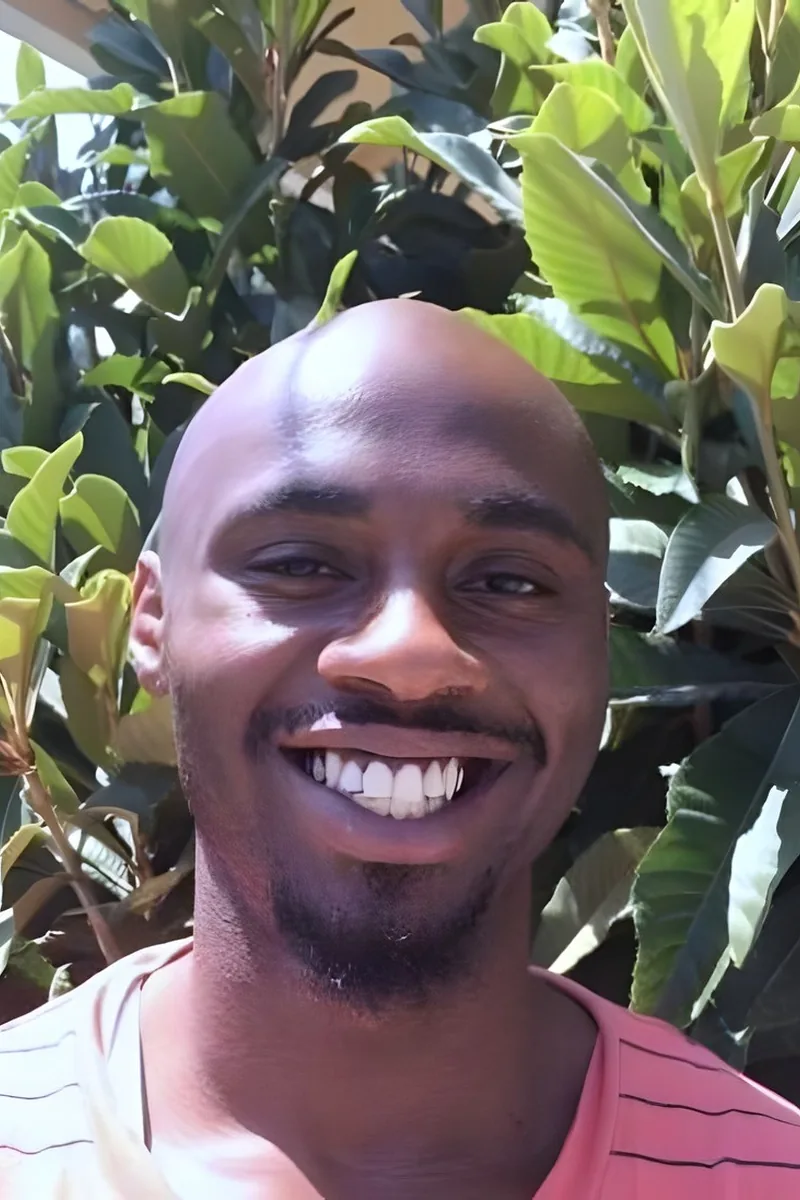
Caltech's economics program is quantitatively rigorous — Brian's coursework meant building econometric models, running hypothesis tests on real datasets, and defending statistical conclusions in ways that mirror exactly what AP Stats free-response questions demand. His dual background in CS and economics gives him a knack for explaining the logic behind choosing between z-procedures and t-procedures, or why independence conditions matter, in terms that click for students who think algorithmically. SAT score of 1580 speaks to the precision he brings to exam strategy.

A philosophy major with a certificate in Statistics and Machine Learning from Princeton, Julie approaches AP Stats from both sides — the computational mechanics and the careful logical reasoning about what the numbers actually prove. That philosophy training is surprisingly relevant: questions about whether correlation implies causation, what constitutes a valid inference, and how to structure an argument from evidence are the same skills the free-response section grades hardest on. Rated 4.9 by students.
Philosophy, Politics, and Economics at Penn is a surprisingly stats-adjacent combination — Kevin's coursework requires interpreting polling data, evaluating economic models, and dissecting whether a study's methodology actually supports its conclusions. That training in rigorous argument transfers well to the AP Stats free-response section, where earning full credit depends on explaining *why* a particular inference procedure applies, not just executing calculator steps. His 34 ACT speaks to the kind of precise, test-ready thinking that keeps answers tight under exam pressure.
Pre-med coursework at the University of Chicago means Rhea is constantly reading research papers that hinge on p-values, confidence intervals, and study design — the same concepts AP Stats tests through its notoriously picky free-response rubric. Her 36 ACT reflects the kind of precise, careful reasoning that pays off when students need to distinguish between observational studies and experiments or explain what "95% confident" actually means. Rated 4.8 by students.
Running simulations of cosmic ray acceleration at Princeton's astrophysics department meant Dennis lived in probability distributions, hypothesis testing, and regression analysis daily. He brings that applied statistics fluency to AP Stats, breaking down concepts like chi-square tests and confidence intervals through real data scenarios rather than rote formulas. Rated 4.7 by students.
Most AP Stats students already know how to crunch numbers — what trips them up is the interpretive writing, like explaining in precise language what a confidence interval captures or why a study's design supports (or undermines) a causal claim. Talia scored a 36 ACT and brings sharp reading comprehension and argumentative writing skills from her political science background, which turns out to be exactly what the free-response section rewards: constructing clear, evidence-based reasoning under time pressure. Rated 5.0 by students.
Most AP Stats students come in expecting another formula-driven math class, then hit a wall when the exam asks them to explain *why* a normal model applies or *what* a 95% confidence level actually means in context. JF's math and CS background at Stanford means he thinks in both precise computation and logical argumentation — exactly the combination the free-response section rewards. Rated 5.0 by students.
A PhD in economics at Yale means Anthony lives in regression output, probability models, and econometric inference daily — and his undergraduate physics and math training is where he first learned to think rigorously about uncertainty and distributions. He's especially sharp on the chi-square and inference units where students need to move past calculator mechanics and articulate the reasoning behind their procedure choice, which is exactly what the free-response rubric scores hardest. Rated 5.0 by students.
Inference tests trip up most AP Statistics students not because the math is hard, but because choosing between a t-test, a chi-square, and a z-interval requires careful attention to context. Sharan's quantitative training in Human Biology at Cornell means she regularly interprets data distributions and p-values — and she breaks down the logic behind each test so students can identify the right approach on exam day.
Psychology research is fundamentally a statistics course in disguise — Martha's work at Michigan examining how culture shapes self-related psychological processes means she's constantly designing studies, choosing between t-tests and ANOVAs, and defending whether her sample sizes and methods actually support her conclusions. That firsthand experience with the full research cycle translates directly to the AP Stats units on experimental design and inference, where she can explain why you'd stratify a sample or what a Type II error looks like in a real study rather than a textbook prompt. Rated 5.0 by students.
Running experiments in a brain sciences PhD program means Tashina designs studies, collects behavioral data, and determines whether her results hold up under statistical scrutiny — the same cycle of experimental design, data analysis, and inference that AP Stats tests on every free-response question. She's especially sharp on the interpretive side, like articulating why a particular sampling method matters or what a confidence interval actually captures, because her dissertation work requires defending those choices to peer reviewers. Rated 4.7 by students.
Computational biology at Cornell means Emily lives in statistical analysis — hypothesis testing, regression models, and probability distributions are part of her daily coursework. She breaks down AP Stats concepts like experimental design and inference by connecting them to real datasets, making the logic behind each test click before students ever touch a formula sheet.
Most AP Stats students come in expecting another math class and get blindsided by how much the exam rewards written explanation over calculation — Benjamin's finance and economics training at Notre Dame, where he constantly interpreted data to support business decisions, built exactly that skill set. He teaches students his own shortcuts for quickly reading output tables and translating statistical results into the precise, context-specific language that earns full marks on free-response inference questions. Rated 5.0 by students.
Game Theory for advanced middle schoolers at Johns Hopkins CTY required Carter to make probability, expected value, and strategic reasoning click for students years ahead of the typical curve — experience that translates directly to the combinatorics and probability units in AP Stats. His economics training at Brown also means he's comfortable with regression and inference in applied contexts, so he can ground abstract concepts like sampling variability in real decision-making scenarios rather than just calculator routines. Rated 5.0 by students.
Cognitive science at Rice meant Adam spent semesters immersed in experimental design, hypothesis testing, and statistical inference — the exact skills AP Statistics demands. He teaches students to think through probability distributions and confidence intervals the way a researcher would, connecting each concept to the logic behind the test rather than just the formula sheet.
Neuroscience research runs on statistics — hypothesis testing, confidence intervals, regression analysis, interpreting p-values from real experimental data. Daniel applies that firsthand lab experience from his work at the Jungers Center for Neuroscience Research to break down AP Statistics concepts in ways that go beyond formula sheets. His biomedical engineering coursework at Rice keeps these tools sharp and current.
Studying statistics at Northwestern means Jake isn't just learning the concepts AP Stats covers — he's using them daily in upper-division coursework involving real data analysis, probability models, and inference procedures. That ongoing immersion makes him sharp on the details students tend to blur, like the difference between a parameter and a statistic or why checking conditions before running a test isn't optional. Rated 5.0 by students.
Heather minored in Quantitative Methods at Vanderbilt, which means AP Statistics isn't a side subject for her — it's core to her academic training. She breaks down inference procedures, experimental design, and probability distributions with the kind of fluency that comes from applying statistics daily, not just teaching it from a textbook. Rated 4.9 by students.
Crony's dual degrees in Neuroscience and Economics from Brown meant constant exposure to both experimental design and data modeling — two threads that converge neatly in the AP Stats curriculum. He breaks down the normal distribution and z-score reasoning that underpins so much of the course by connecting it to real research contexts, like determining whether a drug trial's results are meaningful or just random variation. Rated 4.6 by students.
Scoring a 36 ACT means Ethan knows how to break down standardized testing — and AP Statistics is really a standardized test in statistical thinking, where the free-response grading hinges on precise language about inference and experimental design. His environmental science and public policy background at the undergraduate level required constant engagement with data analysis, from interpreting regression models in climate studies to evaluating sampling methods in policy research. Rated 5.0 by students, he zeroes in on the communication side of stats that most math-oriented tutors overlook.
Biostatistics coursework during her Master's in Biotechnology gave Rithi hands-on experience designing experiments, running statistical tests on biological data, and interpreting whether results actually mean something — which is the exact reasoning cycle AP Stats builds its curriculum around. She's especially sharp on the probability and sampling distribution units, where her neuroscience research background makes concepts like normal approximations and variability in sample means feel concrete rather than abstract. Rated 4.9 by students.
Computational mathematics at Rice means Vinson doesn't just know the formulas behind normal distributions and chi-square tests — he understands the underlying theory well enough to explain why a particular inference procedure works, not just when to use it. That mathematical depth is especially useful for the AP Stats units on sampling distributions and probability, where students with strong computational instincts often struggle to shift into the interpretive, context-driven reasoning the exam actually scores on. Rated 4.8 by students.
A physics PhD requires living inside probability distributions, error analysis, and hypothesis testing — Jonathan has spent years determining whether experimental results are statistically significant or just noise, which is the exact reasoning AP Stats builds its entire free-response section around. He unpacks the logic behind confidence intervals and chi-square tests by grounding them in real data scenarios, making the interpretive leaps feel intuitive rather than formulaic. Rated 5.0 by students.
Most AP Stats students come in expecting another formula-driven math class, then hit a wall when the exam asks them to explain *why* a normal model applies or *what* a 95% confidence level actually means in context. Tessa's math major at Yale gives her the theoretical grounding to unpack those conceptual questions, while her history training — building arguments from evidence, weighing competing interpretations — maps surprisingly well onto the kind of structured, language-precise reasoning the free-response section rewards. Rated 4.9 by students.
Neuroscience research at Vanderbilt means Blake regularly encounters experimental design, data interpretation, and statistical inference in contexts like brain imaging studies and behavioral experiments — the same reasoning AP Stats tests on every free-response question. He's especially strong on the conceptual side, walking through why a particular test applies and how to communicate conclusions about p-values and confidence intervals with the precision the rubric demands. Rated 5.0 by students.
I am a graduate of Cornell University's College of Arts and Sciences. I received my Bachelor of Arts in Chemistry with Distinction in 2015. Since graduation, I was a physics/chemistry teacher and soccer coach at a private school in Virginia for a year, where I led the soccer team to an undefeated season. Before teaching and coaching professionally, I was a Teaching Assistant for the Cornell Math and Physics Departments, where I taught many subjects including calculus, mechanics, electromagnetism. Throughout my time at Cornell and as a teacher, I tutored subjects ranging from the SAT to AP Physics and Algebra II, which is where my true talents lie: in small group or one-on-one settings where I can give students the full attention they deserve and tailor my approach specifically to their learning styles. This is why I am now pursuing tutoring as a part-time occupation at Varsity Tutors. I embrace teaching all math and science subjects, especially physics and calculus, at both the college and high school level and will go above and beyond to make sure all of my students succeed, according to their definition of success. In my spare time, I enjoy playing league soccer, basketball, tennis and guitar, and also like to travel and see as much of the world as I can.
Most AP Stats students come from algebra and calculus courses where there's one right answer — so the shift to interpreting output, justifying assumptions, and writing about uncertainty in plain English catches them off guard. Matthew's dual math and computer science background at Harvard means he's comfortable on both sides of that divide: the formal probability theory underneath and the data-driven reasoning the exam actually grades you on. Rated 4.9 by students.
Biology research at Yale means Shreya regularly interprets data — reading regression output, evaluating sample designs, and deciding whether results are statistically significant before drawing conclusions. She brings that same analytical lens to AP Statistics, teaching students how to set up and justify inference procedures the way the free-response section demands. Rated 5.0 by students.
Most AP Stats students walk in expecting another formula-driven math class, then hit a wall when the exam asks them to explain *why* a particular sampling method could introduce bias or *what* a 95% confidence level actually means in context. Jake's 1580 SAT and 4.9 rating point to the kind of precise, structured communication skills that make the difference on those language-heavy free-response questions. He breaks down the interpretive reasoning behind inference procedures and experimental design so students learn to write answers that match the rubric's expectations, not just punch numbers into a calculator.
Licensed math teacher with a bachelor's in mathematics, Jacob brings the algebraic backbone that makes AP Stats click — he knows exactly when students need a quick refresher on transformations or logarithmic properties to make sense of Normal calculations or linearizing curved data. His classroom experience with Common Core's data and statistics strands means he's already taught the conceptual groundwork that the AP exam builds on, particularly around variability, sampling, and making claims from data. Rated 5.0 by students.
Cornell biology coursework has Drishti knee-deep in research methods — designing controlled experiments, interpreting data tables, and evaluating whether results actually support a hypothesis or just look like they do. That training maps cleanly onto the AP Stats units on experimental design and inference, where she teaches students to articulate the reasoning behind their procedure choices instead of just punching numbers into a calculator. Rated 5.0 by students.
Victor's master's in applied mathematics means he's worked through probability theory at a level well beyond what AP Stats requires — and that depth lets him explain *why* the normal model underlies so many inference procedures, not just how to punch z-scores into a calculator. He zeros in on the conditional reasoning behind hypothesis tests and the precise language needed to interpret p-values and confidence intervals, which is where most points are won or lost on the free-response section. Rated 5.0 by students.
Behavioral science research runs on SPSS and Stata — Hidefusa has used both extensively to analyze experimental data, build regression models, and run the exact hypothesis tests that AP Stats students need to master for the exam's free-response section. His clinical psychology training at Harvard meant designing studies with proper sampling methods and defending statistical conclusions in front of faculty, which sharpened his ability to teach the interpretive reasoning the AP rubric rewards most heavily. Rated 4.9 by students.
Carnegie Mellon's biology program is lab-intensive, and Puja spent semesters designing experiments, collecting messy real-world data, and determining whether results were meaningful — skills that map directly onto AP Stats topics like experimental design, sampling methods, and inference reasoning. She's particularly sharp at teaching students how to translate calculator output into the precise written explanations the free-response section demands, since her science training required the same kind of defend-your-conclusion thinking. Rated 4.7 by students.
Kyle's statistics degree means he didn't just learn AP Stats concepts — he kept going, building the theoretical framework underneath topics like sampling distributions, expected value, and the normal model that the course only scratches the surface of. That deeper fluency makes him especially effective at explaining why a particular inference procedure applies in a given scenario, not just how to execute it on a calculator. Rated 4.9 by students.
As a statistics major at Carleton College, Aya doesn't just teach AP Stats formulas — she uses them daily in her own coursework. She breaks down tricky concepts like inference for regression slopes, chi-square tests, and experimental design by connecting each one to real data scenarios that make the logic behind the math click.
Neuroscience research at Brown means Oladele has spent semesters analyzing behavioral data, interpreting variability in experimental results, and deciding whether observed effects in the brain are real or just random noise — skills that map directly onto AP Stats concepts like hypothesis testing and inference. He zeroes in on the thinking-through-the-problem side of the course, teaching students to reason about why a particular test applies to a given scenario instead of just memorizing which calculator function to press. His 1430 SAT and role as head math coach for a college prep program speak to how naturally he breaks down quantitative reasoning for others.
As a statistics major at Michigan Tech, Blake lives in the material that AP Stats students are tested on — probability distributions, inference procedures, experimental design, and the logic behind hypothesis testing. He breaks down tricky concepts like Type I and Type II errors or interpreting confidence intervals in context, which are exactly the areas where AP exam free-response questions separate 4s and 5s.
Data analytics coursework in biomedical and public health analysis means Vishank doesn't just know the AP Stats formulas — he's used them to draw real conclusions from messy health data sets, which is the exact skill the exam's free-response questions are testing. He's especially sharp on the data collection and study design unit, breaking down why randomization matters and how confounding variables sneak into observational studies. Rated 4.9 by students.
Most AP Stats students come in expecting another algebra class and get blindsided when the exam asks them to explain *why* a normal model applies or *what* a 95% confidence level actually means in context. Kenneth's applied math background gives him the conceptual fluency to teach that interpretive shift — connecting the formal probability theory underneath to the plain-language reasoning the free-response rubric demands. Rated 4.7 by students.
Testimonials
Because the right AP Statistics tutor makes all the difference.
Average Session Rating – Based on 3.4M Learner Ratings
Practice AP Statistics
Free practice tests, flashcards, and AI tutoring for AP Statistics
Nearby AP Statistics Tutors
Other Queens Tutors
Related Math Tutors in Queens
Frequently Asked Questions
AP Statistics covers four main units: exploring data (descriptive statistics, visualizations, and distributions), sampling and experimentation (study design, bias, and sampling methods), probability and random variables (probability rules, binomial and normal distributions), and inference (confidence intervals and hypothesis testing). The course emphasizes understanding statistical concepts and interpreting real-world data rather than heavy computation, making it accessible to students with varying math backgrounds.
AP Statistics is often considered more conceptual and less computational than AP Calculus, making it a good choice for students who prefer reasoning about data over complex algebra. However, the challenge lies in understanding when and how to apply different statistical methods, interpreting results correctly, and avoiding common misconceptions about probability and inference. Many students find that focused tutoring on these conceptual foundations makes a significant difference in their confidence and performance.
The AP Statistics exam is 3 hours long and consists of two sections: a 90-minute multiple-choice section (40 questions) and a 90-minute free-response section (6 questions, including one investigative task). The free-response questions require you to explain your reasoning and show your work, so clear communication of statistical thinking is just as important as getting the right answer. Time management is critical—many students benefit from practicing full-length exams and developing strategies for tackling each question type efficiently.
Students often struggle with distinguishing between different types of studies (experiments vs. observational studies), understanding sampling distributions and the Central Limit Theorem, and correctly interpreting confidence intervals and p-values. Another frequent challenge is translating word problems into the right statistical procedure—knowing whether to use a t-test, chi-square test, or linear regression, for example. Personalized tutoring helps identify your specific weak areas and builds the conceptual understanding needed to tackle unfamiliar problems with confidence.
Most students benefit from consistent preparation throughout the school year, with increased focus in the 4-6 weeks before the May exam. If you're starting later or struggling with specific concepts, even 8-12 weeks of focused tutoring can lead to meaningful score improvement. The key is regular practice with released AP exam questions and full-length practice tests, combined with targeted review of your weaker areas—this is where working with a tutor for students in Queens can accelerate your progress.
A score of 3 or higher is considered passing and earns college credit at most institutions, though requirements vary by school. Scores of 4 or 5 demonstrate strong mastery and are competitive for college admissions. The national average score hovers around 2.8-3.0, so aiming for a 4 puts you well above average. Your target score depends on your college goals and the schools you're applying to—a tutor can help you create a realistic study plan based on your starting point and timeline.
Building confidence through repeated practice with real exam questions is one of the most effective ways to reduce anxiety. Knowing that you've successfully solved similar problems before makes the actual exam feel less intimidating. Additionally, developing a test-taking strategy—like quickly scanning all questions first, tackling easier problems before harder ones, and managing your time across sections—gives you a sense of control. Tutors can help you practice these strategies during mock exams and provide feedback on your approach, not just your answers.
Look for tutors who have strong experience teaching AP Statistics and understand the specific format and expectations of the College Board exam. Ideally, they should have a background in statistics or mathematics and be familiar with common student misconceptions in the subject. Beyond credentials, the best tutors for students in Queens can explain complex concepts clearly, identify your specific weak areas quickly, and adapt their teaching style to how you learn best. Varsity Tutors connects you with expert tutors who can provide personalized instruction tailored to your goals.
Let’s find your perfect tutor
Answer a few quick questions. We’ll recommend the right plan and match you with a top 5% tutor.