Award-Winning Math Tutors
serving Albany, NY
Award-Winning
Math
Tutors in Albany
Private 1-on-1 tutoring, weekly live classes for academic support, test prep & enrichment, practice tests and diagnostics, and more to elevate grades and test scores.
Based on 3.4M Learner Ratings
UniversitiesSchools & Universities
DeliveredHours Delivered
ProficiencyGrowth in Proficiency
Who needs tutoring?
No obligation. Takes ~1 minute.
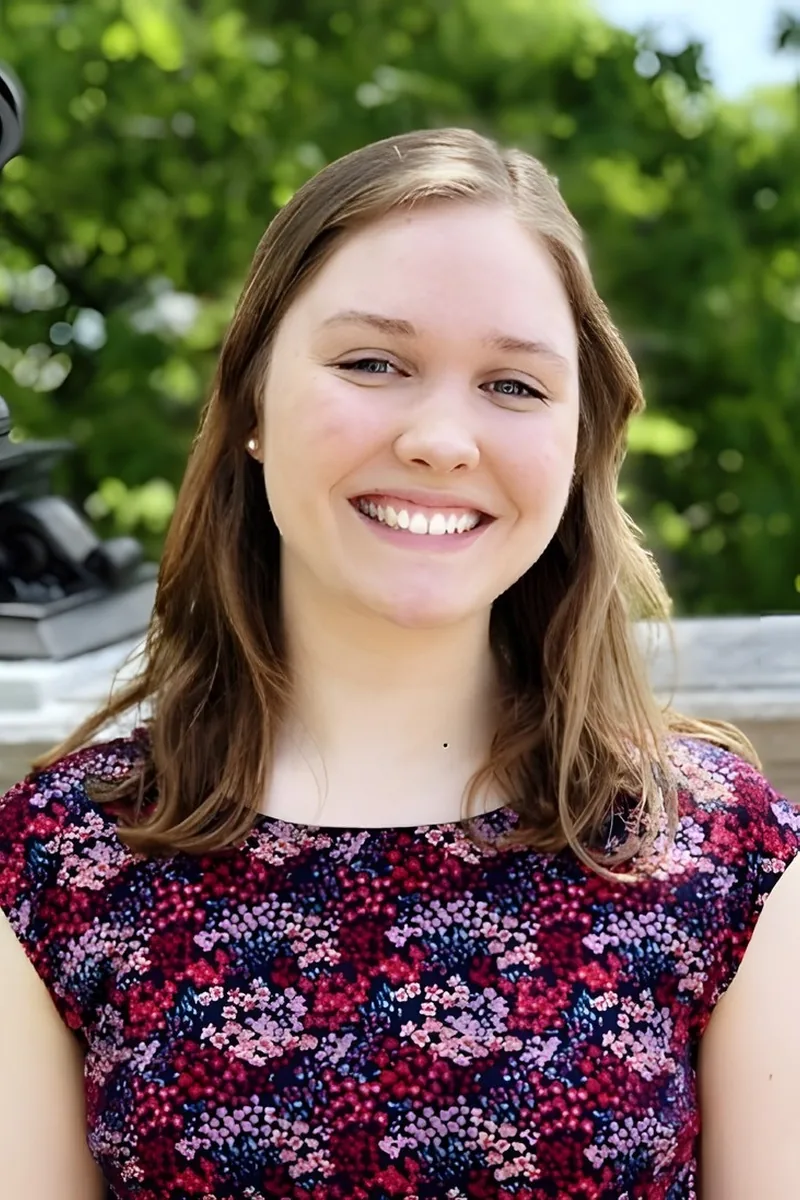
Clare's biopsychology degree required a steady diet of statistics, data analysis, and quantitative reasoning — skills that now inform how she breaks down everything from pre-algebra concepts to calculus problems. She's particularly good at connecting math to the kind of real-world data interpretation she did in research settings, which gives students a concrete reason to care about what they're solving. Rated 5.0 by students, with a 34 ACT to back up her cross-subject range.
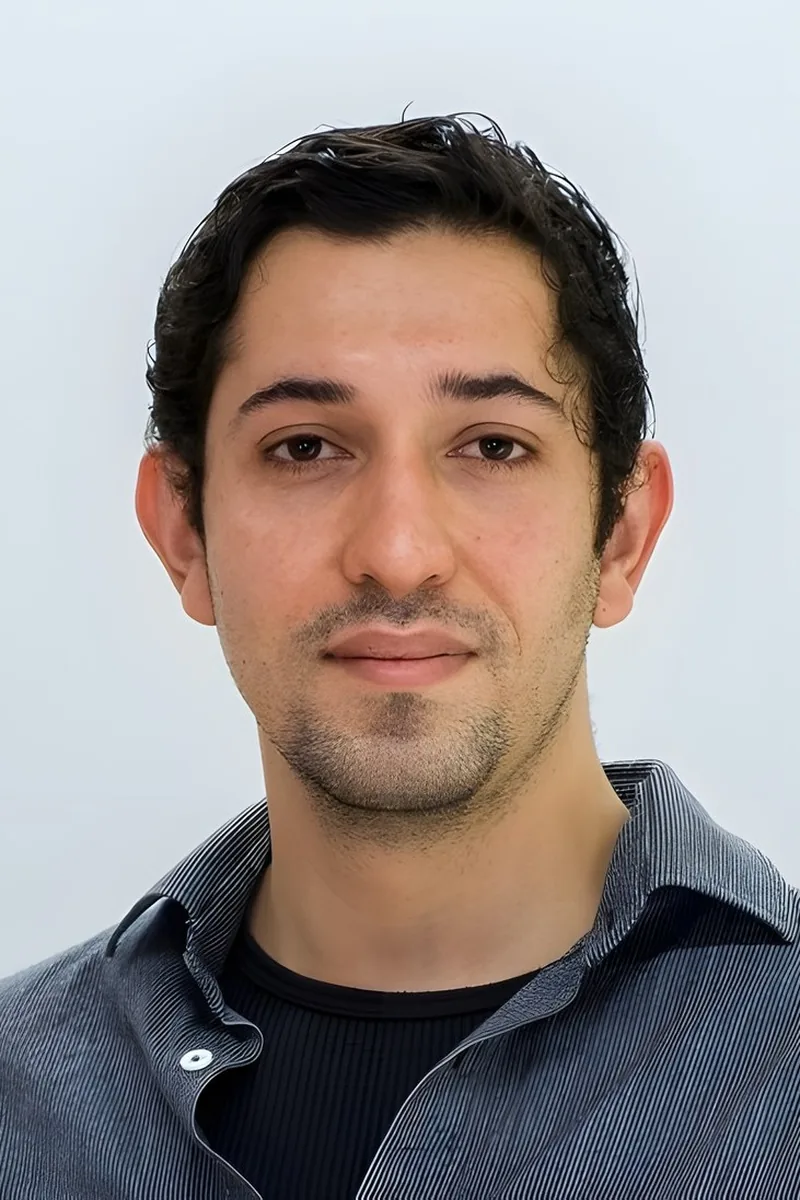
While Esteban's primary expertise lives in the social sciences and languages, he brings the same structured, dialogue-driven approach to math topics like fractions, ratios, and basic algebraic thinking. He breaks problems into smaller reasoning steps and encourages students to explain their logic out loud — a technique drawn from his anthropology training that turns passive number-crunching into active understanding.
From fraction operations in pre-algebra through derivatives in calculus, Andrew covers an unusually wide range of math and knows where students tend to get tripped up at each level. His dual focus on finance and mathematics at Boston College means he's constantly applying quantitative reasoning — and he brings that practical instinct to every problem set.
David approaches math by connecting procedures to the reasoning behind them, whether that's unpacking why cross-multiplication works in proportions or breaking down the logic of order of operations. His teaching background means he's skilled at identifying exactly where a concept stopped making sense and rebuilding from that point.
Jennifer's background in social sciences means she's spent plenty of time with data interpretation, basic statistics, and the quantitative reasoning that underpins research — skills that translate directly into teaching math at the elementary and middle school levels. She breaks down concepts like place value, multi-digit operations, and early equation-solving into clear, manageable steps, rated 4.9 by her students.
Years of teaching remedial reading gave Arielle a sharp eye for where understanding quietly breaks down — a skill that applies directly to math, where a shaky grasp of fractions or order of operations can silently sabotage everything from algebra to word problems. Her English background also means she's especially effective at untangling the language of math questions, teaching students to figure out what a problem is really asking before they start solving. Rated 4.8 by students.
Someone who solves math problems for fun brings a different energy to tutoring than someone who merely teaches procedures. Taylor genuinely enjoys the puzzle-solving side of math and uses that enthusiasm to walk students through concepts like proportional reasoning, equation solving, and number sense in ways that make the logic click.
I'm not tutoring or buried in my textbooks, you will either find me rock climbing at the Triangle Rock Club, playing Ultimate Frisbee, working on my car, or enjoying the great outdoors (beaches, mountains, forests--you name it, I love it). On rainy weekends I enjoy tinkering with computers and old electronics, playing Pokemon, or picking at my guitar.
I am an interdisciplinary educator with an Ed.M. from the Harvard Graduate School of Education and a B.A. from Dartmouth College. My background is primarily in integrated arts learning and museum education and I specialize in visual arts, history and art history, and object-based learning. In all subjects, I take a creative, inquiry-based and learner-centered approach, designing opportunities for each unique individual to meet their learning goals.
I am a recent graduate from a masters program in biostatistics at Columbia University. I received my Bachelor of Arts in biological sciences, with a focus in neurobiology at Northwestern University. In August, I will be starting a doctoral program in biostatistics at NYU. I was a teaching assistant at Columbia University in my department and also have tutored graduate students and undergraduates privately as well. My primary areas of tutoring are math and statistics coursework in addition to math sections on standardized tests such as the GRE and GMAT. I am very passionate about helping students feel more confident and excited about math. In my spare time, I enjoy running, playing piano, and spending time with friends and family.
I am a graduate of Wesleyan University, where I received my Bachelor of Arts in Sociology with High Honors. With eight years of experience working in education, I've tutored students in math, science, history, and English, as well as helped students prepare for standardized tests. I've guided adults towards passing the US Citizenship Exam and taught English in India, where I lived for six months. Whenever I work with a student I personalize the lessons to fit their particular learning style, since I know every student is unique and having the right fit can make all the difference in making learning fun and effective. My strengths are tutoring the social sciences and humanities, as well as making math and standardized tests approachable to students that normally don't like those subjects. In my spare time I like traveling, spending time in the outdoors (climbing & backpacking), meditation, and playing soccer. Next fall I will be beginning my PhD in Education at Harvard University.
I am a rising sophomore at Harvard College and am about to declare as a Mechanical Engineering concentrator, working towards a Bachelor of Science degree. I've always enjoyed sharing my knowledge with my peers and those around me and have done so in both formal and informal settings. I've been a tutor for both Math and Spanish programs in high school and enjoyed the strides I made with students. I am willing to tutor any subject I have a background in, but am strong in mathematics, the sciences, Spanish, history, writing, and ACT prep. I enjoy teaching mathematics most due to the joy I can see in children once they master a topic and can answer even pointed questions meant to stump them, and maybe even put their knowledge to real world use. As a tutor, I like to give a strong foundation to orient my student, and then gradually grant them more freedom and independence until they can feel themselves grasp the concept, pointing out pitfalls or common errors along the way; teachers who used these methods on me always left the most lasting impressions. Outside of my studies, I really enjoy listening to music, both old favorites and new interests, reading classics, and gaming/playing basketball with my friends.
Testimonials
Because the right Math tutor makes all the difference.
Average Session Rating – Based on 3.4M Learner Ratings
Practice Math
Free practice tests, flashcards, and AI tutoring for Math
Other Albany Tutors
Related Math Tutors in Albany
Frequently Asked Questions
Many students in Albany struggle with the transition from memorizing procedures to understanding the underlying concepts—especially when tackling word problems, multi-step equations, and graphing. Others hit a wall with proofs in geometry or feel anxious about math overall. Personalized tutoring helps students move beyond "just getting the answer" to seeing the patterns and connections that make math click.
During an initial session, a tutor will assess your student's current understanding, identify specific gaps or misconceptions, and learn about their learning style and goals. This might involve reviewing recent homework, discussing which topics feel confusing, and working through a problem together to see how your student approaches math. This foundation helps the tutor create a personalized plan tailored to your student's needs.
Many students rush through steps or skip explanations, which leads to lost points and missed learning opportunities. Tutors teach students to organize their work clearly, explain their reasoning at each step, and check their answers using different methods. This builds both better problem-solving habits and the communication skills teachers look for on tests and assignments.
Yes. With 13 school districts across Albany, curricula and textbooks vary—from traditional approaches to standards-based programs. Tutors work with students using their actual coursework and can adapt explanations to match how concepts are taught in their specific classroom. This alignment ensures tutoring reinforces what students are learning in school rather than introducing conflicting methods.
Absolutely. Math anxiety often stems from past struggles or feeling rushed in class—the average student-teacher ratio in Albany is 14.7:1, which means students don't always get one-on-one attention when they need it. Personalized tutoring creates a low-pressure space where students can ask questions, make mistakes safely, and build confidence through small wins. Over time, this shifts their relationship with math from "I can't do this" to "I can figure this out."
Word problems require students to translate real-world situations into mathematical language—a skill that's separate from computation. Tutors teach strategies like identifying key information, drawing diagrams, breaking problems into steps, and checking if answers make sense. With practice and guidance, students learn to see word problems as puzzles to solve rather than confusing obstacles.
Proofs intimidate many students because they require both logical thinking and clear communication. Tutors break down the process—starting with understanding what you're trying to prove, identifying what you already know, and building a logical chain of statements. By working through examples and practicing the structure, students develop confidence in constructing their own proofs and understanding why they work.
Conceptual understanding comes from seeing how different topics relate—like how graphing connects to equations, or how area formulas build on each other. Tutors help students explore these relationships through multiple representations (equations, graphs, tables, real-world examples) so they build a connected web of understanding rather than isolated facts. This deeper comprehension makes new topics easier to learn and helps math feel less like random rules.
Let’s find your perfect tutor
Answer a few quick questions. We’ll recommend the right plan and match you with a top 5% tutor.