Award-Winning College Algebra Tutors
serving St. Louis, MO
College Algebra
Tutors in St. Louis
Private 1-on-1 tutoring, weekly live classes for academic support, test prep & enrichment, practice tests and diagnostics, and more to elevate grades and test scores.
Based on 3.4M Learner Ratings
UniversitiesSchools & Universities
DeliveredHours Delivered
ProficiencyGrowth in Proficiency
Who needs tutoring?
No obligation. Takes ~1 minute.
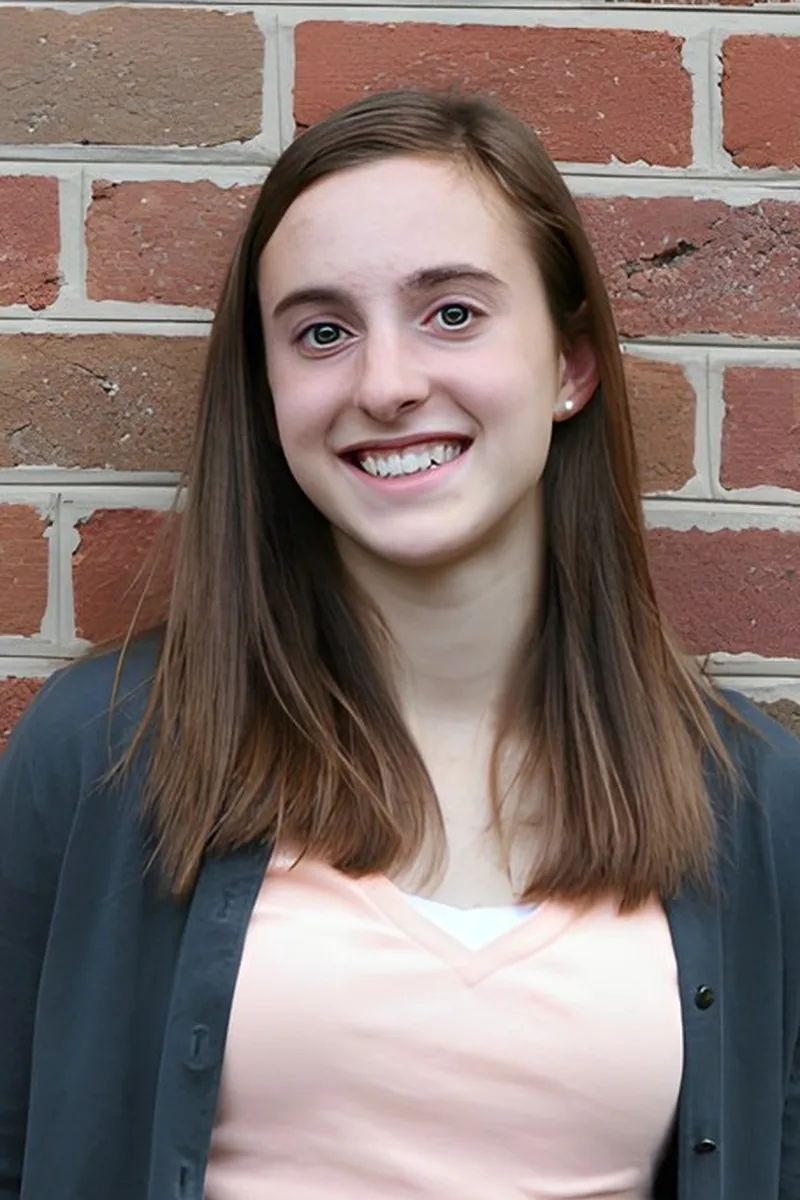
Kathleen's math degree at Washington University means she's currently working through multivariable calculus and beyond, so she can trace a tricky college algebra topic — like why logarithmic rules work the way they do, or how to read a piecewise function's behavior — back to the deeper structure instead of just handing over steps to memorize. Four years of tutoring students across every level from elementary through calculus have given her a sharp instinct for diagnosing exactly which earlier concept is causing a roadblock. Her 35 ACT and 1550 SAT back up the quantitative fluency she brings to every session.

Most college algebra frustration isn't really about the math — it's about not knowing how to organize the pile of intersecting rules for logarithms, rational expressions, or piecewise functions into something that makes sense. Rachel tackles that organizational problem head-on, breaking tangled multi-step problems into a logical sequence where each piece builds on the last. Her 31 ACT and experience across both math and science subjects means the algebraic toolkit stays sharp and connected to real coursework.
I am interested in Physics and Mathematics and working out practical problems from plumbing to electronics. I will someday go back for my Ph.D. in Physics but until then I am looking to grow as an engineer or computer programmer.
Struggling with rational expressions, logarithmic equations, or systems of inequalities in college algebra usually signals a gap somewhere earlier in the chain. John traces those gaps quickly — his math degree means he knows exactly which foundational idea is missing when a student gets stuck on, say, function composition or domain restrictions. That diagnostic instinct keeps sessions efficient and targeted.
I am excited to help anyone who might need it!
Rational expressions, logarithmic equations, and systems of linear equations tend to be the sticking points in college algebra, and Anatoliy approaches each one by first making sure the underlying logic is clear. His science and medical training gave him constant practice manipulating algebraic relationships under pressure, so he knows which shortcuts are trustworthy and which ones create bad habits.
Medical school coursework at UMKC has Jacob solving dosage calculations, pharmacokinetic models, and concentration equations that all trace back to the same algebraic mechanics — manipulating rational expressions, working with exponential and logarithmic functions, and solving multi-step equations. He approaches college algebra problems by slowing down at the exact step where the logic gets murky, rebuilding the reasoning before moving forward. His top-3% high school class rank points to the quantitative instincts behind that methodical style.
Most college algebra students don't struggle with the math itself — they struggle with keeping track of which rule applies when, especially once logarithmic properties, rational expressions, and function notation start overlapping in the same problem. Anita tackles that organizational piece head-on, teaching students to sort problems by structure before jumping into steps, so each new topic slots into a framework instead of floating loose.
The jump to college algebra is often less about new content and more about speed and rigor — professors expect fluency with polynomial division, rational expressions, and function transformations that high school courses only introduced. Jordan tackles these topics by tying abstract manipulation back to real applications he encountered in his mechanical engineering coursework, which makes the "why" behind each technique click.
Mechanical engineering gave Matt a daily relationship with the algebraic tools that college algebra courses formalize — solving systems, working with functions, and untangling expressions that show up in everything from structural load calculations to thermodynamic models. He's especially good at walking through problems like rational equations or quadratic systems by mapping out each step in plain, mechanical terms until the logic clicks. Rated 5.0 by students.
Karl studied math and physics at Iowa State University, which means he didn't just pass through college algebra — he built on it every semester through differential equations and Calculus III. That depth lets him trace a tricky logarithmic equation or rational expression back to the underlying principle instead of just walking through the steps, giving students a framework that holds up when problems get unfamiliar.
A PhD in computer science means Samantha has spent years working with the algebraic structures that underpin algorithm design — recursive functions, polynomial complexity analysis, and discrete mathematical proofs all demand fluency with the exact manipulation skills college algebra courses test. She breaks down topics like logarithmic equations and systems of inequalities by connecting them to the computational logic she uses in her research, making abstract procedures feel purposeful. Rated 5.0 by students.
Eileen's neuroscience coursework at Vanderbilt means she regularly uses logarithmic, exponential, and polynomial functions in applied contexts — exactly the material that trips students up in college algebra. She walks through problems by connecting abstract notation to concrete meaning, which makes topics like rational expressions and systems of equations far less intimidating.
Engineering coursework at Cornell demanded fluency in polynomial functions, logarithmic equations, and systems of inequalities — all core college algebra topics Kelly uses regularly. Her PhD research also required constant quantitative modeling, so she teaches these concepts with real applications in mind rather than as abstract exercises. Rated 5.0 by students.
Studying anthropology means learning to find hidden structure in messy, unfamiliar systems — a habit Rebecca brings directly to college algebra topics like logarithmic properties and rational expressions, where students often feel lost in a tangle of rules. Her 1550 SAT score backs up serious quantitative skill, and she's particularly good at slowing down multi-step problems and making each algebraic move feel deliberate rather than mysterious.
The jump to college algebra trips up students who never fully internalized why function transformations, rational expressions, or logarithmic rules work the way they do. Carter tackles these gaps head-on, drawing on the rigorous math training he got through his Brown economics program. He holds a 5.0 client rating.
A mathematics-economics degree from UCLA means Vinay didn't just pass college algebra — he relied on it daily for econometric modeling and quantitative analysis. He digs into the concepts that stall most college students, like piecewise functions, logarithmic equations, and systems of inequalities, connecting each one to a bigger mathematical picture. Rated 5.0 by students, he brings clarity to a course that often feels like a gatekeeping requirement.
Polynomial division, rational expressions, and logarithmic equations all demand a level of algebraic fluency that many college students haven't fully locked in from high school. Nima tackles these gaps directly, walking through the underlying logic of each manipulation so the steps make sense instead of feeling like arbitrary symbol-shuffling.
Medical school admissions required Samantha to ace quantitative reasoning long before she started her MD — her perfect 1600 SAT and 36 ACT came from the kind of algebraic fluency that makes polynomial operations, inequalities, and function transformations feel automatic rather than formulaic. Her global health background at Duke also means she's comfortable translating abstract algebra into applied contexts, like modeling disease spread with exponential functions or interpreting data trends through logarithmic scales. Rated 5.0 by students.
A Yale graduate who went on to earn her Master's in Education from Columbia, Victoria brings both mathematical depth and real teaching skill to college algebra topics like polynomial functions, logarithmic equations, and systems of inequalities. She's taught math across every level from first grade through calculus, which means she can quickly identify where a gap in foundational thinking is causing trouble in a college-level course.
Rational expressions, logarithmic equations, and systems of inequalities all land in college algebra at once, and the pace leaves little room for confusion to linger. Daniel tackles these topics by walking through the reasoning behind each step rather than just demonstrating procedures — an instinct he developed as an applied math major who had to earn his understanding the hard way.
Mechanical and aerospace engineering at Princeton means Matthew doesn't just remember college algebra — he's actively building on it every semester, using polynomial models, systems of equations, and function analysis as the foundation for his coursework in dynamics and thermodynamics. His teaching style is deliberate: walk through a problem step by step, then hand over a harder one and let the student work through the logic with guidance. A 34 ACT backs up the quantitative instincts behind that approach.
Jean's background is in Latin American history and law, not mathematics — but her 1500 SAT and years of tutoring pre-algebra through calculus mean she's built a reliable toolkit for walking students through the polynomial operations, function behavior, and equation-solving that define a college algebra course. She's particularly effective at translating algebraic notation into plain, structured language, a skill sharpened by legal training that demands breaking dense material into logical steps.
Zac scored a 34 on the ACT, which means he's sharp with the algebraic reasoning that college algebra courses hammer — solving systems, working through polynomial and rational expressions, and making sense of function behavior. His Human and Organizational Development major at Vanderbilt doesn't scream math, but it's built on quantitative problem-solving frameworks, and he brings that structured, break-it-into-pieces thinking to every equation he walks through. Rated 4.9 by students.
Testimonials
Because the right College Algebra tutor makes all the difference.
Average Session Rating – Based on 3.4M Learner Ratings
Practice College Algebra
Free practice tests, flashcards, and AI tutoring for College Algebra
Nearby College Algebra Tutors
Other St. Louis Tutors
Related Math Tutors in St. Louis
Frequently Asked Questions
College Algebra requires a shift from memorizing procedures to understanding the concepts behind them—many students struggle with this transition. Common pain points include word problems (translating real situations into equations), multi-step equations, graphing functions, and understanding why certain methods work. Personalized tutoring helps students move beyond "just getting the answer" to seeing the patterns and connections that make College Algebra click.
Your first session is about understanding where you are and where you want to go. A tutor will assess your current strengths, identify specific topics causing confusion, and learn about your learning style. Together, you'll create a personalized plan focused on your goals—whether that's mastering a particular concept, improving your grade, or building confidence before an exam.
Showing work isn't just about getting points on a test—it reveals your thinking process and helps identify exactly where confusion happens. A tutor can spot whether you're struggling with the concept itself, making careless errors, or misunderstanding a specific step. This visibility makes it easier to target exactly what needs to improve rather than reteaching everything from scratch.
Word problems require translating English into mathematical language—a skill that takes practice and strategy. Tutors teach problem-solving frameworks: identifying what you know, what you're solving for, choosing the right equation type, and checking if your answer makes sense. With personalized instruction, you'll build confidence in breaking down complex problems into manageable steps.
Math anxiety often stems from past negative experiences or feeling rushed in a classroom setting. Personalized 1-on-1 instruction removes that pressure—you work at your own pace, ask questions without judgment, and build confidence through small wins. A tutor can also help you recognize that struggling with a concept doesn't mean you're "bad at math"; it means you need a different explanation or approach.
Yes. St. Louis schools use different curricula and teaching methods, and Varsity Tutors connects you with tutors who understand these variations. Whether your course emphasizes graphical, numerical, or algebraic approaches, a tutor familiar with your specific textbook and course structure can reinforce what you're learning in class and fill gaps in understanding.
Graphing connects abstract equations to visual patterns—and that connection is key to understanding functions deeply. Tutors help you recognize how changes in an equation affect the graph, understand transformations, and develop strategies for sketching functions quickly. With practice and feedback, graphing shifts from a tedious process to a tool that actually clarifies your understanding.
Progress depends on where you're starting and how consistently you work with a tutor. Many students see confidence and grade improvements within 4-6 weeks of regular sessions, especially when they practice between tutoring appointments. The key is addressing specific gaps rather than general review—personalized instruction targets exactly what's holding you back.
Let’s find your perfect tutor
Answer a few quick questions. We’ll recommend the right plan and match you with a top 5% tutor.