Award-Winning ACT Reading Tutors
serving St. Louis, MO
ACT Reading
Tutors in St. Louis
Private 1-on-1 tutoring, weekly live classes for academic support, test prep & enrichment, practice tests and diagnostics, and more to elevate grades and test scores.
Based on 3.4M Learner Ratings
UniversitiesSchools & Universities
DeliveredHours Delivered
ProficiencyGrowth in Proficiency
Who needs tutoring?
No obligation. Takes ~1 minute.
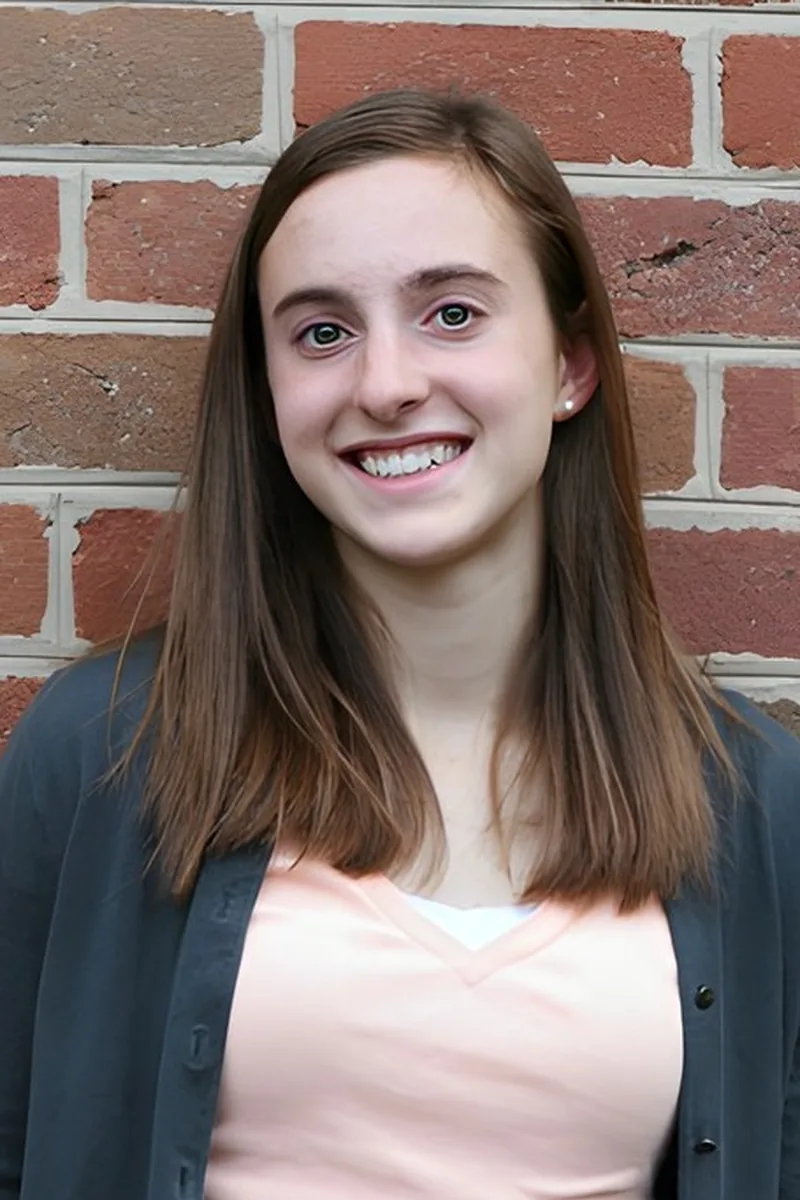
I am an undergraduate at Washington University, and I grew up in Columbus, Ohio. Math has always been one of my favorite subjects. I love Pre-algebra, Calculus, Linear Algebra and everything in between! I have tutored for about four years and have worked with students of all ages. Most students come to me for Math, but I have also worked with students on SAT and ACT test prep, Statistics and Physics. Everyone learns in a slightly different way, and I love figuring out the best way to teach something to people individually and dig down to what questions they really need to have answered to understand the material. In my spare time, I like to go on long bike rides and explore St. Louis's restaurants. I also love baking, playing with dogs and cats, watching movies with my friends and playing soccer.

Most students read ACT passages start to finish and then scramble to answer questions — Sean teaches a different approach, training students to identify what each question actually asks before deciding how much of the passage to re-read. This kind of strategic reading is especially critical on the dual-passage comparison questions, where time management separates a 28 from a 34. His own 34 composite came partly from mastering exactly this discipline.
I am a junior pre-med student studying health management at Saint Louis University. I began tutoring my peers in high school and continued my passion for teaching throughout college. I tutor high school students studying for the SAT and ACT. I also tutor math, science, and spanish. I recognize that every student has a different style of learning and I plan each lesson according to the student. My goal is to help my students achieve their goals and realize their potential.
I am excited to help anyone who might need it!
The ACT Reading section isn't really about reading — it's about strategic information retrieval under a brutal time constraint. John teaches students to identify question types, locate evidence quickly, and avoid the traps embedded in answer choices. Rated 35 on the ACT himself, he approaches each passage type (prose fiction, social science, humanities, natural science) with a distinct strategy.
Speed is the defining challenge of ACT Reading: four passages, forty questions, thirty-five minutes. Samuel teaches a deliberate passage-attack strategy — how to skim for structure, locate evidence lines, and eliminate wrong answers without second-guessing — that turns the time crunch from an obstacle into a manageable routine.
Speed is the real challenge on ACT Reading — four passages in 35 minutes leaves almost no room for re-reading. Jacob, who earned a 34 composite, teaches a passage-mapping technique that identifies the author's main claim and key evidence on the first pass, so students can answer inference and detail questions without hunting through paragraphs again.
Reading comprehension on the ACT is really about knowing what the question is actually asking — whether it wants a direct detail, an inference, or the author's tone. Joy spent years teaching English as a second language in Ecuador, which sharpened her ability to unpack how texts are structured and show students exactly where answers hide in dense passages.
The ACT Reading section rewards students who can quickly identify an author's purpose, trace arguments across paragraphs, and distinguish between stated and implied information — all under tight time pressure. Katherine scored a 33 ACT composite and teaches a passage-mapping strategy that cuts down on re-reading and keeps students moving through all four passages with time to spare.
Most students lose points on ACT Reading not because they can't comprehend the passages but because they spend too long re-reading. Parag, who earned a 32 ACT composite, teaches an active-reading strategy — annotating for main claims and tone shifts — that keeps students moving through all four passages with time to spare.
The ACT Reading section isn't about being a fast reader — it's about knowing which details to hunt for and which to skip. Vijaya teaches a strategic approach to each passage type, from prose fiction to natural science, that turns 35 minutes into more than enough time. Her 34 ACT composite and 5.0 rating speak to how well that approach transfers to her students.
Two years of teaching seventh-grade reading gave Kristen daily practice in showing students how to pull meaning from complex texts quickly — the exact skill the ACT Reading section tests across its four passage types. She teaches a passage-mapping approach that keeps students from rereading entire paragraphs when answering detail and inference questions. With a 33 ACT composite and a personal reading habit of fifty books a year, she brings both test expertise and genuine literacy depth.
I am currently working towards an Aerospace Engineering degree at the University of Colorado, Boulder. In high school, I worked with 5th grade students tutoring math. Beyond that, I was always avaliable to help my classmates learn topics that I may have understood better at the time. Overall, math and science courses are my favorite to help people with because I enjoy those courses myself and think the knowledge is not hard to learn if given the right teacher and enough time. In teaching, I like to understand the level of comprehension the student has first before just going in and telling them what he/she should do. It is more effective to learn how to teach yourself the knowledge than to just be able to regurgitate it onto a test. Other than academics, I like playing basketball, video games, and just hanging out and messing around with friends.
The ACT Reading section isn't really about reading — it's about finding answers fast across four dense passages in 35 minutes. Megan, who scored a 33 ACT composite, teaches a strategic approach to passage types (prose fiction, social science, humanities, natural science) that prioritizes evidence location over deep analysis. Rated 5.0 by students, she breaks down how to eliminate wrong answers even when two choices look equally plausible.
The ACT Reading section gives students just 35 minutes to process four dense passages, which means the real skill isn't reading carefully — it's reading strategically. Taylor, who earned a 33 ACT composite, teaches a passage-mapping approach that trains students to identify main arguments and locate supporting details quickly. Her method turns a section that feels rushed into one that feels structured and predictable.
I am a high school graduate from The Pembroke Hill School in Kansas City, Missouri and currently studying at Washington University in St. Louis in the class of 2024. Through my high school's Spanish program, I tutored students just two years below my level of Spanish. And through our debate program, for my sophomore, junior, and senior years, I mentored students new to the activity. I have always seen helping other students as an opportunity of growth, not only for that student, but for myself as well. I feel that I am qualified to tutor all middle and most high school levels of math, chemistry, and Spanish. As for standardized tests, I am most oriented towards the ACT. My favorite subject to learn and tutor is Math because it allows the student an opportunity to understand a concept much deeper than the surface. And that is my focus for when I learn a concept or teach a concept: understanding not only the what but the how and why as well.
Pacing is the hidden obstacle on ACT Reading: four passages, ten questions each, and only 35 minutes to get through them all. Nik, who earned a 32 ACT composite, teaches a passage-triage method that identifies which question types to answer first and how to skim for key claims without getting lost in details. Rated 4.9 by students, he turns a section many find stressful into a predictable, manageable routine.
I am a recent graduate of the University of Colorado at Boulder. I am a Colorado native who enjoys rock climbing and nature. I work currently for a large international engineering consulting company and specialize in water engineering.
Speed is usually what kills ACT Reading scores — students understand the passages but run out of time toggling between the text and forty questions. Laura teaches a passage-mapping strategy that cuts down on re-reading, so students can tackle prose fiction, social science, and natural science passages within the time limit. Her 32 ACT composite and 5.0 rating speak to how well the approach works.
The ACT Reading section isn't about being a fast reader — it's about knowing where to look and how to eliminate answer choices efficiently across four dense passages in 35 minutes. Zhenrui, who earned a 36 composite, breaks down each passage type (prose fiction, social science, humanities, natural science) and teaches the specific retrieval strategies that keep students from second-guessing themselves.
The ACT Reading section punishes students who read passively — four passages in 35 minutes requires a deliberate strategy for extracting main ideas and locating evidence fast. David, who scored a 36 composite, teaches a structured approach to each passage type so students spend less time rereading and more time answering confidently.
I am an aspiring applied mathematician, with particular interest in image processing and climate science. I graduated in May 2017 from Washington University in St. Louis with a bachelor's in physics and mathematics, and am beginning a PhD program in September 2017 at the University of Chicago in Computational and Applied Mathematics. I've tutored introductory physics students for three years and enjoyed it thoroughly, as a chance to help other students while revisiting fundamental concepts to enhance my own knowledge. I'm eager to continue reaching out and helping students of math and physics to succeed and, furthermore, to appreciate the beauty and power of these subjects.
I'm a sophomore at Vanderbilt University, majoring in Physics and Classics and minoring in Mathematics and Computer Science. I'm qualified to teach a wide variety of subjects, but prefer to focus on the fields I'm studying in school listed above; I have a passion for those areas that I want to share with everyone, no matter the education level or confidence. I believe that no one is "bad at math," but many people haven't been taught math and science concepts in a way that matches how they best learn. As a result, I try to tailor my teaching style to be the best it can be for each individual student. With regard to math and physics, I myself prefer a physical, graphical understanding of different concepts, so I do best at explaining what seemingly abstract concepts actually mean in the real world and how they act on a graph.
I am a Yale graduate with over 8 years experience tutoring students from a variety of backgrounds. I recently graduated from the Yale School of Public Health with a MPH concentrating in Epidemiology and Global Health. I also received my B.S. from Yale with a double major in Molecular, Cellular, and Developmental Biology and French. I have experience both leading group classes and working with students one on one. I will respond to a student's strengths, weaknesses, and learning style in order to help them succeed and make the most of our time together. I earned a perfect score of 36 on the ACT, 2280 on the SAT, and qualified as a National Merit Scholar on the PSAT. I look forward to working with you!
The ACT Reading section gives students just 35 minutes for four dense passages — a pace that rewards strategy as much as comprehension. Kerr teaches a passage-mapping technique that isolates each paragraph's purpose so students can answer detail and inference questions without rereading entire sections. He earned a 36 ACT composite and brings that same efficiency-minded approach to every practice set.
Most ACT Reading mistakes come from running out of time, not from a lack of comprehension. Sharan, who earned a 36 composite, teaches a passage-attack strategy that prioritizes locating evidence over re-reading entire paragraphs. She walks through each question type — main idea, inference, vocabulary in context — so students know exactly what the test is asking before they even look at the answer choices.
Mechanical engineering coursework at Harvard means Christopher reads the way the ACT Reading section rewards — extracting key claims from dense technical material fast and ignoring everything that doesn't answer the question in front of him. He applies that same efficiency to all four passage types, teaching students to map an author's argument structure in the first read so that inference and detail questions become quick lookups rather than guesswork. His 35 ACT composite and 4.8 student rating back up the approach.
I am an undergraduate at Washington University in St. Louis majoring in Philosophy-Neuroscience-Psychology on the Premed track. I have two years worth of experience peer tutoring. I feel the most confident tutoring ACT preparation. During my time as a high school student, I worked from an ACT score of 25 to a 36 and developed many effective strategies that I will tailor to the students I tutor and understand the ins and outs of the test. In addition to working with high school peers, I have also enjoyed teaching private piano and violin lessons for elementary students. Helping people knock down their roadblocks is a passion of mine. Standardized tests and basic education may feel removed from our passions, but developing those foundations are essential for opening up opportunities and becoming capable of taking on our pursuits.
A government major at Harvard, Richard spent his coursework doing exactly what the ACT Reading section rewards: rapidly digesting competing political arguments, identifying an author's central claim, and distinguishing stated evidence from implied conclusions — skills that map directly onto the social science and humanities passages. His perfect 36 ACT composite means he's navigated every passage type under real testing pressure and knows which time-management habits actually hold up when the clock is running.
Most students treat ACT Reading as a speed test, but Ilesh reframes it as a precision exercise: knowing what the question actually asks before hunting for evidence in the passage. His 36 composite came partly from a disciplined passage-mapping strategy that he now teaches students to replicate across all four prose genres the section throws at them.
Most ACT Reading mistakes come from spending too long on passages and rushing through questions — or the reverse. Logan, who earned a 36 composite, teaches a deliberate passage-mapping technique that lets students locate evidence for inference and detail questions without rereading entire paragraphs. His communication background also sharpens how students interpret tone and author's-purpose questions.
Testimonials
Because the right ACT Reading tutor makes all the difference.
Average Session Rating – Based on 3.4M Learner Ratings
Practice ACT Reading
Free practice tests, flashcards, and AI tutoring for ACT Reading
Nearby ACT Reading Tutors
Other St. Louis Tutors
Related Test Prep Tutors in St. Louis
Frequently Asked Questions
Score improvement depends on your starting point and commitment level, but most students see meaningful gains within 8-12 weeks of focused practice. Students who work with tutors on reading comprehension strategies, time management, and targeted practice typically improve by 2-4 points on the ACT Reading section. The key is identifying your specific weak areas—whether that's vocabulary, inference questions, or pacing—and addressing them systematically.
The ACT Reading section requires reading four passages and answering 40 questions in just 35 minutes, which leaves less than 9 minutes per passage. Many students either rush through passages and miss details, or spend too much time reading and run out of time for later questions. A tutor can help you develop a personalized pacing strategy, teach you how to identify key information quickly, and practice triage techniques for managing your time effectively.
ACT Reading questions fall into several categories: detail/fact questions (what did the passage say), inference questions (what can you conclude), vocabulary-in-context questions, and purpose/tone questions. Each question type requires a slightly different approach—detail questions reward careful reading, while inference questions test your ability to read between the lines. Understanding these formats and practicing each type helps you answer more efficiently and accurately.
The best way is to take a full-length practice test under timed conditions, then review your answers by question type and passage genre. You might discover you're strong on fiction but weak on science passages, or that you consistently miss inference questions. Varsity Tutors connects you with tutors who can analyze your practice test results, identify patterns in your mistakes, and create a targeted study plan focused on your specific challenges.
Consistent practice is more effective than cramming—aim for 3-4 focused study sessions per week, with each session lasting 45-60 minutes. This might include timed passage practice, review of missed questions, and strategy work on your weak areas. For students in St. Louis preparing for test day, a tutor can help you build a realistic study schedule that fits your school commitments and ensures you're making steady progress.
Test anxiety often stems from feeling unprepared or unsure of your strategy. When you practice the same question types repeatedly, understand the test format inside and out, and have a solid pacing plan, confidence naturally builds. Tutors help by creating a structured study plan, giving you realistic feedback on your progress, and teaching you to manage time pressure so you feel more in control on test day.
Your first session typically includes a diagnostic assessment to understand your current reading level, test-taking habits, and specific challenges. The tutor will review your recent practice test results (if available), discuss your target score and timeline, and explain a personalized study plan tailored to your needs. This foundation helps ensure every future session is focused and productive.
Yes—students often find science and historical passages more challenging than fiction and social studies passages because they contain unfamiliar vocabulary and concepts. However, difficulty varies by student; someone strong in STEM might excel on science passages but struggle with literary analysis. A tutor can help you practice your weaker passage types and develop strategies for tackling unfamiliar content without getting bogged down in details.
Let’s find your perfect tutor
Answer a few quick questions. We’ll recommend the right plan and match you with a top 5% tutor.