Award-Winning College Chemistry Tutors
serving St. Louis, MO
College Chemistry
Tutors in St. Louis
Private 1-on-1 tutoring, weekly live classes for academic support, test prep & enrichment, practice tests and diagnostics, and more to elevate grades and test scores.
Based on 3.4M Learner Ratings
UniversitiesSchools & Universities
DeliveredHours Delivered
ProficiencyGrowth in Proficiency
Who needs tutoring?
No obligation. Takes ~1 minute.

When college chemistry students feel overwhelmed, it's usually because topics like gas laws, equilibrium, and stoichiometry are piling up faster than they can organize the connections between them — and untangling that clutter is where Rachel excels. Her science background across biology, anatomy, and physiology means she's applied gen chem principles in multiple contexts, so she can show how a concept like acid-base behavior or molecular polarity actually functions beyond the textbook chapter it first appears in.
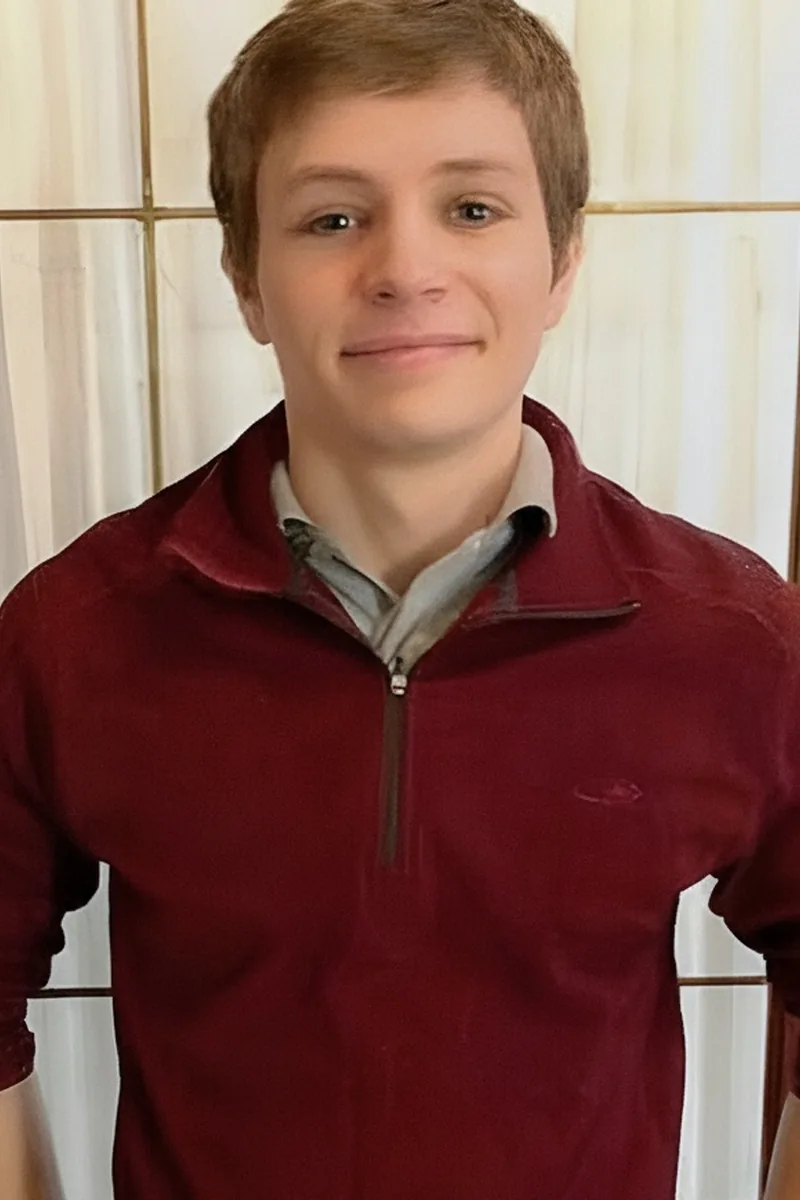
Organic mechanisms, equilibrium calculations, thermodynamic cycles — Jacob built his entire degree around these topics, earning a BS in Chemistry with a biochemistry emphasis from Missouri State. He spent his final semester tutoring chemistry online and found it was the most rewarding work he'd done, which shows in a perfect 5.0 client rating.
I am excited to help anyone who might need it!
Organic reaction mechanisms, thermodynamic state functions, equilibrium calculations — college chemistry asks students to juggle quantitative rigor and conceptual depth at the same time. Anatoliy's medical training required mastering these topics under pressure, and he brings that practical familiarity to sessions. He's particularly good at unpacking acid-base chemistry and electrochemistry, where the math and the intuition need to work together.
The jump from general chemistry to organic or analytical chem often catches college students off guard because memorizing reactions no longer works — you need to understand electron behavior. Megan unpacks mechanisms and equilibrium concepts by connecting them to the physical intuition students already have from gen chem. She draws on her broad science background across biology, physics, and chemistry to show where these ideas intersect.
College chemistry ramps up fast, and Sidney remembers exactly where it gets hard — thermodynamics problems that require integrating multiple concepts, or kinetics questions where the math suddenly matters more than intuition. Her chemical and biomolecular engineering background means she's tackled gen chem, organic, and physical chemistry at a level most tutors haven't.
Tackling college-level chemistry means juggling thermodynamics, kinetics, and equilibrium all in the same problem set. Brittany was employed at the University of Pennsylvania's Tutoring Center specifically for General Chemistry I and II, where she worked with both undergraduates encountering the material for the first time and graduate students brushing up on fundamentals. That range sharpened her ability to adjust explanations to any level of preparation.
Biochemistry and cell biology coursework at the undergraduate level, followed by Duke medical school, means Tammy has run the full gauntlet of college chemistry — from gen chem fundamentals like electron configurations and VSEPR theory through the organic and biochemical applications that make those foundations matter. She teaches the early material with an eye toward what's coming next, so students aren't just surviving gen chem but actually building fluency they'll use in later courses. Rated 5.0 by students.
Tackling college chemistry topics like thermodynamics, kinetics, and electrochemistry is second nature for Greg, whose chemical engineering major at Vanderbilt requires him to apply these concepts in advanced contexts every semester. He breaks down intimidating derivations and multi-step problems by connecting them to the underlying physical intuition rather than treating each formula as something to memorize.
Engineering coursework at Harvard means Christopher regularly uses chemistry concepts like thermodynamics, equilibrium, and reaction kinetics in applied settings. He teaches college chemistry by connecting abstract ideas — say, Gibbs free energy or electrochemical cells — to tangible problems, making the material easier to internalize before exams.
Dual-majoring in biomedical and chemical engineering at Vanderbilt means William encounters gen chem concepts like reaction thermodynamics, equilibrium, and stoichiometry not as isolated textbook chapters but as tools he actively uses in engineering coursework — which gives him a sharp sense of what "good enough" understanding looks like versus what actually holds up under pressure. He scored a 5 on the AP Chemistry exam and now tackles college chemistry by connecting the molecular-level reasoning to the quantitative problem-solving, so students see why the math works instead of just memorizing setups. Rated 4.8 by students.
Cognitive Studies at Vanderbilt gave Vy an unusual angle on college chemistry — she understands how students actually learn and retain dense, concept-heavy material like electron configurations, equilibrium shifts, and thermodynamic laws, not just the content itself. She uses that awareness to structure explanations around how the brain organizes new information, which makes a real difference when a student is drowning in a fast-paced gen chem course. Holds a 5.0 rating.
MIT's general chemistry sequence is notoriously fast — Vania not only survived it but tutored other students through it via the university's Seminar XL and Tutorial Services Room programs, where she got fluent in the exact places students stall out on topics like thermochemistry, equilibrium, and electron configuration. Her mechanical engineering training means she thinks about chemistry problems quantitatively, tracing how molecular-level behavior connects to the math rather than treating equations and concepts as separate tasks. Rated 5.0 by students.
Having scored a 36 on the ACT and taught honors chemistry alongside AP-level math and statistics, Ethan brings a quantitative sharpness to college chemistry that's especially useful when students hit the calculation-dense stretches — gas law problems, enthalpy calculations, solution stoichiometry. His environmental science background also means he can ground abstract topics like chemical kinetics and equilibrium in real-world systems where those principles visibly play out. Rated 5.0 by students.
Balancing redox equations, predicting reaction spontaneity with Gibbs free energy, working through equilibrium problems — these are the topics that trip up most college chemistry students. Laura tackles them daily as a biology major at WashU, where the pre-med chemistry sequence demands real fluency with thermodynamics, kinetics, and acid-base chemistry. Rated 5.0 by students, she breaks down quantitative problems into clear, logical steps.
Between a biochemistry degree and ongoing work in biochemical laboratories, Andrew has used gen chem concepts like reaction thermodynamics, molecular bonding, and acid-base chemistry as everyday tools — not just exam material he learned and forgot. He teaches college chemistry by grounding abstract ideas in the lab contexts where they actually behave, so topics like equilibrium constants and enthalpy changes carry physical meaning rather than just numerical answers. Rated 4.9 by students.
Though political science was her major at the University of Chicago, Asta's tutoring work across both chemistry and quantitative subjects means she's spent real time breaking down the conceptual hurdles in gen chem — balancing equations, working through mole conversions, and making sense of reaction types. Her 5.0 rating speaks to an approach that's honest about meeting the material on its own terms rather than pretending expertise she doesn't have, which students in a tough prerequisite course tend to trust more, not less.
Between his physics training and years of hands-on biochemistry research, Matthew tackles college chemistry from both the theoretical and applied sides. He's especially effective with thermodynamics, molecular orbital theory, and kinetics — topics where students often struggle to bridge lecture material and problem sets. His lab experience at Columbia gives him concrete examples that make abstract concepts like enthalpy and entropy click.
Testimonials
Because the right College Chemistry tutor makes all the difference.
Average Session Rating – Based on 3.4M Learner Ratings
Nearby College Chemistry Tutors
Other St. Louis Tutors
Related Science Tutors in St. Louis
Frequently Asked Questions
College Chemistry requires mastering both conceptual understanding and problem-solving skills—students often struggle with balancing equations, unit conversions, and visualizing molecular structures that are impossible to see with the naked eye. Many students also find the leap from high school chemistry challenging because the pace accelerates and the math becomes more integral to success. Personalized tutoring helps bridge these gaps by breaking down abstract concepts into concrete explanations and building confidence with practice problems.
Your first session is about understanding where you are and where you want to go. A tutor will assess your current grasp of key concepts, identify specific problem areas (like stoichiometry or thermodynamics), and learn about your learning style and goals—whether that's improving your grade, preparing for an exam, or building a stronger foundation. From there, they'll create a personalized plan tailored to your needs and schedule follow-up sessions accordingly.
Memorization doesn't work for College Chemistry—you need to understand the 'why' behind reactions, bonding, and calculations to apply concepts to new problems. Expert tutors focus on building conceptual understanding by connecting theory to real-world applications, using visualizations to explain molecular behavior, and walking you through the reasoning behind problem-solving steps. This approach not only improves your exam performance but also develops the scientific thinking skills you'll need in advanced courses and beyond.
Yes—tutoring can significantly strengthen your lab skills and understanding. Tutors can help you prepare for lab sessions by reviewing experimental procedures, explaining the scientific method behind each experiment, and clarifying how lab results connect to lecture concepts. They can also help you analyze data, write lab reports, and troubleshoot when your results don't match expectations, turning lab work into a deeper learning experience rather than just a grade.
Most students notice improvement within 3-4 sessions as they gain clarity on difficult concepts and develop better problem-solving strategies. However, the timeline depends on your starting point, the specific topics you're struggling with, and how consistently you practice between sessions. Regular tutoring combined with active studying—like practice problems and spaced repetition—accelerates progress and helps concepts stick long-term.
Varsity Tutors connects you with expert tutors who have strong backgrounds in chemistry—many hold degrees in chemistry, chemical engineering, or related fields, and many have experience teaching or tutoring at the college level. All tutors are vetted for subject expertise and teaching ability, ensuring you get someone who not only knows chemistry deeply but can explain it clearly and adapt to your learning style.
Balancing equations and stoichiometry are foundational skills that unlock success in College Chemistry, but many students struggle because they treat them as pure memorization rather than logical problem-solving. A tutor breaks down the systematic approach—showing you how to identify atoms, track coefficients, and use stoichiometry to solve real problems step-by-step. With guided practice and feedback, you'll develop the intuition to tackle these problems confidently on exams.
Studying alone often means repeating the same mistakes or getting stuck without knowing how to move forward—personalized instruction gives you immediate feedback, targeted explanations, and accountability. A tutor can identify gaps in your understanding that you might miss, adapt explanations to your learning style, and keep you focused on the concepts that matter most for your grade and future success. For students in St. Louis working toward chemistry proficiency, this personalized approach typically leads to faster improvement than solo studying.
Let’s find your perfect tutor
Answer a few quick questions. We’ll recommend the right plan and match you with a top 5% tutor.