Award-Winning College Physics Tutors
serving St. Louis, MO
College Physics
Tutors in St. Louis
Private 1-on-1 tutoring, weekly live classes for academic support, test prep & enrichment, practice tests and diagnostics, and more to elevate grades and test scores.
Based on 3.4M Learner Ratings
UniversitiesSchools & Universities
DeliveredHours Delivered
ProficiencyGrowth in Proficiency
Who needs tutoring?
No obligation. Takes ~1 minute.
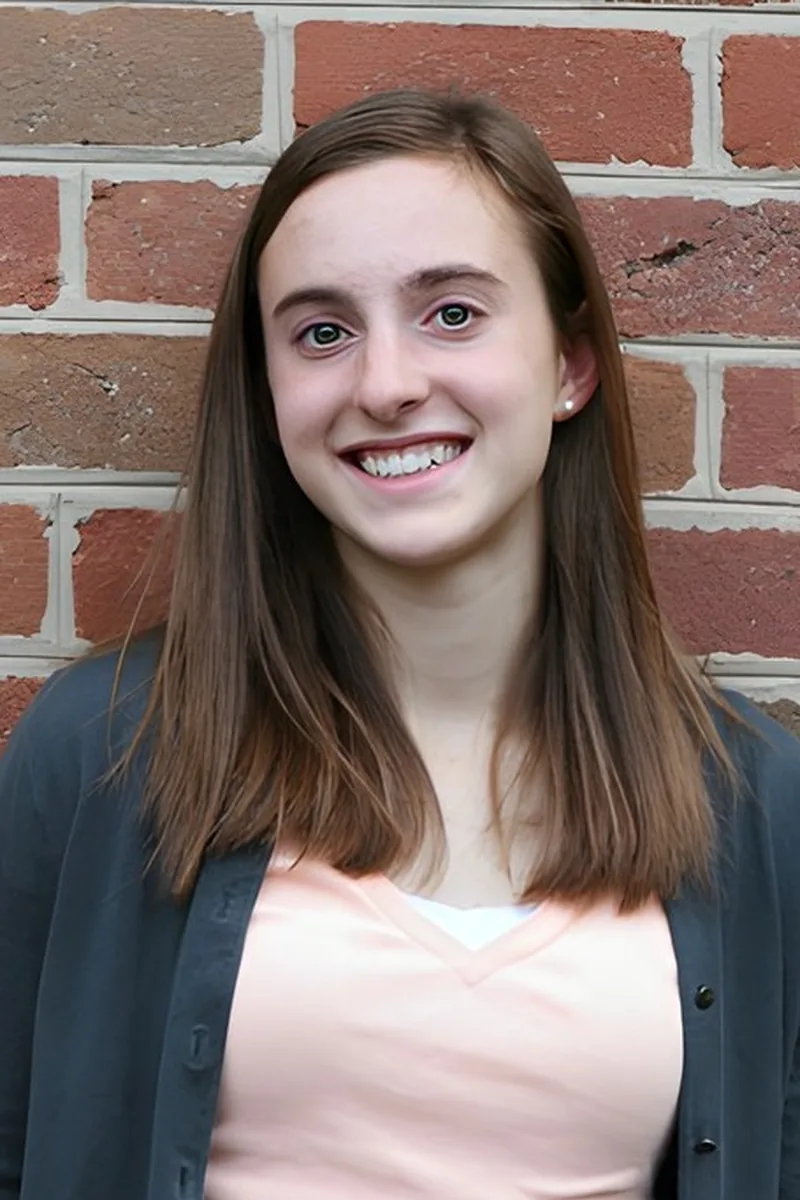
College-level physics demands comfort with calculus-based reasoning — deriving equations of motion, integrating force over a path for work, or applying differential equations to oscillations. Kathleen's math degree from Washington University and her experience teaching through multivariable calculus mean she can unpack both the physics intuition and the mathematical machinery simultaneously.
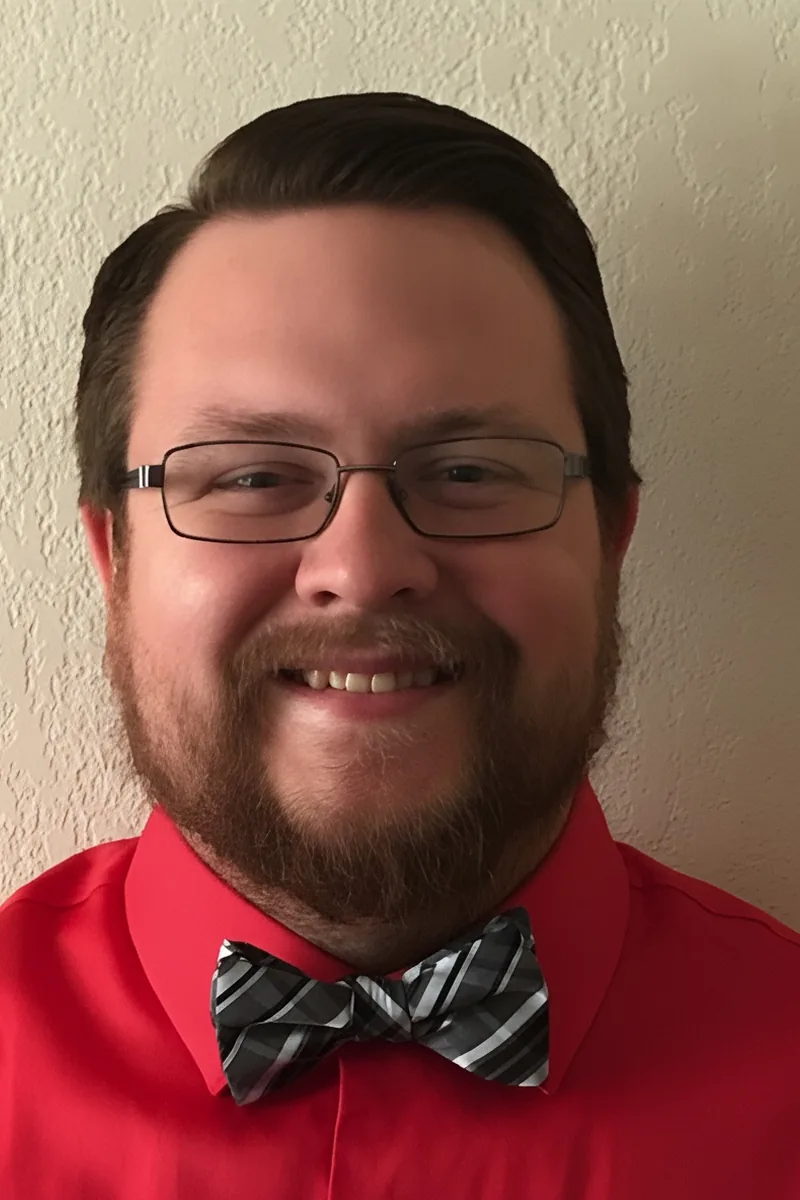
Teaching AP Chemistry, Honors Biology, and Anatomy & Physiology in a high school classroom means Samuel regularly translates physics into the language his students already speak — explaining pressure gradients through circulatory systems, connecting thermodynamic laws to calorimetry labs, and grounding wave behavior in real instrumentation. His master's in science education sharpens that skill further, giving him a structured way to diagnose exactly where a student's conceptual understanding breaks down during multi-step problem solving. Rated 4.9 by students.
I am interested in Physics and Mathematics and working out practical problems from plumbing to electronics. I will someday go back for my Ph.D. in Physics but until then I am looking to grow as an engineer or computer programmer.
Having spent four years solving problems in thermodynamics, kinetics, and quantum mechanics as part of his chemistry degree at Missouri State, Jacob approaches college physics with the mathematical rigor it demands. He's especially strong on topics where physics and chemistry overlap — electromagnetism, fluid dynamics, and energy conservation — and breaks multi-step problems into clear, logical sequences.
I am excited to help anyone who might need it!
Five years of tutoring undergraduate physics while completing a PhD in the subject means Mayuri has seen every way students get tripped up — from misapplying Newton's third law in multi-body problems to losing signs in electric potential calculations. She teaches the diagnostic step most students rush past: figuring out which physical principle actually governs a scenario before touching any math. Her triple background in physics, mathematics, and statistics makes her especially comfortable with the calculus-heavy and data-driven portions of the course.
College physics ramps up fast — suddenly rotational dynamics, electromagnetic induction, and wave optics all demand calculus fluency on top of conceptual understanding. Anatoliy's math background through calculus BC combined with his science training means he can tackle both sides of that challenge simultaneously. He's especially effective at connecting the integral and differential forms of physics equations to their physical meaning.
Certified to teach secondary science and holding a 33 ACT, Megan brings a teacher's instinct for diagnosing exactly where a student's reasoning breaks down — whether it's setting up free-body diagrams, misapplying conservation laws, or losing the physics inside the calculus. Her graduate work in curriculum design means she structures problem-solving practice deliberately, building from conceptual understanding to multi-step quantitative problems rather than just assigning more homework. Rated 5.0 by students.
Chemical engineering coursework is essentially college physics with higher stakes — fluid dynamics, heat transfer, and thermodynamics applied to industrial-scale systems where getting the math wrong has real consequences. Austin brings that engineering rigor to problems involving energy balances, pressure, and mechanics, walking students through the physical reasoning step by step rather than letting them default to equation hunting.
Free-body diagrams, torque calculations, stress analysis, fluid dynamics — Jordan didn't just study these in a textbook but worked through them as core requirements of a mechanical engineering degree, where getting the physics wrong means the design fails. That engineering lens means he tackles college physics problems the way a practicing engineer would: sketching the system, identifying constraints, and choosing the right principle before touching an equation. He's especially sharp on mechanics and thermodynamics, the two areas where his coursework went deepest.
Three physics-related bachelor's degrees give Avram an unusually deep undergraduate perspective on the subject — he's worked through mechanics, electromagnetism, and modern physics multiple times across different programs, which means he knows exactly where the conceptual gaps tend to hide. He breaks down wave phenomena and optics problems by connecting the math back to physical intuition, so equations feel like descriptions of real behavior rather than symbols to manipulate. His 1520 SAT reflects the quantitative precision he brings to problem solving.
Studying applied mathematics at Caltech means Samuel encounters physics constantly — from classical mechanics and energy conservation to electromagnetism and wave behavior. He breaks down the math behind physical systems so that equations like Maxwell's or Newton's second law feel like tools rather than obstacles.
TA-ing MIT's Physics II course gave Cori front-row experience with the stumbling blocks college students face — from applying Maxwell's equations to navigating multi-step problems in mechanics and thermodynamics. She approaches each topic by building physical intuition first, then layering on the math. Her engineering background means she can also show how these principles appear in real material systems and design problems.
Princeton's mechanical and aerospace engineering program is essentially a four-year immersion in applied physics — Fred spent it solving problems in fluid dynamics, thermodynamics, structural mechanics, and orbital motion, which maps directly onto the topics that fill college physics syllabi. He breaks down force diagrams and energy methods by connecting them to the engineering contexts where those concepts actually get used, making abstract problem sets feel more concrete. His 1550 SAT reflects the quantitative precision he brings to calculus-heavy coursework.
Studying computer science and applied math at Harvard means Derek uses physics constantly — from electromagnetism in circuit design to mechanics in computational modeling. He tackles college-level topics like Lagrangian dynamics and wave equations by connecting the math to physical intuition, making dense derivations feel less abstract.
Three years of tutoring introductory physics while completing dual bachelor's degrees in physics and mathematics gave Justin a detailed map of exactly where students lose the thread — the jump from one-dimensional kinematics to rotational analogs, the shift from intuitive force reasoning to formal energy methods. His PhD in Computational Mathematics at the University of Chicago deepened that foundation, adding fluency with the differential equations and vector calculus that make the leap from algebra-based to calculus-based physics so steep. Rated 5.0 by students.
Premed coursework and a computing degree at Notre Dame meant Aidan sat through the full sequence of calculus-based physics — mechanics, E&M, waves — while simultaneously learning to think algorithmically about complex problems. That combination is particularly useful when students hit the wall where physics stops being plug-and-chug and starts requiring multi-step reasoning, like connecting free-body diagrams to energy methods or translating a word problem into the right integral. His 35 ACT speaks to the quantitative fluency he brings to those tougher setups.
A physics PhD means Jonathan didn't just take college physics — he spent years teaching it, earning a teaching fellowship that kept him in front of students even while running his own research. That depth shows when he tackles the conceptual leaps that derail most introductory students, like connecting free-body diagrams to real force interactions or translating a word problem into the right conservation law. Rated 5.0 by students.
Serving as a TA for Duke's Electricity and Magnetism course means Florence has graded the exact types of problems — Gauss's law applications, RC circuits, Faraday's law scenarios — that make college physics students sweat, and she knows precisely where the reasoning breaks down. Her computer science background also gives her a knack for teaching the systematic, step-by-step problem decomposition that turns a wall of physics into something solvable. Holds a 5.0 rating.
Engineering physics at Cornell means Daniel is taking the most mathematically demanding version of every physics course — mechanics, E&M, waves, thermo — and building the intuition to move fluidly between physical reasoning and formal derivation. He's particularly strong at teaching students how to set up problems from scratch, translating a word problem into a free-body diagram or energy equation before any numbers appear. Rated 5.0 by students.
A bio-organic chemistry degree means Alex spent semesters in calculus-based physics courses where thermodynamics, electromagnetism, and mechanics weren't electives — they were prerequisites for understanding molecular behavior. That chemistry-physics overlap gives him a knack for unpacking energy conservation and electric potential in ways that click for students who think in terms of atoms and reactions rather than pulleys and ramps.
Biomedical engineering at Johns Hopkins means Christine solves physics problems daily that most students only see in textbooks — fluid dynamics in blood flow, pressure gradients across membranes, mechanics of prosthetic joints — giving her a concrete, application-heavy lens for the material. She's particularly strong on the thermodynamics and mechanics portions of college physics, where her coursework overlaps most directly with standard problem sets. Holds a 5.0 rating.
Testimonials
Because the right College Physics tutor makes all the difference.
Average Session Rating – Based on 3.4M Learner Ratings
Nearby College Physics Tutors
Other St. Louis Tutors
Related Science Tutors in St. Louis
Frequently Asked Questions
College Physics requires both conceptual understanding and mathematical problem-solving skills—many students struggle when they try to memorize formulas without grasping the underlying physics principles. Common pain points include visualizing abstract concepts like electromagnetic fields and wave behavior, mastering unit conversions and dimensional analysis, and applying Newton's laws to complex real-world scenarios. Personalized tutoring helps students build a solid foundation in these areas by connecting theory to practical applications, so formulas make sense rather than feeling arbitrary.
During an initial session, a tutor will assess your current understanding of physics concepts, identify specific topics causing difficulty (whether it's kinematics, energy, circuits, or something else), and learn about your learning style and goals. This diagnostic approach allows the tutor to create a personalized plan that targets your weaknesses while building on your strengths. You'll leave the first session with clarity on next steps and a sense of how personalized instruction can help you succeed in the course.
Yes—tutors can help you understand the physics principles behind lab experiments, interpret data correctly, and develop stronger scientific reasoning skills. Whether you're struggling with experimental design, data analysis, or writing lab reports, personalized instruction helps you connect hands-on work to the theoretical concepts you're learning in lecture. This deeper understanding makes both the lab and the course material more meaningful.
Rather than just showing you how to solve individual problems, tutors teach you a systematic approach: identifying what's given, determining what you need to find, selecting relevant equations, checking units, and evaluating whether your answer makes physical sense. This strategy-based approach helps you tackle unfamiliar problems with confidence and builds the scientific reasoning skills that are essential for success in physics and beyond.
Starting tutoring early—ideally at the beginning of the semester or when a unit begins—gives you time to build solid conceptual understanding rather than cramming formulas at the last minute. However, even a few weeks of focused sessions before a midterm or final can significantly improve your performance by clarifying confusing topics and building problem-solving confidence. The key is addressing gaps in understanding as soon as you notice them, rather than letting misconceptions pile up.
Varsity Tutors connects you with tutors who have strong backgrounds in physics—many hold degrees in physics, engineering, or related fields, and have experience teaching or tutoring college-level coursework. Tutors understand both the content deeply and how to explain complex concepts in ways that click for students. When you get matched with a tutor, you can review their qualifications and experience to ensure they're the right fit for your needs.
One of the biggest challenges in College Physics is visualizing things you can't see—like electric fields, magnetic forces, or wave interference patterns. Expert tutors use diagrams, analogies, real-world examples, and sometimes digital tools to make these abstract ideas concrete and intuitive. When you can actually picture what's happening physically, the math becomes a tool for describing that picture rather than a disconnected set of equations.
College Physics is challenging because different students struggle with different concepts—one student might need help with vector mathematics while another needs to understand energy conservation better. Personalized 1-on-1 instruction means your tutor focuses entirely on your specific gaps and learning style, pacing the material to match your needs rather than moving at a fixed speed. This targeted approach typically leads to faster progress and deeper understanding than group settings where instruction must accommodate everyone at once.
Let’s find your perfect tutor
Answer a few quick questions. We’ll recommend the right plan and match you with a top 5% tutor.