Award-Winning College Algebra Tutors
serving Springfield, MO
College Algebra
Tutors in Springfield
Private 1-on-1 tutoring, weekly live classes for academic support, test prep & enrichment, practice tests and diagnostics, and more to elevate grades and test scores.
Based on 3.4M Learner Ratings
UniversitiesSchools & Universities
DeliveredHours Delivered
ProficiencyGrowth in Proficiency
Who needs tutoring?
No obligation. Takes ~1 minute.
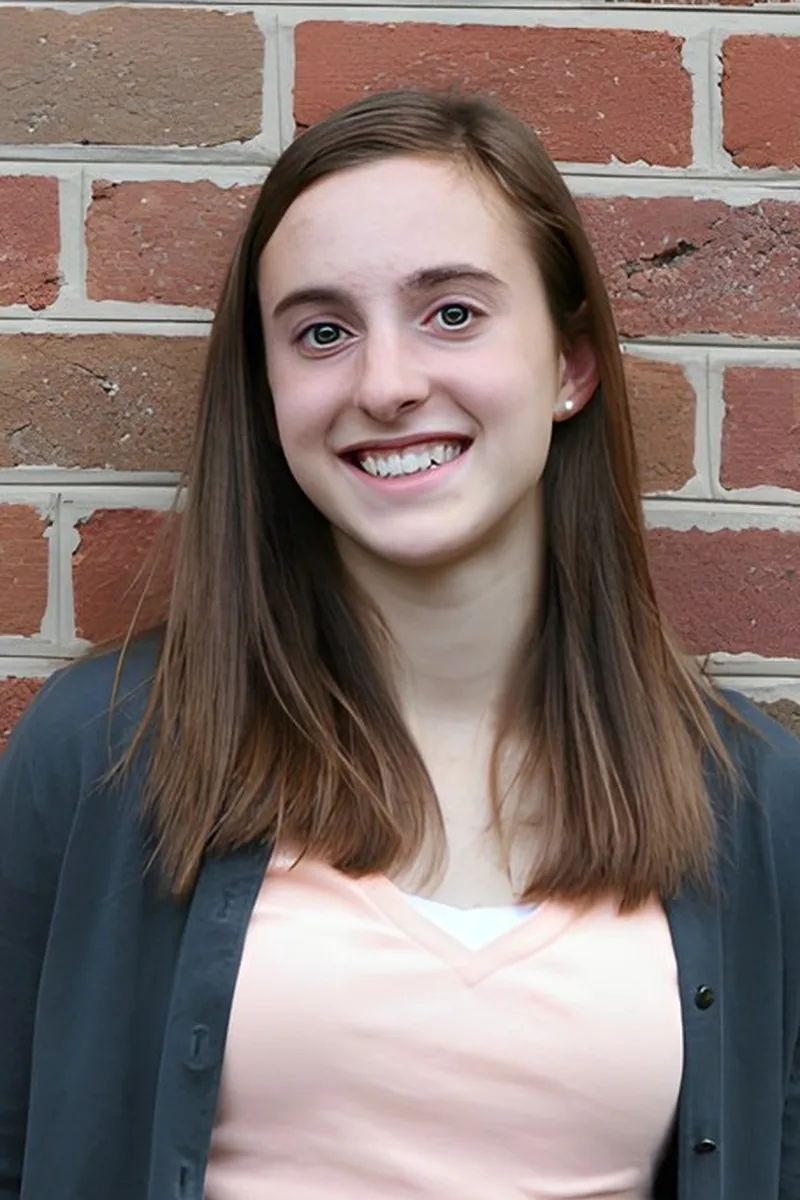
Kathleen's math degree at Washington University means she's currently working through multivariable calculus and beyond, so she can trace a tricky college algebra topic — like why logarithmic rules work the way they do, or how to read a piecewise function's behavior — back to the deeper structure instead of just handing over steps to memorize. Four years of tutoring students across every level from elementary through calculus have given her a sharp instinct for diagnosing exactly which earlier concept is causing a roadblock. Her 35 ACT and 1550 SAT back up the quantitative fluency she brings to every session.

Most college algebra frustration isn't really about the math — it's about not knowing how to organize the pile of intersecting rules for logarithms, rational expressions, or piecewise functions into something that makes sense. Rachel tackles that organizational problem head-on, breaking tangled multi-step problems into a logical sequence where each piece builds on the last. Her 31 ACT and experience across both math and science subjects means the algebraic toolkit stays sharp and connected to real coursework.
I am interested in Physics and Mathematics and working out practical problems from plumbing to electronics. I will someday go back for my Ph.D. in Physics but until then I am looking to grow as an engineer or computer programmer.
Struggling with rational expressions, logarithmic equations, or systems of inequalities in college algebra usually signals a gap somewhere earlier in the chain. John traces those gaps quickly — his math degree means he knows exactly which foundational idea is missing when a student gets stuck on, say, function composition or domain restrictions. That diagnostic instinct keeps sessions efficient and targeted.
I am excited to help anyone who might need it!
Rational expressions, logarithmic equations, and systems of linear equations tend to be the sticking points in college algebra, and Anatoliy approaches each one by first making sure the underlying logic is clear. His science and medical training gave him constant practice manipulating algebraic relationships under pressure, so he knows which shortcuts are trustworthy and which ones create bad habits.
Medical school coursework at UMKC has Jacob solving dosage calculations, pharmacokinetic models, and concentration equations that all trace back to the same algebraic mechanics — manipulating rational expressions, working with exponential and logarithmic functions, and solving multi-step equations. He approaches college algebra problems by slowing down at the exact step where the logic gets murky, rebuilding the reasoning before moving forward. His top-3% high school class rank points to the quantitative instincts behind that methodical style.
Most college algebra students don't struggle with the math itself — they struggle with keeping track of which rule applies when, especially once logarithmic properties, rational expressions, and function notation start overlapping in the same problem. Anita tackles that organizational piece head-on, teaching students to sort problems by structure before jumping into steps, so each new topic slots into a framework instead of floating loose.
The jump to college algebra is often less about new content and more about speed and rigor — professors expect fluency with polynomial division, rational expressions, and function transformations that high school courses only introduced. Jordan tackles these topics by tying abstract manipulation back to real applications he encountered in his mechanical engineering coursework, which makes the "why" behind each technique click.
Mechanical engineering gave Matt a daily relationship with the algebraic tools that college algebra courses formalize — solving systems, working with functions, and untangling expressions that show up in everything from structural load calculations to thermodynamic models. He's especially good at walking through problems like rational equations or quadratic systems by mapping out each step in plain, mechanical terms until the logic clicks. Rated 5.0 by students.
Karl studied math and physics at Iowa State University, which means he didn't just pass through college algebra — he built on it every semester through differential equations and Calculus III. That depth lets him trace a tricky logarithmic equation or rational expression back to the underlying principle instead of just walking through the steps, giving students a framework that holds up when problems get unfamiliar.
A PhD in computer science means Samantha has spent years working with the algebraic structures that underpin algorithm design — recursive functions, polynomial complexity analysis, and discrete mathematical proofs all demand fluency with the exact manipulation skills college algebra courses test. She breaks down topics like logarithmic equations and systems of inequalities by connecting them to the computational logic she uses in her research, making abstract procedures feel purposeful. Rated 5.0 by students.
Katie's American Studies and Gender Studies degrees might not scream algebra, but math is one of her first loves — she's taught it across every level from elementary through calculus, which means she knows exactly how gaps from earlier courses snowball into confusion around logarithms or rational expressions. She unpacks each problem by connecting it to the arithmetic and pre-algebra logic students already understand, building the bridge between familiar ground and the abstract notation that tends to intimidate.
Mechanical and aerospace engineering at Princeton means Matthew doesn't just remember college algebra — he's actively building on it every semester, using polynomial models, systems of equations, and function analysis as the foundation for his coursework in dynamics and thermodynamics. His teaching style is deliberate: walk through a problem step by step, then hand over a harder one and let the student work through the logic with guidance. A 34 ACT backs up the quantitative instincts behind that approach.
Political science at the University of Chicago is deceptively quantitative — game theory models, statistical analysis of polling data, and policy cost projections all run on the same algebraic machinery that college algebra courses formalize. Asta brings that background to topics like systems of equations and exponential functions, connecting abstract procedures to the kind of real-world modeling she actually did in her coursework. A 35 ACT and 5.0 tutoring rating back up the math instincts.
At a prep school where she teaches and manages curriculum, Moriah has spent years diagnosing exactly where students lose the thread in topics like logarithmic equations, rational expressions, and function behavior — and building clear paths back. Her Cornell education and 1550 SAT score anchor serious quantitative ability, while her day-to-day classroom experience means she knows how to adapt an explanation on the fly when the first approach doesn't land. Rated 5.0 by students.
An MBA in Finance and Management means Hari spent years building financial models that run on the exact algebraic machinery college algebra courses test — solving systems of equations for break-even analysis, manipulating exponential functions for compound interest projections, and interpreting graphs of cost and revenue functions. He connects abstract topics like logarithmic properties and polynomial operations to the business scenarios where they actually matter, which tends to make the material stick for students who wonder why they need it. Rated 5.0 by students.
Dennis's physics research at Princeton — simulating cosmic ray acceleration through turbulent plasmas — required manipulating complex algebraic structures daily, from systems of equations to exponential and logarithmic models. That hands-on fluency means he teaches college algebra as a toolkit with real purpose, breaking down polynomial behavior and function transformations by showing how each concept actually operates in quantitative work. His 36 ACT composite reflects the depth of mathematical reasoning he brings to every session.
Two-time Ocean County Math League champion and Princeton chemistry TA, Jon built his algebraic instincts through years of competition math before sharpening them further in graduate-level quantitative coursework — so when a college algebra student gets tangled in logarithmic equations or rational expressions, he can usually spot the misconception fast. His 33 ACT and chemistry master's mean he's comfortable attacking algebra from both the pure-math and applied-science sides, whichever clicks better for a given student.
Polynomial functions, rational expressions, and logarithmic equations all become more manageable when you understand the underlying logic instead of memorizing steps. Dana earned a 36 ACT — including the math section — and brings that analytical precision to college algebra, breaking complex problems into clear, repeatable reasoning.
Engineering coursework at Cornell demanded fluency in polynomial functions, logarithmic equations, and systems of inequalities — all core college algebra topics Kelly uses regularly. Her PhD research also required constant quantitative modeling, so she teaches these concepts with real applications in mind rather than as abstract exercises. Rated 5.0 by students.
Economics at Penn is built on algebraic modeling — Katherine spent four years working with functions, systems of equations, and logarithmic relationships in contexts like supply-demand analysis and econometric forecasting. That means she can unpack college algebra concepts by connecting them to problems she's actually solved, making abstract manipulation of rational expressions or exponential equations feel purposeful. Her 1550 SAT backs up the quantitative instincts.
A materials science major at Brown, Shun uses college-level math daily — polynomial modeling, matrix operations, and rational functions all show up in his coursework. That real-world fluency means he can explain why a technique like completing the square or factoring a higher-degree polynomial actually matters beyond the homework set. He breaks problems into clear, repeatable steps that make the abstract feel manageable.
A PhD in Comparative Human Development at the University of Chicago might not scream algebra, but Gabriel's lifelong love of math — and years of tutoring it across age levels — means he can unpack topics like logarithmic properties and polynomial operations with genuine enthusiasm rather than rote procedure. He's especially effective at diagnosing exactly where a student's reasoning breaks down and rebuilding the logic from that point forward. Rated 5.0 by students.
Testimonials
Because the right College Algebra tutor makes all the difference.
Average Session Rating – Based on 3.4M Learner Ratings
Practice College Algebra
Free practice tests, flashcards, and AI tutoring for College Algebra
Nearby College Algebra Tutors
Other Springfield Tutors
Related Math Tutors in Springfield
Frequently Asked Questions
Varsity Tutors matches Springfield students with expert College Algebra tutors for 1-on-1 instruction. We pair each student with a tutor based on their specific needs, learning style, and goals.
Whether you need homework help, exam prep, or want to get ahead, our College Algebra tutors are ready to help.
Common challenges include gaps from earlier material, difficulty with specific concepts, and trouble applying learning to new problems. These issues can snowball quickly in College Algebra.
A tutor identifies where you're stuck, fills in gaps, and provides targeted practice. The 1-on-1 format means you get help exactly where you need it.
Tutors work with your student's actual coursework—homework assignments, class notes, and upcoming tests. This keeps tutoring directly relevant to what's happening in the classroom.
When you share information about your student's school and curriculum, we can match you with a tutor who has relevant experience.
All tutors complete background checks, credential verification, and teaching evaluation. Many of our College Algebra tutors hold advanced degrees or have years of teaching experience.
You can review tutor profiles to find someone with the right background for your student's level and needs.
Many students see improved grades within a few weeks, along with better understanding of College Algebra concepts and more confidence tackling challenging material.
Tutors track progress and adjust their approach to ensure continued improvement.
Most students benefit from 1-2 sessions per week. More frequent sessions help if your student is significantly behind or has an important exam coming up.
Your tutor can recommend a schedule based on your student's specific situation and goals.
Tutoring is purchased in packages of hours, with rates varying by tutor experience. Varsity Tutors offers several options to fit different budgets and needs.
You can discuss pricing during your consultation to find what works best.
Your tutor will assess where your student is, discuss goals, and start working on priority areas. Most students bring current homework or upcoming test material to focus on.
By the end, you'll have a clear sense of how the tutor can help and a plan for moving forward.
Let’s find your perfect tutor
Answer a few quick questions. We’ll recommend the right plan and match you with a top 5% tutor.