Award-Winning Calculus Tutors
serving Baltimore, MD
Calculus
Tutors in Baltimore
Private 1-on-1 tutoring, weekly live classes for academic support, test prep & enrichment, practice tests and diagnostics, and more to elevate grades and test scores.
Based on 3.4M Learner Ratings
UniversitiesSchools & Universities
DeliveredHours Delivered
ProficiencyGrowth in Proficiency
Who needs tutoring?
No obligation. Takes ~1 minute.
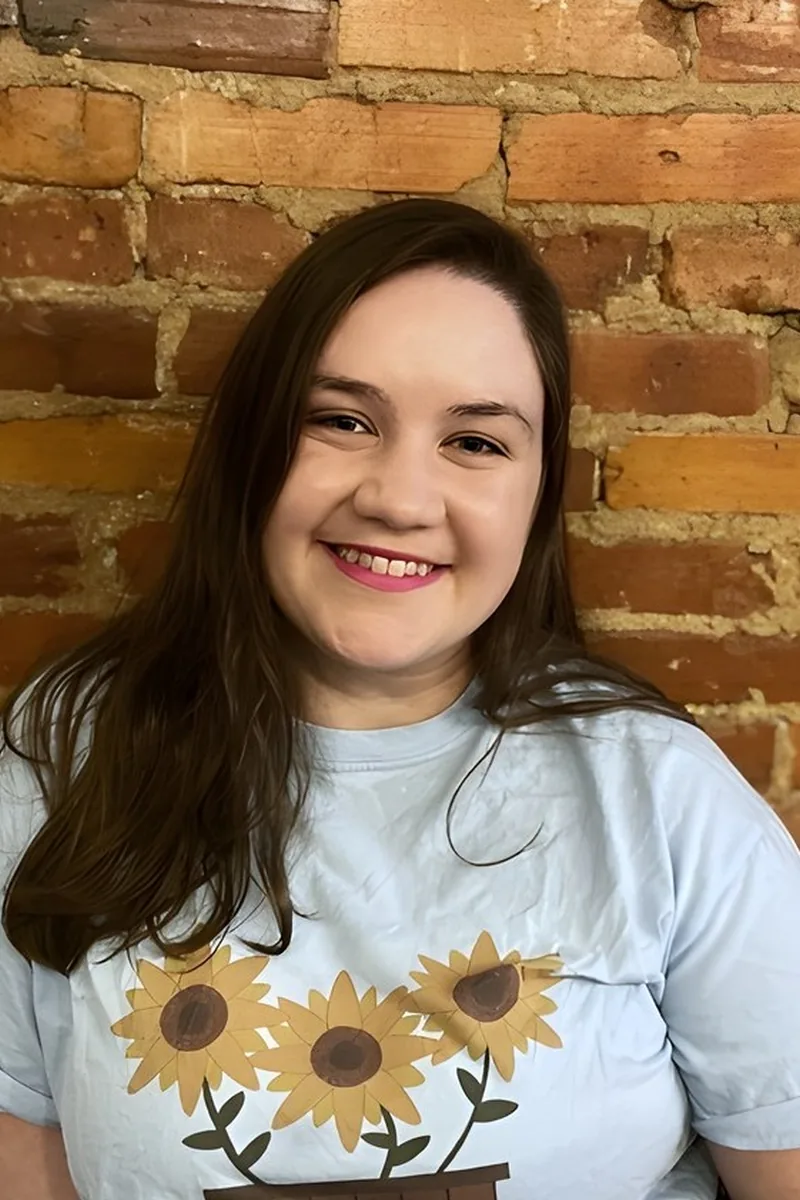
Jamie's academic background is in anthropology and the humanities, not mathematics, so calculus isn't the strongest arrow in the quiver — but a 1600 SAT demonstrates serious quantitative reasoning ability. That analytical sharpness means Jamie can break down early calculus ideas like limits and instantaneous rates of change into clear, logical steps, approaching each concept the way a careful reader would approach a dense argument: one piece at a time until the whole thing makes sense.
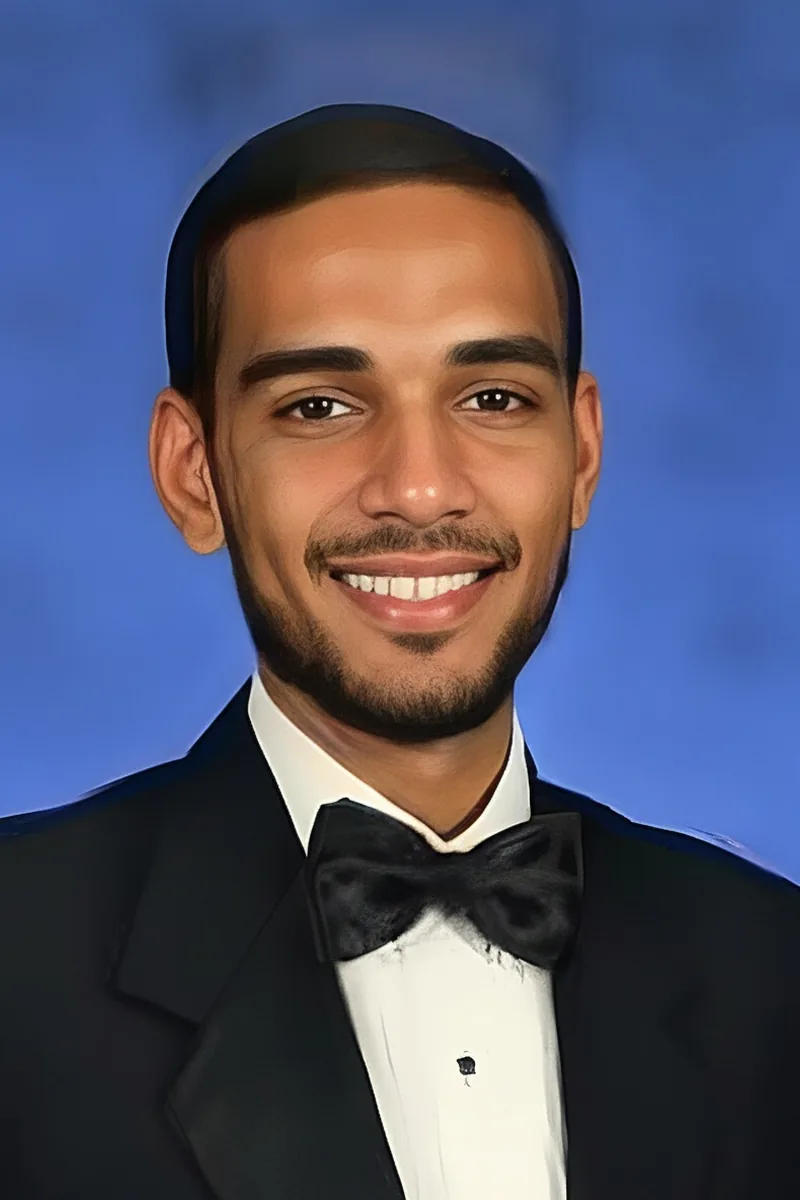
Studying cellular and molecular biology at Johns Hopkins means Christopher uses calculus constantly — modeling enzyme kinetics, population growth, and reaction rates all depend on limits, derivatives, and integration. He brings that real-world context into sessions, making concepts like the chain rule and optimization problems feel purposeful rather than abstract.
Molecular and cellular biology at the undergraduate level and then physician assistant training meant Leah couldn't avoid calculus — rate-of-change problems show up in everything from enzyme kinetics to drug absorption curves. That repeated exposure gives her a practical grip on derivatives and integrals that she can translate back into the foundational math, connecting the abstract rules to the biological systems where they actually do something. Rated 4.8 by students.
Cellular and molecular biology coursework lives and dies by calculus — enzyme kinetics, membrane transport rates, and modeling how molecular concentrations shift over time all demand fluency with derivatives and integrals. Mark learned the material through those biological applications first, which means he teaches it that way too: grounding each new rule in a rate-of-change problem that actually connects to something tangible. Rated 4.7 by students.
I am a public school reading teacher in the elementary grades. I have a passion for educating young people and guiding them to academic success, either in or outside of the classroom. I have experience as a classroom teacher and a private tutor, in subjects that range from Reading and Writing to History and French. In my opinion, the path to obtaining a good education is formed by hard work, diligence, persistence, and an open mind. I work on a daily basis to instill these qualities in my students and tutees. I also believe that forming meaningful relationships with my students creates an environment in which learning is the goal. In my spare time, I enjoy running, golf, reading, cooking, and spending time with family and friends.
Osteopathic medical training at Heritage College means Kinkela encounters calculus constantly — from modeling drug absorption rates in pharmacology to interpreting the curves that describe how physiological systems change over time. Her cognitive neuroscience degree from Johns Hopkins required working through differential equations that govern neural signal propagation, so she teaches derivatives and integrals as tools with tangible meaning rather than abstract procedures. Rated 5.0 by students.
Limits, derivatives, and integrals each demand a different kind of thinking — visual intuition for one, algebraic precision for another, and strategic setup for the third. Christopher earned his B.S. in Mathematics and teaches calculus by connecting the graphical story of a function to the symbolic work students do on paper. That dual perspective makes techniques like the chain rule or integration by parts feel purposeful rather than mechanical.
As a graduate of Johns Hopkins University with a Bachelor's in Materials Science and Engineering, I have over 5 years of tutoring experience across various subjects, including Algebra, Geometry, Biology and Chemistry. My teaching philosophy centers on fostering a supportive and engaging learning environment where students feel confident to explore and ask questions. I believe in tailoring my approach to meet each student's unique needs, encouraging them to connect concepts with real-world applications. My passion for teaching stems from witnessing students gain clarity and confidence in their abilities, which motivates me to continually refine my methods. Outside of tutoring, I enjoy exploring new technologies and engaging with nature, which often inspires my lessons.
Physics majors don't just take calculus — they breathe it, using derivatives to describe motion and integrals to compute work, energy, and flux across every course in the curriculum. Nima's physics degree means he teaches concepts like the chain rule or integration by parts with the intuition of someone who's applied them constantly, not just solved textbook exercises. His 1580 SAT and 4.7 rating back up that quantitative fluency.
English and Political Science degrees don't scream calculus, and Jane is honest about that — this isn't her deepest subject. That said, her experience tutoring math and her analytical training mean she can walk students through the early conceptual hurdles like limits and slope interpretation, breaking down the notation piece by piece until the reasoning behind it becomes clear.
An English and writing background might not scream calculus, but Alexis's MFA studies at Columbia demand the same kind of rigorous, step-by-step logical thinking that makes early derivative and limit problems click. She breaks down dense mathematical notation the way she'd break down a complex sentence — isolating each component, clarifying its function, then showing how the pieces fit together. Rated 5.0 by students.
Biomedical engineering at the university level is essentially applied calculus — from modeling drug concentration curves with integrals to analyzing rates of change in physiological systems. Rickey brings that applied perspective to derivatives, limits, and integration techniques, connecting each concept to something tangible so the theory doesn't feel like an abstraction exercise.
Michael's Computer Science and Financial Engineering coursework at Columbia means he uses calculus daily — from optimization problems to modeling rates of change in real systems. He breaks down concepts like integration techniques and series convergence by connecting them to tangible applications, so the logic behind each method clicks before students ever touch a formula.
Being part of the Physics Education Research group at the University of Maryland meant Lee spent years studying how students actually learn quantitative reasoning — and calculus was at the center of that work, since nearly every physics concept from kinematics to thermodynamics is built on derivatives and integrals. That research background gives him a tutor's instinct for where the conceptual breakdowns happen, whether it's the epsilon-delta definition of a limit or the leap from integration rules to applying them in real problems. Rated 4.6 by students.
Nine years as a school counselor gave Banke a sharp eye for where students get stuck — and in calculus, that's almost always the conceptual jump from algebra to thinking in terms of limits and instantaneous change. Her psychology training in research methods included statistical reasoning that touches on the same rate-of-change logic underlying derivatives, so she can bridge that gap with patience and precision. Rated 5.0 by students.
Genetic counseling at Northwestern's Feinberg School of Medicine requires fluency in quantitative models — risk calculations, probability curves, and the rate-of-change reasoning that underpins how genetic traits propagate through populations. Weilong brings that applied math background to calculus tutoring, translating abstract derivative and integral rules into the kind of plain-language explanations she uses daily with patients navigating complex data. Her 35 ACT composite and 5.0 rating back up that quantitative and communication skill set.
I am currently an Undergraduate Freshman at Washington University in St. Louis (WashU) studying Biomedical Engineering on a Pre-Medical track. I tutor mostly math-related subjects, such as Calculus and Linear Algebra. I push hard in my personal work to gain a strong, conceptual backing for almost all subjects, and am able to help others efficiently with this. Understanding material conceptually, rather than analytically, is vital to being able to think and apply knowledge. This is my learning and teaching philosophy. I am patient and thorough; I am caring and understanding. I look forward to our first session!
Studying Classical languages like Latin and Ancient Greek is essentially an exercise in rigorous logical parsing — breaking complex structures into precise components and tracking how each piece relates to the whole. Juan applies that same analytical discipline to early calculus concepts, walking through the logic of limits and derivatives step by step so the reasoning is clear before any shortcuts kick in. His philology training at Penn means he's unusually good at unpacking dense notation into plain, readable meaning.
From limits and derivatives through integration techniques, Allan teaches calculus with an emphasis on understanding what's happening graphically before diving into computation. His coursework at Swarthmore extends through multivariable calculus, so he sees the full arc of where these ideas lead and can explain single-variable concepts with that broader perspective in mind.
I love to teach. I love young minds and fresh brains. Those are just like clean sheets of papers I can draw anything I like. I really like to help young people to achieve their full capacities with my long experience of teaching. I am very patient and good at explaining complex concepts in simple terms. I am looking forward to meeting students who need my help.
As a dedicated neuroscience student at Johns Hopkins University, I have over two years of tutoring experience, specializing in math and history. My passion for subjects like algebra and AP World History drives me to help students overcome their challenges and develop a love for learning. I adapt my teaching strategies to suit each student's unique learning style, utilizing visual aids and hands-on methods to ensure comprehension and engagement. My background includes participation in Math Olympiads and earning multiple AP Scholar awards, showcasing my commitment to academic excellence. I find joy in making complex concepts accessible and fostering a supportive environment where students can thrive. Outside of tutoring, I enjoy exploring geography and history, further enriching my teaching approach.
With over 15 years of industry experience in cloud computing, data analytics, data engineering, advanced SQL, and quantitative problem-solving, I am passionate about helping students and professionals develop strong technical and analytical skills that translate into academic and career success. My expertise spans database management, ETL development, data visualization, business intelligence, statistical analysis, cloud-based data solutions, and advanced SQL query optimization across enterprise environments. In addition, I have extensive experience preparing students for standardized examinations including the GRE and SAT, particularly in mathematics, quantitative reasoning, analytical problem-solving, and test-taking strategies. Alongside my professional career, I have dedicated my part-time efforts to teaching and mentoring students from diverse academic and professional backgrounds. I enjoy simplifying complex concepts into practical, easy-to-understand lessons that build both confidence and competence. My teaching approach combines real-world applications, interactive problem-solving, and personalized guidance to help learners achieve measurable results in academics, technical interviews, certifications, and career advancement. I am committed to fostering an engaging learning environment that empowers students to excel in today's competitive technology and data-driven industries.
Between a physics bachelor's and a PhD in biomedical engineering, Andrew has used calculus as a daily working language — from modeling tissue mechanics to solving the differential equations that describe biological systems. That depth means he can teach derivatives, integrals, and multivariable concepts not as isolated procedures but as tools with clear physical meaning. Rated 4.9 by students.
The University of Chicago's core curriculum put Valerie through rigorous quantitative coursework alongside her Classics and Theatre majors, so she's encountered calculus even if math isn't her primary lane. Her 1540 SAT confirms she can handle the reasoning, and her instinct as a writing-trained thinker — breaking a complex argument into its smallest logical moves — maps surprisingly well onto unpacking what a derivative is actually doing step by step.
Curriculum development — Elena's day job — is essentially about sequencing ideas so each one builds logically on the last, which is exactly what early calculus demands when students move from limits to derivatives to integration. Her McGill and Edinburgh training is in the humanities, not math, so she's transparent about the boundaries of her calculus expertise, but her knack for making abstract concepts click through analogy and structured explanation (she was named Scotland's International Young Thinker of the Year for that skill) carries over well to unpacking the reasoning behind rules like the chain rule or the fundamental theorem.
Limits, derivatives, and integrals all build on each other, so one shaky concept can derail an entire semester. Akarsh approaches calculus by making sure each layer is solid before moving on — walking through chain rule applications or Riemann sums until the logic behind the formulas becomes second nature.
Psychology and linguistics both lean heavily on statistical modeling — analyzing language acquisition curves, interpreting behavioral data over time — which gave Sherry real exposure to the calculus concepts underlying those methods during her University of Chicago coursework. Her 1600 SAT confirms she can handle rigorous quantitative reasoning, and she brings that same precision to unpacking limits and derivatives for students who need the 'why' explained clearly before the mechanics make sense. Rated 5.0 by students.
Between a biology degree heavy on quantitative coursework and a perfect 36 ACT, Emily has the mathematical chops to teach calculus with real depth — not just procedure but the reasoning behind integration techniques and derivative applications. Her epidemiology training at Yale's School of Public Health meant working with rate-of-change models constantly, from disease transmission curves to survival analysis, so she can ground abstract calculus concepts in problems where the math actually drives decisions. Rated 5.0 by students.
Comparative literature at Princeton isn't a typical path to calculus, but the close-reading discipline Brittney developed there — pulling apart layered arguments piece by piece — maps surprisingly well onto unpacking limit definitions and derivative rules where every symbol carries specific meaning. Her 1440 SAT confirms solid quantitative reasoning, and she brings that same meticulous, notation-decoding approach to early calculus concepts. Rated 5.0 by students.
Tackling limits, derivatives, and integrals requires building each concept on the last, and one shaky step can derail an entire semester. Kathy's quantitative training in economics at Duke kept her deep in applied calculus — optimization problems, rates of change, area under curves — and she teaches the reasoning behind each rule so students can handle problems they haven't seen before.
Biomedical engineering at Brown means Phillip uses calculus daily — whether it's modeling fluid flow through blood vessels, analyzing stress-strain curves in tissue mechanics, or solving the differential equations behind medical device design. That hands-on engineering context lets him teach integration techniques and derivative applications as tools with real physical meaning, not just abstract procedures. Rated 5.0 by students.
Limits, derivatives, and integrals become far more intuitive when a tutor can point to what they mean in a physical system — velocity as a derivative of position, area under a curve as accumulated work. As a mechanical engineering major at Yale, Charles lives in calculus every day and brings that applied fluency to sessions, whether the topic is chain rule mechanics or setting up a Riemann sum.
Ellie doesn't just study calculus — she teaches it. As a weekly tutor for a Differential Equations course at Yale, she regularly walks students through integration techniques, series convergence, and the conceptual leaps that textbooks tend to rush past. Her engineering background means she can show exactly where derivatives and integrals appear in real modeling problems, giving abstract rules a concrete purpose.
Three BS degrees including one in Finance means Matt has worked through the calculus that underpins financial modeling — present value derivations, marginal cost optimization, and the continuous compounding formulas that rely on limits and exponentials. His 1530 SAT confirms the quantitative chops to back that up, and he teaches the material by connecting each rule to the business logic that makes it worth learning.
Testimonials
Because the right Calculus tutor makes all the difference.
Average Session Rating – Based on 3.4M Learner Ratings
Other Baltimore Tutors
Related Math Tutors in Baltimore
Frequently Asked Questions
Many students struggle with the transition from algebra and precalculus to the conceptual thinking Calculus requires. Common pain points include understanding limits and continuity, mastering derivative and integral applications, tackling word problems that require translating real-world scenarios into equations, and working through multi-step proofs. Additionally, students often feel anxious about the pace of the course, especially in Baltimore's competitive school environment. Personalized tutoring helps students build confidence by breaking down complex concepts into manageable pieces and connecting them to what they already know.
Your first session is about understanding where you are and where you want to go. A tutor will assess your current understanding of foundational concepts like limits, derivatives, and integrals, identify specific areas causing difficulty, and discuss your goals—whether that's improving your grade, preparing for the AP Calculus exam, or building conceptual understanding. From there, the tutor creates a personalized plan tailored to your learning style and pace, so you're not just memorizing procedures but truly understanding the 'why' behind Calculus.
Word problems require translating English into mathematical language—a skill many students find intimidating. Expert tutors teach problem-solving strategies like identifying what's given, what you're solving for, and which Calculus concepts apply. They help you see patterns across different problem types (optimization, related rates, area under curves) so you develop intuition rather than just following formulas. With guided practice and feedback on your work, you'll build the confidence to tackle unfamiliar problems on tests and assignments.
Yes. AP Calculus AB and BC exams test both conceptual understanding and procedural fluency, and personalized tutoring addresses both. Tutors help you master the specific topics on the exam, practice multiple-choice and free-response questions, develop time-management strategies, and identify your weak areas before test day. With Baltimore's strong academic standards, many students benefit from targeted exam prep that goes beyond classroom review, especially in the weeks leading up to May testing.
Showing work reveals your thinking process and helps tutors identify exactly where misconceptions occur—whether it's a conceptual misunderstanding or a simple algebra mistake. This distinction matters because the fix is different for each. Tutors guide you in writing clear, organized solutions that demonstrate you understand each step, not just the final answer. This skill is especially valuable on free-response sections of exams and in college-level math courses.
Yes. Baltimore students use various textbooks and curricula depending on their school, and experienced tutors are familiar with different approaches and notations. Whether your course emphasizes graphical, numerical, or analytical perspectives, a tutor can align their instruction with your specific curriculum while also helping you see the bigger picture—how limits, derivatives, and integrals connect across different representations. This flexibility ensures tutoring complements what you're learning in class.
Math anxiety often stems from feeling lost or falling behind, especially in a fast-paced course like Calculus. Personalized instruction creates a low-pressure environment where you can ask questions without judgment and work at your own pace. As you understand concepts more deeply and see improvement on assignments and tests, confidence naturally builds. Tutors also teach problem-solving strategies and help you recognize patterns, which reduces the feeling of helplessness and replaces it with a sense of control and competence.
Look for tutors with strong Calculus knowledge, teaching experience, and the ability to explain concepts clearly at different levels. Ideally, they've worked with students preparing for AP exams or college-level Calculus, understand common student misconceptions, and can adapt their approach to your learning style. Varsity Tutors connects you with expert tutors who meet these standards, so you can focus on learning rather than vetting credentials.
Let’s find your perfect tutor
Answer a few quick questions. We’ll recommend the right plan and match you with a top 5% tutor.