Award-Winning AP Calculus BC Tutors
serving Baltimore, MD
AP Calculus BC
Tutors in Baltimore
Private 1-on-1 tutoring, weekly live classes for academic support, test prep & enrichment, practice tests and diagnostics, and more to elevate grades and test scores.
Based on 3.4M Learner Ratings
UniversitiesSchools & Universities
DeliveredHours Delivered
ProficiencyGrowth in Proficiency
Who needs tutoring?
No obligation. Takes ~1 minute.
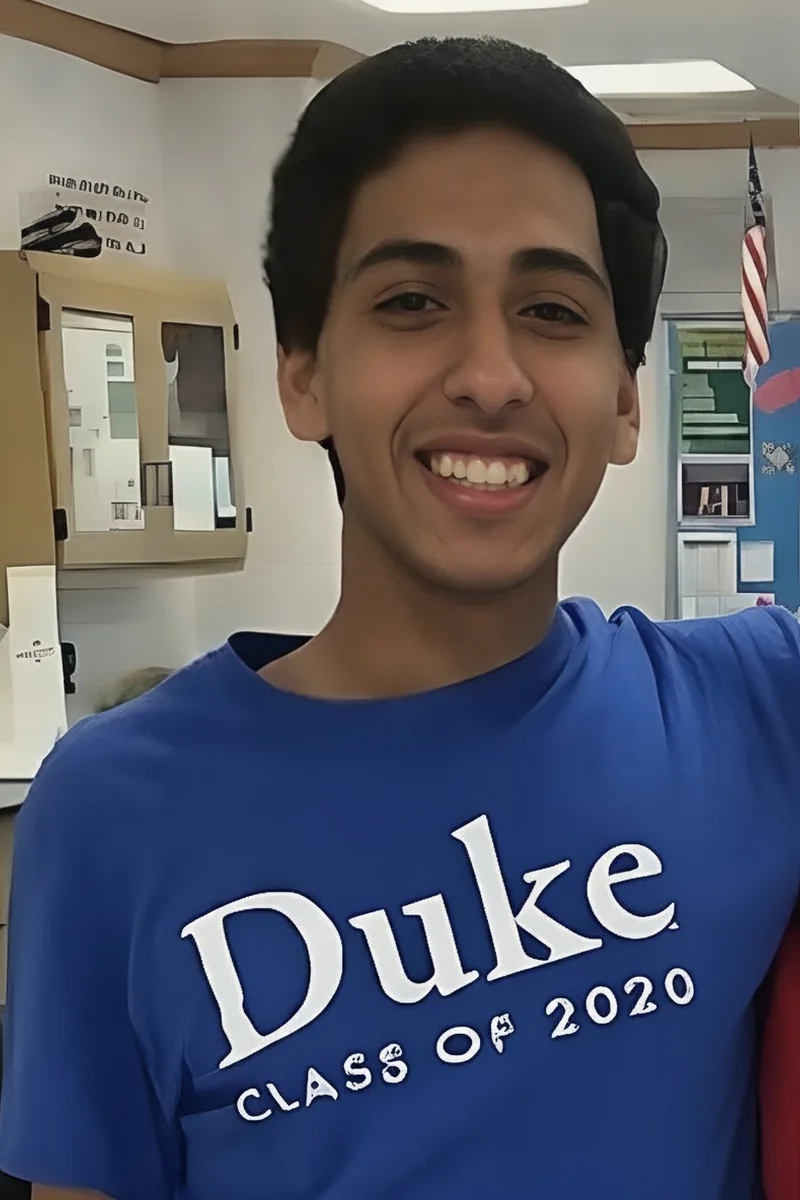
Most BC students can follow a convergence test step by step but freeze when asked to choose which test to apply — that decision-making is where Nima, a physics major heading to Duke on a full merit scholarship, spends most of his teaching energy. His physics training means he treats series and parametric equations as descriptions of real motion and real forces, which gives students an intuitive anchor when the abstraction piles up. A 1580 SAT and 4.7 rating back up his ability to make that AB-to-BC jump feel manageable.
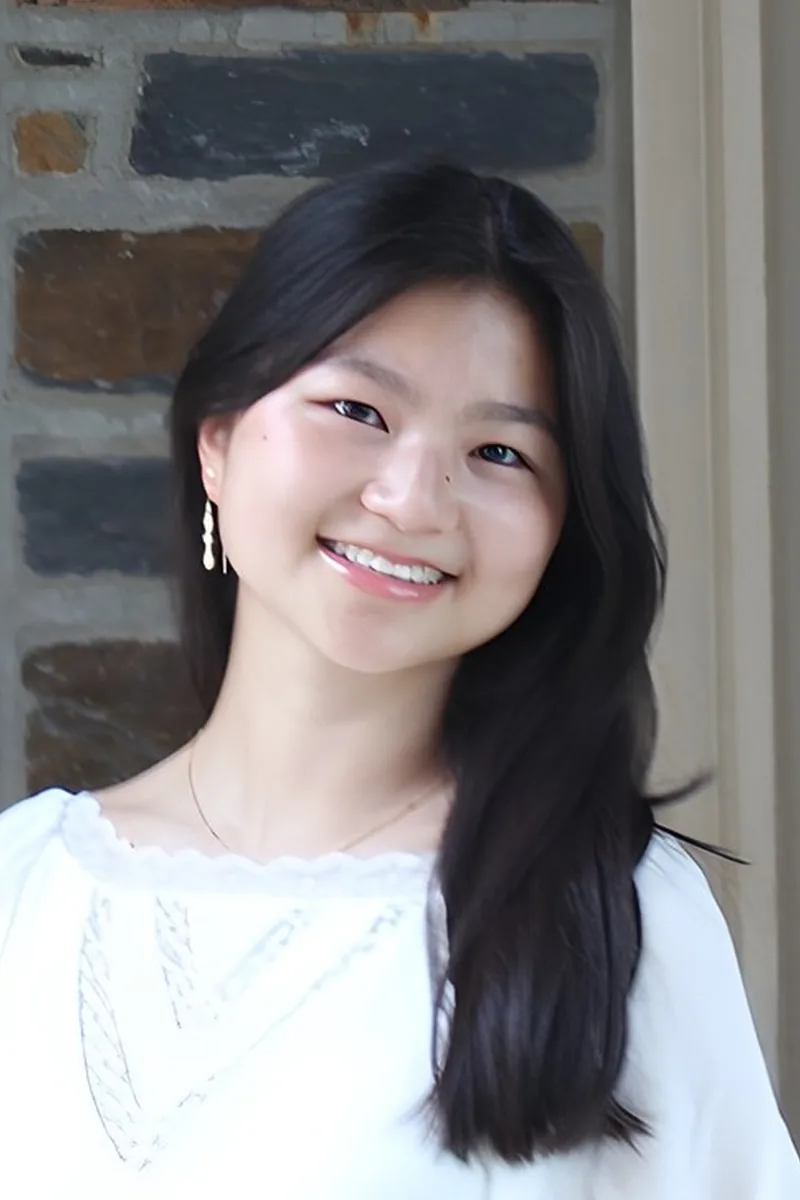
Duke's computer science program required Michelle to live inside the calculus that powers algorithm analysis — convergence behavior, recursive sequences, and the kind of series manipulation that BC students encounter when Taylor polynomials and ratio tests suddenly demand more than AB intuition. She breaks down those topics by tracing each one back to the underlying limit and derivative logic, so the leap to BC feels like a natural next step rather than a wall. Holds a 5.0 rating from students.
Mackenzie scored a 35 on the ACT and tutors math at every level from elementary through AP, which means she knows exactly which algebra and AB gaps trip students up once BC introduces new integration techniques and series. She walks through problems like setting up improper integrals or applying ratio tests by tracing each step back to the reasoning behind it, so students build intuition they can rely on during the exam.
Scoring a 36 on the ACT while studying economics at Vanderbilt means Kerr lives comfortably in the quantitative reasoning that BC Calculus demands — and his computer science focus sharpens the algorithmic thinking behind recursive sequences and series convergence. He teaches BC's trickiest leaps, like moving from basic integration to constructing Taylor polynomials, by grounding each new idea in the conceptual logic rather than just the procedural steps. Rated 4.9 by students.
Biomedical engineering eats BC Calculus for breakfast — Spencer's coursework has him building models with differential equations, approximating functions with series, and integrating across complex domains before he even opens his calc textbook. That real-time immersion means he can walk through something like the Lagrange error bound or a tricky polar area setup with the fluency of someone who just used it in a lab report, not someone dusting off old notes. His 1550 SAT and 35 ACT speak to the test-taking precision he pairs with that technical depth.
As a multivariable calculus teaching assistant at Harvard's Math Department, Kristi spent semesters watching exactly where students' BC foundations cracked under pressure — shaky series intuition, mechanical convergence testing, parametric reasoning that never quite solidified. Her astrophysics training means she learned these tools by necessity, using Taylor expansions to model orbital mechanics and integration techniques to analyze planetary data, so she teaches the logic driving each method rather than just the steps. Rated 5.0 by students.
BC Calculus throws students into deep water fast — Taylor and Maclaurin series, parametric equations, and convergence tests all pile up in a single semester. Rahi's applied mathematics engineering background means he can unpack these topics by connecting them to the real-world modeling problems they were designed to solve. He builds each concept from its AB foundation so students see how the BC extensions actually work.
Molecular biology at Yale means Maxwell lives in calculus-heavy territory — modeling gene expression rates, quantifying cell growth curves, analyzing reaction kinetics — so BC topics like differential equations and series approximations aren't abstract exercises for him but tools he actually reaches for in research. He's especially good at walking through the logic of integration techniques and parametric problems by grounding them in the AB concepts students already trust. Holds a 5.0 rating.
Having worked as a teaching assistant for multiple engineering courses at Washington University in St. Louis, Ava spent hours breaking down the calculus that trips students up most — and BC's jump into series convergence, parametric derivatives, and advanced integration techniques is exactly the material she kept revisiting with struggling engineers. Her dual degree in mechanical and energy engineering means she's applied Taylor expansions and improper integrals to real thermodynamic and fluid systems, giving her a concrete vocabulary for explaining why these tools matter beyond the AP exam.
Coming out of Thomas Jefferson High School for Science and Technology — one of the most rigorous STEM pipelines in the country — Rhamy had BC Calculus concepts like series convergence and parametric integration locked down before most students even encounter them. His computer engineering program at Vanderbilt keeps those tools sharp daily, since signal analysis and circuit design lean heavily on the same Taylor expansions and differential equations that define the BC curriculum. Rated 5.0 by students.
Series convergence, parametric equations, and polar curves make BC the course where strong calculus students finally have to slow down and think carefully. Anthony earned his BS in physics and math from Yale, where these concepts weren't just exercises — they were the language of electromagnetism and classical mechanics. He teaches BC topics by connecting each technique to why it exists and when it matters.
Environmental engineering graduate work is essentially applied calculus — Kate's thesis work required series approximations for modeling fluid dynamics and integration techniques for analyzing pollutant transport, so BC topics like Taylor polynomials and improper integrals are tools she's used professionally, not just academically. She's particularly good at showing how convergence tests follow a logical decision tree rather than feeling like a random grab bag of techniques. Rated 4.9 by students.
Scoring a perfect 1600 on the SAT while studying computer science at MIT suggests Brice isn't just comfortable with calculus — he's fluent in it, and BC's extension into series, parametric equations, and advanced integration techniques sits squarely in his daily coursework. He breaks down topics like convergence tests by tracing each one back to the limit reasoning students already built in AB, turning what feels like a grab bag of rules into a coherent decision-making process. Rated 4.9 by students.
Testimonials
Because the right AP Calculus BC tutor makes all the difference.
Average Session Rating – Based on 3.4M Learner Ratings
Practice AP Calculus BC
Free practice tests, flashcards, and AI tutoring for AP Calculus BC
Other Baltimore Tutors
Related Math Tutors in Baltimore
Frequently Asked Questions
AP Calculus BC covers all of AP Calculus AB content plus additional topics including parametric equations, polar coordinates, and infinite series. The course focuses on limits, derivatives, integrals, differential equations, and applications of calculus. For students in Baltimore, understanding this expanded scope is important since BC is considered more rigorous than AB and requires mastery of both foundational and advanced concepts.
Score improvement depends on your starting point and consistency with practice. Students who work with a tutor typically see gains of 1-2 score points on the 1-5 scale, with larger improvements possible when addressing specific weak areas like series convergence or parametric differentiation. The key is identifying gaps early and practicing with released AP exams to build familiarity with question formats and time management.
Students in Baltimore commonly struggle with infinite series (convergence tests, Taylor series), parametric and polar calculus, and applications involving differential equations. Many also find the free-response section challenging due to time pressure and the need to show clear mathematical reasoning. A tutor can break down these topics into manageable pieces and help you practice the problem-solving strategies that earn full credit.
The AP Calculus BC exam is 3 hours and 15 minutes, split between a multiple-choice section (105 minutes) and a free-response section (90 minutes). Effective pacing means spending roughly 1.5-2 minutes per multiple-choice question and allocating 15-20 minutes per free-response problem. Tutors can help you practice timed sections and develop strategies for knowing when to skip a problem and come back to it, which reduces anxiety and maximizes your score.
Most students benefit from taking 4-6 full-length practice tests in the weeks leading up to the exam, spaced out with time for review and targeted practice on weak areas. After each test, analyzing your mistakes—especially on free-response questions where you can lose points for incomplete reasoning—is more valuable than the score itself. A tutor can help you identify patterns in your errors and create a focused study plan based on what you find.
Look for tutors with strong mathematics backgrounds, experience teaching or tutoring AP Calculus BC, and familiarity with the College Board's exam format and grading rubrics. It's also helpful if they've worked with students in Baltimore schools and understand the specific curriculum pacing your school uses. Varsity Tutors connects you with expert tutors who can tailor instruction to your learning style and help you master both computational skills and conceptual understanding.
Free-response questions reward clear mathematical communication and justification, not just correct answers. Practice writing out your reasoning step-by-step, showing all work, and explaining why your approach is valid. Common mistakes include skipping steps, not labeling axes or units, and failing to address what the question actually asks. Working with a tutor on released free-response questions teaches you how to earn full credit by meeting the College Board's expectations for rigor and clarity.
Your first session is typically a diagnostic and planning meeting. The tutor will assess your current understanding of key calculus concepts, identify your strongest and weakest areas, and learn about your goals (score target, timeline, specific topics). From there, you'll create a personalized study plan that focuses on the topics where you'll gain the most points, whether that's strengthening fundamentals or mastering advanced series and parametric calculus.
Let’s find your perfect tutor
Answer a few quick questions. We’ll recommend the right plan and match you with a top 5% tutor.