Award-Winning AP Statistics Tutors
serving Baltimore, MD
AP Statistics
Tutors in Baltimore
Private 1-on-1 tutoring, weekly live classes for academic support, test prep & enrichment, practice tests and diagnostics, and more to elevate grades and test scores.
Based on 3.4M Learner Ratings
UniversitiesSchools & Universities
DeliveredHours Delivered
ProficiencyGrowth in Proficiency
Who needs tutoring?
No obligation. Takes ~1 minute.
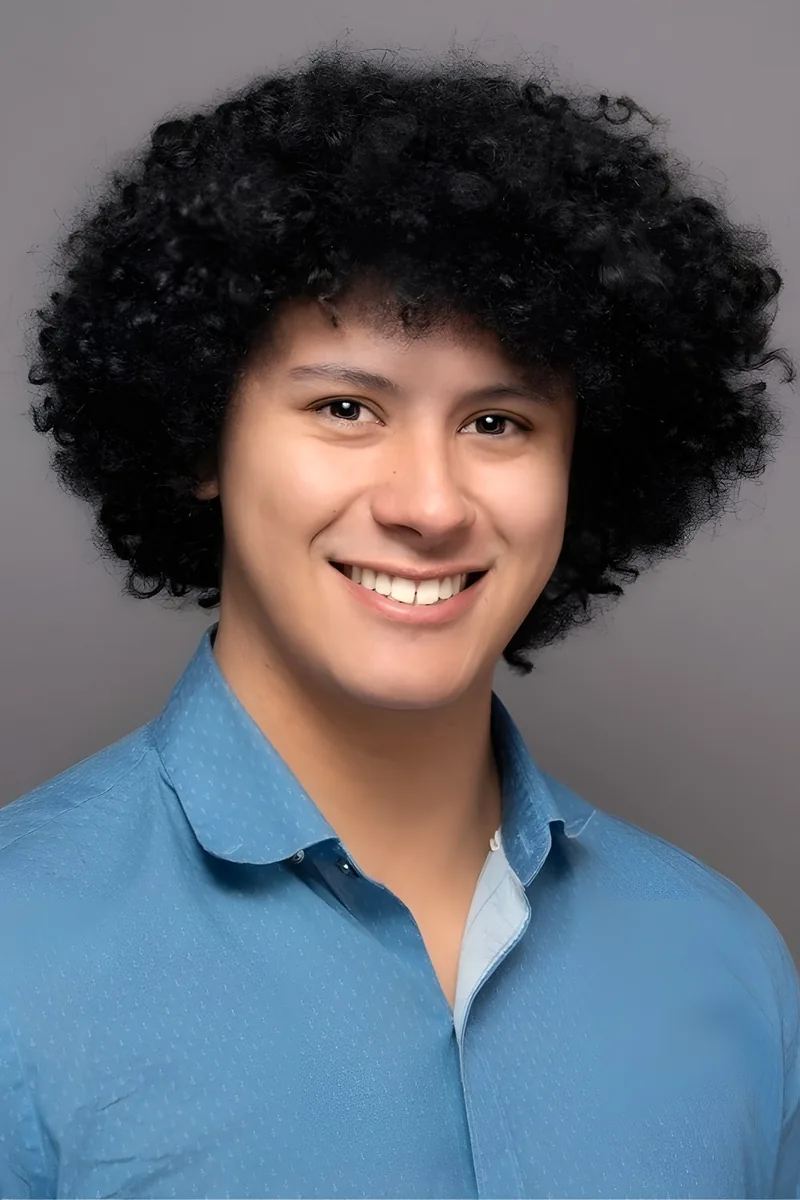
Hello! My name is Gabe, and I currently work as a Biostatistician in New York. I hold a Master's degree in Epidemiology from Johns Hopkins and a Bachelor's degree from NYU. Statistics isn't for everyone, but I hope to help students expand their knowledge or gain confidence in using it for a class. I am skilled in R studio for statistical and epidemiological analysis. My goal is to help students perform their best by becoming comfortable with the concepts.

Cognitive science trains you to think about how people reason under uncertainty — which is surprisingly close to what AP Stats actually tests, from interpreting conditional probabilities to explaining why a particular sampling method can skew results. Kimberly uses that background to teach the mental models behind concepts like normal distributions and inference, so the logic clicks before students ever touch a calculator. Rated 5.0 by students.
Psychology research is fundamentally a statistics course in disguise — Martha's work at Michigan examining how culture shapes self-related psychological processes means she's constantly designing studies, choosing between t-tests and ANOVAs, and defending whether her sample sizes and methods actually support her conclusions. That firsthand experience with the full research cycle translates directly to the AP Stats units on experimental design and inference, where she can explain why you'd stratify a sample or what a Type II error looks like in a real study rather than a textbook prompt. Rated 5.0 by students.
Data analytics coursework in biomedical and public health analysis means Vishank doesn't just know the AP Stats formulas — he's used them to draw real conclusions from messy health data sets, which is the exact skill the exam's free-response questions are testing. He's especially sharp on the data collection and study design unit, breaking down why randomization matters and how confounding variables sneak into observational studies. Rated 4.9 by students.
Most AP Stats students come from algebra and calculus courses where there's one right answer — so the shift to interpreting output, justifying assumptions, and writing about uncertainty in plain English catches them off guard. Matthew's dual math and computer science background at Harvard means he's comfortable on both sides of that divide: the formal probability theory underneath and the data-driven reasoning the exam actually grades you on. Rated 4.9 by students.
Licensed math teacher with a bachelor's in mathematics, Jacob brings the algebraic backbone that makes AP Stats click — he knows exactly when students need a quick refresher on transformations or logarithmic properties to make sense of Normal calculations or linearizing curved data. His classroom experience with Common Core's data and statistics strands means he's already taught the conceptual groundwork that the AP exam builds on, particularly around variability, sampling, and making claims from data. Rated 5.0 by students.
Studying statistics at Northwestern means Jake isn't just learning the concepts AP Stats covers — he's using them daily in upper-division coursework involving real data analysis, probability models, and inference procedures. That ongoing immersion makes him sharp on the details students tend to blur, like the difference between a parameter and a statistic or why checking conditions before running a test isn't optional. Rated 5.0 by students.
Computational biology at Cornell means Emily lives in statistical analysis — hypothesis testing, regression models, and probability distributions are part of her daily coursework. She breaks down AP Stats concepts like experimental design and inference by connecting them to real datasets, making the logic behind each test click before students ever touch a formula sheet.
A PhD in economics at Yale means Anthony lives in regression output, probability models, and econometric inference daily — and his undergraduate physics and math training is where he first learned to think rigorously about uncertainty and distributions. He's especially sharp on the chi-square and inference units where students need to move past calculator mechanics and articulate the reasoning behind their procedure choice, which is exactly what the free-response rubric scores hardest. Rated 5.0 by students.
Engineering PhD programs at Georgia Tech don't let you hand-wave through data — Jordan's biomedical research required designing experiments, validating sensor measurements, and running the kind of statistical inference that AP Stats builds its entire curriculum around. That lab experience makes him especially sharp on the exam's trickiest conceptual pieces, like distinguishing between observational studies and experiments or explaining why a particular confidence level changes an interval's width. Rated 5.0 by students.
A physics PhD requires living inside probability distributions, error analysis, and hypothesis testing — Jonathan has spent years determining whether experimental results are statistically significant or just noise, which is the exact reasoning AP Stats builds its entire free-response section around. He unpacks the logic behind confidence intervals and chi-square tests by grounding them in real data scenarios, making the interpretive leaps feel intuitive rather than formulaic. Rated 5.0 by students.
Kyle's statistics degree means he didn't just learn AP Stats concepts — he kept going, building the theoretical framework underneath topics like sampling distributions, expected value, and the normal model that the course only scratches the surface of. That deeper fluency makes him especially effective at explaining why a particular inference procedure applies in a given scenario, not just how to execute it on a calculator. Rated 4.9 by students.
I am a undergraduate freshman of the University of Michigan, studying business at the Ross School of Business. Working together with students and having a good time while seeing steady improvements has proven to provide me great joy. I believe that communication and relationship building is crucial for students to open up about their struggles and also for me to identify problems they don't realize they can improve on, so this is a key aspect of all of my lessons. During my free time, I enjoy playing sports or snacking on desserts while binge-watching Friends!
Testimonials
Because the right AP Statistics tutor makes all the difference.
Average Session Rating – Based on 3.4M Learner Ratings
Practice AP Statistics
Free practice tests, flashcards, and AI tutoring for AP Statistics
Other Baltimore Tutors
Related Math Tutors in Baltimore
Frequently Asked Questions
AP Statistics covers four main units: exploring data (distributions, relationships, and summaries), sampling and experimentation (study design and bias), probability and random variables, and inference (confidence intervals and hypothesis testing). The course emphasizes understanding statistical concepts and interpreting real-world data rather than heavy computation. Many students find the inference unit most challenging, as it requires connecting probability theory to practical decision-making.
Score improvement depends on your starting point and consistency with practice. Students who work with a tutor typically see gains of 1-2 points on the AP scale (out of 5), with some seeing larger jumps if they address specific weak areas like hypothesis testing or study design. The key is identifying which concepts are causing confusion—whether it's interpreting p-values, designing experiments, or working through multi-part free-response questions—and building mastery through targeted practice.
Many students struggle with the conceptual side of statistics—understanding what a p-value actually means, distinguishing between correlation and causation, and recognizing bias in study designs. The free-response section trips up students who can calculate correctly but can't explain their reasoning clearly. Time management is also critical; students often spend too long on calculations and rush through the interpretation, which costs points on the exam.
Start with the multiple-choice section to build confidence and identify patterns in question types. On free-response questions, always show your work and explain your reasoning—partial credit is generous if you demonstrate understanding. Read questions carefully for key phrases like "approximately," "at least," or "explain why," which signal what the graders are looking for. Practice full exams under timed conditions to build pacing skills; most students benefit from allocating 50 minutes to multiple-choice and 90 minutes to free-response.
Practice tests are essential for AP Statistics because they expose you to the full range of question types and help you identify which concepts need more work. Taking full-length practice exams under timed conditions builds stamina and reveals pacing issues before test day. Most students benefit from completing 3-4 full practice tests during their prep, spacing them out over several weeks to allow time for reviewing mistakes and reinforcing weak areas.
Ideally, students benefit from tutoring support starting in the fall or early winter before the May exam. This gives you time to build conceptual understanding throughout the course and then focus on exam-specific strategies and practice in the final 6-8 weeks. If you're starting closer to test day, even 4-6 weeks of focused tutoring can help you target weak areas and improve your score. Varsity Tutors connects you with expert tutors in Baltimore who can create a personalized study plan based on your timeline and needs.
Your first session focuses on understanding where you stand. A tutor will review your current knowledge of key concepts, identify which topics feel solid and which need work, and discuss your goals for the AP exam. You might work through a sample problem or two to see your problem-solving approach in action. This helps your tutor create a personalized study plan that targets your specific challenges, whether that's inference, study design, or communicating statistical reasoning.
Expert tutors working with Varsity Tutors for AP Statistics typically have strong backgrounds in statistics, mathematics, or related fields, and many have experience teaching the AP course or working with students preparing for the exam. They understand both the content and the nuances of how the AP exam evaluates understanding—knowing that explaining your reasoning is just as important as getting the right answer. When you connect with a tutor, you can discuss their experience with AP Statistics and students in Baltimore.
Let’s find your perfect tutor
Answer a few quick questions. We’ll recommend the right plan and match you with a top 5% tutor.