Award-Winning Biology Tutors
serving Round Lake Beach, IL
Biology
Tutors in Round Lake Beach
Private 1-on-1 tutoring, weekly live classes for academic support, test prep & enrichment, practice tests and diagnostics, and more to elevate grades and test scores.
Based on 3.4M Learner Ratings
UniversitiesSchools & Universities
DeliveredHours Delivered
ProficiencyGrowth in Proficiency
Who needs tutoring?
No obligation. Takes ~1 minute.
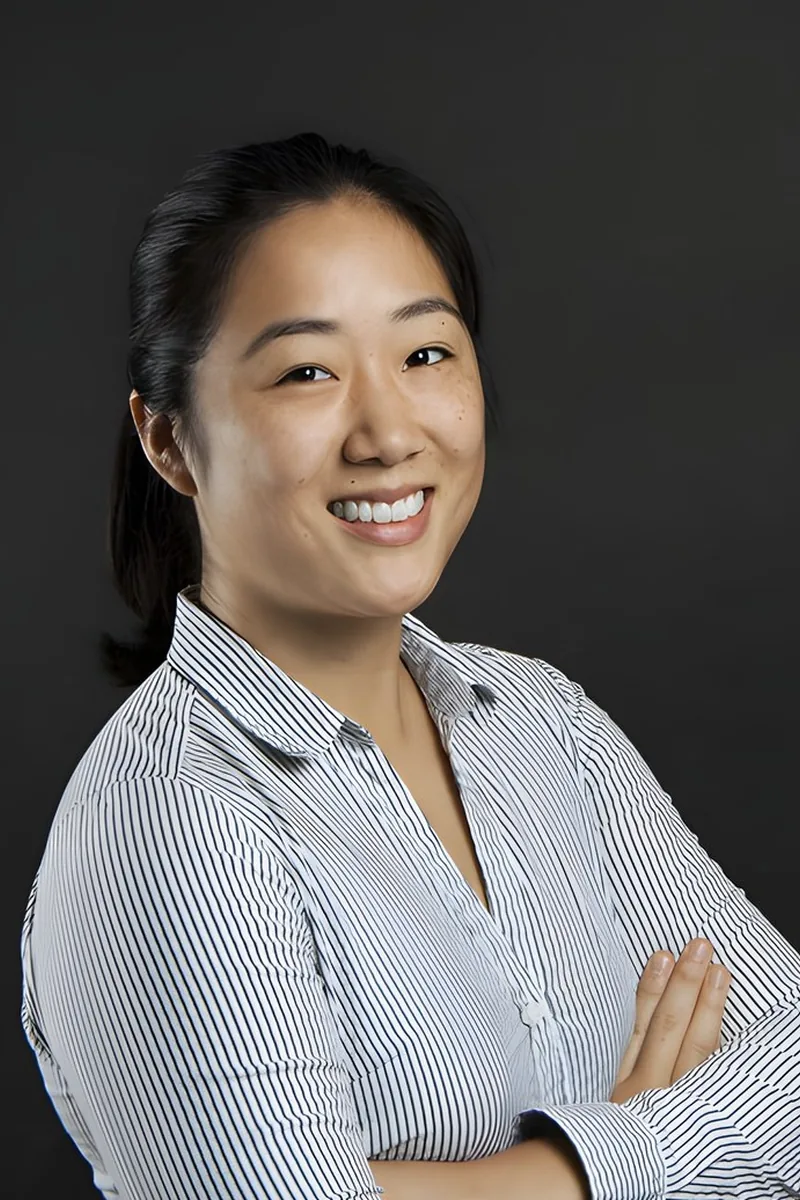
From cell respiration pathways to genetics crosses, biology rewards students who can organize large amounts of interconnected information rather than memorize isolated facts. Asta's University of Chicago training in research and analytical writing translates directly to how she teaches students to map relationships between biological systems — linking, say, DNA replication to protein synthesis to gene expression in a coherent chain.
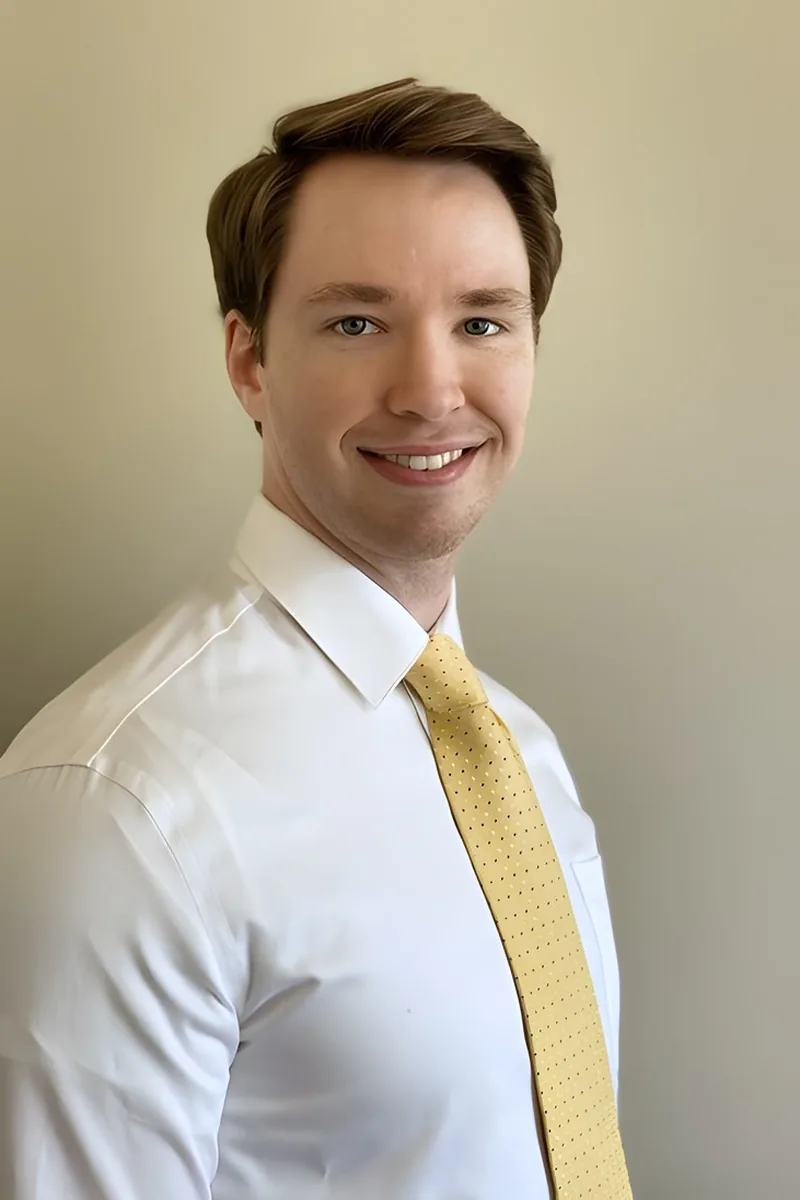
Three years running a Cell Biology lab course at Notre Dame gave Connor a front-row seat to the exact moments students lose track of what's happening — whether it's the logic connecting mitosis stages or how gene expression actually produces a functional protein. His master's work in Biomedical Sciences at Loyola Chicago layered on the molecular and physiological depth to explain those sticking points from multiple angles. Rated 5.0 by students.
Studying biology and chemistry simultaneously on Northwestern's pre-med track means Kade is constantly toggling between the molecular and the organismal — seeing how something like enzyme regulation in a biochemistry problem set connects directly to the ecology or genetics material he's covering the same week. That dual lens is especially useful for students who can memorize individual processes like meiosis or the light reactions but struggle to see how those pieces fit into larger biological systems. His 1550 SAT reflects the same kind of structured, cross-disciplinary thinking he brings to science tutoring.
Studying biology and computer science at McGill, Hannah lives in the world of biological systems daily — from cellular respiration pathways to genetics and molecular biology. She approaches tough concepts like DNA replication or enzyme kinetics by walking through the logic step by step, drawing on cognitive science principles to make dense material easier to retain.
Todd earned his B.S. in Biology from the University of Illinois at Urbana-Champaign, giving him deep grounding in everything from cellular respiration and mitosis to ecology and evolutionary theory. He breaks down complex processes like DNA replication and protein synthesis into clear, logical steps that stick. Rated 5.0 by students.
Jessica's cancer biology coursework at the University of Chicago means she's studying topics like tumor suppression, cell cycle regulation, and gene expression in their most consequential context — which sharpens how she teaches the fundamentals those concepts rest on. She's especially strong at connecting ecology and microbiology back to core cellular processes, making the kind of links that turn a sprawling subject into something coherent for students preparing for exams.
Ruthie's degree in Biological Basis of Behavior means she studied biology through the lens of how living systems produce behavior — tracing pathways from gene expression and neural signaling all the way to organism-level responses. That angle makes her especially sharp at teaching the connections between cell biology, genetics, and physiology that most intro courses treat as separate units. Rated 5.0 by students.
Ethan's background is in economics and public policy rather than the life sciences, but his rigorous coursework at the University of Chicago — where even non-science students face demanding analytical standards — means he approaches biology the way a strong student would: by building logical connections between concepts like cellular respiration, genetics, and ecology rather than treating each unit as its own silo. His 1550 SAT reflects the kind of disciplined reading and reasoning skills that translate well to parsing dense biology passages and experiment-based questions.
A Rice bioengineering degree means Nicolette didn't just study biology — she applied it, designing solutions that depend on understanding cell signaling, genetics, and organ-system physiology at a granular level. She unpacks topics like DNA replication or membrane transport by tying mechanisms to their real consequences in the body.
A Northwestern degree in biological sciences with a genetics and genomics concentration, followed by a full medical education, means Kruti has studied biology at every level — from molecular pathways to whole-organism physiology to population health. She approaches the subject by connecting smaller details (like how enzymes work) to bigger themes (like homeostasis), which makes sprawling biology courses feel organized. Whether the topic is ecology, evolution, or human anatomy, she ties it back to underlying principles.
Between his neuroscience major and hands-on electrophysiology research at NYU's Center for Neural Science, Gabriel approaches biology from the molecular level up — cell signaling, gene expression, neural circuitry. He unpacks complex biological systems by connecting structure to function, making dense material like membrane transport or protein synthesis easier to reason through rather than just memorize.
Jhonatan's neuroscience specialization means he built his biology knowledge from one of the most demanding corners of the discipline — tracing how ion channels, neurotransmitter cascades, and gene expression all converge to produce something as simple as a reflex arc. That depth translates well when teaching broader biology topics like cell signaling, homeostasis, or genetics, because he can show students the mechanistic "why" behind each process instead of leaving them with a diagram to memorize. Rated 5.0 by students.
Teaching assistant experience in an advanced biology course at Washington University gave Alexander a deep bench of ways to explain everything from cellular respiration to ecological dynamics. He unpacks biological processes as cause-and-effect chains — what triggers what, and why — so students can reason through unfamiliar questions instead of panicking. That analytical approach earned him a 4.7 student rating.
Nicki's public health research at George Washington University required deep fluency in biology — from cellular mechanisms to population-level ecology. She teaches biology by connecting molecular-scale processes like DNA replication and protein synthesis to the larger systems they support, giving students a framework that makes memorization far less overwhelming.
A double major in biology at Emory followed by a PhD at Northwestern means Richard has encountered nearly every corner of the discipline, from molecular genetics to ecosystem ecology. He's particularly skilled at teaching students how to interpret experimental results and connect cellular-level processes to organism-level outcomes. His 5.0 rating speaks to how clearly he communicates even the densest material.
From Mendelian inheritance to cellular respiration to ecology, introductory biology covers enormous ground in a single course. Rashida's background spanning plant genetics and molecular biology gives her unusual range across these topics, and she designs practice problems tailored to whichever unit a student is tackling. Her 5.0 rating speaks to how well that targeted approach works.
Sparsh's path from biomedical engineering to medical school at Northwestern means he's studied biology from both the molecular and systems level — cell signaling, genetics, organ physiology, and everything in between. He connects biological concepts to engineering applications and clinical scenarios, which makes topics like the Krebs cycle or membrane transport feel purposeful rather than like a list to memorize.
I am a graduate of Cornell University's College of Arts and Sciences. I received my Bachelor of Arts in Chemistry with Distinction in 2015. Since graduation, I was a physics/chemistry teacher and soccer coach at a private school in Virginia for a year, where I led the soccer team to an undefeated season. Before teaching and coaching professionally, I was a Teaching Assistant for the Cornell Math and Physics Departments, where I taught many subjects including calculus, mechanics, electromagnetism. Throughout my time at Cornell and as a teacher, I tutored subjects ranging from the SAT to AP Physics and Algebra II, which is where my true talents lie: in small group or one-on-one settings where I can give students the full attention they deserve and tailor my approach specifically to their learning styles. This is why I am now pursuing tutoring as a part-time occupation at Varsity Tutors. I embrace teaching all math and science subjects, especially physics and calculus, at both the college and high school level and will go above and beyond to make sure all of my students succeed, according to their definition of success. In my spare time, I enjoy playing league soccer, basketball, tennis and guitar, and also like to travel and see as much of the world as I can.
Amber concentrated in genetics and genomics during her biological sciences degree at Northwestern and is now completing a Master's specifically in biology teaching — so she's spent years thinking about how to make topics like DNA replication, Mendelian inheritance, and gene expression genuinely understandable. She connects molecular details to bigger biological stories, which turns memorization-heavy units into something logical. Her 32 ACT composite reflects the broad analytical skills she brings to science instruction.
Claire doesn't just know biology from a textbook — her doctoral work in molecular medicine means she's done the benchwork behind concepts like DNA replication, cell division, and immune response. She teaches biology by connecting classroom topics to what actually happens in a lab or a clinic, turning abstract diagrams of mitosis or the central dogma into concrete processes students can reason through. Rated 5.0 by students.
Pursuing a biology major at Carleton College, Aya lives inside this subject — from molecular genetics and cell signaling to ecology and evolution. She teaches biology as a set of interconnected systems rather than isolated facts, walking students through how a concept like gene expression connects to protein function, which connects to phenotype and natural selection.
Three associate degrees in science — including one specifically in microbiology — mean Felix has spent serious time with the small-scale biology that underpins bigger concepts like infection, immunity, and ecological nutrient cycling. He teaches microbiology-adjacent topics with the confidence of someone who's studied them as a primary discipline, and broader biology topics like genetics or cell structure benefit from that same attention to mechanistic detail. Rated 5.0 by students.
A neuroscience major doesn't just study biology — Rohan is immersed in it, from cellular signaling and membrane transport to genetics and metabolic pathways. He brings that depth to high school biology by explaining processes like mitosis or protein synthesis as interconnected systems rather than isolated vocabulary lists. Students walk away understanding the logic behind the diagrams, not just the labels on them.
A biology degree means Aleeza didn't just study genetics, cell signaling, and ecology in a textbook — she worked through them at the college level and then revisited them intensively for the MCAT. She teaches biology by linking processes together: understanding how DNA replication works, for instance, makes transcription and translation feel like logical next steps rather than separate topics to memorize. That connective approach is especially useful for students preparing for AP or college-level exams.
Iris's anthropology background means she already thinks in terms of systems — how organisms interact with environments, how populations shift, how structures serve functions. She applies that same systems-level thinking to biology topics like cell signaling, genetics, and ecology, making connections across chapters that textbooks often leave implicit.
Whether it's cellular respiration, genetics, or ecology, biology rewards students who can see how systems connect rather than treating each chapter as isolated facts. Callie's degree in the History and Philosophy of Science and Technology at the University of Chicago trained her to think about *how* scientific knowledge fits together, which shapes the way she teaches everything from Punnett squares to phylogenetic trees. She prefers letting students drive the session and stepping in only when they need a new angle on a tough concept.
Working in a neurobiology lab caring for fifty octopuses gives Sofia a daily, hands-on connection to the biology she teaches — animal behavior, nervous system function, and the kind of ecological thinking that ties organisms to their environments. Her Biological and Physical Sciences degree at UChicago, with its ecology focus, means she's particularly sharp at showing how concepts like energy flow, population dynamics, and natural selection link together rather than sitting in separate chapters.
Laurie's pre-med concentration meant her biology coursework didn't stop at ecology and genetics — it pushed through microbiology and the upper-level life sciences that most undergrads never touch, giving her a unusually complete map of how introductory topics connect to advanced ones. She's especially good at breaking down processes like cellular respiration or heredity by tying them back to the Spanish-minor study habits she swears by: structured repetition with real comprehension underneath. Rated 5.0 by students.
Most biology students struggle not with individual facts but with keeping the layers straight — how a mutation in a gene becomes a change in a protein becomes a shift in cell behavior. Masooma's coursework in molecular biology, cell biology, and microbiology means she can walk through those cause-and-effect chains at whatever level a student needs, whether that's introductory bio or college-level detail. Her 4.9 rating speaks to how well that layered approach lands.
Grant's infectious disease focus in medical school means he thinks about biology through the lens of host-pathogen interactions — how microbes invade, how immune systems respond, and how evolutionary pressures shape both sides of that arms race. That angle makes him especially useful for students tackling microbiology, immunology, or ecology units where the material suddenly feels less like memorization and more like a war story with molecular stakes.
A psychology degree means Christopher already thinks in terms of biological systems — neurons, hormones, genetics — and he brings that lens to teaching biology at every level. He's especially effective at unpacking topics like cell signaling and gene expression, where students need to trace cause and effect across multiple steps.
I am a sophomore at UIUC studying agricultural and biological engineering. Eventually, I hope to work on environmental engineering related projects concerning the improvement of ecosystem management and reducing the harmful effects of pollutants in the environment. As an aspiring engineer, my favorite subjects to teach students are math and science. I've been working with kids as a swim instructor and music teacher for the past six years now. As I've begun developing experience tutoring students, my favorite part about helping students learn math and science concepts is teaching them how these different concepts interconnect and later helping them to develop critical thinking skills to work through difficult material.
I am passionate about tutoring students in science (biology, chemistry, and physics) and math (algebra). I am also keen on helping students master the math section on the ACT/SAT. I like to make sure that my students have completely understood any given concept to the point where they can explain it to me clearly. I am always motivated about creating study plans and discussing techniques that are personalized for each of my students.
A current neuroscience major and research assistant in UIC's neurobiology department, Pal lives inside biological concepts daily — from cellular signaling pathways to genetics to organ system physiology. He unpacks dense biology material by tying molecular details to bigger-picture processes, which makes topics like mitosis, DNA replication, and homeostasis easier to retain.
A master's in biomedical sciences means Stephen didn't just study biology — he lived in it, from cellular metabolism and genetics to organ-system physiology. He teaches biology by linking processes together into cause-and-effect chains, so a student studying the Krebs cycle also understands why it matters for electron transport downstream.
A degree in microbiology, immunology, and molecular genetics means Matthew sees biology as an interconnected system rather than a list of vocabulary words. He unpacks topics like cell signaling, gene expression, and ecological relationships by asking layered questions that build from simple recall to genuine analysis. Students come away understanding how biological concepts link together, not just what each term means in isolation.
From cell respiration to genetics to ecology, biology covers an enormous range, and Ian approaches each unit by anchoring it to a few core principles — energy flow, structure-function relationships, and information transfer. His dual background in biological sciences and psychology means he also understands how students learn, which makes his explanations stick. He holds a 5.0 rating from past students.
Irene's background is squarely in mathematics and computer science, not the life sciences — but her PhD-level training in quantitative reasoning and data analysis translates surprisingly well to the parts of biology that trip students up most: interpreting experimental results, working through Punnett square probabilities, and making sense of population genetics models. She approaches biological concepts with the structured, logical scaffolding of a mathematician, which can be exactly what a student needs when memorization alone isn't cutting it.
Studying bioengineering requires mastering biology at every scale, from DNA replication inside a single cell to the physiology of entire organ systems. Kishore breaks down topics like cellular respiration, ecology, and genetics by tying each concept back to concrete examples from his coursework and Alzheimer's research at UIC.
Riya's science coursework at UIC, paired with her strong math background, means she approaches biology problems quantitatively — calculating expected phenotype ratios in genetics crosses, interpreting growth curves in ecology, or working through the stoichiometry of photosynthesis and respiration. That analytical bent is especially useful for students who understand the vocabulary but freeze when a biology question asks them to actually do something with the data.
Testimonials
Because the right Biology tutor makes all the difference.
Average Session Rating – Based on 3.4M Learner Ratings
Practice Biology
Free practice tests, flashcards, and AI tutoring for Biology
Nearby Biology Tutors
Other Round Lake Beach Tutors
Related Science Tutors in Round Lake Beach
Frequently Asked Questions
Varsity Tutors matches Round Lake Beach students with expert Biology tutors for 1-on-1 instruction. We pair each student with a tutor based on their specific needs, learning style, and goals.
Whether you need homework help, exam prep, or want to get ahead, our Biology tutors are ready to help.
Common challenges include gaps from earlier material, difficulty with specific concepts, and trouble applying learning to new problems. These issues can snowball quickly in Biology.
A tutor identifies where you're stuck, fills in gaps, and provides targeted practice. The 1-on-1 format means you get help exactly where you need it.
Tutors work with your student's actual coursework—homework assignments, class notes, and upcoming tests. This keeps tutoring directly relevant to what's happening in the classroom.
When you share information about your student's school and curriculum, we can match you with a tutor who has relevant experience.
All tutors complete background checks, credential verification, and teaching evaluation. Many of our Biology tutors hold advanced degrees or have years of teaching experience.
You can review tutor profiles to find someone with the right background for your student's level and needs.
Many students see improved grades within a few weeks, along with better understanding of Biology concepts and more confidence tackling challenging material.
Tutors track progress and adjust their approach to ensure continued improvement.
Most students benefit from 1-2 sessions per week. More frequent sessions help if your student is significantly behind or has an important exam coming up.
Your tutor can recommend a schedule based on your student's specific situation and goals.
Tutoring is purchased in packages of hours, with rates varying by tutor experience. Varsity Tutors offers several options to fit different budgets and needs.
You can discuss pricing during your consultation to find what works best.
Your tutor will assess where your student is, discuss goals, and start working on priority areas. Most students bring current homework or upcoming test material to focus on.
By the end, you'll have a clear sense of how the tutor can help and a plan for moving forward.
Let’s find your perfect tutor
Answer a few quick questions. We’ll recommend the right plan and match you with a top 5% tutor.