Award-Winning Writing Tutors
serving Green Bay, WI
Writing
Tutors in Green Bay
Private 1-on-1 tutoring, weekly live classes for academic support, test prep & enrichment, practice tests and diagnostics, and more to elevate grades and test scores.
Based on 3.4M Learner Ratings
UniversitiesSchools & Universities
DeliveredHours Delivered
ProficiencyGrowth in Proficiency
Who needs tutoring?
No obligation. Takes ~1 minute.
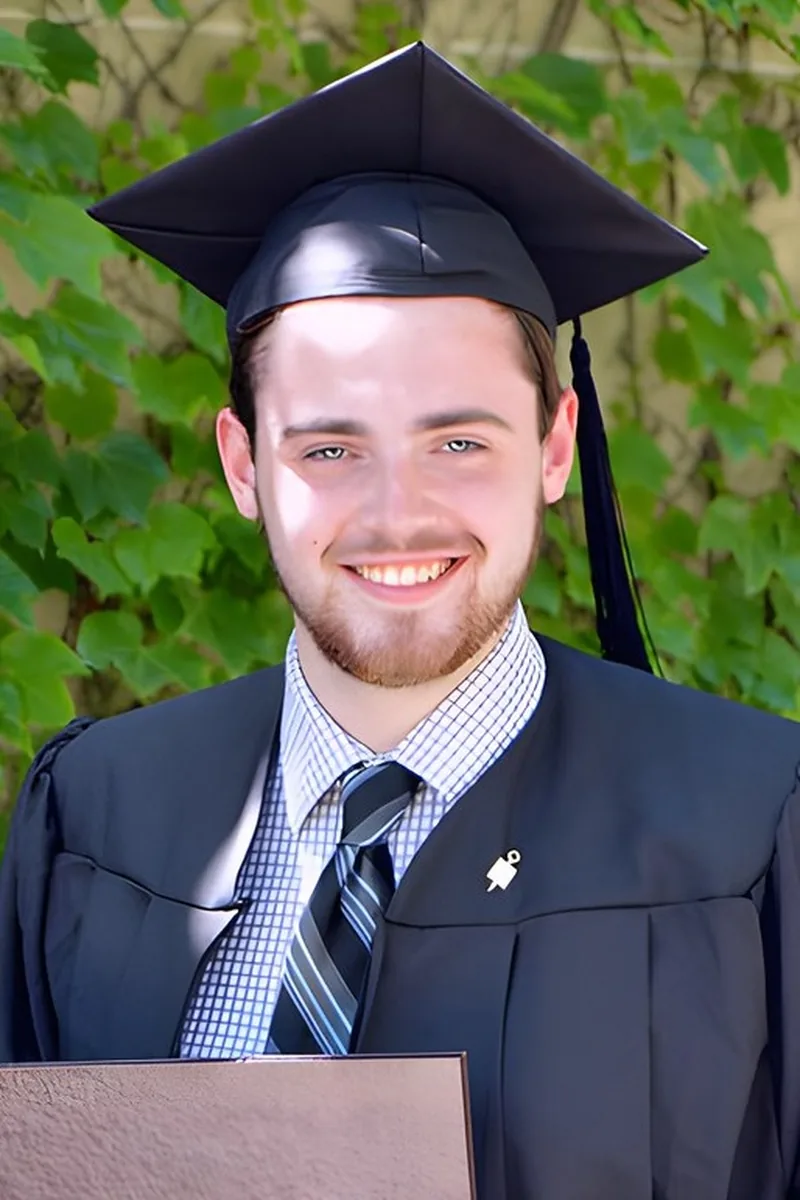
From argumentative essays to creative nonfiction, Patrick teaches writing as a process of thinking on the page — outlining claims, drafting with momentum, and revising with precision. He's taught writing to fifth graders in Chicago, business professionals in South Korea, and incoming university students, which means he can calibrate his approach to virtually any skill level. His UChicago training in both literature and linguistics gives him equal command of big-picture rhetoric and sentence-level craft.
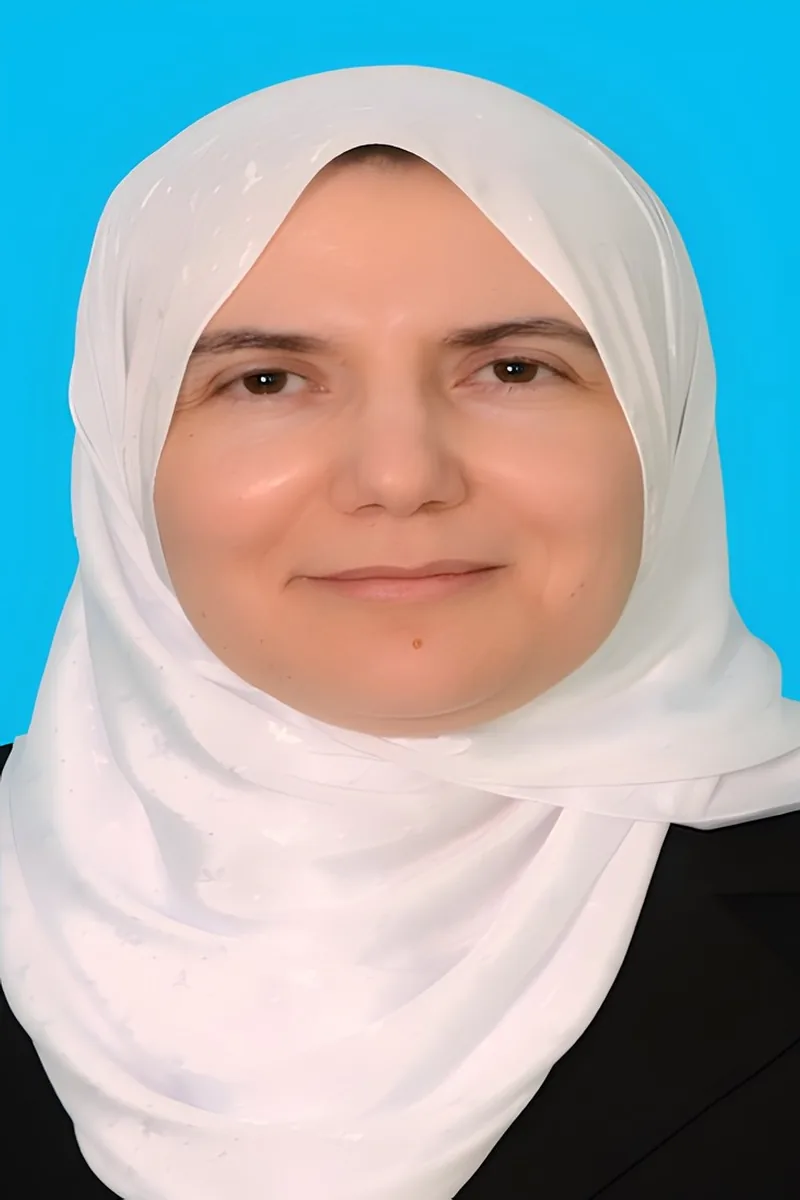
Years of teaching writing at both the university and K-12 level taught Alia that most writing problems aren't really about grammar — they're about thinking. She unpacks the planning stage with students, showing them how to organize an argument or narrative before drafting, so revision becomes refinement instead of a total rewrite.
Getting ideas out of your head and onto the page is its own skill, separate from grammar or formatting. Maura tackles the writing process from brainstorming through final draft, teaching techniques like freewriting and reverse outlining that she picked up working in Carthage College's Writing Center. She's especially good at helping students who know what they want to say but can't figure out where to start.
Clear writing starts with clear thinking, and Nupur tackles both at once. Whether a student is structuring a five-paragraph essay or developing a research argument, she breaks the process into concrete decisions — what's the claim, what's the strongest evidence, where does the counterargument go — so the blank page feels less overwhelming. Her own writing background spans scientific reports, legal briefs, and creative work.
Staring at a blank page is a psychological problem as much as a writing one, and Alexis treats it that way. She teaches brainstorming techniques, outlining strategies, and paragraph-level structure — from crafting a thesis to supporting it with evidence — so the writing process feels manageable rather than overwhelming. Her 5.0 rating speaks to how quickly students start producing work they're proud of.
Teaching writing at UW-Madison and currently teaching English to students in China has given Sarah an unusually wide view of how people learn to organize ideas on a page. She digs into the fundamentals — thesis development, paragraph structure, evidence integration — and adapts her approach depending on whether a student struggles with generating ideas or with executing them clearly.
Strong writing starts with having something specific to say and knowing how to organize it — two skills Madeline sharpens constantly in her PhD work. She teaches students to outline before they draft, build paragraphs around single ideas, and revise with purpose, whether they're writing a five-paragraph essay or a research paper.
Strong writing isn't about following a formula; it's about learning to control your ideas on the page. Jacob teaches the mechanics behind that control — how to build a paragraph around a single claim, how to vary sentence structure for emphasis, and how to revise with purpose instead of just rearranging words. His MA in Communication keeps him immersed in writing craft at a professional level.
The hardest part of writing is usually not the grammar — it's figuring out what you're actually trying to say and then organizing it so a reader can follow. Sophie tackles that structural thinking first, teaching students to outline arguments, develop claims with specific evidence, and revise with purpose. Her graduate work and years of TA feedback sessions make her especially sharp at diagnosing why a draft isn't working yet.
Clear writing starts with knowing how to organize an argument before drafting a single sentence — outlining a thesis, choosing evidence, and structuring paragraphs so each one earns the next. Mary's speech-language background gives her a sharp ear for how sentences flow and where clarity breaks down, which she applies directly when teaching revision and editing strategies.
A journalism degree sharpens one specific skill above all else: getting to the point. Daniel applies that clarity-first instinct to everything from argumentative essays to creative nonfiction, teaching students how to structure a thesis, tighten their paragraphs, and develop claims with concrete evidence. His 5.0 rating speaks to the trust writers place in his feedback.
The hardest part of writing is usually the thinking that happens before any words hit the page. George tackles that pre-writing phase head-on, teaching students to outline their argument, identify their strongest evidence, and commit to a clear thesis before drafting — a structured approach shaped by the analytical writing his business program demands daily.
Strong writing starts with a clear claim and a plan for proving it, whether the assignment is a five-paragraph essay or a research paper. Dylan has tutored writing across grade levels — from elementary students learning paragraph structure to peers working on college-level argumentation — and he tailors his feedback accordingly. He's particularly good at showing students how to outline before they draft, which cuts revision time dramatically.
Most writing problems aren't really about writing — they're about thinking. Julia starts by teaching students to organize their ideas before they touch a keyboard, using outlining and freewriting techniques that prevent the blank-page panic. From there, she walks through revision as a skill in itself, showing how to cut filler, sharpen thesis statements, and build paragraphs that each earn their place in the piece.
Clear writing starts with clear thinking, and Miriam treats every draft as a logic problem: does each claim follow from the last, does the evidence actually support the point, and is there a sentence doing no work that should be cut? Her dual background in English and Biology means she's equally comfortable coaching a literary analysis or a lab report. She also writes short fiction in her spare time, which sharpens her instinct for voice and structure.
Good writing isn't about big vocabulary — it's about clear thinking on the page. Olivia writes professionally every day, crafting everything from investigative features to tight news pieces, and she brings that real-world discipline to teaching structure, argumentation, and revision. Students leave sessions understanding not just what to fix, but how to spot weak points in their own drafts going forward.
Every piece of writing starts with a clear claim and a plan for supporting it, whether it's a personal narrative or a research paper. Maya walks students through the full process: brainstorming, outlining, drafting topic sentences that actually advance an argument, and revising with fresh eyes. As the oldest of five siblings, she's practiced at adjusting her explanations to match each writer's confidence level.
An avid screenwriter who spends her free time crafting scripts, Monica treats writing as a craft with learnable moves — thesis construction, paragraph transitions, evidence integration, and voice. She adapts her approach depending on whether a student is struggling to get ideas on the page or needs to sharpen a draft that's already taking shape.
Getting ideas onto the page is often the hardest part, and Breanna tackles that blank-page paralysis by teaching concrete prewriting strategies — outlining, freewriting, clustering — before a student ever drafts a full paragraph. From there, she digs into thesis construction, paragraph development, and revision techniques so that each piece of writing has a clear purpose and a logical flow.
An avid reader and writer herself, Younjoo approaches writing instruction by first figuring out where a student's process breaks down — whether that's generating ideas, organizing an outline, or revising a rough draft into polished prose. She then tackles that specific bottleneck with targeted exercises, from freewriting prompts to paragraph-level revision drills.
Getting ideas out of your head and onto the page is often the hardest part — and Wolly treats that bottleneck seriously. His approach starts with brainstorming and outlining techniques drawn from his communications training, then moves into drafting strategies that build momentum instead of perfectionism. He's coached students through everything from five-paragraph essays to graduate-level research papers.
Between lab reports, research papers, and a microbiology course she helped teach at UW-Madison, Samantha has done more structured writing than most undergrads. She breaks the writing process into concrete steps — outlining an argument, building evidence-based paragraphs, and revising for clarity — so students walk away with a repeatable method, not just a polished single draft.
Staring at a blank page is usually a planning problem, not a writing problem. Raechal starts by teaching students to outline their argument before drafting, then walks them through revision techniques that strengthen thesis statements, sharpen transitions, and cut unnecessary filler. Her communication degree grounds her approach in clear, purposeful prose.
Clear writing starts with clear thinking, and Halle approaches every essay or assignment by first untangling what a student actually wants to say before tackling structure and style. Her biology and Spanish coursework at UW-Madison means she's written across disciplines — lab reports, analytical essays, research papers — and knows how to adapt tone and organization to different audiences. Rated 5.0 by students.
Teaching writing for years across middle school, high school, and college levels has given Joseph a clear sense of where students get stuck — whether it's organizing ideas into a coherent structure or finding a voice that doesn't sound forced. He breaks the drafting process into concrete steps, from brainstorming to polishing final sentences, so the blank page feels less intimidating.
Strong writing starts before the first sentence — with a clear claim and a plan for how each paragraph earns its place. India teaches outlining, thesis development, and paragraph-level cohesion so that students move from scattered ideas to organized, persuasive prose. Her background spanning both math-science and liberal arts gives her a structured, logical approach to composition.
Getting thoughts onto paper can feel overwhelming when a student doesn't know where to start. Amalia tackles that blank-page anxiety by walking through brainstorming and outlining techniques that give young writers a roadmap before they draft. She treats revision as a normal, creative part of the process rather than a punishment for getting it wrong the first time.
Strong writing starts with clear thinking, and Kelly's background — a BA in History and English Literature plus a master's in History — means she's produced thousands of pages of research-driven, argument-heavy prose. She teaches students to outline before they draft, build paragraphs around single claims, and revise with a ruthless eye for filler.
Montana treats writing as a process with movable parts: brainstorming, drafting, revising, and editing each get dedicated attention so students learn where their own writing tends to break down. She teaches AP English Language and Composition in Texas, which means she's constantly coaching students through argument construction, evidence integration, and stylistic revision in real time.
I am currently a first-year Master's student at the Yale School of Public Health. I received my Bachelor's in biology at UCLA. As a Californian, I enjoy sunny weather and eating avocados.
I am a math enthusiast who is passionate about helping students gain confidence and achieve. I began tutoring other students in middle school and continued throughout high school. I believe all students have the potential to understand math, but they can be intimated or have trouble finding the learning method that works for them. With my extensive experience tutoring students of various age groups through different mediums, I have seen how my emphasis on building a strong foundation and understanding how concepts/formulas work, patience, and encouragement helped students see math in an approachable manner. I participated and scored well in various math competitions throughout high school. Additionally, I am experienced in high school standardized test preparation. I am also a native Mandarin speaker.
I'm now living in New York City pursuing a career in casting and producing theater. Although I have found my passion in the arts, I find great fulfillment tutoring math and science, because I think it's important for students to know they can succeed in these challenging subjects. I seek to develop an individual learning plan for each student, discovering the tools that will best help them succeed. My previous private tutoring clients have gone on to graduate at the top of their class. In addition, I am also an experienced SAT and ACT prep tutor.
I am willing to address any issue with an open mind and I try to develop strategies that play to a student's strengths. I would like to think I am very approachable and personable, and I have had very positive experiences with many students in the past using this philosophy. Outside of academics, I love playing basketball and watching sports, as well as chilling with friends, listening to music, and keeping up with politics and current affairs.
I'm an undergrad student at Stanford University studying Computer Science and American Studies. I am passionate about teaching and mentorship, and find that the best way to learn more about a subject is to teach it.
I am a current Master's Student studying Philosophy with a wide range of academic interests. I graduated with General Honors from the University of Chicago in 2018 with degrees in Statistics and East Asian Languages and Civilizations. I enjoy helping students achieve their full potential and primarily tutor standardized tests and college prep. Outside of tutoring I spend my time reading and playing board games.
I am passionate about teaching because I understand greatly a lot of the academic struggles and problems students may face through education, especially as a first generation college student. Currently I am studying for my medical doctorate degree (M.D.) at the Medical College of Wisconsin. I graduated UCLA with a Biology degree with Asian Languages minor in 2019, cum laude honors. Both during my undergrad and days since, I had a chance to tutor private clients in Southern California and work for a few exam prep companies. I enjoy tutoring math, sciences (chemistry, biology mainly), social sciences (history, politics), essay writing, and Japanese. I also help assist in studying for standardized exams (SAT, ACT, SAT Subject, AP, MCAT, PCAT, OAT)! My tutoring style will be very direct in trying to identify gaps in knowledge and working/practicing on those gaps. I like to be interactive and answer the students' questions directly. I strongly believe education is one path in which students may be able to reach their dreams and I will be your supporter along the way. In my free time, I enjoy playing the piano, practicing martial arts, and watching anime/playing games.
I am a current sophomore at Brown University, where I study Applied Math and Urban Studies. I have tutored in a high school ESL classroom, as a private tutor, in a local community center, and on online platforms. I love tutoring all subjects, and I'm especially passionate about teaching math. As a tutor, I work to meet each student where they're at by helping them find connections between existing knowledge and new subjects. I believe every student can find passion, motivation, and empowerment in education, and I love helping students develop the knowledge and skills to get there.
I am a pre-Occupational Therapy student majoring in psychology with minors in neuroscience and art. I will be graduating with honors from the University of Minnesota-Twin Cities in May, and I will begin Washington University School of Medicine's Doctorate of Occupational Therapy Program this Fall. My academic pursuits have made me confident in my abilities to tutor those pursing degrees in social sciences along with those pursuing careers in health care. Currently my favorite subject is neuroscience. I fell in love with it after I started college and I plan on specializing in neurorehabilitionation as an occupational therapist.
I am currently working on my doctorate in Environment and Resources at Wisconsin-Madison, studying tiger ecology and conservation with sub-field foci on predator ecology, and modeling population dynamics.
I am a graduate of the University of Delaware. I received my Bachelors of Mechanical Engineering degree and obtained minors in Mathematics, Economics, and Biomedical Engineering. Since graduation I've worked for a large diversified manufacturing company in one of their leadership rotational programs. Over the past 2 years I've moved from Hartford, CT to Charlotte, NC and currently reside in Milwaukee, WI. During this time I've been active in the local communities, volunteering up to 10 hours per week. Much of my volunteer work has been focused on helping adult learners in Math and English as they progressed towards obtaining their GED and also helping young learners in the same subjects. I am a strong believer in not only learning the material at hand, but also developing a study strategy that will ensure long term success, regardless of the subject.
Testimonials
Because the right Writing tutor makes all the difference.
Average Session Rating – Based on 3.4M Learner Ratings
Nearby Writing Tutors
Other Green Bay Tutors
Related English Tutors in Green Bay
Frequently Asked Questions
Varsity Tutors matches Green Bay students with expert Writing tutors for 1-on-1 instruction. We pair each student with a tutor based on their specific needs, learning style, and goals.
Whether you need homework help, exam prep, or want to get ahead, our Writing tutors are ready to help.
Common challenges include gaps from earlier material, difficulty with specific concepts, and trouble applying learning to new problems. These issues can snowball quickly in Writing.
A tutor identifies where you're stuck, fills in gaps, and provides targeted practice. The 1-on-1 format means you get help exactly where you need it.
Tutors work with your student's actual coursework—homework assignments, class notes, and upcoming tests. This keeps tutoring directly relevant to what's happening in the classroom.
When you share information about your student's school and curriculum, we can match you with a tutor who has relevant experience.
All tutors complete background checks, credential verification, and teaching evaluation. Many of our Writing tutors hold advanced degrees or have years of teaching experience.
You can review tutor profiles to find someone with the right background for your student's level and needs.
Many students see improved grades within a few weeks, along with better understanding of Writing concepts and more confidence tackling challenging material.
Tutors track progress and adjust their approach to ensure continued improvement.
Most students benefit from 1-2 sessions per week. More frequent sessions help if your student is significantly behind or has an important exam coming up.
Your tutor can recommend a schedule based on your student's specific situation and goals.
Tutoring is purchased in packages of hours, with rates varying by tutor experience. Varsity Tutors offers several options to fit different budgets and needs.
You can discuss pricing during your consultation to find what works best.
Your tutor will assess where your student is, discuss goals, and start working on priority areas. Most students bring current homework or upcoming test material to focus on.
By the end, you'll have a clear sense of how the tutor can help and a plan for moving forward.
Let’s find your perfect tutor
Answer a few quick questions. We’ll recommend the right plan and match you with a top 5% tutor.